Togo Gypsum Plaster Market Growth Rate Analysis (2025 - 2031)
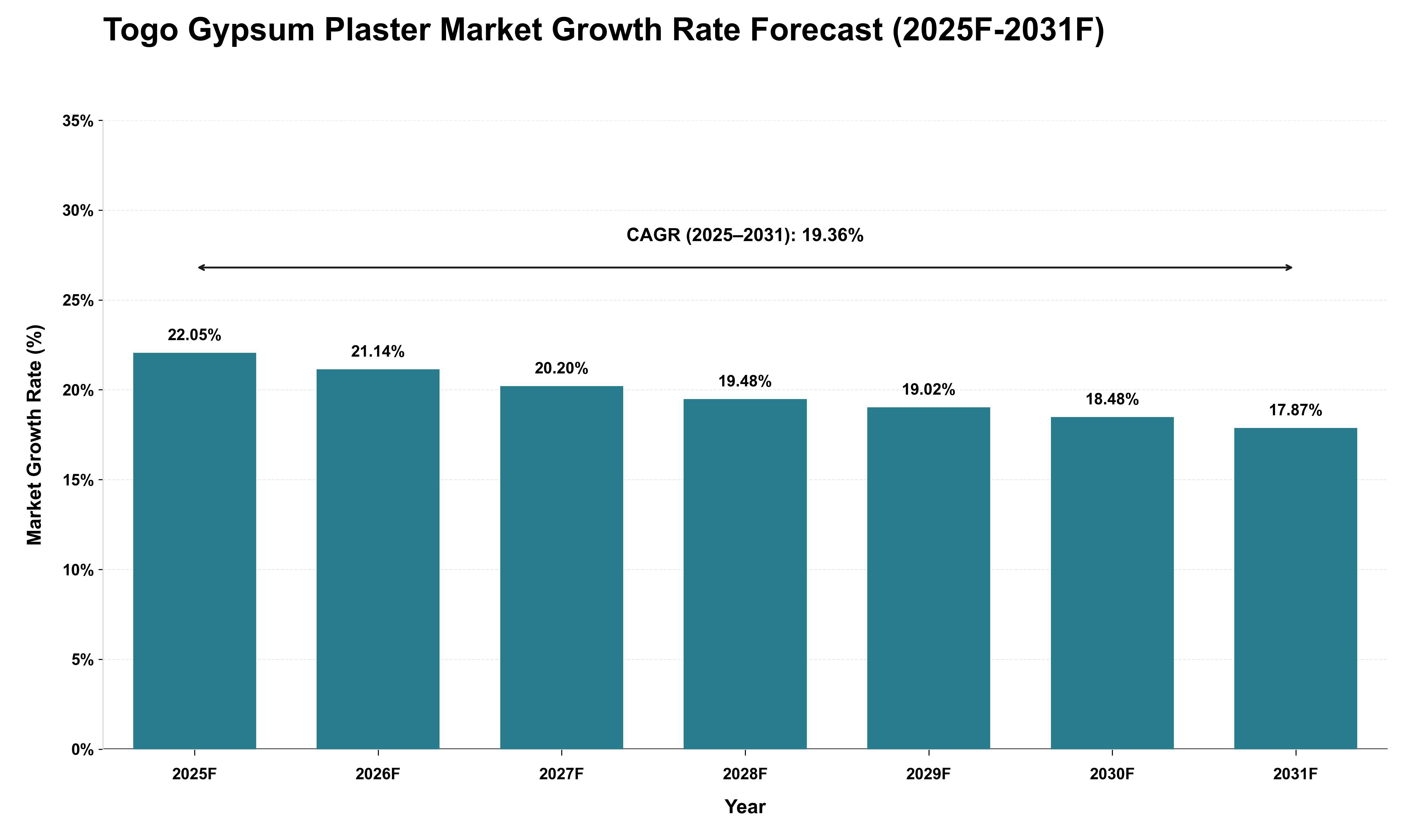
The Togo gypsum plaster market is projected to experience a robust compound annual growth rate of 19.36% from 2025 to 2031, driven primarily by increasing construction activities and infrastructure development. The annual growth rates indicate a gradual decline, yet remain significantly high, suggesting sustained demand for gypsum plaster as a key raw material in the building sector. This demand will likely be influenced by the availability and pricing of gypsum, which is subject to global supply chain dynamics and local extraction capabilities. As Togo's construction sector expands, reliance on imported gypsum may increase, potentially impacting pricing structures due to fluctuations in international markets. Additionally, cyclical trends in construction activity will play a crucial role; as economic conditions improve, investment in housing and commercial projects will further bolster the gypsum plaster market through 2031.
Key Highlights of the Report:
- Togo Gypsum Plaster Market Outlook
- Market Size of Togo Gypsum Plaster Market, 2024
- Forecast of Togo Gypsum Plaster Market, 2031
- Historical Data and Forecast of Togo Gypsum Plaster Revenues & Volume for the Period 2021-2031
- Togo Gypsum Plaster Market Trend Evolution
- Togo Gypsum Plaster Market Drivers and Challenges
- Togo Gypsum Plaster Price Trends
- Togo Gypsum Plaster Porter`s Five Forces
- Togo Gypsum Plaster Industry Life Cycle
- Historical Data and Forecast of Togo Gypsum Plaster Market Revenues & Volume By Plaster System for the Period 2021-2031
- Historical Data and Forecast of Togo Gypsum Plaster Market Revenues & Volume By Manually-applied Plaster for the Period 2021-2031
- Historical Data and Forecast of Togo Gypsum Plaster Market Revenues & Volume By Machine-applied Plaster for the Period 2021-2031
- Historical Data and Forecast of Togo Gypsum Plaster Market Revenues & Volume By Finishes for the Period 2021-2031
- Historical Data and Forecast of Togo Gypsum Plaster Market Revenues & Volume By Raw Material for the Period 2021-2031
- Historical Data and Forecast of Togo Gypsum Plaster Market Revenues & Volume By Natural Gypsum for the Period 2021-2031
- Historical Data and Forecast of Togo Gypsum Plaster Market Revenues & Volume By Synthetic Gypsum for the Period 2021-2031
- Historical Data and Forecast of Togo Gypsum Plaster Market Revenues & Volume By End-use for the Period 2021-2031
- Historical Data and Forecast of Togo Gypsum Plaster Market Revenues & Volume By Residential for the Period 2021-2031
- Historical Data and Forecast of Togo Gypsum Plaster Market Revenues & Volume By Non-residential for the Period 2021-2031
- Togo Gypsum Plaster Import Export Trade Statistics
- Market Opportunity Assessment By Plaster System
- Market Opportunity Assessment By Raw Material
- Market Opportunity Assessment By End-use
- Togo Gypsum Plaster Top Companies Market Share
- Togo Gypsum Plaster Competitive Benchmarking By Technical and Operational Parameters
- Togo Gypsum Plaster Company Profiles
- Togo Gypsum Plaster Key Strategic Recommendations






































