Trinidad and Tobago Insulation Products Market Size Growth Rate
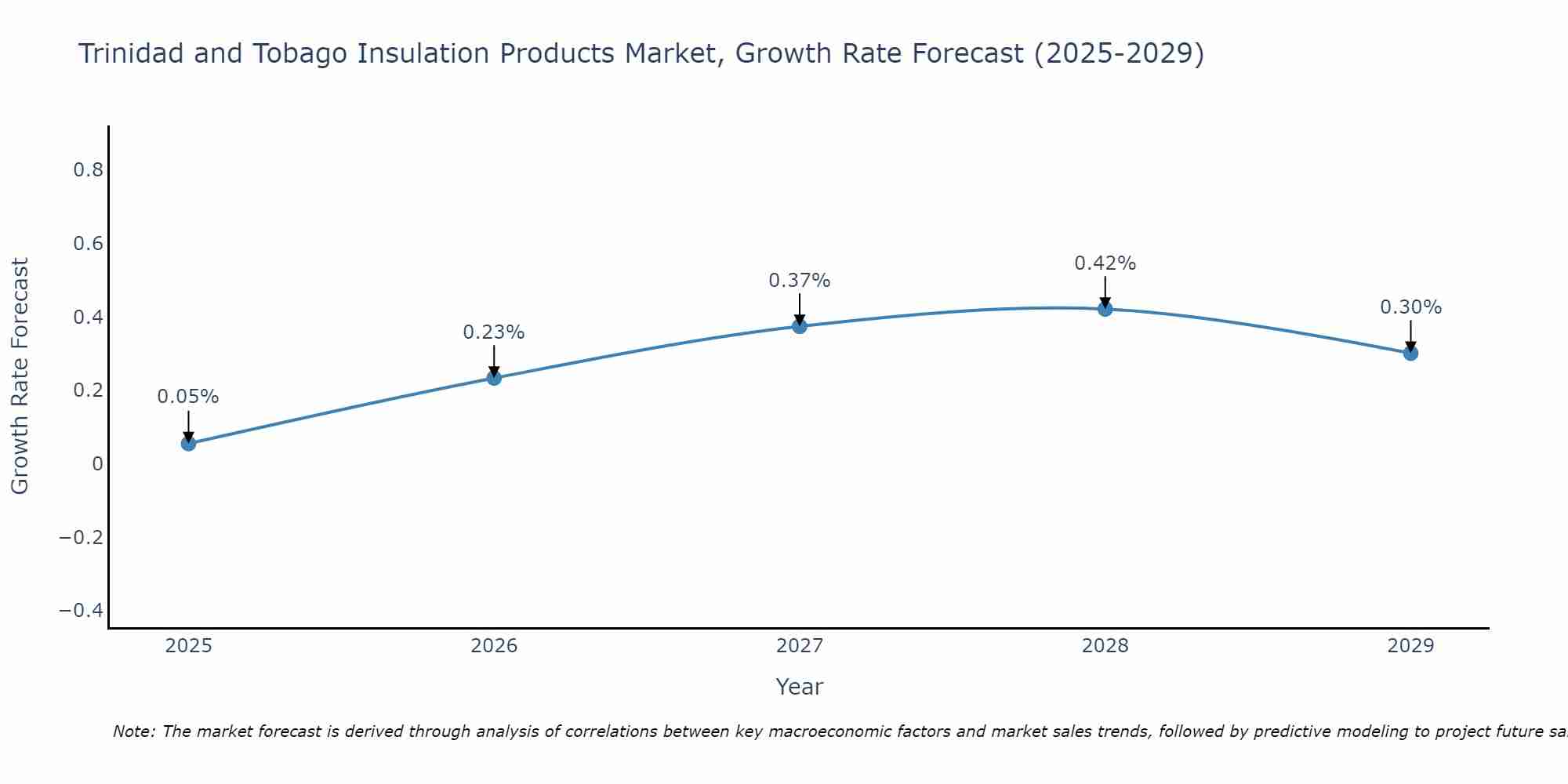
The Trinidad and Tobago Insulation Products Market is projected to witness mixed growth rate patterns during 2025 to 2029. The growth rate begins at 0.05% in 2025, climbs to a high of 0.42% in 2028, and moderates to 0.30% by 2029.
Key Highlights of the Report:
- Trinidad and Tobago Insulation Products Market Outlook
- Market Size of Trinidad and Tobago Insulation Products Market, 2024
- Forecast of Trinidad and Tobago Insulation Products Market, 2031
- Historical Data and Forecast of Trinidad and Tobago Insulation Products Revenues & Volume for the Period 2021-2031
- Trinidad and Tobago Insulation Products Market Trend Evolution
- Trinidad and Tobago Insulation Products Market Drivers and Challenges
- Trinidad and Tobago Insulation Products Price Trends
- Trinidad and Tobago Insulation Products Porter`s Five Forces
- Trinidad and Tobago Insulation Products Industry Life Cycle
- Historical Data and Forecast of Trinidad and Tobago Insulation Products Market Revenues & Volume By Insulation Type for the Period 2021-2031
- Historical Data and Forecast of Trinidad and Tobago Insulation Products Market Revenues & Volume By Thermal for the Period 2021-2031
- Historical Data and Forecast of Trinidad and Tobago Insulation Products Market Revenues & Volume By Acoustic & others for the Period 2021-2031
- Historical Data and Forecast of Trinidad and Tobago Insulation Products Market Revenues & Volume By Material Type for the Period 2021-2031
- Historical Data and Forecast of Trinidad and Tobago Insulation Products Market Revenues & Volume By Mineral Wool for the Period 2021-2031
- Historical Data and Forecast of Trinidad and Tobago Insulation Products Market Revenues & Volume By Fiberglass for the Period 2021-2031
- Historical Data and Forecast of Trinidad and Tobago Insulation Products Market Revenues & Volume By Stone wool for the Period 2021-2031
- Historical Data and Forecast of Trinidad and Tobago Insulation Products Market Revenues & Volume By Polyurethane Foam (PUF) for the Period 2021-2031
- Historical Data and Forecast of Trinidad and Tobago Insulation Products Market Revenues & Volume By Flexible Elastomeric Foam (FEF) for the Period 2021-2031
- Historical Data and Forecast of Trinidad and Tobago Insulation Products Market Revenues & Volume By Other Insulations for the Period 2021-2031
- Historical Data and Forecast of Trinidad and Tobago Insulation Products Market Revenues & Volume By End Use for the Period 2021-2031
- Historical Data and Forecast of Trinidad and Tobago Insulation Products Market Revenues & Volume By Building & Construction for the Period 2021-2031
- Historical Data and Forecast of Trinidad and Tobago Insulation Products Market Revenues & Volume By Industrial for the Period 2021-2031
- Historical Data and Forecast of Trinidad and Tobago Insulation Products Market Revenues & Volume By Transportation for the Period 2021-2031
- Historical Data and Forecast of Trinidad and Tobago Insulation Products Market Revenues & Volume By Consumer for the Period 2021-2031
- Trinidad and Tobago Insulation Products Import Export Trade Statistics
- Market Opportunity Assessment By Insulation Type
- Market Opportunity Assessment By Material Type
- Market Opportunity Assessment By End Use
- Trinidad and Tobago Insulation Products Top Companies Market Share
- Trinidad and Tobago Insulation Products Competitive Benchmarking By Technical and Operational Parameters
- Trinidad and Tobago Insulation Products Company Profiles
- Trinidad and Tobago Insulation Products Key Strategic Recommendations






































