Tunisia Electric AC Motors Market Size Growth Rate
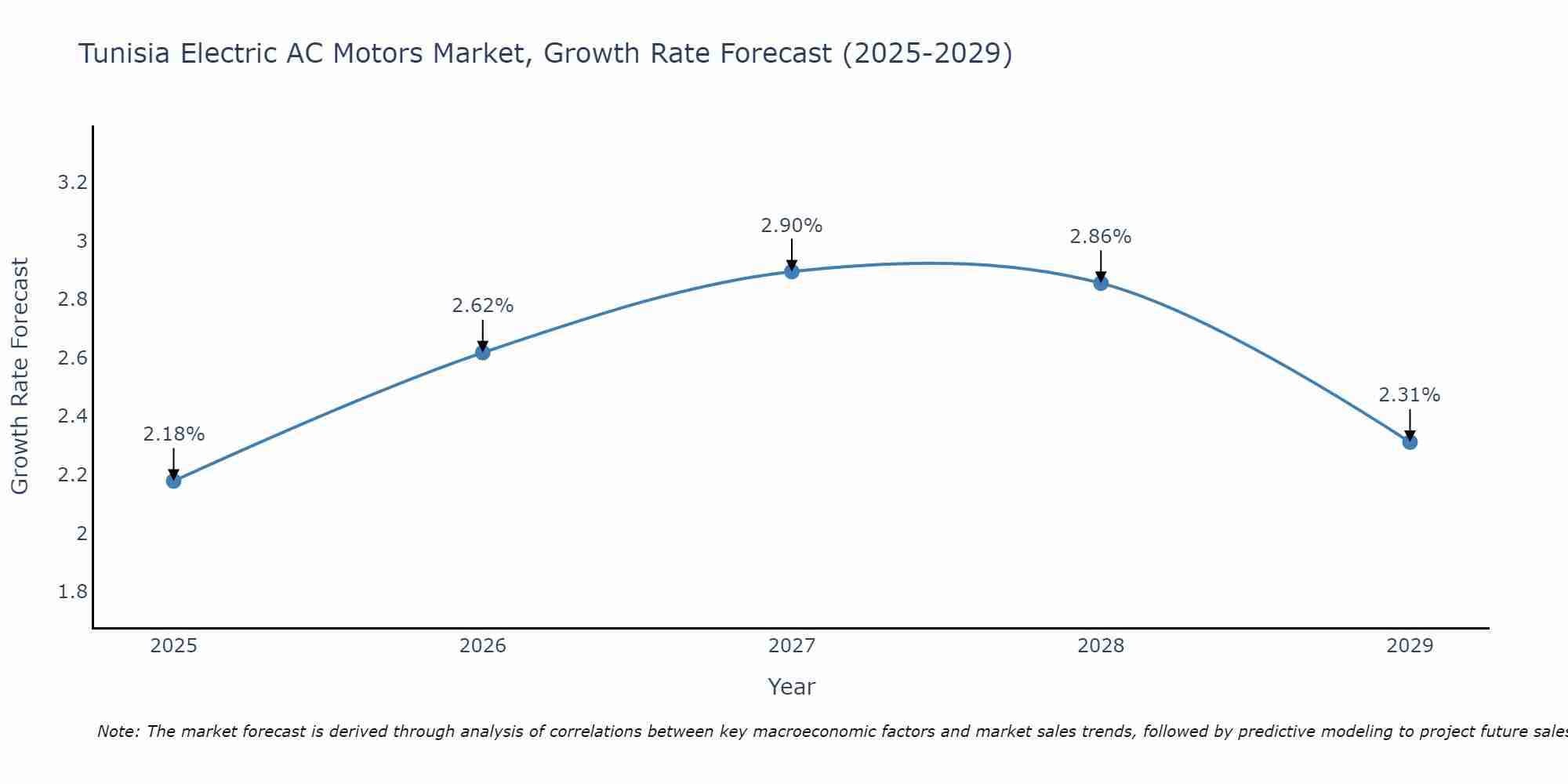
The Tunisia Electric AC Motors Market is projected to witness mixed growth rate patterns during 2025 to 2029. Starting at 2.18% in 2025, the market peaks at 2.90% in 2027, and settles at 2.31% by 2029.
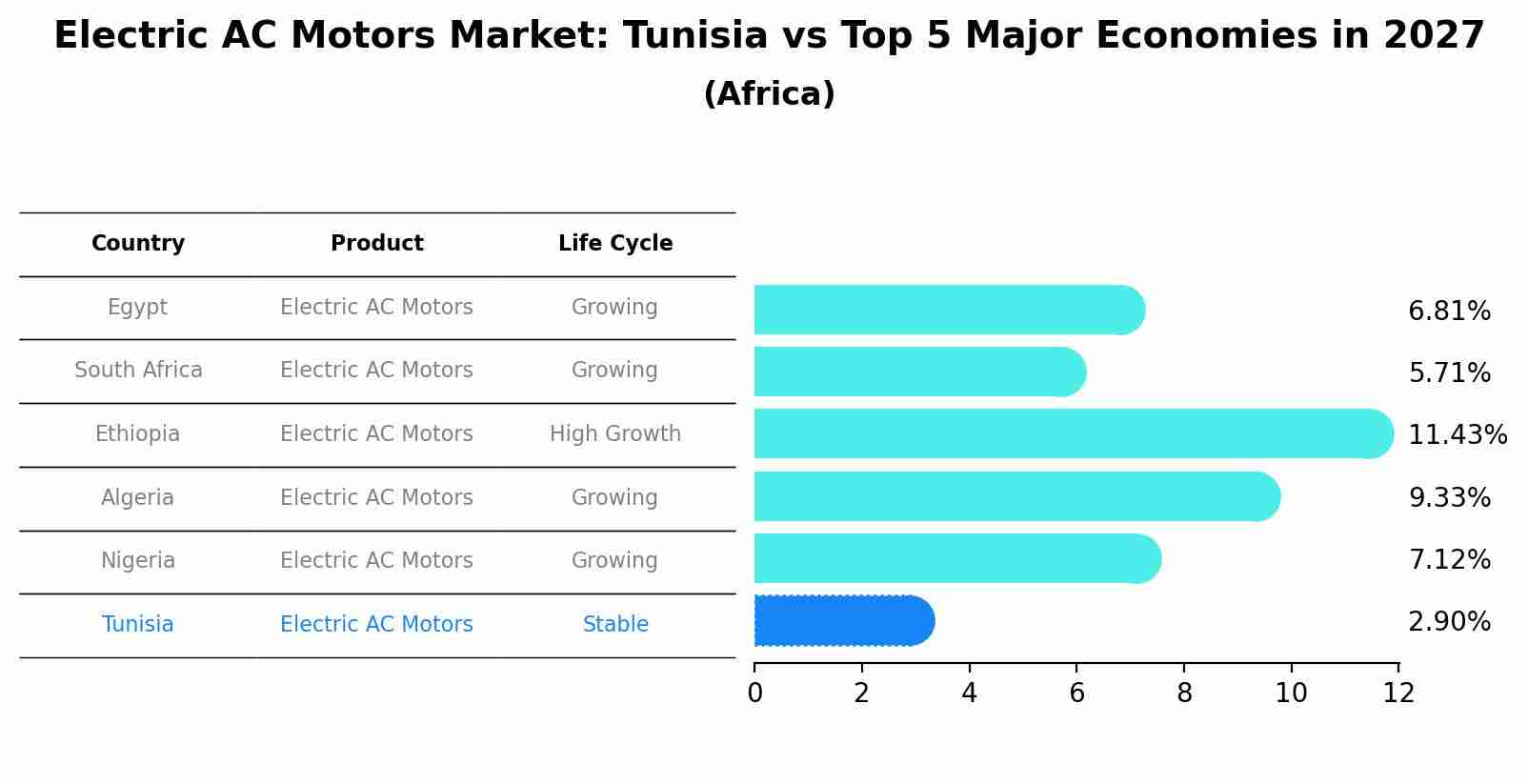
Electric AC Motors Market: Tunisia vs Top 5 Major Economies in 2027 (Africa)
By 2027, Tunisia's Electric AC Motors market is forecasted to achieve a stable growth rate of 2.90%, with Egypt leading the Africa region, followed by South Africa, Ethiopia, Algeria and Nigeria.
Tunisia Electric AC Motors Market Overview
The Tunisia Electric AC Motors Market is witnessing steady growth driven by industrial automation, automotive, and manufacturing sectors. The increasing demand for energy-efficient motors, coupled with government initiatives promoting green technologies, is boosting market growth. Key players in the market are focusing on product innovation and technological advancements to meet the evolving industry requirements. Factors such as rising urbanization, infrastructural development projects, and the adoption of electric vehicles are further propelling the market expansion. Additionally, the shift towards renewable energy sources and the growing emphasis on sustainability are driving the adoption of electric AC motors in various applications. Overall, the Tunisia Electric AC Motors Market is poised for continuous growth, driven by increasing industrialization and the need for energy-efficient solutions.
Tunisia Electric AC Motors Market Trends
The Tunisia Electric AC Motors market is witnessing a growing demand for energy-efficient and environmentally friendly products, driving the adoption of high-efficiency electric motors. With increasing emphasis on sustainability and regulations promoting energy conservation, manufacturers are focusing on developing motors with improved efficiency levels. Additionally, there is a rising trend towards the integration of smart technologies such as IoT and automation in electric AC motors to enhance performance and enable remote monitoring and control. The market is also seeing a shift towards the use of electric motors in various industries including automotive, manufacturing, and agriculture, driven by the need for higher productivity and reduced operational costs. Overall, the Tunisia Electric AC Motors market is moving towards innovation and sustainability to meet the evolving demands of industries and regulations.
Tunisia Electric AC Motors Market Challenges
In the Tunisia Electric AC Motors Market, several challenges are faced, including the high initial cost of electric AC motors compared to traditional motors, which can deter potential buyers. Limited awareness and understanding of the benefits of electric AC motors among consumers and businesses also pose a challenge. Additionally, the lack of a well-established infrastructure for electric vehicle charging stations in Tunisia hinders the adoption of electric AC motors in the transportation sector. Furthermore, concerns about the reliability and efficiency of electric AC motors in certain industrial applications may slow down the market growth. Overcoming these challenges would require targeted education and awareness campaigns, incentives to promote adoption, and investments in infrastructure development.
Tunisia Electric AC Motors Market Investment Opportunities
The Tunisia Electric AC Motors Market presents promising investment opportunities due to the increasing demand for energy-efficient and environmentally friendly motor solutions across various industries such as automotive, manufacturing, and construction. The growing emphasis on sustainability and regulations promoting energy conservation drive the adoption of electric AC motors in Tunisia. Investments in research and development for innovative motor technologies, such as variable frequency drives and high-efficiency motors, can offer substantial returns. Additionally, partnerships with local manufacturers and distributors can help investors capitalize on the expanding market potential. Overall, the Tunisia Electric AC Motors Market presents a favorable landscape for investors looking to tap into the growing demand for energy-efficient solutions in the region.
Tunisia Electric AC Motors Market Government Policy
The government of Tunisia has implemented various policies to support and regulate the electric AC motors market in the country. These policies focus on promoting energy efficiency, reducing carbon emissions, and encouraging the adoption of sustainable technologies. The government provides incentives for the manufacturing and installation of energy-efficient electric AC motors, as well as subsidies for businesses and industries that switch to these more environmentally friendly options. Additionally, there are regulations in place to ensure the quality and safety standards of electric AC motors sold in the market. The government`s emphasis on sustainability and energy efficiency in the electric AC motors sector aligns with global trends towards greener technologies and contributes to the overall goal of reducing the environmental impact of industrial activities in Tunisia.
Tunisia Electric AC Motors Market Future Outlook
The Tunisia Electric AC Motors Market is poised for steady growth in the coming years, driven by increasing industrialization, infrastructure development, and government initiatives promoting energy efficiency. Rising demand for electric vehicles and the growing adoption of renewable energy sources are also expected to boost the market. Additionally, advancements in motor technologies, such as the development of more energy-efficient and compact motors, are likely to drive market growth further. However, challenges such as fluctuating raw material prices and economic uncertainties may impact the market in the short term. Overall, with the increasing focus on sustainability and the transition towards cleaner energy sources, the Tunisia Electric AC Motors Market is expected to experience sustained growth and innovation in the foreseeable future.
Key Highlights of the Report:
- Tunisia Electric AC Motors Market Outlook
- Market Size of Tunisia Electric AC Motors Market, 2021
- Forecast of Tunisia Electric AC Motors Market, 2031
- Historical Data and Forecast of Tunisia Electric AC Motors Revenues & Volume for the Period 2018 - 2031
- Tunisia Electric AC Motors Market Trend Evolution
- Tunisia Electric AC Motors Market Drivers and Challenges
- Tunisia Electric AC Motors Price Trends
- Tunisia Electric AC Motors Porter's Five Forces
- Tunisia Electric AC Motors Industry Life Cycle
- Historical Data and Forecast of Tunisia Electric AC Motors Market Revenues & Volume By Type for the Period 2018 - 2031
- Historical Data and Forecast of Tunisia Electric AC Motors Market Revenues & Volume By Synchronous AC Motors for the Period 2018 - 2031
- Historical Data and Forecast of Tunisia Electric AC Motors Market Revenues & Volume By Induction AC Motors for the Period 2018 - 2031
- Historical Data and Forecast of Tunisia Electric AC Motors Market Revenues & Volume By Voltage for the Period 2018 - 2031
- Historical Data and Forecast of Tunisia Electric AC Motors Market Revenues & Volume By Integral HP Output for the Period 2018 - 2031
- Historical Data and Forecast of Tunisia Electric AC Motors Market Revenues & Volume By Fractional HP Output for the Period 2018 - 2031
- Historical Data and Forecast of Tunisia Electric AC Motors Market Revenues & Volume By End-Use for the Period 2018 - 2031
- Historical Data and Forecast of Tunisia Electric AC Motors Market Revenues & Volume By Industrial Machinery for the Period 2018 - 2031
- Historical Data and Forecast of Tunisia Electric AC Motors Market Revenues & Volume By Motor Vehicles for the Period 2018 - 2031
- Historical Data and Forecast of Tunisia Electric AC Motors Market Revenues & Volume By HVAC Equipment for the Period 2018 - 2031
- Historical Data and Forecast of Tunisia Electric AC Motors Market Revenues & Volume By Aerospace & Transportation for the Period 2018 - 2031
- Historical Data and Forecast of Tunisia Electric AC Motors Market Revenues & Volume By Household Appliances for the Period 2018 - 2031
- Historical Data and Forecast of Tunisia Electric AC Motors Market Revenues & Volume By Others for the Period 2018 - 2031
- Tunisia Electric AC Motors Import Export Trade Statistics
- Market Opportunity Assessment By Type
- Market Opportunity Assessment By Voltage
- Market Opportunity Assessment By End-Use
- Tunisia Electric AC Motors Top Companies Market Share
- Tunisia Electric AC Motors Competitive Benchmarking By Technical and Operational Parameters
- Tunisia Electric AC Motors Company Profiles
- Tunisia Electric AC Motors Key Strategic Recommendations






































