Tunisia Office Chair Market Size Growth Rate
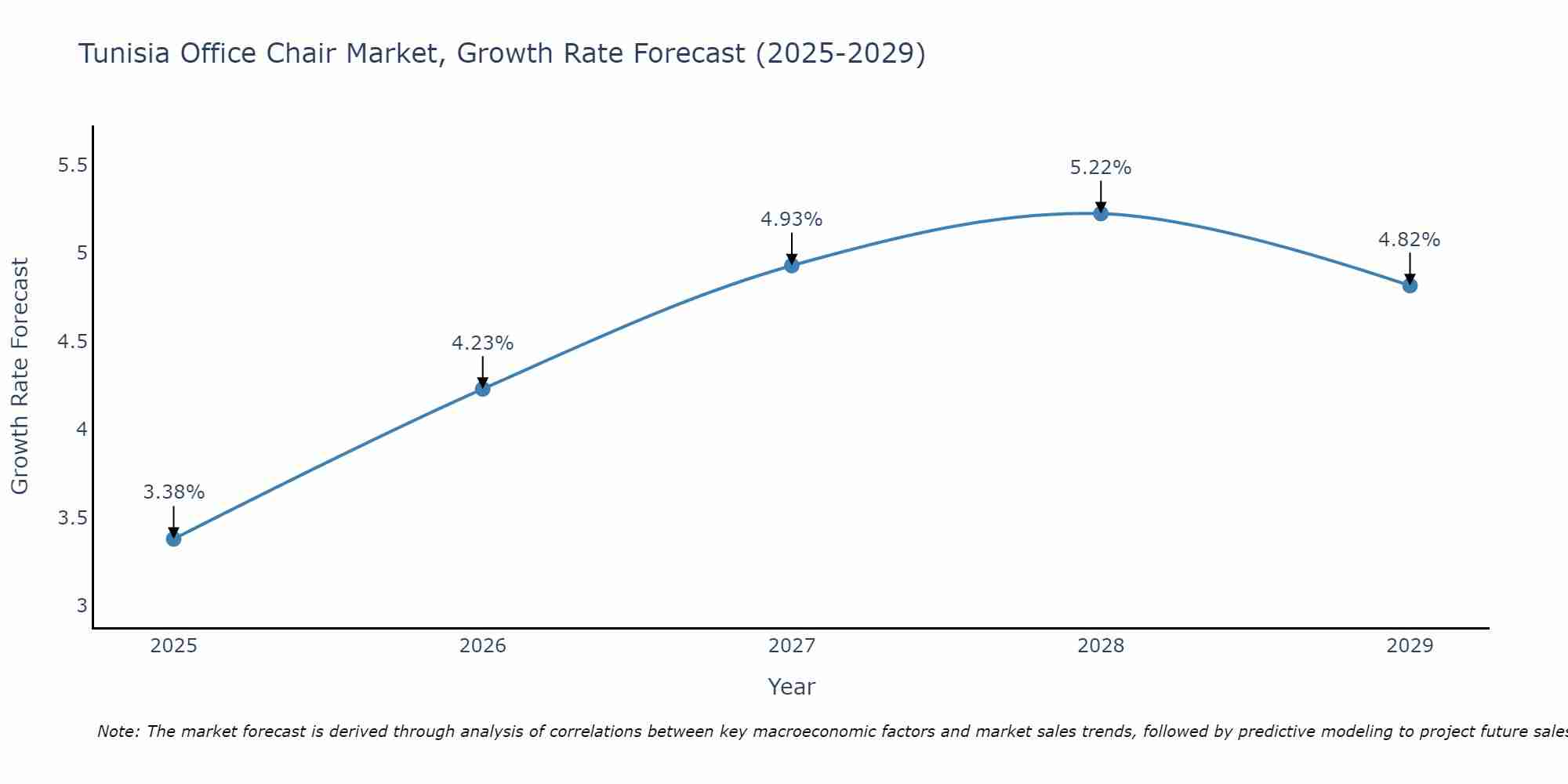
The Tunisia Office Chair Market is projected to witness mixed growth rate patterns during 2025 to 2029. The growth rate begins at 3.38% in 2025, climbs to a high of 5.22% in 2028, and moderates to 4.82% by 2029.
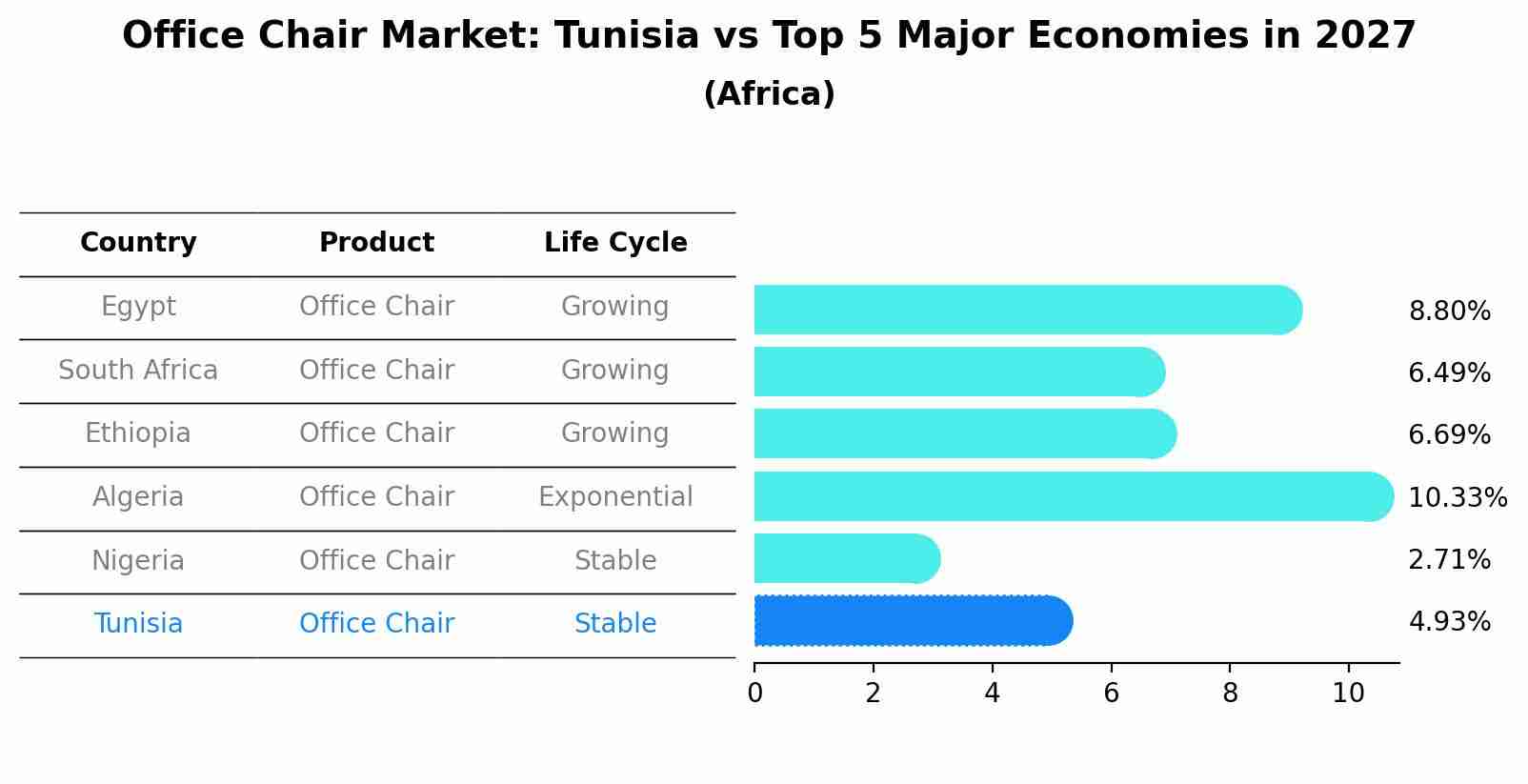
Office Chair Market: Tunisia vs Top 5 Major Economies in 2027 (Africa)
Tunisia's Office Chair market is anticipated to experience a stable growth rate of 4.93% by 2027, reflecting trends observed in the largest economy Egypt, followed by South Africa, Ethiopia, Algeria and Nigeria.
Tunisia Office Chair Market Synopsis
The Tunisia office chair market is witnessing steady growth driven by increasing demand from both commercial and home office spaces. With the rise of remote work and flexible office setups, ergonomic designs and comfort features are becoming more important to consumers. Key players in the market are focusing on sustainability, technology integration, and customization options to cater to evolving customer preferences. The market is also influenced by trends such as the preference for stylish and modern designs, as well as the need for space-saving solutions in smaller work environments. Overall, the Tunisia office chair market is competitive, with a variety of local and international brands offering a range of products to meet the diverse needs of consumers across different sectors.
Tunisia Office Chair Market Trends
The Tunisia Office Chair Market is currently experiencing a shift towards ergonomic designs and sustainable materials. Consumers are increasingly prioritizing comfort and functionality in their office chairs, leading to a growing demand for adjustable features, lumbar support, and breathable materials. Additionally, there is a rising awareness of the environmental impact of furniture production, driving the adoption of eco-friendly materials such as recycled plastics and sustainable wood. Online retail channels are gaining popularity among consumers for their convenience and wide product selection, while traditional brick-and-mortar stores are focusing on providing personalized customer service and product demonstrations. Overall, the Tunisia Office Chair Market is witnessing a trend towards ergonomic, sustainable, and digitally-driven solutions to meet the evolving needs of modern office spaces.
Tunisia Office Chair Market Challenges
In the Tunisia office chair market, some of the key challenges include intense competition from both local and international manufacturers, leading to price wars and pressure on profit margins. Quality control and consistency in manufacturing processes are also significant challenges, as ensuring high-quality products that meet international standards is essential for competing in the global market. Additionally, economic instability and fluctuating exchange rates can impact the cost of raw materials and production, affecting the overall pricing and profitability of office chairs. Furthermore, rapid changes in design trends and consumer preferences require manufacturers to constantly innovate and adapt to stay relevant in the market, which can be a challenging and resource-intensive process. Overall, navigating these challenges while maintaining a competitive edge is crucial for success in the Tunisia office chair market.
Tunisia Office Chair Market Investment Opportunities
The Tunisia Office Chair Market presents investment opportunities in various segments including ergonomic chairs, executive chairs, and task chairs. With the increasing adoption of modern office designs and a growing focus on employee comfort and productivity, there is a rising demand for ergonomic chairs designed to provide proper support and reduce musculoskeletal issues. Executive chairs catering to senior management and high-end clients also offer investment potential due to the premium pricing and customization options available in this segment. Additionally, task chairs targeting everyday office workers represent a steady market opportunity. Investing in the Tunisia Office Chair Market can be lucrative by leveraging trends towards comfort, style, and functionality to cater to diverse customer preferences and needs.
Jordan Agar Market Government Policies
The Tunisian government has implemented various policies related to the office chair market to promote local manufacturing and ensure product quality and safety. These policies include import regulations to protect domestic manufacturers, quality standards to ensure that office chairs meet specific criteria, and safety regulations to protect consumers. Additionally, the government may also offer incentives such as tax breaks or subsidies to encourage companies to invest in the production of office chairs in Tunisia. Overall, these policies aim to support the growth of the local office chair market, enhance competitiveness, and ensure consumer satisfaction with the products available in the market.
Tunisia Office Chair Market Future Outlook
The future outlook for the Tunisia Office Chair Market is positive, driven by factors such as the growing demand for ergonomic and comfortable office furniture, increasing office spaces in urban areas, and a rise in the number of start-up companies and co-working spaces. With the adoption of modern design trends and a focus on employee well-being and productivity, there is a shift towards more innovative and customizable office chair solutions in Tunisia. Additionally, the increasing awareness of the importance of maintaining a healthy posture while working is likely to fuel the demand for high-quality office chairs in the market. As a result, manufacturers and retailers in the Tunisia Office Chair Market are expected to experience growth opportunities in the coming years by catering to the evolving needs of businesses and employees.
Key Highlights of the Report:
- Tunisia Office Chair Market Outlook
- Market Size of Tunisia Office Chair Market, 2021
- Forecast of Tunisia Office Chair Market, 2031
- Historical Data and Forecast of Tunisia Office Chair Revenues & Volume for the Period 2018 - 2031
- Tunisia Office Chair Market Trend Evolution
- Tunisia Office Chair Market Drivers and Challenges
- Tunisia Office Chair Price Trends
- Tunisia Office Chair Porter's Five Forces
- Tunisia Office Chair Industry Life Cycle
- Historical Data and Forecast of Tunisia Office Chair Market Revenues & Volume By Product Type for the Period 2018 - 2031
- Historical Data and Forecast of Tunisia Office Chair Market Revenues & Volume By Executive Office for the Period 2018 - 2031
- Historical Data and Forecast of Tunisia Office Chair Market Revenues & Volume By Ergonomic for the Period 2018 - 2031
- Historical Data and Forecast of Tunisia Office Chair Market Revenues & Volume By Conference for the Period 2018 - 2031
- Historical Data and Forecast of Tunisia Office Chair Market Revenues & Volume By Material for the Period 2018 - 2031
- Historical Data and Forecast of Tunisia Office Chair Market Revenues & Volume By Mesh for the Period 2018 - 2031
- Historical Data and Forecast of Tunisia Office Chair Market Revenues & Volume By Lather for the Period 2018 - 2031
- Historical Data and Forecast of Tunisia Office Chair Market Revenues & Volume By Plastic for the Period 2018 - 2031
- Historical Data and Forecast of Tunisia Office Chair Market Revenues & Volume By Fabric for the Period 2018 - 2031
- Historical Data and Forecast of Tunisia Office Chair Market Revenues & Volume By Sales Channel for the Period 2018 - 2031
- Historical Data and Forecast of Tunisia Office Chair Market Revenues & Volume By Offline for the Period 2018 - 2031
- Historical Data and Forecast of Tunisia Office Chair Market Revenues & Volume By Online for the Period 2018 - 2031
- Tunisia Office Chair Import Export Trade Statistics
- Market Opportunity Assessment By Product Type
- Market Opportunity Assessment By Material
- Market Opportunity Assessment By Sales Channel
- Tunisia Office Chair Top Companies Market Share
- Tunisia Office Chair Competitive Benchmarking By Technical and Operational Parameters
- Tunisia Office Chair Company Profiles
- Tunisia Office Chair Key Strategic Recommendations






































