Tunisia Oil And Gas Pipeline Market Size Growth Rate
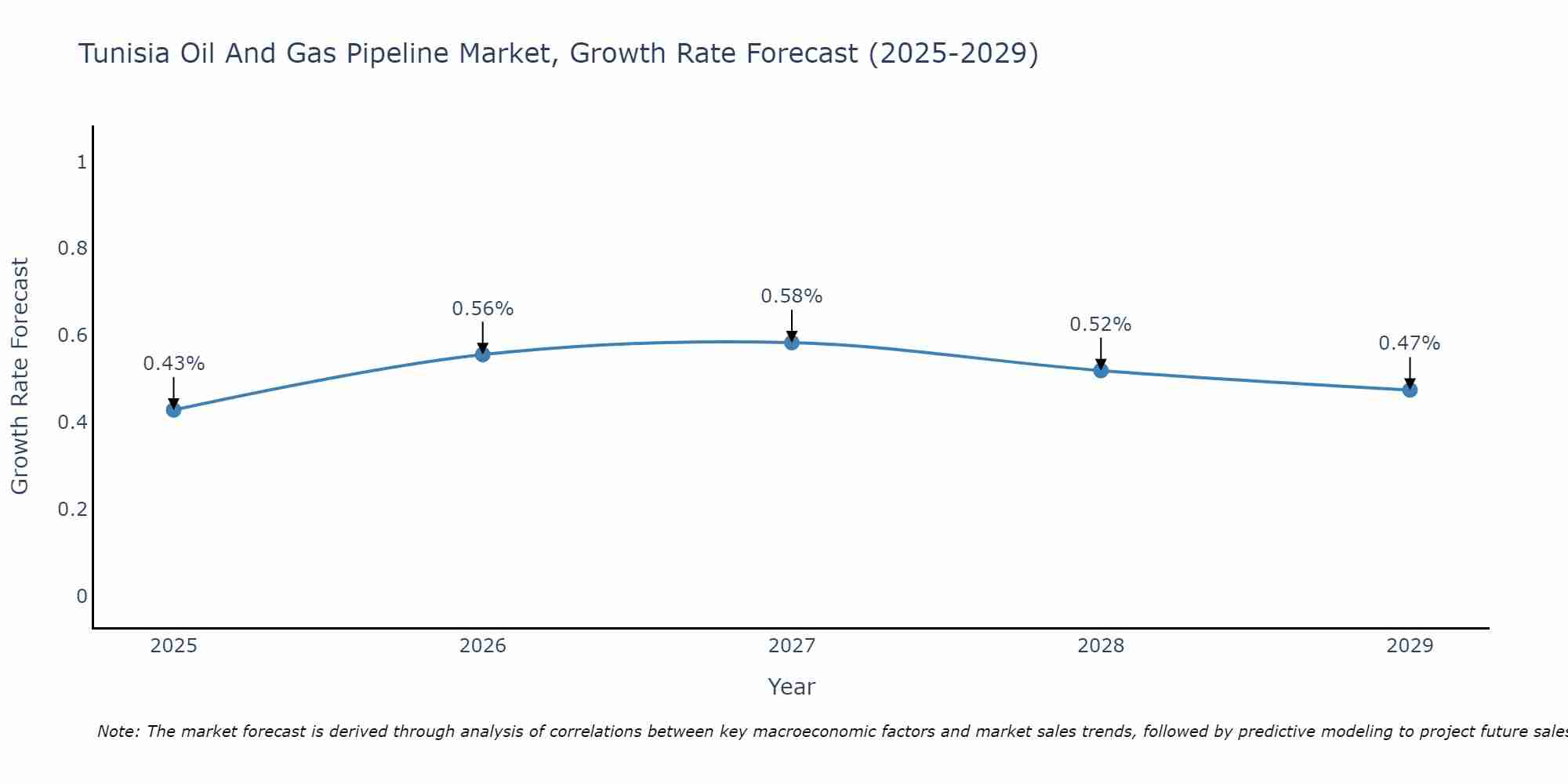
The Tunisia Oil And Gas Pipeline Market is projected to witness mixed growth rate patterns during 2025 to 2029. Growth accelerates to 0.58% in 2027, following an initial rate of 0.43%, before easing to 0.47% at the end of the period.
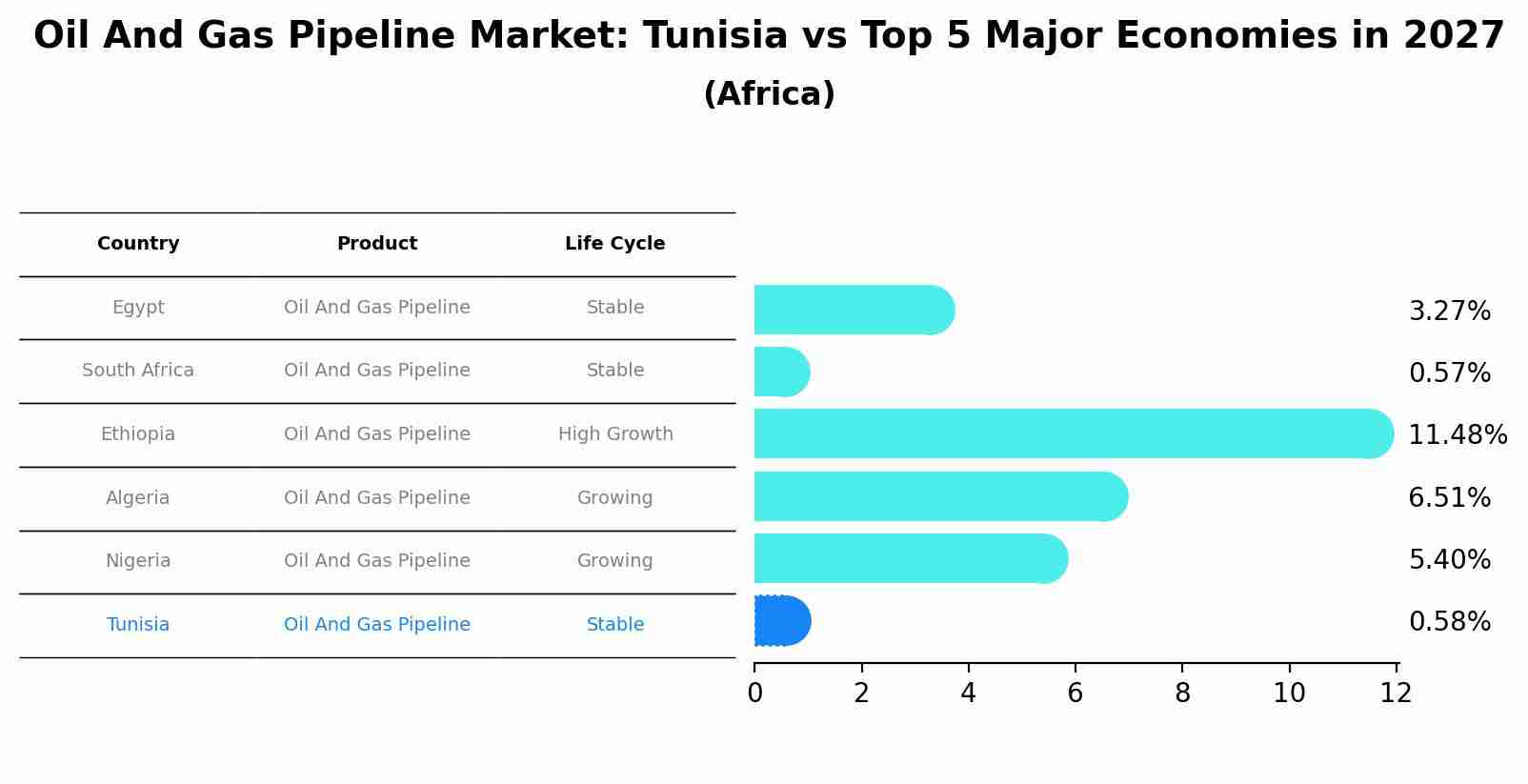
Oil And Gas Pipeline Market: Tunisia vs Top 5 Major Economies in 2027 (Africa)
By 2027, Tunisia's Oil And Gas Pipeline market is forecasted to achieve a stable growth rate of 0.58%, with Egypt leading the Africa region, followed by South Africa, Ethiopia, Algeria and Nigeria.
Tunisia Oil And Gas Pipeline Market Synopsis
The Tunisia Oil and Gas Pipeline Market is characterized by a network of pipelines that transport crude oil and natural gas across the country. The market is primarily driven by the increasing demand for energy resources, both domestically and for export. The pipeline infrastructure in Tunisia is essential for the transportation of oil and gas from production facilities to refineries, distribution points, and export terminals. The country has been investing in pipeline projects to enhance its energy infrastructure and ensure efficient transportation of resources. However, challenges such as aging infrastructure, political instability, and regulatory hurdles pose constraints to market growth. Overall, the Tunisia Oil and Gas Pipeline Market is crucial for the country`s energy supply chain and plays a significant role in supporting its economy.
Tunisia Oil And Gas Pipeline Market Trends
In the Tunisia Oil and Gas Pipeline Market, one of the current trends is the increasing focus on expanding and upgrading the existing pipeline infrastructure to meet the growing demand for energy transportation. The government`s initiatives to attract foreign investments in the sector, coupled with partnerships between international and local companies, are driving the development of new pipeline projects. Additionally, there is a growing emphasis on incorporating advanced technologies such as pipeline monitoring systems and automation to enhance efficiency, safety, and environmental sustainability in the transportation of oil and gas. With Tunisia strategically positioned as a gateway between Europe and North Africa, there is an opportunity for further growth and collaboration in the oil and gas pipeline market to support the region`s energy needs.
Tunisia Oil And Gas Pipeline Market Challenges
In the Tunisia Oil and Gas Pipeline Market, challenges often include political instability, security concerns, and regulatory uncertainties. The region`s geopolitical landscape can be volatile, leading to potential disruption of pipeline operations and investment risks. Additionally, the presence of terrorist threats and social unrest can further hinder the development and maintenance of oil and gas infrastructure. Regulatory frameworks in Tunisia may sometimes be unclear or subject to changes, creating uncertainties for market participants. These challenges can impact the overall efficiency and reliability of the oil and gas pipeline network in Tunisia, requiring companies to carefully assess risks and implement robust risk management strategies to navigate the market successfully.
Tunisia Oil And Gas Pipeline Market Investment Opportunities
The Tunisia oil and gas pipeline market presents promising investment opportunities due to the country`s strategic location as a transit route for energy resources between Europe and North Africa. With Tunisia having a well-established infrastructure for oil and gas transportation, there is potential for growth and expansion in pipeline projects to meet the increasing demand for energy. Investors can consider opportunities in pipeline construction, maintenance services, and technology solutions to enhance efficiency and capacity. Additionally, with Tunisia`s government actively promoting foreign investment in the energy sector and favorable regulatory frameworks in place, the market offers a conducive environment for investors looking to capitalize on the country`s position as a key player in the regional energy market.
Jordan Agar Market Government Policies
Government policies related to the Tunisia Oil and Gas Pipeline Market focus on promoting investment in the energy sector, ensuring energy security, and enhancing infrastructure development. The Tunisian government has implemented reforms to attract foreign investment in the oil and gas industry, including offering incentives such as tax breaks and favorable regulatory frameworks. Additionally, there are regulations in place to ensure the safety and environmental sustainability of pipeline operations. The government also aims to diversify its energy sources and reduce reliance on imports through the development of domestic oil and gas resources. Overall, Tunisia`s policies aim to create a stable and conducive environment for the growth of the oil and gas pipeline market while ensuring sustainable energy practices.
Tunisia Oil And Gas Pipeline Market Future Outlook
The future outlook for the Tunisia Oil and Gas Pipeline Market appears promising with a positive growth trajectory anticipated in the coming years. This growth can be attributed to increasing investments in the country`s oil and gas sector, as well as government initiatives to enhance energy infrastructure. Furthermore, Tunisia`s strategic location as a gateway between Europe and Africa positions it as a key player in the regional energy market. The development of new pipeline projects and upgrades to existing infrastructure are expected to drive market expansion and create opportunities for industry players. However, challenges such as regulatory uncertainties and geopolitical risks may impact the market`s growth potential and require careful navigation by stakeholders in the sector.
Key Highlights of the Report:
- Tunisia Oil And Gas Pipeline Market Outlook
- Market Size of Tunisia Oil And Gas Pipeline Market, 2024
- Forecast of Tunisia Oil And Gas Pipeline Market, 2031
- Historical Data and Forecast of Tunisia Oil And Gas Pipeline Revenues & Volume for the Period 2021 - 2031
- Tunisia Oil And Gas Pipeline Market Trend Evolution
- Tunisia Oil And Gas Pipeline Market Drivers and Challenges
- Tunisia Oil And Gas Pipeline Price Trends
- Tunisia Oil And Gas Pipeline Porter's Five Forces
- Tunisia Oil And Gas Pipeline Industry Life Cycle
- Historical Data and Forecast of Tunisia Oil And Gas Pipeline Market Revenues & Volume By Location of Deployment for the Period 2021 - 2031
- Historical Data and Forecast of Tunisia Oil And Gas Pipeline Market Revenues & Volume By Onshore for the Period 2021 - 2031
- Historical Data and Forecast of Tunisia Oil And Gas Pipeline Market Revenues & Volume By Offshore for the Period 2021 - 2031
- Historical Data and Forecast of Tunisia Oil And Gas Pipeline Market Revenues & Volume By Type for the Period 2021 - 2031
- Historical Data and Forecast of Tunisia Oil And Gas Pipeline Market Revenues & Volume By Crude Oil Pipeline for the Period 2021 - 2031
- Historical Data and Forecast of Tunisia Oil And Gas Pipeline Market Revenues & Volume By Gas Pipeline for the Period 2021 - 2031
- Tunisia Oil And Gas Pipeline Import Export Trade Statistics
- Market Opportunity Assessment By Location of Deployment
- Market Opportunity Assessment By Type
- Tunisia Oil And Gas Pipeline Top Companies Market Share
- Tunisia Oil And Gas Pipeline Competitive Benchmarking By Technical and Operational Parameters
- Tunisia Oil And Gas Pipeline Company Profiles
- Tunisia Oil And Gas Pipeline Key Strategic Recommendations






































