Tunisia Prefabricated Building Market Size Growth Rate
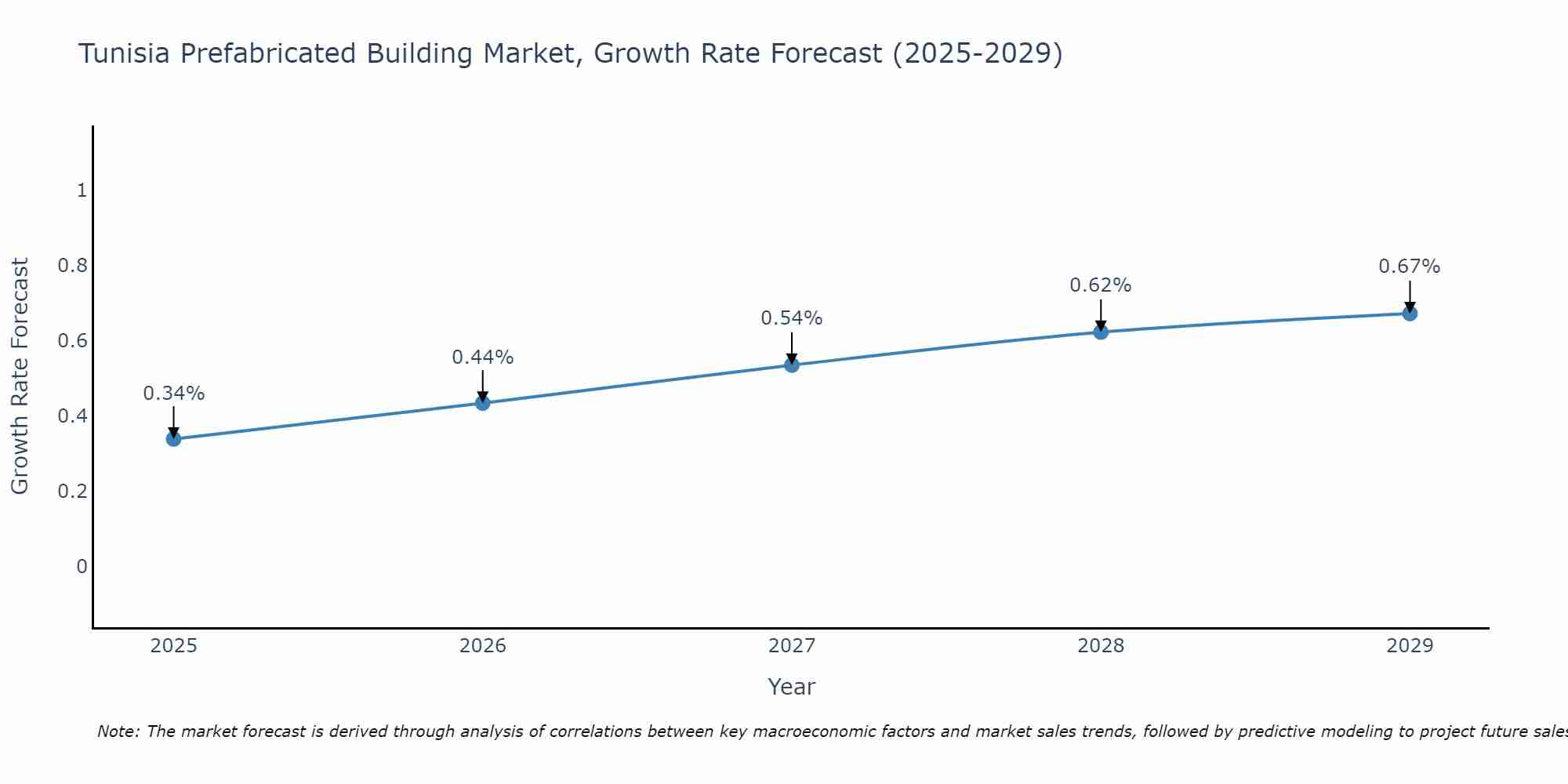
The Tunisia Prefabricated Building Market is poised for steady growth rate improvements from 2025 to 2029. From 0.34% in 2025, the growth rate steadily ascends to 0.67% in 2029.
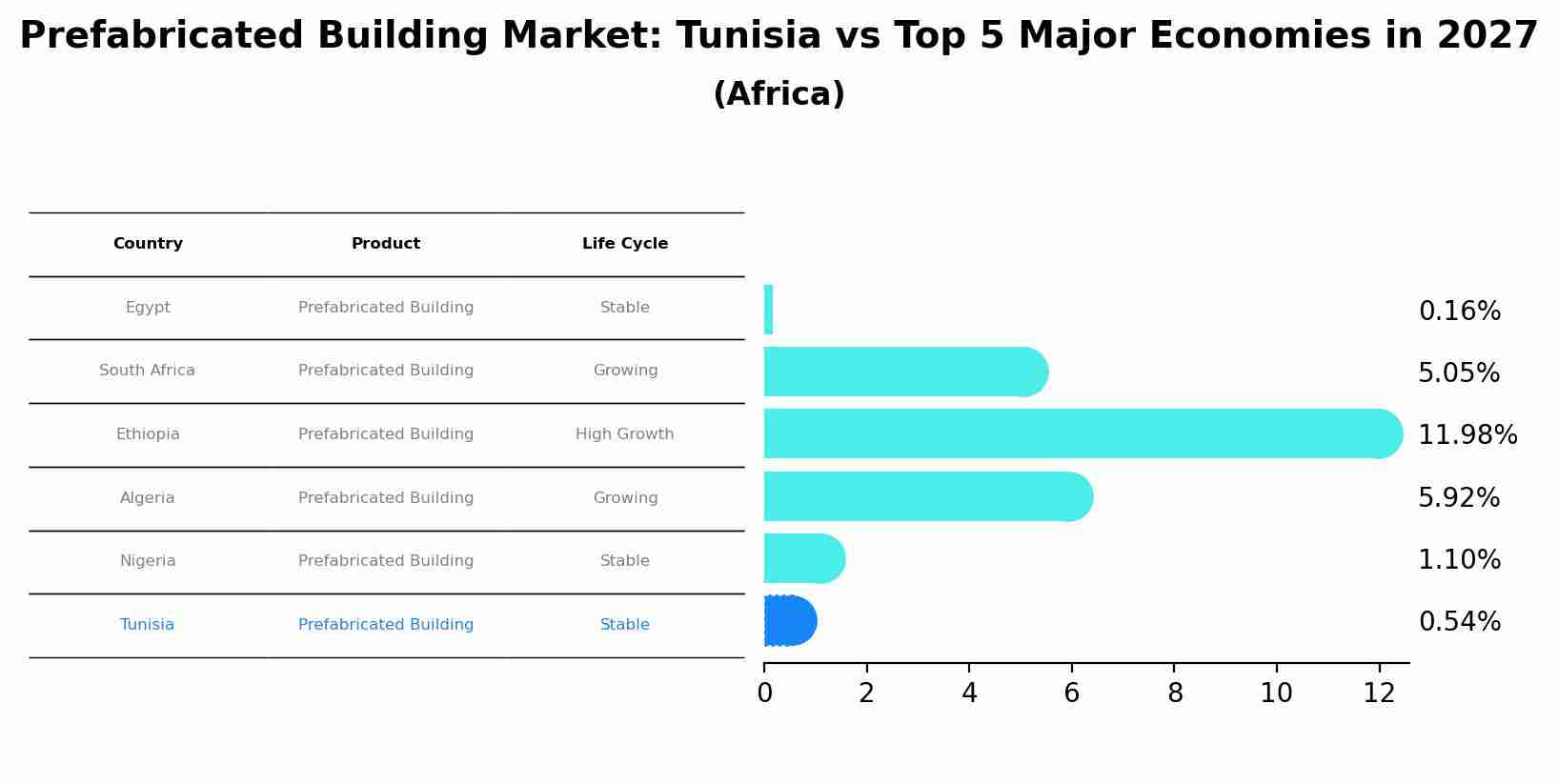
Prefabricated Building Market: Tunisia vs Top 5 Major Economies in 2027 (Africa)
Tunisia's Prefabricated Building market is anticipated to experience a stable growth rate of 0.54% by 2027, reflecting trends observed in the largest economy Egypt, followed by South Africa, Ethiopia, Algeria and Nigeria.
Tunisia Prefabricated Building Market Overview
The Tunisia Prefabricated Building Market is experiencing steady growth driven by factors such as rapid urbanization, population growth, and government initiatives to promote affordable housing solutions. Prefabricated buildings offer advantages in terms of cost-effectiveness, faster construction timelines, and sustainability. The market is seeing increasing demand across residential, commercial, and industrial sectors, with a trend towards modular construction methods. Key players in the market include local and international companies offering a range of prefabricated building solutions. The government`s support for sustainable development and infrastructure projects further boosts the market potential. Overall, the Tunisia Prefabricated Building Market presents opportunities for growth and innovation in the construction industry.
Tunisia Prefabricated Building Market Trends
The Tunisia Prefabricated Building Market is experiencing growth due to increasing urbanization, population growth, and the need for cost-effective and sustainable construction solutions. The market is seeing a rise in demand for prefabricated buildings in various sectors such as residential, commercial, and industrial, driven by the advantages of faster construction timelines, reduced labor costs, and minimal waste generation. Innovative prefabricated technologies, such as modular construction and 3D printing, are gaining traction in the market, offering flexibility and customization options to meet specific project requirements. Additionally, the government`s focus on infrastructure development and affordable housing initiatives is further fueling the adoption of prefabricated buildings in Tunisia. Overall, the market is poised for continued growth as the construction industry seeks efficient and eco-friendly building solutions.
Tunisia Prefabricated Building Market Challenges
In the Tunisia Prefabricated Building Market, several challenges are faced, including limited awareness and understanding of prefabricated construction methods among consumers and industry professionals, leading to slower adoption rates compared to traditional construction methods. Additionally, there is a lack of standardized regulations and codes specific to prefabricated buildings in Tunisia, which can create uncertainty and hinder the growth of the market. Infrastructure constraints, such as limited access to transportation and logistics services, also pose challenges for prefabricated building manufacturers in terms of timely delivery and cost-effectiveness. Furthermore, the perception of prefabricated buildings as lower quality or less durable than traditional construction methods may deter potential customers from choosing this innovative approach, highlighting the need for education and awareness campaigns to overcome these misconceptions and drive market acceptance.
Tunisia Prefabricated Building Market Investment Opportunities
In the Tunisia Prefabricated Building Market, several investment opportunities exist due to the increasing demand for quick and cost-effective construction solutions. Investors can consider opportunities in manufacturing prefabricated building components such as walls, floors, and roofs, as well as fully integrated modular construction solutions. Additionally, there is potential for investment in technology and innovation to improve the efficiency and sustainability of prefabricated building processes. With the government of Tunisia actively promoting the use of prefabricated construction methods to address housing shortages and infrastructure development, investing in this market can offer long-term growth potential and a chance to contribute to the country`s economic development. It is essential for investors to conduct thorough market research, assess the regulatory environment, and seek partnerships with local stakeholders to capitalize on the opportunities in the Tunisia Prefabricated Building Market.
Tunisia Prefabricated Building Market Government Policy
The Tunisian government has implemented various policies to support the growth of the Prefabricated Building Market. These include initiatives to promote sustainable construction practices, increase foreign investment in the sector, and provide incentives for companies to adopt prefabricated building techniques. Additionally, the government has focused on streamlining the regulatory framework to facilitate the permitting and licensing process for prefabricated construction projects. Overall, these policies aim to drive innovation, improve efficiency, and address housing shortages in Tunisia through the adoption of prefabricated building solutions.
Tunisia Prefabricated Building Market Future Outlook
The Tunisia prefabricated building market is expected to experience steady growth in the coming years due to increasing urbanization, population growth, and the government`s focus on infrastructure development. The demand for affordable and sustainable housing solutions, coupled with the benefits of faster construction times and cost-efficiency offered by prefabricated buildings, will drive the market expansion. Additionally, the rising awareness of environmental concerns and the need for energy-efficient construction practices will further boost the adoption of prefabricated buildings in Tunisia. As the construction industry continues to evolve and embrace modern building techniques, the prefabricated building market in Tunisia is poised for significant growth and opportunities for both domestic and international players.
Key Highlights of the Report:
- Tunisia Prefabricated Building Market Outlook
- Market Size of Tunisia Prefabricated Building Market, 2021
- Forecast of Tunisia Prefabricated Building Market, 2031
- Historical Data and Forecast of Tunisia Prefabricated Building Revenues & Volume for the Period 2018 - 2031
- Tunisia Prefabricated Building Market Trend Evolution
- Tunisia Prefabricated Building Market Drivers and Challenges
- Tunisia Prefabricated Building Price Trends
- Tunisia Prefabricated Building Porter's Five Forces
- Tunisia Prefabricated Building Industry Life Cycle
- Historical Data and Forecast of Tunisia Prefabricated Building Market Revenues & Volume By Dimensions for the Period 2018 - 2031
- Historical Data and Forecast of Tunisia Prefabricated Building Market Revenues & Volume By Skeleton System for the Period 2018 - 2031
- Historical Data and Forecast of Tunisia Prefabricated Building Market Revenues & Volume By Panel System for the Period 2018 - 2031
- Historical Data and Forecast of Tunisia Prefabricated Building Market Revenues & Volume By Cellular System for the Period 2018 - 2031
- Historical Data and Forecast of Tunisia Prefabricated Building Market Revenues & Volume By Combined System for the Period 2018 - 2031
- Historical Data and Forecast of Tunisia Prefabricated Building Market Revenues & Volume By Application for the Period 2018 - 2031
- Historical Data and Forecast of Tunisia Prefabricated Building Market Revenues & Volume By Residential for the Period 2018 - 2031
- Historical Data and Forecast of Tunisia Prefabricated Building Market Revenues & Volume By Non-Residential for the Period 2018 - 2031
- Tunisia Prefabricated Building Import Export Trade Statistics
- Market Opportunity Assessment By Dimensions
- Market Opportunity Assessment By Application
- Tunisia Prefabricated Building Top Companies Market Share
- Tunisia Prefabricated Building Competitive Benchmarking By Technical and Operational Parameters
- Tunisia Prefabricated Building Company Profiles
- Tunisia Prefabricated Building Key Strategic Recommendations






































