Tunisia Printing and Writing Paper Market Summary
The tunisia printing and writing paper market was estimated at USD 336 Million in 2025 and is projected to reach USD 457 Million by 2032, growing at a CAGR of 5.1% from 2026 to 2032.
Tunisia Printing and Writing Paper Market Year-wise Growth Rate and Key Drivers
This graph highlights how the Tunisia Printing and Writing Paper Market has steadily grown over the past five years, supported by major growth factors.
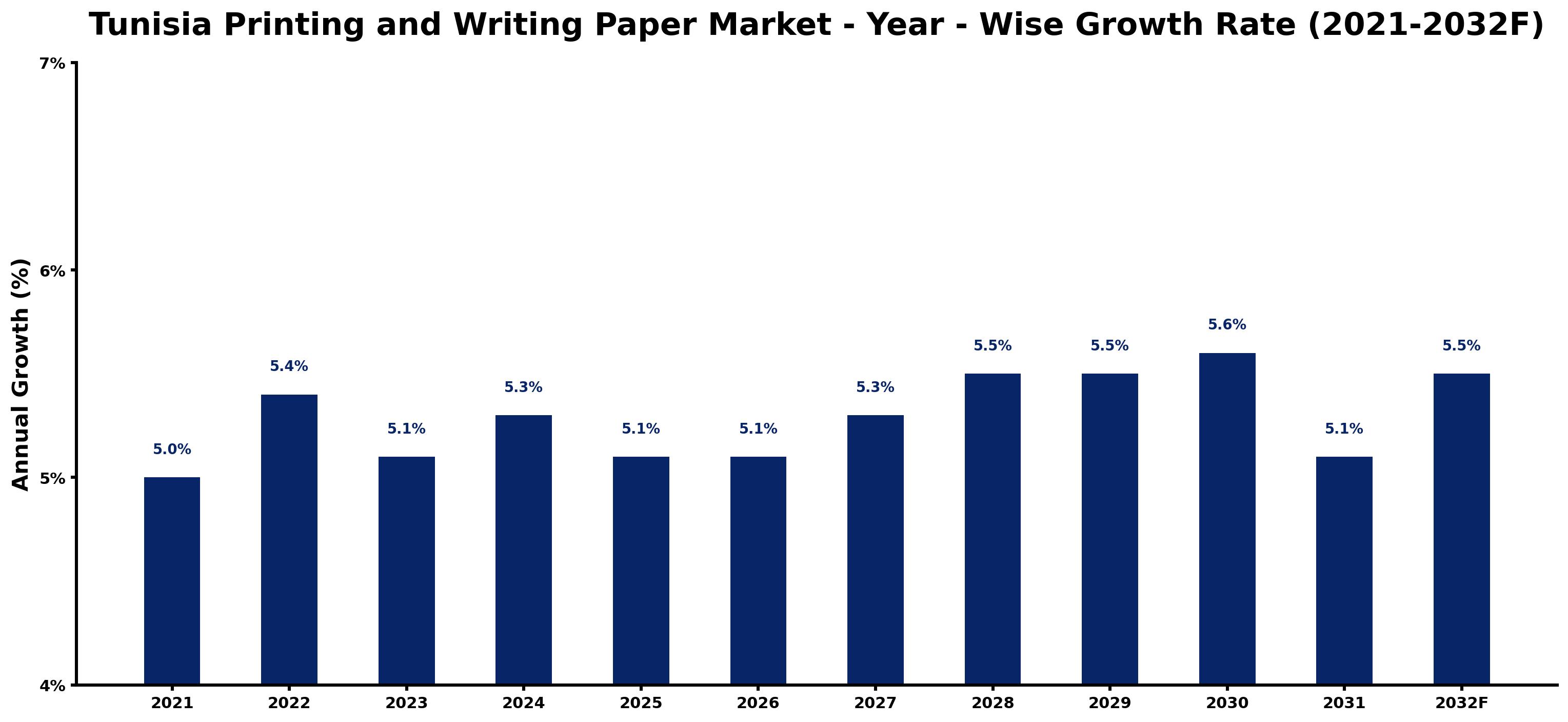
The table below presents the year wise growth rates along with the key drivers influencing the market
| Year | Growth Rate | Major Drivers |
| 2021 | 5.0% | Post-pandemic recovery sparked heightened interest in local printing capabilities and innovation. |
| 2022 | 5.4% | An increase in educational institutions expanded the need for writing paper materials. |
| 2023 | 5.1% | Digital transformation initiatives encouraged hybrid models, impacting traditional paper usage trends. |
| 2024 | 5.3% | Sustainability awareness prompted a shift towards eco-friendly paper production processes. |
| 2025 | 5.1% | Emerging local businesses prioritized printed marketing materials to establish brand identity. |
| 2026 | 5.1% | Technological advancements in printing equipment enhanced production efficiency and reduced costs. |
| 2027 | 5.3% | Regional trade agreements fostered partnerships boosting paper supply chain resilience and collaboration. |
| 2028 | 5.5% | Consumer preferences shifted towards high-quality paper for premium stationery and packaging. |
| 2029 | 5.5% | Cultural events and festivals increased demand for personalized printed materials across Tunisia. |
| 2030 | 5.6% | A rise in e-commerce activities necessitated expanded packaging and labeling requirements. |
| 2031 | 5.1% | Investments in education and training improved workforce skills in the printing sector. |
| 2032 | 5.5% | Market competition encouraged innovation, driving new product offerings in the paper sector. |
Note - Market size estimations and growth projections presented in this report are based on 6Wresearch's advanced forecasting approach, validated with industry datasets as of June 2026.
Tunisia Printing and Writing Paper Market Synopsis
The Tunisia Printing and Writing Paper Market is projected to reach 5.1% and witness significant growth during the forecast period (2026-2032). This market is witnessing a transition influenced by evolving consumer preferences that prioritize sustainability and eco-friendly paper products. The demand for printing and writing paper is largely driven by educational institutions, offices, and the publishing sector, all of which are seeking higher-quality materials that align with modern environmental standards.
Tunisia Printing and Writing Paper Market Growth Drivers
The growth of the Tunisia printing and writing paper market is attributed to several key factors:
- Economic expansion in Tunisia has led to increased literacy rates and educational enrollment, thereby boosting the demand for various types of paper products among schools and universities.
- The corporate sector's growth is fueling demand for office supplies, including printing paper, as companies expand their operations and invest in documentation for business activities.
- Innovation in paper production is enhancing product quality, with advancements in recyclability and compatibility with digital printing, appealing to environmentally conscious consumers.
- The publishing industry remains a traditional yet significant consumer of printing paper, as physical books and magazines continue to hold value in a digital age.
- Growing awareness about environmental sustainability is pushing both consumers and producers towards eco-friendly alternatives, hence catalyzing innovation in the market.
Tunisia Printing and Writing Paper Market Challenges and Restraints
Despite the positive growth outlook, the Tunisia printing and writing paper market faces several challenges:
- The digital transformation across sectors is leading to decreased demand for traditional printing and writing papers, compelling manufacturers to adapt to a more digital-oriented ecosystem.
- Sustainability concerns are driving the need for recycled paper, but there are challenges related to the availability and processing of high-quality recycled materials.
- The cost of sustainably sourced raw materials may pose a financial strain on producers, impacting their pricing strategies and market competitiveness.
- Government regulations promoting eco-friendly practices may require substantial investments in technology and processes, which can be a barrier for some businesses.
- Rapid changes in consumer preferences and the need for constant innovation can strain existing production capabilities and stability in the market.
Tunisia Printing and Writing Paper Market Government Investment and Initiatives
The Tunisian government plays a pivotal role in shaping the landscape of the printing and writing paper market through various policies and initiatives:
- Regulatory frameworks encourage sustainable forestry practices, ensuring that the sources of paper production are environmentally friendly and legally compliant.
- Incentives such as tax breaks are extended to businesses adopting eco-friendly technologies and practices, promoting a shift towards sustainable manufacturing.
- Government programs aim to increase recycling rates of paper products, thereby minimizing waste and fostering a circular economy in the paper sector.
- Public investment in education and literacy initiatives supports the demand for writing and printing papers as schools and institutions expand their resources.
- Collaboration with international organizations is fostering best practices and innovations in production, contributing to the development of a competitive market landscape.
Tunisia Printing and Writing Paper Market Latest Developments (May 2025 - June 2026)
Recent developments in the Tunisia printing and writing paper market have indicated a strategic shift towards sustainability and digital solutions. Industry stakeholders are increasingly focusing on developing paper products that not only meet consumer expectations for quality but also address environmental concerns. As businesses adapt to the digital landscape, there is a notable rise in the integration of digital printing technologies aimed at enhancing efficiency and reducing operational costs. Furthermore, collaborations with environmental organizations have intensified, with an emphasis on promoting recycling and eco-friendly practices across the sector. This trend reflects a broader commitment to aligning market offerings with sustainable principles and consumer demands.
Tunisia Printing and Writing Paper Market - Key Attractiveness of the Report
- 10 Years of Market Numbers
- Historical Data Starting from 2022 to 2025
- Base Year: 2025
- Forecast Data until 2032
- Key Performance Indicators Impacting the Market
- Major Upcoming Developments and Projects
Key Highlights of the Report:
- Tunisia Printing and Writing Paper Market Outlook
- Market Size of Tunisia Printing and Writing Paper Market, 2025
- Forecast of Tunisia Printing and Writing Paper Market, 2032
- Historical Data and Forecast of Tunisia Printing and Writing Paper Revenues & Volume for the Period 2022-2032F
- Tunisia Printing and Writing Paper Market Trend Evolution
- Tunisia Printing and Writing Paper Market Drivers and Challenges
- Tunisia Printing and Writing Paper Price Trends
- Tunisia Printing and Writing Paper Porter's Five Forces
- Tunisia Printing and Writing Paper Industry Life Cycle
- Historical Data and Forecast of Tunisia Printing and Writing Paper Market Revenues & Volume By Types for the Period 2022-2032F
- Historical Data and Forecast of Tunisia Printing and Writing Paper Market Revenues & Volume By Writing Paper for the Period 2022-2032F
- Historical Data and Forecast of Tunisia Printing and Writing Paper Market Revenues & Volume By Printing Paper for the Period 2022-2032F
- Historical Data and Forecast of Tunisia Printing and Writing Paper Market Revenues & Volume By Applications for the Period 2022-2032F
- Historical Data and Forecast of Tunisia Printing and Writing Paper Market Revenues & Volume By Academics for the Period 2022-2032F
- Historical Data and Forecast of Tunisia Printing and Writing Paper Market Revenues & Volume By Corporate for the Period 2022-2032F
- Historical Data and Forecast of Tunisia Printing and Writing Paper Market Revenues & Volume By Others for the Period 2022-2032F
- Historical Data and Forecast of Tunisia Printing and Writing Paper Market Revenues & Volume By Distribution Channel for the Period 2022-2032F
- Historical Data and Forecast of Tunisia Printing and Writing Paper Market Revenues & Volume By Offline for the Period 2022-2032F
- Historical Data and Forecast of Tunisia Printing and Writing Paper Market Revenues & Volume By Online for the Period 2022-2032F
- Tunisia Printing and Writing Paper Import Export Trade Statistics
- Market Opportunity Assessment By Types
- Market Opportunity Assessment By Applications
- Market Opportunity Assessment By Distribution Channel
- Tunisia Printing and Writing Paper Top Companies Market Share
- Tunisia Printing and Writing Paper Competitive Benchmarking By Technical and Operational Parameters
- Tunisia Printing and Writing Paper Company Profiles
- Tunisia Printing and Writing Paper Key Strategic Recommendations






































