Tunisia Two Wheeler Market Summary
The tunisia two wheeler market was estimated at USD 382 Million in 2025 and is projected to reach USD 507 Million by 2032, growing at a CAGR of 5.0% from 2026 to 2032.
Tunisia Two Wheeler Market Year-wise Growth Rate and Key Drivers
This graph highlights how the Tunisia Two Wheeler Market has steadily grown over the past five years, supported by major growth factors.
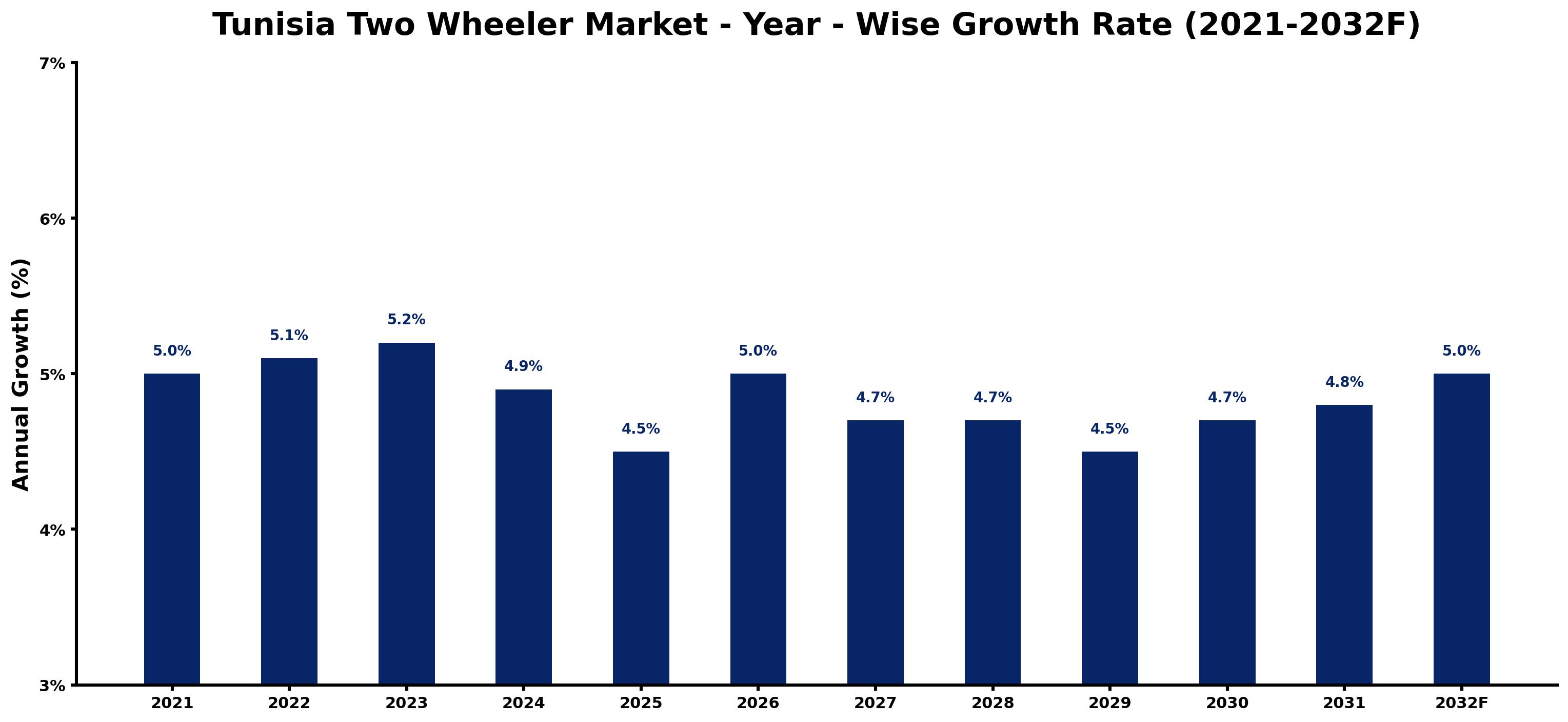
The table below presents the year wise growth rates along with the key drivers influencing the market
| Year | Growth Rate | Major Drivers |
| 2021 | 5.0% | Local manufacturers began investing heavily to meet the urban mobility demand. |
| 2022 | 5.1% | Emerging youth culture embraced two-wheelers as a symbol of independence and affordability. |
| 2023 | 5.2% | Post-pandemic lifestyle changes shifted preference towards personal transportation over public options. |
| 2024 | 4.9% | Urban infrastructures, such as dedicated bike lanes, gained momentum in major cities. |
| 2025 | 4.5% | Youth unemployment prompted many to consider two-wheelers for delivering goods and services. |
| 2026 | 5.0% | Rising fuel prices pushed consumers to seek cost-effective transportation alternatives. |
| 2027 | 4.7% | Electric two-wheelers entered the market, appealing to eco-conscious consumers in Tunisia. |
| 2028 | 4.7% | Improved financing options emerged, making two-wheelers accessible to more households. |
| 2029 | 4.5% | Rural areas began seeing enhanced connectivity, increasing demand for versatile two-wheelers. |
| 2030 | 4.7% | Tourism initiatives highlighted the convenience of two-wheelers for exploring local attractions. |
| 2031 | 4.8% | Community-based sharing programs emerged, promoting sustainable and economical mobility solutions. |
| 2032 | 5.0% | Technological advancements streamlined maintenance, enhancing consumer confidence in two-wheeler ownership. |
Note - Market size estimations and growth projections presented in this report are based on 6Wresearch's advanced forecasting approach, validated with industry datasets as of June 2026.
Tunisia Two Wheeler Market Synopsis
The Tunisia Two Wheeler Market is projected to reach 5.0% and witness significant growth during the forecast period (2026-2032). This market is anticipated to expand at a compound annual growth rate (CAGR) of 4.6%, driven by several key factors that are shaping the industry landscape. The increasing popularity of electric and hybrid two-wheelers among consumers is notable, as environmental consciousness rises and the push for sustainable transportation solutions grows. Additionally, the rise in disposable incomes across the country is enabling more individuals to consider two-wheelers as a practical mode of transportation.
Tunisia Two Wheeler Market Growth Drivers
Several fundamental drivers are propelling the growth of the Tunisia Two Wheeler Market. Firstly, the shift towards electric and hybrid vehicles is gaining momentum, with consumers showing a preference for environmentally friendly options. Secondly, governmental policies aimed at promoting green transportation are positively influencing market trends. Thirdly, the impact of the COVID-19 pandemic has resulted in an increased demand for personal transportation, as individuals seek to avoid crowded public transport options. Furthermore, the growing urban population is fostering higher vehicle ownership rates, as two-wheelers offer a flexible solution for navigating densely populated areas. Lastly, the rise in disposable income levels is allowing more consumers to invest in two-wheelers as a viable means of personal transport.
Tunisia Two Wheeler Market Trends and Opportunities
The Tunisia Two Wheeler Market is experiencing several significant trends that present new opportunities for growth. The advent of smart technologies, such as connected vehicles, is attracting tech-savvy consumers looking for enhanced functionalities. Additionally, there is a gradual increase in the production of affordable electric scooters, aimed at meeting the needs of budget-conscious buyers. The two-wheeler financing options being introduced by financial institutions also facilitate ownership for a broader segment of the population. Moreover, as urban areas continue to expand, there is a growing emphasis on safety features in two-wheelers, which aligns with consumer demands for secure transportation options. These trends collectively create a fertile ground for investment and innovation in the market.
Tunisia Two Wheeler Market Challenges and Restraints
While the Tunisia Two Wheeler Market holds substantial growth potential, it also faces certain challenges and restraints. One significant issue is the lack of adequate infrastructure, particularly in terms of safe driving conditions and parking facilities for two-wheelers. Additionally, fluctuating fuel prices present an ongoing concern, possibly impacting the affordability and attractiveness of traditional fuel-based two-wheelers. Furthermore, the market must contend with regulatory hurdles that can affect the introduction of new vehicles and technologies. The increasing competition from alternative modes of transportation, such as ride-sharing services, may also hinder the growth of two-wheeler popularity. Lastly, economic fluctuations could deter potential consumers from making significant investments in two-wheelers.
Tunisia Two Wheeler Market Government Investment and Initiatives
The Tunisian government has recognized the importance of the two-wheeler sector and is implementing various initiatives to stimulate growth. Public policies are increasingly focused on encouraging the adoption of electric mobility, which includes outlining incentives for purchases of electric two-wheelers. Development plans are being designed to enhance the road infrastructure, making it more accommodating for two-wheeler users. Furthermore, government spending is directed towards awareness campaigns that promote the benefits of two-wheelers as a sustainable form of transportation. These initiatives are integral to fostering a favorable environment for the Tunisia Two Wheeler Market and supporting its anticipated growth.
Tunisia Two Wheeler Market Latest Developments (May 2025 - June 2026)
In the period from May 2025 to June 2026, the Tunisia Two Wheeler Market has witnessed several pivotal developments that have influenced its trajectory. The market has seen increased investments aimed at enhancing production capabilities, particularly for electric two-wheelers. Collaboration between local manufacturers and international companies has also gained prominence, focusing on technology transfer and skill development. Additionally, advancements in battery technology have contributed to the improved range and affordability of electric models, making them more appealing to consumers. The emphasis on safety regulations has led to the enhancement of safety features in newly launched models, which aligns with consumer demand. Moreover, marketing strategies have increasingly focused on educating consumers about the benefits of two-wheelers, further solidifying market growth.
Tunisia Two Wheeler Market - Key Attractiveness of the Report
- 10 Years of Market Numbers
- Historical Data Starting from 2022 to 2025
- Base Year: 2025
- Forecast Data until 2032
- Key Performance Indicators Impacting the Market
- Major Upcoming Developments and Projects
Key Highlights of the Report:
- Tunisia Two Wheeler Market Outlook
- Market Size of Tunisia Two Wheeler Market, 2025
- Forecast of Tunisia Two Wheeler Market, 2032F
- Historical Data and Forecast of Tunisia Two Wheeler Revenues & Volume for the Period 2022-2032F
- Tunisia Two Wheeler Market Trend Evolution
- Tunisia Two Wheeler Market Drivers and Challenges
- Tunisia Two Wheeler Price Trends
- Tunisia Two Wheeler Porter's Five Forces
- Tunisia Two Wheeler Industry Life Cycle
- Historical Data and Forecast of Tunisia Two Wheeler Market Revenues & Volume By Vehicle Type for the Period 2022-2032F
- Historical Data and Forecast of Tunisia Two Wheeler Market Revenues & Volume By Motorcycle for the Period 2022-2032F
- Historical Data and Forecast of Tunisia Two Wheeler Market Revenues & Volume By Scooter/Moped for the Period 2022-2032F
- Historical Data and Forecast of Tunisia Two Wheeler Market Revenues & Volume By Engine Capacity for the Period 2022-2032F
- Historical Data and Forecast of Tunisia Two Wheeler Market Revenues & Volume By Up to 125cc for the Period 2022-2032F
- Historical Data and Forecast of Tunisia Two Wheeler Market Revenues & Volume By 126-250cc for the Period 2022-2032F
- Historical Data and Forecast of Tunisia Two Wheeler Market Revenues & Volume By 251-500cc for the Period 2022-2032F
- Historical Data and Forecast of Tunisia Two Wheeler Market Revenues & Volume By Above 500cc for the Period 2022-2032F
- Tunisia Two Wheeler Import Export Trade Statistics
- Market Opportunity Assessment By Vehicle Type
- Market Opportunity Assessment By Engine Capacity
- Tunisia Two Wheeler Top Companies Market Share
- Tunisia Two Wheeler Competitive Benchmarking By Technical and Operational Parameters
- Tunisia Two Wheeler Company Profiles
- Tunisia Two Wheeler Key Strategic Recommendations






































