Turkey Data Center Transformation Market Size & Growth Rate (2026-2032)
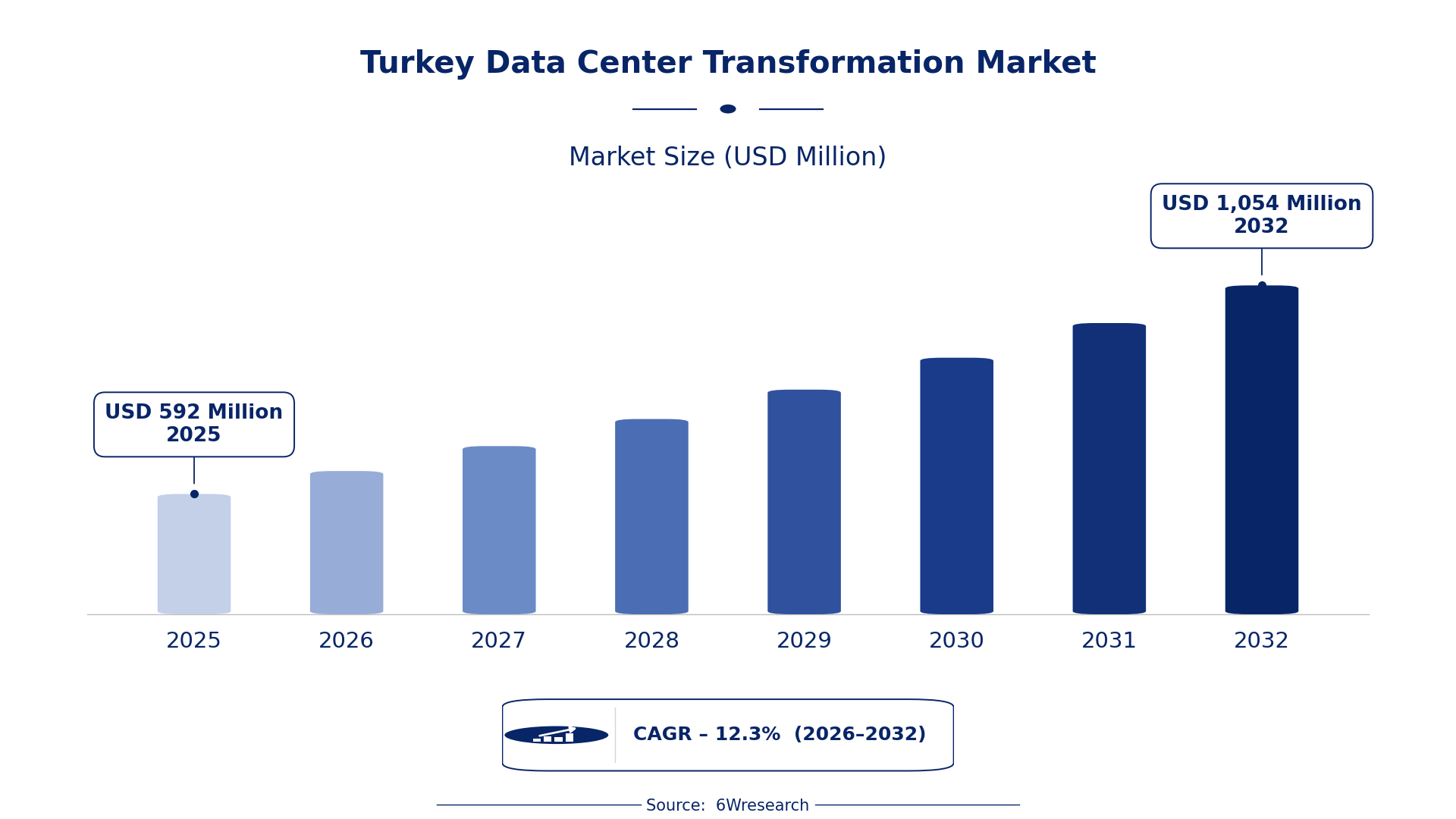
The Turkey Data Center Transformation Market was estimated at USD 592 Million in 2025 and is projected to reach USD 1054 Million by 2032, growing at a CAGR of 12.3% from 2026 to 2032.
Turkey Data Center Transformation Market Synopsis
As Turkish enterprises increasingly recognize the necessity for modernization, the data center transformation market is becoming a focal point for IT strategy. The migration to cloud environments and the adoption of hybrid IT frameworks are not just trends; they are crucial steps for businesses aiming to enhance operational efficiency and drive digital innovation.
These transformations are spurred by the demand for agility and cost optimization. Companies are investing heavily in technologies like virtualization and software-defined architectures, laying the groundwork for scalable, efficient, and future-ready data center operations.
Turkey Data Center Transformation Market Year-wise Growth Rate and Key Drivers
This graph illustrates the annual growth rates of the Turkey Data Center Transformation Market from 2021 to 2032, highlighting a steady upward trajectory and projected expansion over the forecast period.
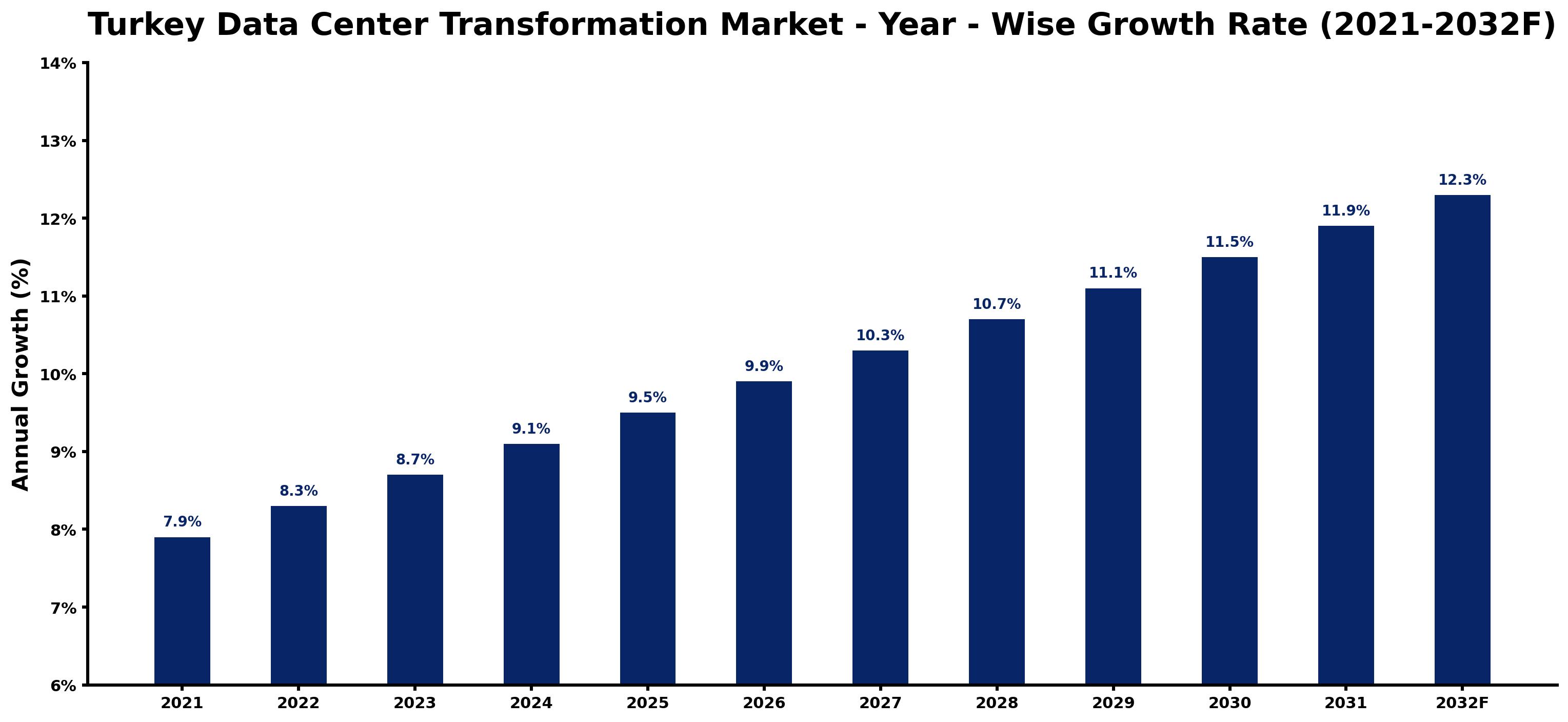
The table below presents the year‑wise growth rates along with the key drivers influencing the market
| Year | Growth Rate | Major Drivers |
| 2021 | 7.9% | Increased local cloud service adoption demands more capacity. |
| 2022 | 8.3% | Turkey's growing e-commerce sector boosts data storage requirements. |
| 2023 | 8.7% | Investment in smart city projects increases data management needs. |
| 2024 | 9.1% | Regulatory changes favoring data sovereignty drive local infrastructure. |
| 2025 | 9.5% | Emergence of fintech apps increases transactional data handling. |
| 2026 | 9.9% | Local enterprises shifting to hybrid cloud solutions spur expansion. |
| 2027 | 10.3% | Government incentives for tech startups heighten data center demand. |
| 2028 | 10.7% | Rising cybersecurity threats increase investment in modern data facilities. |
| 2029 | 11.1% | Technological advancements in AI require enhanced data processing capabilities. |
| 2030 | 11.5% | Growing interest in edge computing drives localized data centers. |
| 2031 | 11.9% | Surge in online education initiatives demands robust data infrastructure. |
| 2032 | 12.3% | Increased remote work trends elevate demand for data solutions. |
Note: Market size estimations and growth projections presented in this report are based on 6Wresearch's proprietary forecasting methodology, utilizing the latest available industry data, government publications, and primary research inputs.
Turkey Data Center Transformation Market Key Takeaways
Below are some of the specific key takeaways from the market, including:
- Modernization of legacy infrastructures is driving demand for transformation services.
- Cloud integration and hybrid IT strategies are essential for operational agility.
- Regulatory compliance and data privacy are influencing investment decisions.
- Energy-efficient designs are becoming a priority for new data centers.
- IT automation and data migration services are key growth drivers.
Evaluation of Restraints in Turkey Data Center Transformation Market
Despite the promising outlook, the Turkey Data Center Transformation Market faces genuine hurdles. Legacy system modernization remains a significant challenge, as many enterprises struggle to align their existing infrastructure with new technologies. Additionally, careful planning for cloud migration is essential; the complexities involved can lead to delays and added costs if not managed properly. Companies must also ensure that their transformation strategies are closely aligned with broader business objectives, which often requires a cultural shift within organizations. This alignment is crucial for optimizing resource utilization and truly accelerating innovation.
Turkey Data Center Transformation Market Trends
Several key trends are currently shaping the Turkey Data Center Transformation Market. The shift towards cloud computing continues to dominate, with businesses increasingly favoring hybrid solutions that balance on-premises and cloud environments. Automation technologies are gaining traction, enabling organizations to streamline operations and reduce manual workloads. Additionally, the focus on sustainability is driving the adoption of green technologies in data centers, pushing firms to invest in energy-efficient designs and practices.
Finally, the rise of data privacy regulations is compelling companies to adopt more stringent security measures in their data management processes, further elevating the importance of transformation services.
Turkey Data Center Transformation Market Opportunities
The market presents a wealth of opportunities for growth, particularly for organizations ready to embrace innovation. Companies investing in advanced automation tools stand to gain a competitive edge through improved efficiency. Additionally, there's a growing market for consulting services that help enterprises navigate their digital transformation journeys effectively. The increasing demand for hybrid IT solutions also offers a ripe opportunity for service providers to deliver tailored solutions that meet specific business needs. Finally, as sustainability becomes a priority, investments in energy-efficient data center technologies will likely yield significant returns.
Government Initiatives in the Turkey Data Center Transformation Market
Government policies are significantly influencing the Turkey Data Center Transformation Market by fostering a regulatory environment that encourages modernization and innovation. Initiatives aimed at supporting data center consolidation and cloud migration are pivotal, as they align with national goals for digital transformation. As Turkey focuses on enhancing its IT infrastructure, these policies will play a crucial role in shaping market dynamics.
- A national digital infrastructure upgrade programme launched in 2023 aims to enhance data center capabilities across the country.
- Currently, an initiative is underway to establish regulatory frameworks that mandate data privacy compliance for data centers.
- A planned public-private partnership expected to promote energy-efficient designs in data centers is set to begin in 2025.
- A recent initiative encourages businesses to adopt cloud technologies through tax incentives for investments in digital transformation.
Future Insights of the Turkey Data Center Transformation Market
Looking ahead, the Turkey Data Center Transformation Market is expected to flourish as organizations increasingly invest in modernizing their infrastructures. By 2032, we can anticipate a marked shift toward fully integrated hybrid IT environments, driven by the need for greater flexibility and efficiency. The demand for sustainable practices will also shape investment decisions, compelling companies to rethink their operational strategies. As regulatory pressures mount, firms that prioritize compliance and data security will likely emerge as market leaders.
Turkey Data Center Transformation Market Latest Developments
In the past year, the Turkey Data Center Transformation Market has experienced notable activity, with a surge in investments directed towards modernization initiatives. Enterprises are increasingly focusing on integrating advanced technologies into their operations to stay competitive in a rapidly changing environment. This momentum is reflected in various developments across the sector.
- A major technology vendor announced a new cloud migration service in early 2025, aimed at easing the transition for businesses upgrading their data centers.
- A leading regional operator has been enhancing its data center facilities since mid-2025 to incorporate energy-efficient technologies.
- An initiative launched in Q3 2025 focuses on providing training programs for IT staff to better manage hybrid cloud environments.
- A planned rollout of a cutting-edge data center management platform is expected to begin in late 2026, targeting operational efficiency improvements.
Turkey Data Center Transformation Market - Key Attractiveness of the Report
- 10 Years of Market Numbers
- Historical Data Starting from 2022 to 2025
- Base Year: 2025
- Forecast Data until 2032
- Key Performance Indicators Impacting the Market
- Major Upcoming Developments and Projects
Key Highlights of the Report:
- Turkey Data Center Transformation Market Outlook
- Market Size of Turkey Data Center Transformation Market, 2025
- Forecast of Turkey Data Center Transformation Market, 2032
- Historical Data and Forecast of Turkey Data Center Transformation Revenues & Volume for the Period 2022-2032F
- Turkey Data Center Transformation Market Trend Evolution
- Turkey Data Center Transformation Market Drivers and Challenges
- Turkey Data Center Transformation Price Trends
- Turkey Data Center Transformation Porter's Five Forces
- Turkey Data Center Transformation Industry Life Cycle
- Historical Data and Forecast of Turkey Data Center Transformation Market Revenues & Volume By Service Type for the Period 2022-2032F
- Historical Data and Forecast of Turkey Data Center Transformation Market Revenues & Volume By Consolidation services for the Period 2022-2032F
- Historical Data and Forecast of Turkey Data Center Transformation Market Revenues & Volume By Optimization services for the Period 2022-2032F
- Historical Data and Forecast of Turkey Data Center Transformation Market Revenues & Volume By Automation services for the Period 2022-2032F
- Historical Data and Forecast of Turkey Data Center Transformation Market Revenues & Volume By Infrastructure management services for the Period 2022-2032F
- Historical Data and Forecast of Turkey Data Center Transformation Market Revenues & Volume By Tier Type for the Period 2022-2032F
- Historical Data and Forecast of Turkey Data Center Transformation Market Revenues & Volume By Tier 1 for the Period 2022-2032F
- Historical Data and Forecast of Turkey Data Center Transformation Market Revenues & Volume By Tier 2 for the Period 2022-2032F
- Historical Data and Forecast of Turkey Data Center Transformation Market Revenues & Volume By Tier 3 for the Period 2022-2032F
- Historical Data and Forecast of Turkey Data Center Transformation Market Revenues & Volume By Tier 4 for the Period 2022-2032F
- Historical Data and Forecast of Turkey Data Center Transformation Market Revenues & Volume By End User for the Period 2022-2032F
- Historical Data and Forecast of Turkey Data Center Transformation Market Revenues & Volume By Cloud Service Providers for the Period 2022-2032F
- Historical Data and Forecast of Turkey Data Center Transformation Market Revenues & Volume By Colocation Providers for the Period 2022-2032F
- Historical Data and Forecast of Turkey Data Center Transformation Market Revenues & Volume By Enterprises for the Period 2022-2032F
- Historical Data and Forecast of Turkey Data Center Transformation Market Revenues & Volume By Data Center Size for the Period 2022-2032F
- Historical Data and Forecast of Turkey Data Center Transformation Market Revenues & Volume By Small Data Centers for the Period 2022-2032F
- Historical Data and Forecast of Turkey Data Center Transformation Market Revenues & Volume By Medium-sized Data Centers for the Period 2022-2032F
- Historical Data and Forecast of Turkey Data Center Transformation Market Revenues & Volume By Large Data Centers for the Period 2022-2032F
- Historical Data and Forecast of Turkey Data Center Transformation Market Revenues & Volume By Vertical for the Period 2022-2032F
- Historical Data and Forecast of Turkey Data Center Transformation Market Revenues & Volume By BFSI for the Period 2022-2032F
- Historical Data and Forecast of Turkey Data Center Transformation Market Revenues & Volume By IT and Telecom for the Period 2022-2032F
- Historical Data and Forecast of Turkey Data Center Transformation Market Revenues & Volume By Government and Defense for the Period 2022-2032F
- Historical Data and Forecast of Turkey Data Center Transformation Market Revenues & Volume By Healthcare for the Period 2022-2032F
- Historical Data and Forecast of Turkey Data Center Transformation Market Revenues & Volume By Transportation for the Period 2022-2032F
- Historical Data and Forecast of Turkey Data Center Transformation Market Revenues & Volume By Retail for the Period 2022-2032F
- Historical Data and Forecast of Turkey Data Center Transformation Market Revenues & Volume By Energy for the Period 2022-2032F
- Historical Data and Forecast of Turkey Data Center Transformation Market Revenues & Volume By Manufacturing for the Period 2022-2032F
- Turkey Data Center Transformation Import Export Trade Statistics
- Market Opportunity Assessment By Service Type
- Market Opportunity Assessment By Tier Type
- Market Opportunity Assessment By End User
- Market Opportunity Assessment By Data Center Size
- Market Opportunity Assessment By Vertical
- Turkey Data Center Transformation Top Companies Market Share
- Turkey Data Center Transformation Competitive Benchmarking By Technical and Operational Parameters
- Turkey Data Center Transformation Company Profiles
- Turkey Data Center Transformation Key Strategic Recommendations






































