Turkey Security Analytics Market Size & Growth Rate (2026-2032)
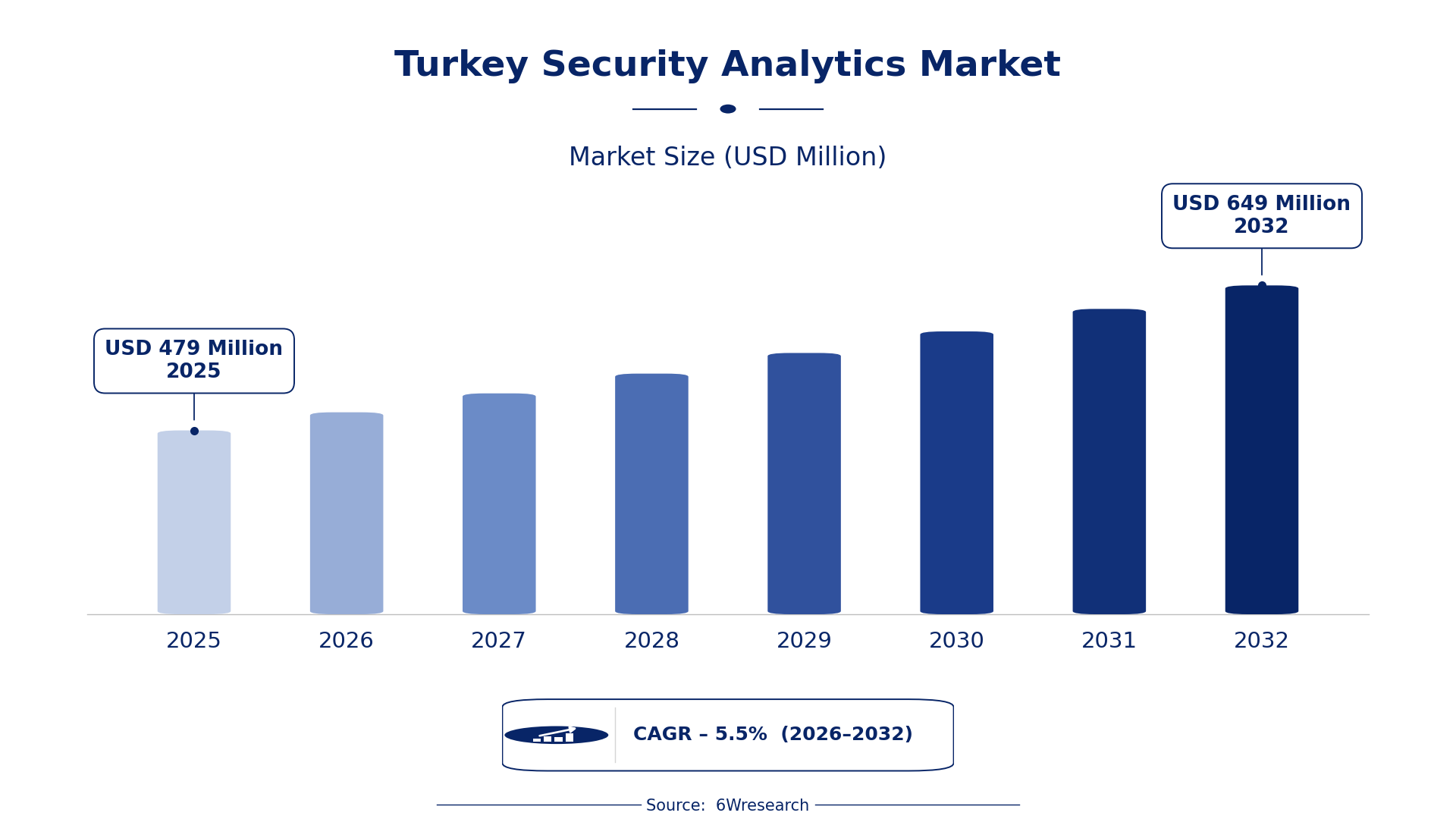
The Turkey Security Analytics Market was estimated at USD 479 Million in 2025 and is projected to reach USD 649 Million by 2032, growing at a CAGR of 5.5% from 2026 to 2032.
Turkey Security Analytics Market Synopsis
The Turkey Security Analytics Market is gaining momentum, driven by a rising demand for effective threat detection and risk management solutions. As businesses in various sectors recognize the critical need to protect sensitive information, the adoption of advanced analytics tools is increasingly prioritized.
Organizations spanning banking, government, healthcare, and IT services are harnessing the capabilities of security analytics to tackle the growing landscape of cyber threats. This shift is largely influenced by regulatory pressures and the imperative for compliance with data protection laws.
Turkey Security Analytics Market Year-wise Growth Rate and Key Drivers
This graph illustrates the annual growth rates of the Turkey Security Analytics Market from 2021 to 2032, highlighting a steady upward trajectory and projected expansion over the forecast period.
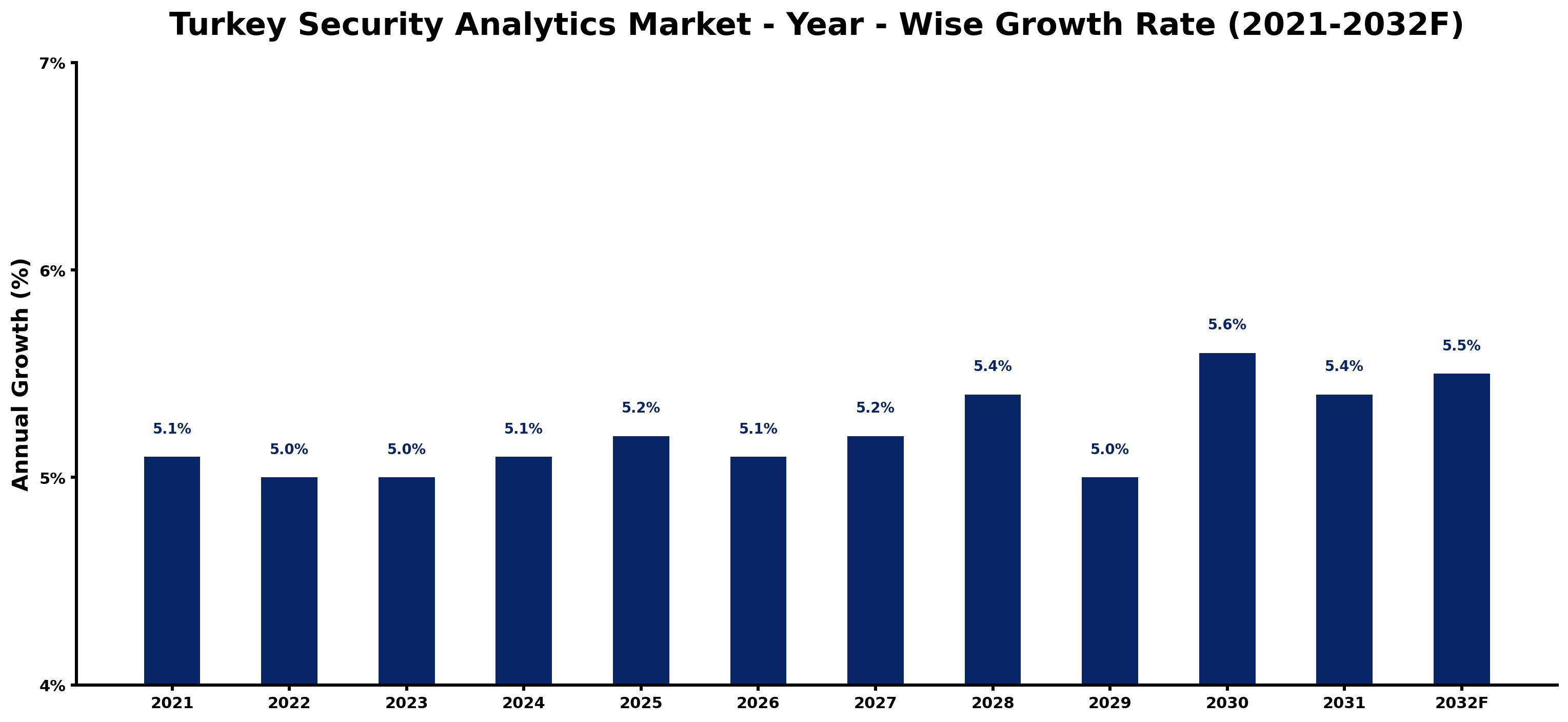
The table below presents the year‑wise growth rates along with the key drivers influencing the market
| Year | Growth Rate | Major Drivers |
| 2021 | 5.1% | Increased cyber threats drive demand for security analytics. |
| 2022 | 5.0% | New data protection regulations boost analytics adoption in Turkey. |
| 2023 | 5.0% | Government investment in digital infrastructure enhances security capabilities. |
| 2024 | 5.1% | Rise in IoT devices heightens need for cybersecurity solutions. |
| 2025 | 5.2% | Growing awareness of cyber risk among SMEs fuels growth. |
| 2026 | 5.1% | Increased demand for biometric security measures in finance sector. |
| 2027 | 5.2% | Regulatory compliance requirements spur market for security analytics. |
| 2028 | 5.4% | Investment in AI technologies enhances security system effectiveness. |
| 2029 | 5.0% | Integration of security analytics in mobile payment systems rises. |
| 2030 | 5.6% | Public sector initiatives enhance cybersecurity for national infrastructure. |
| 2031 | 5.4% | Demand for advanced threat intelligence services increases significantly. |
| 2032 | 5.5% | Rapid digital transformation drives need for comprehensive security analytics. |
Note: Market size estimations and growth projections presented in this report are based on 6Wresearch's proprietary forecasting methodology, utilizing the latest available industry data, government publications, and primary research inputs.
Turkey Security Analytics Market Key Takeaways
Below are some of the specific key takeaways from the market, including:
- The market is experiencing steady growth fueled by increasing sophistication in cyber threats.
- Investment in AI and machine learning technologies is elevating the effectiveness of security analytics solutions.
- Cloud-based solutions are becoming the preferred choice for many organizations due to their scalability.
- Behavioral analytics is gaining traction as firms address insider threats more proactively.
- Data protection regulations are driving compliance efforts, further propelling the market forward.
Evaluation of Restraints in Turkey Security Analytics Market
Despite its growth trajectory, the Turkey Security Analytics Market faces notable challenges that can stymie its progress. One of the foremost issues is the growing complexity of cyber threats, which outpace many organizations' ability to detect and respond swiftly. This is compounded by a shortage of skilled cybersecurity professionals, creating a gap in effective threat management.
Organizations often struggle to maintain compliance with stringent data protection regulations, which can lead to hesitancy in adopting innovative solutions. on top of that, the rapid pace of digital transformation creates a pressing need for continuous investment in advanced technologies, posing financial and operational burdens on businesses.
Turkey Security Analytics Market Trends
A few trends are clearly shaping the Turkey Security Analytics Market. The integration of artificial intelligence and machine learning in threat detection is becoming mainstream, enhancing the predictive capabilities of security measures. on top of that, organizations are now increasingly inclined to deploy cloud-based security analytics, offering greater flexibility and scalability compared to traditional on-premises solutions.
Additionally, there is a pronounced shift towards proactive risk management, focusing on insider threat detection and behavioral analytics. As the market matures, the emphasis on comprehensive threat intelligence platforms will likely intensify, reflecting the urgent need for sophisticated analytics solutions that align with evolving cyber risk landscapes.
Turkey Security Analytics Market Opportunities
The Turkey Security Analytics Market presents multiple avenues for investment, notably in the realms of threat intelligence and advanced analytics services. With rising cyber threats, businesses are increasingly prioritizing the enhancement of their security frameworks.
Investment in user and entity behavior analytics (UEBA) is one key area, as organizations seek real-time visibility into user activity and potential insider threats. on top of that, as firms strive for compliance with strict regulatory standards, demand for security information and event management (SIEM) systems will continue to grow, promising a lucrative market for providers of these technologies.
Government Initiatives in the Turkey Security Analytics Market
Government policy is playing a crucial role in shaping the trajectory of the Turkey Security Analytics Market. With a clear focus on enhancing national security measures, the Turkish government is actively promoting the integration of advanced technologies like AI and machine learning into security frameworks. These efforts aim to fortify the cybersecurity landscape while ensuring compliance with stringent data protection regulations.
- A national initiative launched in early 2024 aimed at bolstering cybersecurity infrastructure across key sectors, including finance and healthcare.
- Current efforts are underway to develop a cybersecurity task force tasked with improving public-private collaboration on security analytics strategies.
- A planned rollout of a nationwide cybersecurity awareness campaign is expected to begin in late 2025 to educate businesses on best practices.
- Ongoing projects focusing on the establishment of a regulatory framework to mandate cybersecurity standards in the private sector.
- Recently completed partnerships between government agencies and tech firms to accelerate the development of advanced threat detection systems.
Future Insights of the Turkey Security Analytics Market
Looking ahead to 2026-2032, the Turkey Security Analytics Market is set for considerable expansion. Organizations are likely to invest significantly in innovative security solutions that offer comprehensive protection against increasingly sophisticated threats. The urgency of real-time incident response capabilities will shape product offerings, driving demand for analytics that can swiftly adapt to changing attack vectors.
Regulatory compliance will remain a key driver, as companies aim to meet evolving legal standards while securing sensitive information. As technological advancements continue to emerge, the market will evolve, paving the way for the deployment of next-generation analytics solutions that are capable of addressing the multifaceted challenges facing cybersecurity today.
Turkey Security Analytics Market Latest Developments
In the last 12-14 months, the Turkey Security Analytics Market has witnessed a surge in activity, driven by both technological advancements and increasing awareness of cybersecurity threats. Organizations across various sectors are ramping up their investment in security analytics solutions, focusing on proactive measures to mitigate risks.
- A major technology vendor announced a new AI-driven security analytics tool aimed at mid-sized enterprises, launched in Q3 2025.
- In early 2025, a consortium of local tech firms initiated a project to develop an integrated security platform combining SIEM and UEBA functionalities, which is currently underway.
- A leading cybersecurity provider is planning a product launch of an advanced threat detection solution scheduled for late 2026, designed specifically for the healthcare sector.
- A partnership between a regional operator and a cybersecurity start-up was finalized in early 2025 to enhance their combined service offerings.
- A pilot program was completed in mid-2025, showcasing the effectiveness of cloud-based security analytics in various industries.
Turkey Security Analytics Market - Key Attractiveness of the Report
- 10 Years of Market Numbers
- Historical Data Starting from 2022 to 2025
- Base Year: 2025
- Forecast Data until 2032
- Key Performance Indicators Impacting the Market
- Major Upcoming Developments and Projects
Key Highlights of the Report:
- Turkey Security Analytics Market Outlook
- Market Size of Turkey Security Analytics Market, 2025
- Forecast of Turkey Security Analytics Market, 2032
- Historical Data and Forecast of Turkey Security Analytics Revenues & Volume for the Period 2022-2032F
- Turkey Security Analytics Market Trend Evolution
- Turkey Security Analytics Market Drivers and Challenges
- Turkey Security Analytics Price Trends
- Turkey Security Analytics Porter's Five Forces
- Turkey Security Analytics Industry Life Cycle
- Historical Data and Forecast of Turkey Security Analytics Market Revenues & Volume By Application for the Period 2022-2032F
- Historical Data and Forecast of Turkey Security Analytics Market Revenues & Volume By Web Security Analytics for the Period 2022-2032F
- Historical Data and Forecast of Turkey Security Analytics Market Revenues & Volume By Network Security Analytics for the Period 2022-2032F
- Historical Data and Forecast of Turkey Security Analytics Market Revenues & Volume By Endpoint SecurityAnalytics for the Period 2022-2032F
- Historical Data and Forecast of Turkey Security Analytics Market Revenues & Volume By Application Security Analytics for the Period 2022-2032F
- Historical Data and Forecast of Turkey Security Analytics Market Revenues & Volume By Others(Content Security, ICS Security, Database Security, Cloud Security) for the Period 2022-2032F
- Historical Data and Forecast of Turkey Security Analytics Market Revenues & Volume By Vertical for the Period 2022-2032F
- Historical Data and Forecast of Turkey Security Analytics Market Revenues & Volume By BFSI for the Period 2022-2032F
- Historical Data and Forecast of Turkey Security Analytics Market Revenues & Volume By Retail and eCommerce for the Period 2022-2032F
- Historical Data and Forecast of Turkey Security Analytics Market Revenues & Volume By Media and Entertainment for the Period 2022-2032F
- Historical Data and Forecast of Turkey Security Analytics Market Revenues & Volume By Travel and Hospitality for the Period 2022-2032F
- Historical Data and Forecast of Turkey Security Analytics Market Revenues & Volume By Telecom and IT for the Period 2022-2032F
- Historical Data and Forecast of Turkey Security Analytics Market Revenues & Volume By Healthcare for the Period 2022-2032F
- Historical Data and Forecast of Turkey Security Analytics Market Revenues & Volume By Others(automobile, government, and education) for the Period 2022-2032F
- Historical Data and Forecast of Turkey Security Analytics Market Revenues & Volume By Component for the Period 2022-2032F
- Historical Data and Forecast of Turkey Security Analytics Market Revenues & Volume By Platform for the Period 2022-2032F
- Historical Data and Forecast of Turkey Security Analytics Market Revenues & Volume By Services for the Period 2022-2032F
- Historical Data and Forecast of Turkey Security Analytics Market Revenues & Volume By Professional Services for the Period 2022-2032F
- Historical Data and Forecast of Turkey Security Analytics Market Revenues & Volume By Deployment Mode for the Period 2022-2032F
- Historical Data and Forecast of Turkey Security Analytics Market Revenues & Volume By Cloud for the Period 2022-2032F
- Historical Data and Forecast of Turkey Security Analytics Market Revenues & Volume By On-premises for the Period 2022-2032F
- Historical Data and Forecast of Turkey Security Analytics Market Revenues & Volume By Organization Size for the Period 2022-2032F
- Historical Data and Forecast of Turkey Security Analytics Market Revenues & Volume By Large enterprises for the Period 2022-2032F
- Historical Data and Forecast of Turkey Security Analytics Market Revenues & Volume By Small and medium-sized enterprises (SMEs) for the Period 2022-2032F
- Turkey Security Analytics Import Export Trade Statistics
- Market Opportunity Assessment By Application
- Market Opportunity Assessment By Vertical
- Market Opportunity Assessment By Component
- Market Opportunity Assessment By Deployment Mode
- Market Opportunity Assessment By Organization Size
- Turkey Security Analytics Top Companies Market Share
- Turkey Security Analytics Competitive Benchmarking By Technical and Operational Parameters
- Turkey Security Analytics Company Profiles
- Turkey Security Analytics Key Strategic Recommendations






































