United Arab Emirates Pet Food Market Size Growth Rate
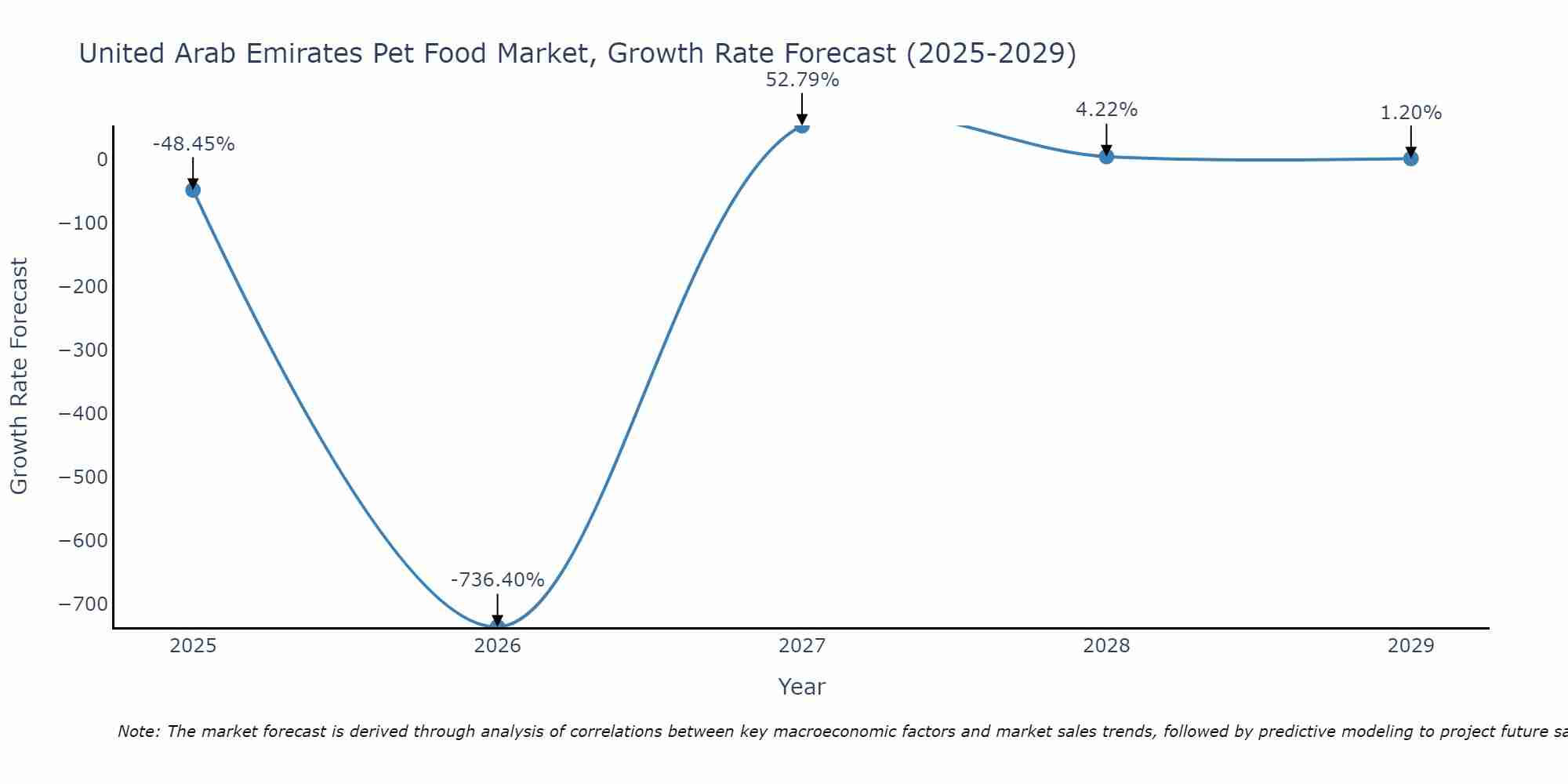
The United Arab Emirates Pet Food Market is projected to witness mixed growth rate patterns during 2025 to 2029. Starting at -48.45% in 2025, the market peaks at 52.79% in 2027, and settles at 1.20% by 2029.
United Arab Emirates (UAE) Pet Food Market Synopsis
The UAE pet food market is driven by a growing pet ownership culture, with pet owners seeking high-quality and nutritious options for their beloved animals. A variety of pet food brands and products are available to cater to the specific dietary needs of pets.
Drivers of the market
The UAE pet food market has witnessed remarkable growth, driven by a surge in pet ownership and an increasing focus on pet health and nutrition. Pet owners are increasingly seeking high-quality, specialized pet food products that cater to specific dietary needs and preferences. The market is also influenced by a burgeoning pet care industry, which includes grooming services, veterinary clinics, and pet-friendly amenities in residential communities.
Challenges of the market
The pet food market in the UAE caters to a discerning consumer base seeking high-quality and nutritionally balanced products for their pets. However, ensuring the safety and nutritional adequacy of pet food formulations is a paramount challenge. Adhering to stringent regulatory standards and conducting thorough quality testing are essential for market trust and sustainability.
Covid-19 Impact of the market
The pet food market in the UAE witnessed resilience as pet ownership increased during lockdowns. However, supply chain disruptions occasionally led to shortages of certain pet food products, prompting consumers to explore alternative options.
Key Players of the market
Mars Petcare and Royal Canin are prominent names in the UAE pet food industry, offering a wide range of pet nutrition products.
Key Highlights of the Report:
- United Arab Emirates (UAE) Pet Food Market Outlook
- Market Size of United Arab Emirates (UAE) Pet Food Market, 2024
- Forecast of United Arab Emirates (UAE) Pet Food Market, 2031
- Historical Data and Forecast of United Arab Emirates (UAE) Pet Food Revenues & Volume for the Period 2021-2031
- United Arab Emirates (UAE) Pet Food Market Trend Evolution
- United Arab Emirates (UAE) Pet Food Market Drivers and Challenges
- United Arab Emirates (UAE) Pet Food Price Trends
- United Arab Emirates (UAE) Pet Food Porter's Five Forces
- United Arab Emirates (UAE) Pet Food Industry Life Cycle
- Historical Data and Forecast of United Arab Emirates (UAE) Pet Food Market Revenues & Volume By Type for the Period 2021-2031
- Historical Data and Forecast of United Arab Emirates (UAE) Pet Food Market Revenues & Volume By Dry Food for the Period 2021-2031
- Historical Data and Forecast of United Arab Emirates (UAE) Pet Food Market Revenues & Volume By Wet Food for the Period 2021-2031
- Historical Data and Forecast of United Arab Emirates (UAE) Pet Food Market Revenues & Volume By Snacks/Treats for the Period 2021-2031
- Historical Data and Forecast of United Arab Emirates (UAE) Pet Food Market Revenues & Volume By Animal for the Period 2021-2031
- Historical Data and Forecast of United Arab Emirates (UAE) Pet Food Market Revenues & Volume By Dog for the Period 2021-2031
- Historical Data and Forecast of United Arab Emirates (UAE) Pet Food Market Revenues & Volume By Cat for the Period 2021-2031
- Historical Data and Forecast of United Arab Emirates (UAE) Pet Food Market Revenues & Volume By Others for the Period 2021-2031
- United Arab Emirates (UAE) Pet Food Import Export Trade Statistics
- Market Opportunity Assessment By Type
- Market Opportunity Assessment By Animal
- United Arab Emirates (UAE) Pet Food Top Companies Market Share
- United Arab Emirates (UAE) Pet Food Competitive Benchmarking By Technical and Operational Parameters
- United Arab Emirates (UAE) Pet Food Company Profiles
- United Arab Emirates (UAE) Pet Food Key Strategic Recommendations






































