United Kingdom (UK) Flower and Ornamental Plants Market Summary
The united kingdom (uk) flower and ornamental plants market was estimated at USD 324 Million in 2025 and is projected to reach USD 401 Million by 2032, growing at a CAGR of 2.2% from 2026 to 2032.
United Kingdom (UK) Flower and Ornamental Plants Market Year-wise Growth Rate and Key Drivers
This graph highlights how the United Kingdom (UK) Flower and Ornamental Plants Market has steadily grown over the past five years, supported by major growth factors.
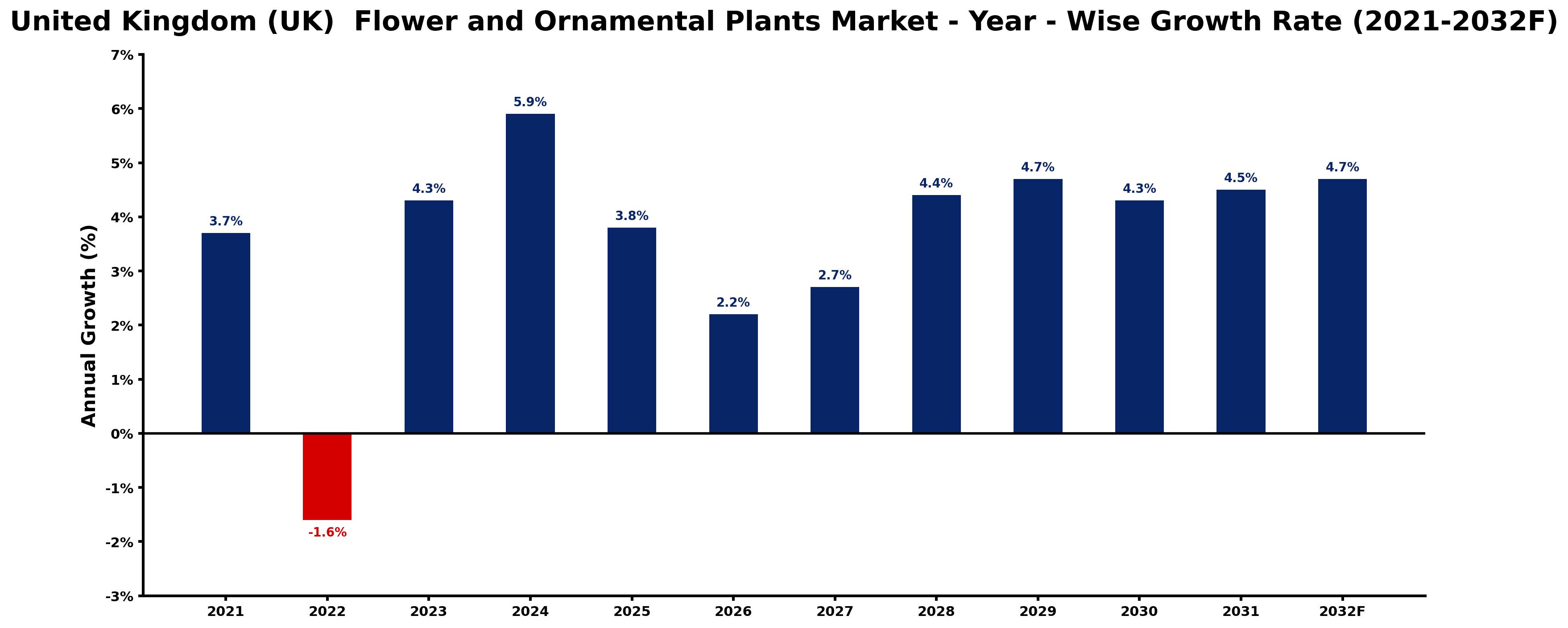
The table below presents the year wise growth rates along with the key drivers influencing the market
| Year | Growth Rate | Major Drivers |
| 2021 | 3.7% | Post-lockdown retail projects revitalized interest in indoor and outdoor gardening. |
| 2022 | -1.6% | Unseasonably adverse weather conditions significantly hampered outdoor planting, leading to reduced sales in floral markets. |
| 2023 | 4.3% | Sustainable practices gained traction, with more consumers seeking organic plant sources. |
| 2024 | 5.9% | Urban gardening trends emerged, reshaping demand for compact plant varieties and kits. |
| 2025 | 3.8% | Home improvement activities surged, driving sales of decorative plants and flowers. |
| 2026 | 2.2% | Wellness trends highlighted the psychological benefits of gardening, encouraging more participants. |
| 2027 | 2.7% | Floriculture education programs increased, fostering a new generation of skilled horticulturists. |
| 2028 | 4.4% | Health-conscious consumers shifted towards edible ornamental plants, merging aesthetics with utility. |
| 2029 | 4.7% | Innovative landscaping techniques became popular, promoting unique flower arrangements in urban spaces. |
| 2030 | 4.3% | Social media campaigns inspired plant enthusiasts to share creative floral displays widely. |
| 2031 | 4.5% | Climate-conscious botanicals gained popularity, with consumers favoring drought-resistant species. |
| 2032 | 4.7% | Global supply chain adjustments facilitated better access to exotic ornamental plant varieties. |
Note - Market size estimations and growth projections presented in this report are based on 6Wresearch's advanced forecasting approach, validated with industry datasets as of June 2026.
United Kingdom (UK) Flower and Ornamental Plants Market Synopsis
The United Kingdom (UK) Flower and Ornamental Plants Market is projected to reach 2.2% and witness significant growth during the forecast period (2026-2032). This growth is driven by several key factors, including the increasing demand for landscaping services, the rising interest in floriculture, and enhanced consumer awareness regarding health and wellness. Furthermore, changing lifestyles and rapid urbanization trends have led consumers to invest more in decorative plants for both indoor and outdoor spaces, thereby stimulating market growth.
United Kingdom (UK) Flower and Ornamental Plants Market Growth Drivers
The growth trajectory of the United Kingdom (UK) Flower and Ornamental Plants Market is supported by multifaceted dynamics. Major drivers include:
- The increase in landscaping projects is a significant factor driving demand. Homeowners and businesses are increasingly focusing on enhancing outdoor aesthetics, leading to heightened sales of ornamental plants.
- The floriculture sector continues to thrive, fueled by innovative flower arrangements and a growing preference for decorative plants in events and celebrations.
- Health awareness among consumers is prompting investments in indoor plants, as they are known to improve air quality and contribute to mental well-being.
- Urbanization has led to shrinking green spaces, which has, in turn, spurred demand for ornamental plants that can fit into smaller environments like apartments and urban gardens.
- Technological advancements in horticulture, including hydroponics and automated growing systems, are enhancing plant production efficiency and product quality.
United Kingdom (UK) Flower and Ornamental Plants Market Trends and Opportunities
As the United Kingdom (UK) Flower and Ornamental Plants Market evolves, several notable trends and opportunities are emerging:
- Sustainable practices are becoming increasingly popular, with consumers seeking plants that are cultivated using eco-friendly methods. This trend presents opportunities for businesses that prioritize sustainability.
- E-commerce platforms are gaining traction, allowing consumers to purchase plants online with ease. This shift towards digital shopping is reshaping how ornamental plants are marketed and sold.
- There is a growing interest in native and drought-resistant plant varieties, driven by environmental concerns and the need for water conservation in gardening.
- Collaborations between landscape architects and horticulturists are on the rise, fostering innovative designs that integrate ornamental plants into urban environments.
- The trend towards wellness gardening, which is centered on cultivating plants for personal enjoyment and wellness, is creating a niche market for ornamental plants.
United Kingdom (UK) Flower and Ornamental Plants Market Challenges and Restraints
Despite its growth potential, the United Kingdom (UK) Flower and Ornamental Plants Market faces several challenges:
- Fluctuating weather patterns can adversely affect plant growth and availability, impacting consumer purchasing decisions.
- The market is highly competitive, with numerous players vying for consumer attention, which can drive prices down and affect profitability.
- Imported plants may present a lower-cost alternative, creating pricing pressure on local growers.
- Disease outbreaks in plants can lead to supply chain disruptions and increased costs in pest management.
- Consumer education regarding plant care is crucial; a lack of knowledge can lead to high plant mortality rates, discouraging future purchases.
United Kingdom (UK) Flower and Ornamental Plants Market Government Investment and Initiatives
The United Kingdom government plays a pivotal role in supporting the Flower and Ornamental Plants Market through various policies and initiatives. Investments in agricultural infrastructure modernization are a top priority, aiming to enhance productivity and sustainability. Programs encouraging urban greening initiatives, such as community gardens and green rooftops, are also gaining traction, intending to improve urban biodiversity. Furthermore, public funding for research and development in sustainable horticulture practices is increasing, with a focus on innovations that minimize environmental impact. Government incentives aimed at promoting local growers over imported plants contribute to strengthening domestic production capabilities. Overall, these initiatives are designed to create a conducive environment for market growth.
United Kingdom (UK) Flower and Ornamental Plants Market Latest Developments (May 2025 - June 2026)
Recent developments within the United Kingdom (UK) Flower and Ornamental Plants Market reflect a period of dynamic changes and adaptations. There have been noticeable shifts towards online sales channels as retailers expand their digital footprint to cater to changing consumer behavior. Innovations in sustainable growing techniques have gained traction, with numerous producers adopting eco-friendly practices as a response to growing environmental awareness. Additionally, collaborative initiatives between public entities and horticultural organizations have emerged, focusing on educational programs that promote responsible gardening and plant care. These developments indicate a market that is not only responding to consumer preferences but also actively seeking to align with broader sustainability goals.
United Kingdom (UK) Flower and Ornamental Plants Market - Key Attractiveness of the Report
- 10 Years of Market Numbers
- Historical Data Starting from 2022 to 2025
- Base Year: 2025
- Forecast Data until 2032
- Key Performance Indicators Impacting the Market
- Major Upcoming Developments and Projects
Key Highlights of the Report:
- United Kingdom (UK) Flower and Ornamental Plants Market Outlook
- Market Size of United Kingdom (UK) Flower and Ornamental Plants Market, 2025
- Forecast of United Kingdom (UK) Flower and Ornamental Plants Market, 2032F
- Historical Data and Forecast of United Kingdom (UK) Flower and Ornamental Plants Revenues & Volume for the Period 2022-2032F
- United Kingdom (UK) Flower and Ornamental Plants Market Trend Evolution
- United Kingdom (UK) Flower and Ornamental Plants Market Drivers and Challenges
- United Kingdom (UK) Flower and Ornamental Plants Price Trends
- United Kingdom (UK) Flower and Ornamental Plants Porter's Five Forces
- United Kingdom (UK) Flower and Ornamental Plants Industry Life Cycle
- Historical Data and Forecast of United Kingdom (UK) Flower and Ornamental Plants Market Revenues & Volume By Product Type for the Period 2022-2032F
- Historical Data and Forecast of United Kingdom (UK) Flower and Ornamental Plants Market Revenues & Volume By Potted Plants for the Period 2022-2032F
- Historical Data and Forecast of United Kingdom (UK) Flower and Ornamental Plants Market Revenues & Volume By Cut Flowers for the Period 2022-2032F
- Historical Data and Forecast of United Kingdom (UK) Flower and Ornamental Plants Market Revenues & Volume By Application for the Period 2022-2032F
- Historical Data and Forecast of United Kingdom (UK) Flower and Ornamental Plants Market Revenues & Volume By Home for the Period 2022-2032F
- Historical Data and Forecast of United Kingdom (UK) Flower and Ornamental Plants Market Revenues & Volume By Commercial for the Period 2022-2032F
- United Kingdom (UK) Flower and Ornamental Plants Import Export Trade Statistics
- Market Opportunity Assessment By Product Type
- Market Opportunity Assessment By Application
- United Kingdom (UK) Flower and Ornamental Plants Top Companies Market Share
- United Kingdom (UK) Flower and Ornamental Plants Competitive Benchmarking By Technical and Operational Parameters
- United Kingdom (UK) Flower and Ornamental Plants Company Profiles
- United Kingdom (UK) Flower and Ornamental Plants Key Strategic Recommendations






































