United Kingdom (UK) Luxury Leather Goods Market: Import Trend Analysis
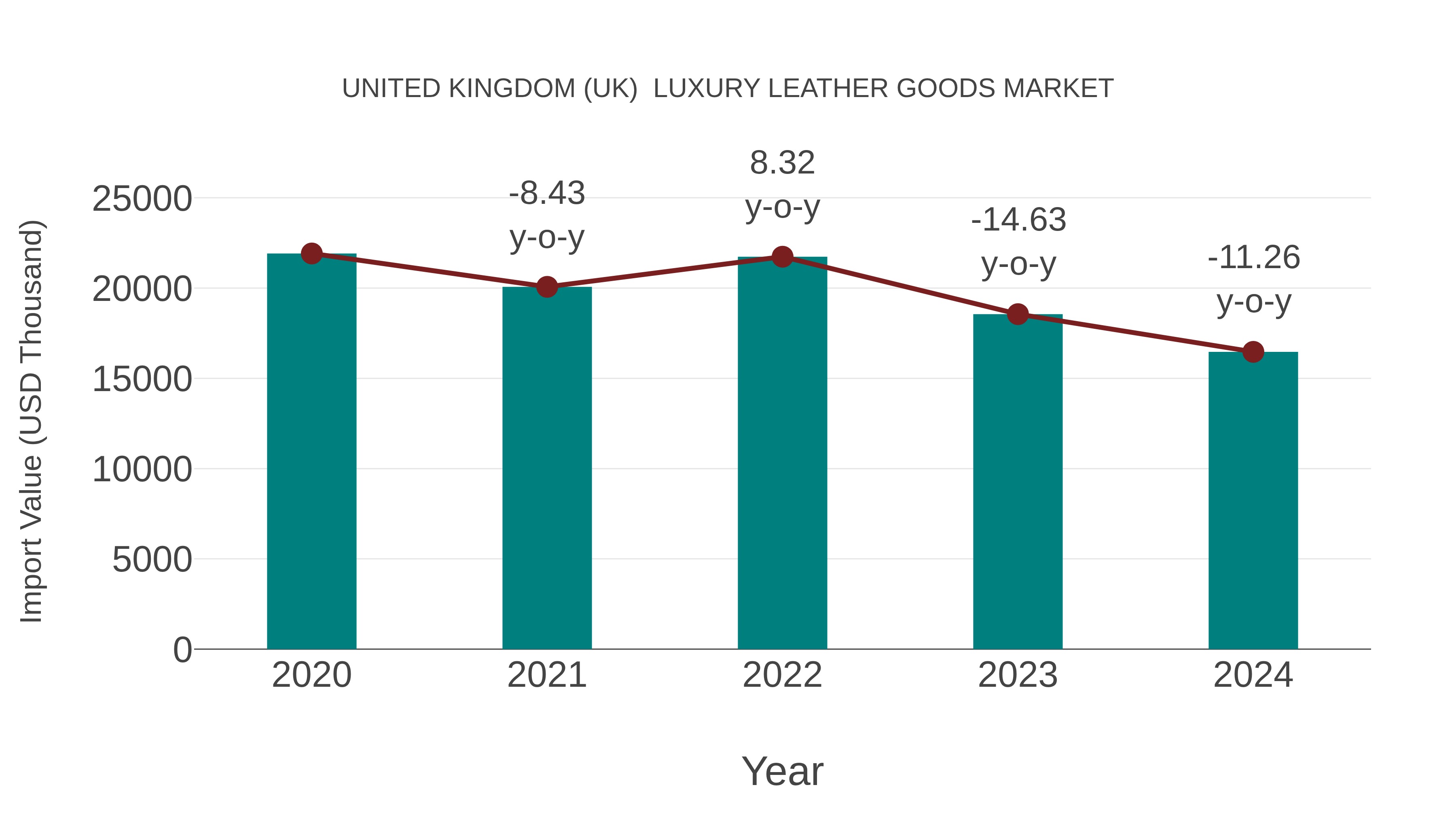
The United Kingdom import trend for luxury leather goods experienced a decline, with a growth rate of -11.26% from 2023 to 2024 and a compound annual growth rate (CAGR) of -6.9% for the period 2020-2024. This negative momentum could be attributed to shifting consumer preferences, impacting demand for luxury items in the market.
United Kingdom (UK) Luxury Leather Goods Market Synopsis
The United Kingdom luxury leather goods market is a prominent segment within the luxury fashion industry, encompassing high-end products such as handbags, wallets, shoes, and accessories made from premium quality leather. The market is driven by a combination of factors including the country`s rich heritage in craftsmanship, a strong demand for luxury goods among affluent consumers, and the presence of renowned luxury brands. Key players in the UK luxury leather goods market include established brands like Burberry, Mulberry, and Anya Hindmarch, as well as emerging designers offering innovative and trend-setting designs. With a focus on quality, timeless elegance, and craftsmanship, the market continues to attract both domestic and international consumers seeking luxurious and stylish leather products. The UK luxury leather goods market is characterized by a high level of competition, innovation, and a strong consumer base with a penchant for luxury fashion.
United Kingdom (UK) Luxury Leather Goods Market Trends
The UK Luxury Leather Goods Market is experiencing a surge in demand for sustainable and ethically sourced products, driven by increasing consumer awareness and interest in eco-friendly fashion. Luxury brands are focusing on transparency in their supply chain and are incorporating environmentally friendly practices in their production processes to cater to this growing trend. There is also a rising popularity of personalized and bespoke leather goods, offering consumers the opportunity to own unique and exclusive pieces. With the rise of e-commerce and digital platforms, there is a significant opportunity for luxury leather goods brands to expand their online presence and reach a wider audience of tech-savvy consumers. Overall, the UK Luxury Leather Goods Market presents opportunities for brands to differentiate themselves through sustainability, personalization, and digital innovation.
United Kingdom (UK) Luxury Leather Goods Market Challenges
In the United Kingdom Luxury Leather Goods Market, several challenges are prevalent. One key challenge is the increasing competition from international luxury brands, particularly from countries like Italy and France, which have a long-standing reputation for high-quality leather goods. Additionally, the uncertainty surrounding Brexit and its potential impact on trade agreements, tariffs, and consumer confidence poses a significant challenge for UK-based luxury leather goods companies. Another challenge is the shifting consumer preferences towards sustainability and ethical sourcing, leading to a growing demand for eco-friendly and cruelty-free products. Moreover, the rise of online shopping and the need for luxury brands to establish a strong digital presence to compete effectively in the e-commerce landscape adds complexity to the market dynamics. Overall, UK luxury leather goods companies must navigate these challenges to maintain their competitiveness and relevance in the market.
United Kingdom (UK) Luxury Leather Goods Market Investment Opportunities
The United Kingdom luxury leather goods market is primarily driven by factors such as increasing consumer disposable income, changing lifestyles, and a growing preference for premium and high-quality products. The rise in purchasing power among consumers has led to a greater demand for luxury leather goods, as individuals seek to invest in durable and stylish items. Additionally, the influence of social media and celebrities showcasing luxury brands has further fueled the demand for these products. The UK`s strong fashion and design heritage also play a significant role in driving the luxury leather goods market, as British brands are renowned for their craftsmanship and attention to detail. Overall, a combination of economic factors, changing consumer preferences, and strong brand presence contribute to the growth of the luxury leather goods market in the UK.
United Kingdom (UK) Luxury Leather Goods Market Government Polices
The UK luxury leather goods market is influenced by various government policies, particularly in areas such as trade agreements, tariffs, and regulations. The UK`s trade policies, including Brexit-related changes, can impact the import and export of luxury leather goods, affecting pricing and market competitiveness. Tariffs imposed on leather goods can also impact the cost of raw materials and finished products, influencing consumer demand and market trends. Additionally, regulations related to environmental sustainability, labor practices, and product safety can shape the operations and reputation of luxury leather goods brands in the UK market. Overall, government policies play a significant role in shaping the competitive landscape and consumer preferences within the UK luxury leather goods market.
United Kingdom (UK) Luxury Leather Goods Market Future Outlook
The future outlook for the United Kingdom Luxury Leather Goods Market appears promising, driven by a combination of factors. Increasing disposable income levels, changing consumer preferences towards premium and sustainable products, and a growing emphasis on quality and craftsmanship are expected to fuel the demand for luxury leather goods in the UK. Furthermore, the rise of e-commerce platforms and digital marketing strategies by luxury brands are likely to enhance accessibility and reach to a broader customer base. However, challenges such as economic uncertainties, evolving fashion trends, and potential supply chain disruptions may pose risks to the market`s growth. Overall, the UK Luxury Leather Goods Market is anticipated to continue its upward trajectory, supported by a blend of traditional craftsmanship and modern marketing techniques.
Key Highlights of the Report:
- United Kingdom (UK) Luxury Leather Goods Market Outlook
- Market Size of United Kingdom (UK) Luxury Leather Goods Market, 2025
- Forecast of United Kingdom (UK) Luxury Leather Goods Market, 2032
- Historical Data and Forecast of United Kingdom (UK) Luxury Leather Goods Revenues & Volume for the Period 2022 - 2032F
- United Kingdom (UK) Luxury Leather Goods Market Trend Evolution
- United Kingdom (UK) Luxury Leather Goods Market Drivers and Challenges
- United Kingdom (UK) Luxury Leather Goods Price Trends
- United Kingdom (UK) Luxury Leather Goods Porter's Five Forces
- United Kingdom (UK) Luxury Leather Goods Industry Life Cycle
- Historical Data and Forecast of United Kingdom (UK) Luxury Leather Goods Market Revenues & Volume By Product for the Period 2022 - 2032F
- Historical Data and Forecast of United Kingdom (UK) Luxury Leather Goods Market Revenues & Volume By High- Grade for the Period 2022 - 2032F
- Historical Data and Forecast of United Kingdom (UK) Luxury Leather Goods Market Revenues & Volume By Low-Grade for the Period 2022 - 2032F
- Historical Data and Forecast of United Kingdom (UK) Luxury Leather Goods Market Revenues & Volume By Mid-Grade for the Period 2022 - 2032F
- Historical Data and Forecast of United Kingdom (UK) Luxury Leather Goods Market Revenues & Volume By Application for the Period 2022 - 2032F
- Historical Data and Forecast of United Kingdom (UK) Luxury Leather Goods Market Revenues & Volume By Men for the Period 2022 - 2032F
- Historical Data and Forecast of United Kingdom (UK) Luxury Leather Goods Market Revenues & Volume By Women for the Period 2022 - 2032F
- Historical Data and Forecast of United Kingdom (UK) Luxury Leather Goods Market Revenues & Volume By Distribution Channel for the Period 2022 - 2032F
- Historical Data and Forecast of United Kingdom (UK) Luxury Leather Goods Market Revenues & Volume By Offline Retail Stores for the Period 2022 - 2032F
- Historical Data and Forecast of United Kingdom (UK) Luxury Leather Goods Market Revenues & Volume By Online Retail Stores for the Period 2022 - 2032F
- United Kingdom (UK) Luxury Leather Goods Import Export Trade Statistics
- Market Opportunity Assessment By Product
- Market Opportunity Assessment By Application
- Market Opportunity Assessment By Distribution Channel
- United Kingdom (UK) Luxury Leather Goods Top Companies Market Share
- United Kingdom (UK) Luxury Leather Goods Competitive Benchmarking By Technical and Operational Parameters
- United Kingdom (UK) Luxury Leather Goods Company Profiles
- United Kingdom (UK) Luxury Leather Goods Key Strategic Recommendations






































