United States (US) Data Catalog Market Size & Growth Rate (2026-2032)
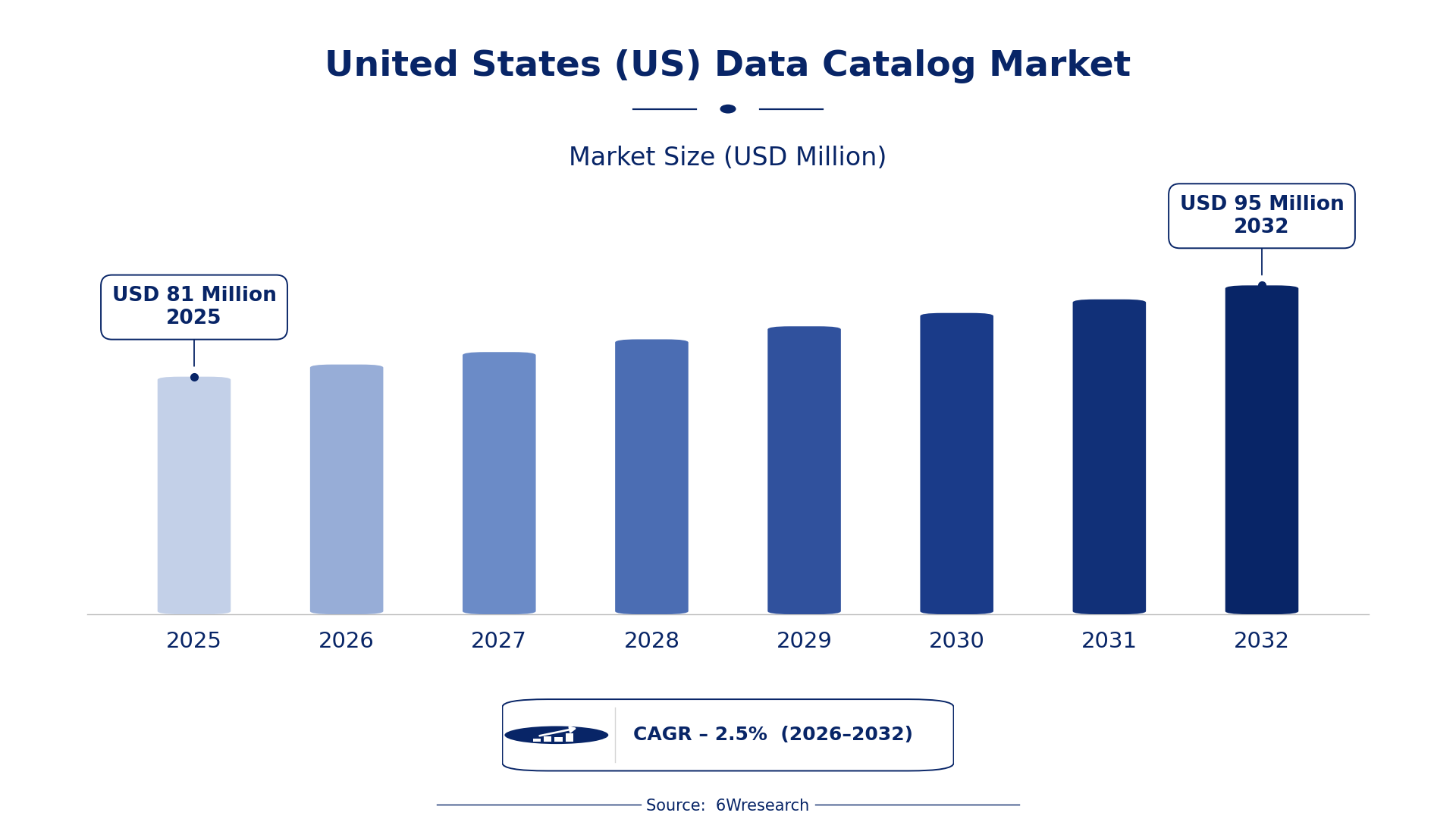
The United States (US) Data Catalog Market was estimated at USD 81 Million in 2025 and is projected to reach USD 95 Million by 2032, growing at a CAGR of 2.5% from 2026 to 2032.
United States (US) Data Catalog Market Synopsis
The most influential force shaping the United States Data Catalog Market is the rapid increase in data complexity and volume across organizations. As companies gather more data than ever, the need for effective management solutions is more pressing, driving the demand for data catalogs.
With regulatory frameworks like GDPR and CCPA demanding higher standards of data governance, organizations are compelled to adopt advanced cataloging solutions. This shift is not merely about compliance; it’s about enabling organizations to extract actionable insights from their data repositories efficiently.
United States (US) Data Catalog Market Year-wise Growth Rate and Key Drivers
This graph illustrates the annual growth rates of the United States (US) Data Catalog Market from 2021 to 2032, highlighting a steady upward trajectory and projected expansion over the forecast period.
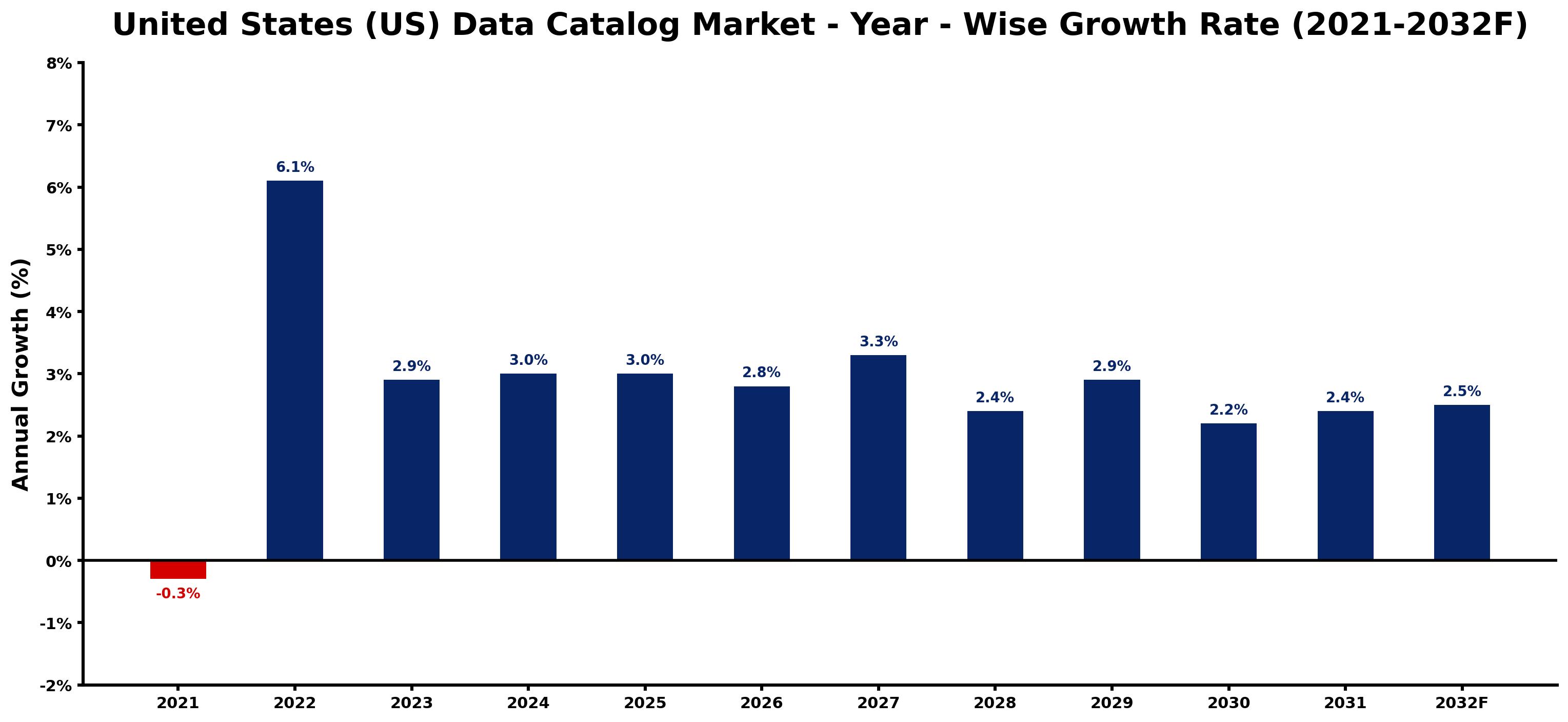
The table below presents the year‑wise growth rates along with the key drivers influencing the market
| Year | Growth Rate | Major Drivers |
| 2021 | -0.3% | Census Bureau halted public data collection initiatives. |
| 2022 | 6.1% | Implementation of Federal Data Strategy by OMB |
| 2023 | 2.9% | Growing interest in open data for urban planning |
| 2024 | 3.0% | Accelerated adoption of AI for data-driven insights |
| 2025 | 3.0% | Increased funding for national data modernization projects |
| 2026 | 2.8% | Surge in demand for data governance solutions |
| 2027 | 3.3% | Support from the Data Coalition advocating for standards |
| 2028 | 2.4% | Enhanced regulatory focus on data privacy compliance |
| 2029 | 2.9% | Rise in partnerships between tech firms and government |
| 2030 | 2.2% | Development of federal grants for data sharing initiatives |
| 2031 | 2.4% | Local governments launching projects to improve data usage |
| 2032 | 2.5% | Growing emphasis on data literacy programs nationwide |
Note: Market size estimations and growth projections presented in this report are based on 6Wresearch's proprietary forecasting methodology, utilizing the latest available industry data, government publications, and primary research inputs.
United States (US) Data Catalog Market Key Takeaways
Below are some of the specific key takeaways from the market, including:
- The demand for AI-integrated data catalog solutions is increasing as businesses seek automation and efficiency.
- Cloud-based data catalogs are gaining traction due to their scalability and flexibility in data management.
- Organizations are investing in data governance practices to mitigate risks associated with data privacy and compliance.
- Data discovery and metadata management features are becoming critical components of data catalog solutions.
- Increased focus on data democratization is driving the development of user-friendly data catalog interfaces.
Evaluation of Restraints in United States (US) Data Catalog Market
Despite the growth potential, several restraints are limiting the United States Data Catalog Market. Data security and privacy concerns loom large, as organizations grapple with protecting sensitive information while ensuring compliance. on top of that, the sheer volume of data can lead to challenges in maintaining data quality and accuracy. Integrating new catalog solutions with existing infrastructures is also a significant hurdle, especially for organizations entrenched in legacy systems. Addressing these challenges is essential for organizations to maximize the benefits of their data assets.
United States (US) Data Catalog Market Trends
Current trends in the United States Data Catalog Market highlight a shift toward enhanced data governance and metadata management capabilities. Organizations are increasingly recognizing the necessity of a centralized platform to manage their diverse data assets. Cloud-based solutions are becoming the preferred choice, as they provide the agility needed to adapt to evolving data environments. The integration of AI and machine learning within data catalogs is also on the rise, paving the way for automated data classification and improved data lineage tracking.
United States (US) Data Catalog Market Opportunities
Investment opportunities abound in the United States Data Catalog Market, driven by the surging demand for effective data management solutions across industries. Companies are prioritizing investments in data governance and compliance tools, creating a fertile ground for innovative catalog platforms. on top of that, advancements in AI-driven cataloging offer investors a chance to capitalize on technologies that enhance data usability and accessibility. As organizations increasingly recognize the value of data-driven decision-making, the market is likely to see substantial growth.
Government Initiatives in the United States (US) Data Catalog Market
Government policies are shaping the United States Data Catalog Market by promoting data transparency, security, and accessibility. Initiatives aim to enhance public access to data, thus fostering accountability and innovation. As the regulatory landscape becomes more stringent, these initiatives are crucial for ensuring compliance and safeguarding data privacy.
- A recently completed initiative focused on enhancing data accessibility for public agencies through a revised Open Data Policy.
- Currently underway is a national digital infrastructure upgrade program aimed at improving data cataloging capabilities across federal agencies.
- A planned initiative expected to launch in 2026 will mandate enhanced data quality standards for federal datasets shared through data catalogs.
- Ongoing efforts include the establishment of a centralized repository for state-level datasets to encourage data sharing among public agencies.
Future Insights of the United States (US) Data Catalog Market
Looking ahead to 2026-2032, the United States Data Catalog Market is set to expand significantly. The increasing complexity of data generated by organizations will continue to drive the demand for efficient cataloging solutions. As businesses place a higher priority on data-driven decision-making, the role of data catalogs in facilitating access to and understanding of data assets will become even more critical. Additionally, advancements in artificial intelligence will likely enhance the functionality of data catalogs, further solidifying their place in modern data management strategies.
United States (US) Data Catalog Market Latest Developments
In the last 12-14 months, the United States Data Catalog Market has seen notable activity, marked by technological advancements and strategic partnerships aimed at enhancing data management solutions. Companies are actively pursuing new capabilities to meet the evolving needs of data governance and accessibility.
- A major technology vendor announced the rollout of an AI-enhanced data catalog solution in early 2025, aimed at automating metadata management.
- An ongoing partnership between leading organizations has resulted in a collaborative platform for data sharing and governance, expected to expand by mid-2026.
- A product upgrade initiated in late 2024 is currently enhancing user interface and experience for cloud-based data catalogs.
- Plans are in place for an upcoming workshop series in late 2025, focused on best practices in data governance and cataloging.
United States (US) Data Catalog Market - Key Attractiveness of the Report
- 10 Years of Market Numbers
- Historical Data Starting from 2022 to 2025
- Base Year: 2025
- Forecast Data until 2032
- Key Performance Indicators Impacting the Market
- Major Upcoming Developments and Projects
Key Highlights of the Report:
- United States (US) Data Catalog Market Outlook
- Market Size of United States (US) Data Catalog Market, 2025
- Forecast of United States (US) Data Catalog Market, 2032
- Historical Data and Forecast of United States (US) Data Catalog Revenues & Volume for the Period 2022-2032F
- United States (US) Data Catalog Market Trend Evolution
- United States (US) Data Catalog Market Drivers and Challenges
- United States (US) Data Catalog Price Trends
- United States (US) Data Catalog Porter's Five Forces
- United States (US) Data Catalog Industry Life Cycle
- Historical Data and Forecast of United States (US) Data Catalog Market Revenues & Volume By Component for the Period 2022-2032F
- Historical Data and Forecast of United States (US) Data Catalog Market Revenues & Volume By Solutions for the Period 2022-2032F
- Historical Data and Forecast of United States (US) Data Catalog Market Revenues & Volume By Services for the Period 2022-2032F
- Historical Data and Forecast of United States (US) Data Catalog Market Revenues & Volume By Data Consumer for the Period 2022-2032F
- Historical Data and Forecast of United States (US) Data Catalog Market Revenues & Volume By Business Intelligence tools for the Period 2022-2032F
- Historical Data and Forecast of United States (US) Data Catalog Market Revenues & Volume By Enterprise Applications for the Period 2022-2032F
- Historical Data and Forecast of United States (US) Data Catalog Market Revenues & Volume By Mobile and Web Applications for the Period 2022-2032F
- Historical Data and Forecast of United States (US) Data Catalog Market Revenues & Volume By Deployment Mode for the Period 2022-2032F
- Historical Data and Forecast of United States (US) Data Catalog Market Revenues & Volume By Cloud for the Period 2022-2032F
- Historical Data and Forecast of United States (US) Data Catalog Market Revenues & Volume By On-premises for the Period 2022-2032F
- Historical Data and Forecast of United States (US) Data Catalog Market Revenues & Volume By Metadata Type for the Period 2022-2032F
- Historical Data and Forecast of United States (US) Data Catalog Market Revenues & Volume By Technical Metadata for the Period 2022-2032F
- Historical Data and Forecast of United States (US) Data Catalog Market Revenues & Volume By Business Metadata for the Period 2022-2032F
- Historical Data and Forecast of United States (US) Data Catalog Market Revenues & Volume By Organization Size for the Period 2022-2032F
- Historical Data and Forecast of United States (US) Data Catalog Market Revenues & Volume By SMEs for the Period 2022-2032F
- Historical Data and Forecast of United States (US) Data Catalog Market Revenues & Volume By Large Enterprises for the Period 2022-2032F
- Historical Data and Forecast of United States (US) Data Catalog Market Revenues & Volume By Vertical for the Period 2022-2032F
- Historical Data and Forecast of United States (US) Data Catalog Market Revenues & Volume By BFSI for the Period 2022-2032F
- Historical Data and Forecast of United States (US) Data Catalog Market Revenues & Volume By Retail and eCommerce for the Period 2022-2032F
- Historical Data and Forecast of United States (US) Data Catalog Market Revenues & Volume By Manufacturing for the Period 2022-2032F
- Historical Data and Forecast of United States (US) Data Catalog Market Revenues & Volume By Government and Defence for the Period 2022-2032F
- Historical Data and Forecast of United States (US) Data Catalog Market Revenues & Volume By Healthcare and Life Sciences for the Period 2022-2032F
- Historical Data and Forecast of United States (US) Data Catalog Market Revenues & Volume By Telecom for the Period 2022-2032F
- Historical Data and Forecast of United States (US) Data Catalog Market Revenues & Volume By Media and Entertainment for the Period 2022-2032F
- Historical Data and Forecast of United States (US) Data Catalog Market Revenues & Volume By Transportation and Logistics for the Period 2022-2032F
- United States (US) Data Catalog Import Export Trade Statistics
- Market Opportunity Assessment By Component
- Market Opportunity Assessment By Data Consumer
- Market Opportunity Assessment By Deployment Mode
- Market Opportunity Assessment By Metadata Type
- Market Opportunity Assessment By Organization Size
- Market Opportunity Assessment By Vertical
- United States (US) Data Catalog Top Companies Market Share
- United States (US) Data Catalog Competitive Benchmarking By Technical and Operational Parameters
- United States (US) Data Catalog Company Profiles
- United States (US) Data Catalog Key Strategic Recommendations






































