United States (US) Ergonomic Chair Market Size, Share & Growth Rate
The United States (US) Ergonomic Chair Market was estimated at USD 299 Million in 2025 and is projected to reach USD 409 Million by 2032, growing at a CAGR of 4.6% from 2026 to 2032. This steady growth trajectory is fueled by an increasing recognition of the vital role ergonomic seating plays in enhancing workplace health and productivity. As remote work continues to be prevalent, demand is surging for ergonomic chairs that provide adjustability and lumbar support to help combat musculoskeletal disorders.
United States (US) Ergonomic Chair Market Year-wise Growth Rate and Key Drivers
This graph highlights how the United States (US) Ergonomic Chair Market has steadily grown over the years, supported by major growth factors.
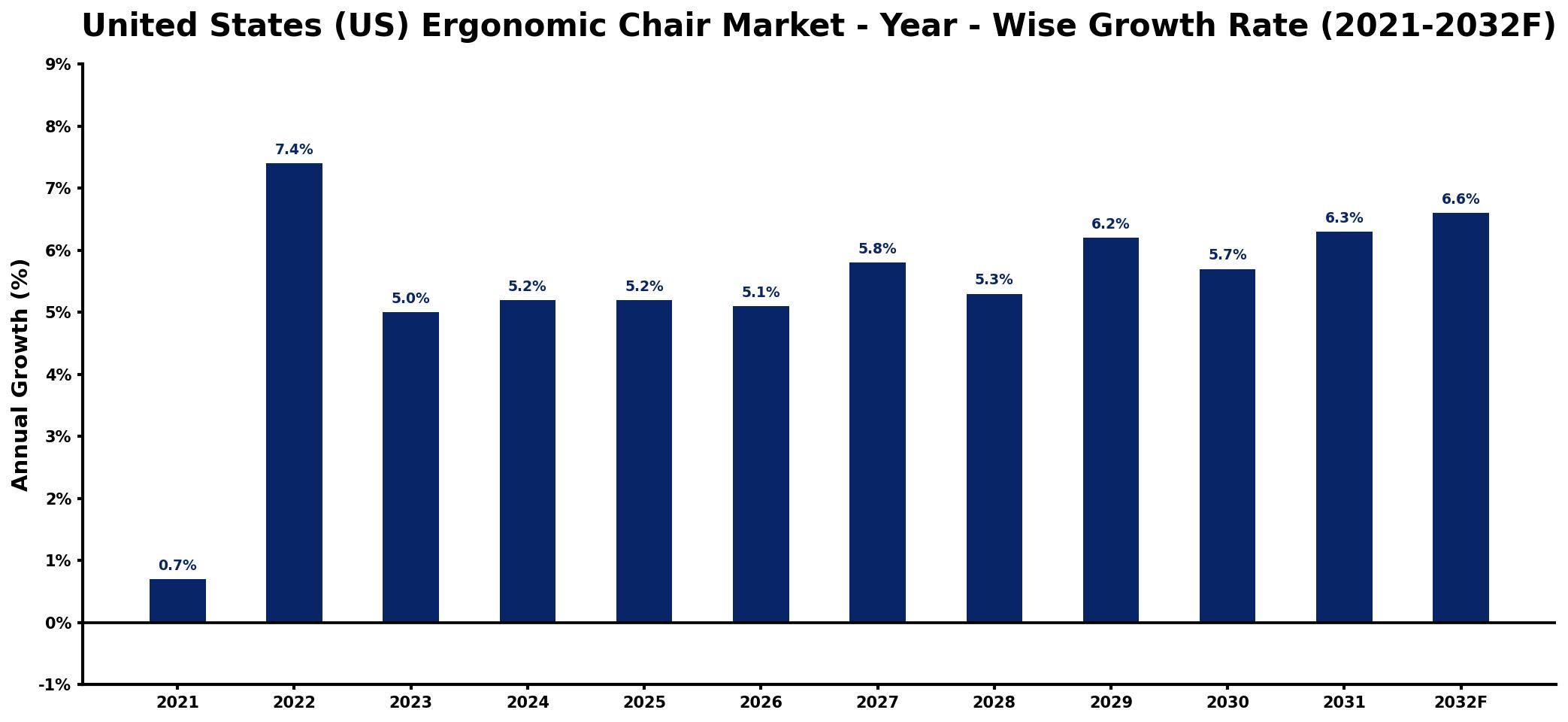
The table below presents the year‑wise growth rates along with the key drivers influencing the market
| Year | Growth Rate | Major Drivers |
| 2021 | 0.7% | Increased remote work opportunities |
| 2022 | 7.4% | Growing focus on wellness initiatives |
| 2023 | 5.0% | Rise in home office setups |
| 2024 | 5.2% | Surge in corporate wellness programs |
| 2025 | 5.2% | Expansion of health consciousness |
| 2026 | 5.1% | Increase in workplace productivity demands |
| 2027 | 5.8% | Growth in online furniture sales |
| 2028 | 5.3% | Rising awareness of posture benefits |
| 2029 | 6.2% | Investments in employee comfort solutions |
| 2030 | 5.7% | Demand for customizable seating options |
| 2031 | 6.3% | Enhanced focus on sustainable materials |
| 2032 | 6.6% | improved processing technologies adoption |
Note: Market size estimations and growth projections presented in this report are based on 6Wresearch's proprietary forecasting methodology, utilizing the latest available industry data, government publications, and primary research inputs.
United States (US) Ergonomic Chair Market Synopsis
The most significant force shaping the US ergonomic chair market is the ongoing shift towards remote work, accelerated by the COVID-19 pandemic. Employers and employees alike have recognized the critical importance of comfortable, supportive seating in maintaining productivity and well-being in home office environments.
In addition, the increasing focus on sustainability is influencing consumer choices, with eco-friendly materials gaining popularity in ergonomic chair designs. Companies are actively innovating to offer customizable features that align with the varied preferences of a growing workforce prioritizing health and comfort.
United States (US) Ergonomic Chair Market Key Takeaways
- The market is expected to grow significantly, driven by remote work and increased awareness of health issues associated with poor seating.
- Innovation in ergonomic design, including adjustable features and sustainable materials, is becoming a key competitive differentiator.
- There is an increasing trend towards online retail, enhancing accessibility and variety for consumers across the country.
- Government regulations regarding workplace ergonomics are shaping product standards and consumer expectations.
- Organizations are investing more in ergonomic solutions to enhance employee satisfaction and reduce health-related costs.
Evaluation of Restraints in United States (US) Ergonomic Chair Market
Despite the positive outlook, several restraints limit growth in the US ergonomic chair market. Increasing competition among manufacturers necessitates continuous innovation and adaptation to consumer preferences, which can strain resources. Additionally, the emphasis on high-quality materials can lead to increased production costs, ultimately affecting pricing strategies. Fluctuations in raw material prices and global supply chain disruptions further complicate the ability of companies to maintain product quality and availability, challenging their market positioning.
United States (US) Ergonomic Chair Market Trends
Current trends highlight a surge in demand for ergonomic chairs that are not only comfortable but also promote wellness through features like adjustable lumbar support and temperature control. The rise of hybrid work models is prompting companies to offer their employees better ergonomic solutions both at home and in the office. Moreover, the growing environmental consciousness among consumers has led to a preference for products made from sustainable materials. This trend is compelling manufacturers to incorporate eco-friendly practices into their design and production processes.
United States (US) Ergonomic Chair Market Opportunities
The US ergonomic chair market offers considerable investment opportunities, particularly for businesses that can provide innovative, customizable designs at competitive prices. The increased focus on remote work has created a vibrant market for home office solutions, where ergonomic chairs can help mitigate the physical strains associated with prolonged sitting. Additionally, tapping into consumer demand for environmentally responsible products presents a unique growth avenue. Companies that align with these market dynamics will likely find significant success.
Government Initiatives in the United States (US) Ergonomic Chair Market
In the US, government policies aimed at promoting workplace health and safety are crucial for the ergonomic chair market. The Occupational Safety and Health Administration (OSHA) provides guidelines that emphasize ergonomic standards to minimize musculoskeletal disorders. Furthermore, the Americans with Disabilities Act (ADA) mandates reasonable accommodations for employees with disabilities, which often includes the provision of ergonomic seating solutions. These regulations are instrumental in shaping the design and marketing of ergonomic chairs, underscoring their significance in fostering healthier work environments.
Future Insights of the United States (US) Ergonomic Chair Market
Looking ahead to 2026-2032, the United States ergonomic chair market is well-positioned for sustained growth. The rising awareness surrounding the health impacts of sedentary work is driving the adoption of ergonomic solutions. Organizations and individual consumers alike are expected to prioritize investments in seating that enhances comfort and well-being, especially as the trend of remote work evolves. Manufacturers will likely focus on creating highly adjustable, durable designs to meet diverse consumer needs, ensuring continued demand in this burgeoning market.
United States (US) Ergonomic Chair Market Latest Developments (2025 - 2026)
Recent industry developments reveal a growing trend among manufacturers to launch innovative ergonomic chairs with integrated technology features such as smart adjustments and wellness tracking capabilities. This focus on technological integration is reshaping consumer expectations and encouraging new design paradigms. Additionally, an increase in collaborations between ergonomic chair companies and tech firms is poised to enhance product offerings, making them more appealing to modern consumers.
United States (US) Ergonomic Chair Market - Key Attractiveness of the Report
- 10 Years of Market Numbers
- Historical Data Starting from 2022 to 2025
- Base Year: 2025
- Forecast Data until 2032
- Key Performance Indicators Impacting the Market
- Major Upcoming Developments and Projects
Key Highlights of the Report:
- United States (US) Ergonomic Chair Market Outlook
- Market Size of United States (US) Ergonomic Chair Market, 2025
- Forecast of United States (US) Ergonomic Chair Market, 2032
- Historical Data and Forecast of United States (US) Ergonomic Chair Revenues & Volume for the Period 2022-2032F
- United States (US) Ergonomic Chair Market Trend Evolution
- United States (US) Ergonomic Chair Market Drivers and Challenges
- United States (US) Ergonomic Chair Price Trends
- United States (US) Ergonomic Chair Porter's Five Forces
- United States (US) Ergonomic Chair Industry Life Cycle
- Historical Data and Forecast of United States (US) Ergonomic Chair Market Revenues & Volume By Application for the Period 2022-2032F
- Historical Data and Forecast of United States (US) Ergonomic Chair Market Revenues & Volume By Enterprise Procurement for the Period 2022-2032F
- Historical Data and Forecast of United States (US) Ergonomic Chair Market Revenues & Volume By Government Procurement for the Period 2022-2032F
- Historical Data and Forecast of United States (US) Ergonomic Chair Market Revenues & Volume By School Procurement for the Period 2022-2032F
- Historical Data and Forecast of United States (US) Ergonomic Chair Market Revenues & Volume By Individual Procurement for the Period 2022-2032F
- Historical Data and Forecast of United States (US) Ergonomic Chair Market Revenues & Volume By Other for the Period 2022-2032F
- United States (US) Ergonomic Chair Import Export Trade Statistics
- Market Opportunity Assessment By Application
- United States (US) Ergonomic Chair Top Companies Market Share
- United States (US) Ergonomic Chair Competitive Benchmarking By Technical and Operational Parameters
- United States (US) Ergonomic Chair Company Profiles
- United States (US) Ergonomic Chair Key Strategic Recommendations






































