Vietnam Alternative Building Materials Market Size, Share & Growth Rate
The Vietnam Alternative Building Materials Market was estimated at USD 1051 Million in 2025 and is projected to reach USD 1493 Million by 2032, growing at a CAGR of 5.1% from 2026 to 2032. This impressive growth trajectory is being driven primarily by an increasing awareness of sustainable construction practices and a collective push towards reducing the environmental impact of building activities. The construction sector's shift towards materials such as bamboo and recycled plastics is not only economically motivated but is also a response to rising consumer demand for environmentally responsible options.
Vietnam Alternative Building Materials Market Year-wise Growth Rate and Key Drivers
This graph highlights how the Vietnam Alternative Building Materials Market has steadily grown over the years, supported by major growth factors.
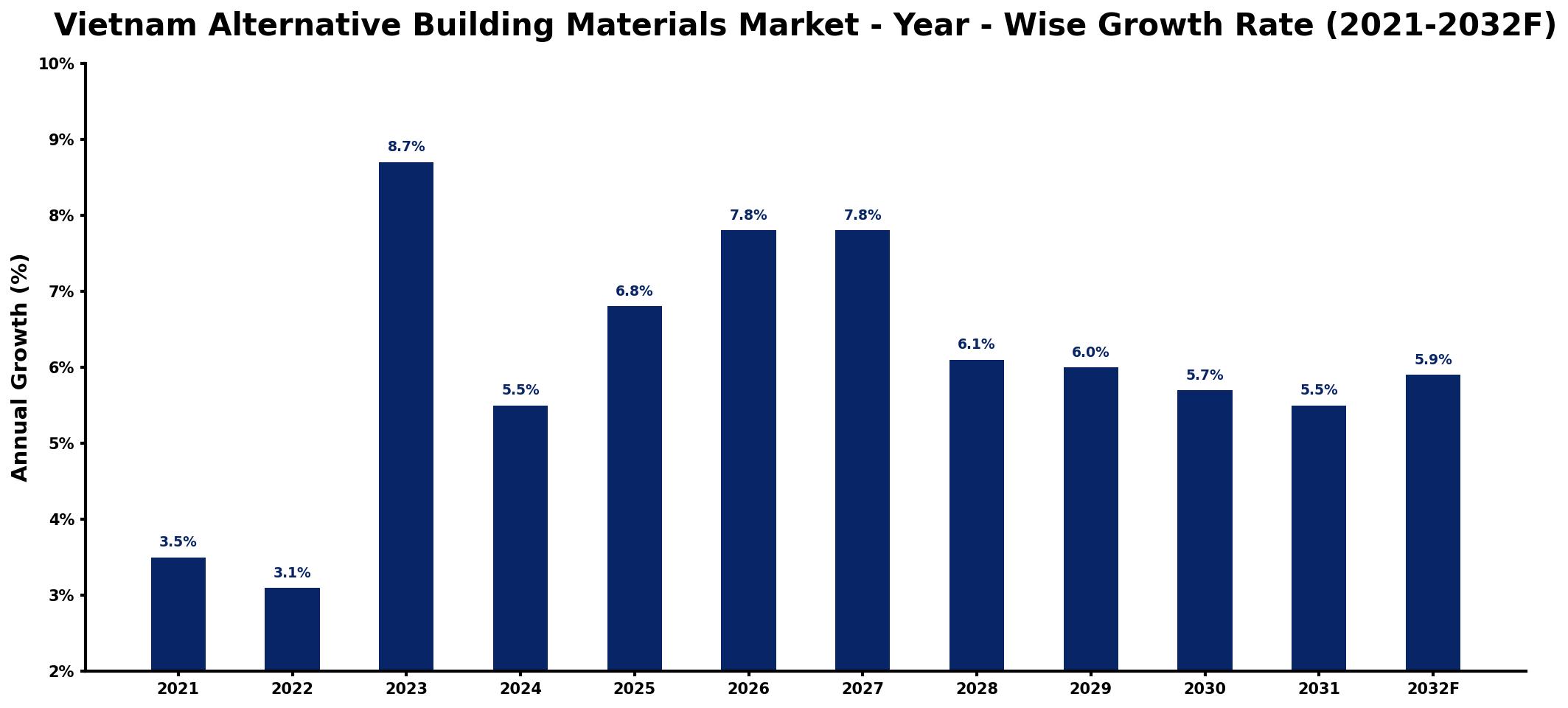
The table below presents the year‑wise growth rates along with the key drivers influencing the market
| Year | Growth Rate | Major Drivers |
| 2021 | 3.5% | Rising construction sector investments |
| 2022 | 3.1% | Increased awareness of sustainability |
| 2023 | 8.7% | Growing demand for innovative solutions |
| 2024 | 5.5% | Expansion of green technology adoption |
| 2025 | 6.8% | Government incentives for eco-friendly projects |
| 2026 | 7.8% | Surge in urbanization and infrastructure |
| 2027 | 7.8% | Growing popularity of renewable options |
| 2028 | 6.1% | Demand for energy efficient solutions |
| 2029 | 6.0% | Increase in residential construction activities |
| 2030 | 5.7% | Heightened focus on waste reduction |
| 2031 | 5.5% | Emerging trends in eco-conscious living |
| 2032 | 5.9% | Rising investments in sustainable practices |
Note: Market size estimations and growth projections presented in this report are based on 6Wresearch's proprietary forecasting methodology, utilizing the latest available industry data, government publications, and primary research inputs.
Vietnam Alternative Building Materials Market Synopsis
The strongest force shaping the Vietnam Alternative Building Materials Market is the growing emphasis on sustainability. As the country grapples with environmental challenges, the construction industry is increasingly adopting alternative materials that minimize carbon footprints. Products like compressed earth blocks and innovative composites are emerging as viable replacements for traditional materials.
Government initiatives further bolster this market by promoting green building technologies and sustainable practices. As public awareness around climate change intensifies, builders and developers are more inclined to explore eco-friendly materials that align with both governmental policies and public sentiment, propelling the market forward.
Vietnam Alternative Building Materials Market Key Takeaways
- Robust growth is fueled by the increasing adoption of sustainable construction practices.
- The market is characterized by innovative materials that offer both cost savings and environmental benefits.
- Government support plays a pivotal role in the market's expansion, enhancing the viability of alternative materials.
- Supply chain disruptions during the COVID-19 pandemic led to a temporary slowdown, but recovery is underway.
- Traditional building practices pose challenges for the adoption of new materials in the construction sector.
Evaluation of Restraints in Vietnam Alternative Building Materials Market
Despite the promising outlook, several restraints hinder the Vietnam Alternative Building Materials Market. A major issue is the entrenched nature of traditional construction methods, which often results in reluctance from industry stakeholders to switch to innovative alternatives. This inertia is compounded by the need for rigorous testing and certification of new materials, which can prolong the adoption process. Furthermore, a lack of widespread knowledge and trust in these materials can create barriers to their acceptance, delaying the full realization of the market's potential.
Vietnam Alternative Building Materials Market Trends
Several trends are currently shaping the Vietnam Alternative Building Materials Market. The integration of technology in building materials—such as energy-efficient designs and smart materials—is gaining traction, creating exciting possibilities for builders. Additionally, an increasing focus on circular economy principles encourages the use of recycled materials in construction projects. These trends signify a broader shift towards more responsible building practices that not only meet regulatory requirements but also align with consumer expectations for sustainability.
Vietnam Alternative Building Materials Market Opportunities
The Vietnam Alternative Building Materials Market offers genuine growth and investment opportunities, particularly in urban areas where rapid construction is taking place. Entrepreneurs and investors can capitalize on the increasing demand for eco-friendly materials by developing innovative products that meet both performance and sustainability standards. There is also a significant opportunity for collaborations with government entities to develop projects that highlight the benefits of alternative materials, paving the way for broader adoption across the industry.
Government Initiatives in the Vietnam Alternative Building Materials Market
The Vietnamese government is actively promoting initiatives aimed at fostering sustainable construction practices. This includes the implementation of guidelines and regulations that encourage the use of green building materials. Public spending is also increasingly focused on infrastructure projects that prioritize environmental sustainability. By offering incentives and support for research into alternative materials, the government is playing a vital role in shaping the future of the construction sector in Vietnam.
Future Insights of the Vietnam Alternative Building Materials Market
Looking ahead to 2026-2032, the Vietnam Alternative Building Materials Market is poised for significant growth driven by technological advancements and evolving consumer preferences. As environmental concerns become even more pressing, the demand for sustainable materials will likely intensify. The integration of innovative solutions, combined with ongoing government support, will create a conducive environment for the proliferation of alternative building materials, setting the stage for a transformative period in Vietnams construction industry.
Vietnam Alternative Building Materials Market Latest Developments (2025 - 2026)
Recent developments in the Vietnam Alternative Building Materials Market indicate a growing trend towards innovation and collaboration within the industry. Efforts to streamline the supply chain for alternative materials have gained momentum, promoting efficiency and accessibility. Additionally, various stakeholders have initiated educational programs aimed at builders and contractors to raise awareness about the benefits of using eco-friendly materials, further solidifying their position in the market.
Vietnam Alternative Building Materials Market - Key Attractiveness of the Report
- 10 Years of Market Numbers
- Historical Data Starting from 2022 to 2025
- Base Year: 2025
- Forecast Data until 2032
- Key Performance Indicators Impacting the Market
- Major Upcoming Developments and Projects
Key Highlights of the Report:
- Vietnam Alternative Building Materials Market Outlook
- Market Size of Vietnam Alternative Building Materials Market, 2025
- Forecast of Vietnam Alternative Building Materials Market, 2032
- Historical Data and Forecast of Vietnam Alternative Building Materials Revenues & Volume for the Period 2022-2032F
- Vietnam Alternative Building Materials Market Trend Evolution
- Vietnam Alternative Building Materials Market Drivers and Challenges
- Vietnam Alternative Building Materials Price Trends
- Vietnam Alternative Building Materials Porter's Five Forces
- Vietnam Alternative Building Materials Industry Life Cycle
- Historical Data and Forecast of Vietnam Alternative Building Materials Market Revenues & Volume By Material for the Period 2022-2032F
- Historical Data and Forecast of Vietnam Alternative Building Materials Market Revenues & Volume By Bamboo for the Period 2022-2032F
- Historical Data and Forecast of Vietnam Alternative Building Materials Market Revenues & Volume By Recycled Plastic for the Period 2022-2032F
- Historical Data and Forecast of Vietnam Alternative Building Materials Market Revenues & Volume By Wood for the Period 2022-2032F
- Historical Data and Forecast of Vietnam Alternative Building Materials Market Revenues & Volume By Others for the Period 2022-2032F
- Historical Data and Forecast of Vietnam Alternative Building Materials Market Revenues & Volume By End User for the Period 2022-2032F
- Historical Data and Forecast of Vietnam Alternative Building Materials Market Revenues & Volume By Residential for the Period 2022-2032F
- Historical Data and Forecast of Vietnam Alternative Building Materials Market Revenues & Volume By Non-residential for the Period 2022-2032F
- Historical Data and Forecast of Vietnam Alternative Building Materials Market Revenues & Volume By Application for the Period 2022-2032F
- Historical Data and Forecast of Vietnam Alternative Building Materials Market Revenues & Volume By Construction for the Period 2022-2032F
- Historical Data and Forecast of Vietnam Alternative Building Materials Market Revenues & Volume By Furniture for the Period 2022-2032F
- Historical Data and Forecast of Vietnam Alternative Building Materials Market Revenues & Volume By Flooring for the Period 2022-2032F
- Vietnam Alternative Building Materials Import Export Trade Statistics
- Market Opportunity Assessment By Material
- Market Opportunity Assessment By End User
- Market Opportunity Assessment By Application
- Vietnam Alternative Building Materials Top Companies Market Share
- Vietnam Alternative Building Materials Competitive Benchmarking By Technical and Operational Parameters
- Vietnam Alternative Building Materials Company Profiles
- Vietnam Alternative Building Materials Key Strategic Recommendations






































