Vietnam Battery Scrap Market Growth Rate
According to 6Wresearch internal database and industry insights, the Vietnam Battery Scrap Market is growing at a compound annual growth rate (CAGR) of 7.2% during the forecast period (2026-2032).
Vietnam Battery Scrap Market Year-wise Growth Rate and Key Drivers
This graph highlights how the Vietnam Battery Scrap Market has steadily grown over the past five years, supported by major growth factors.
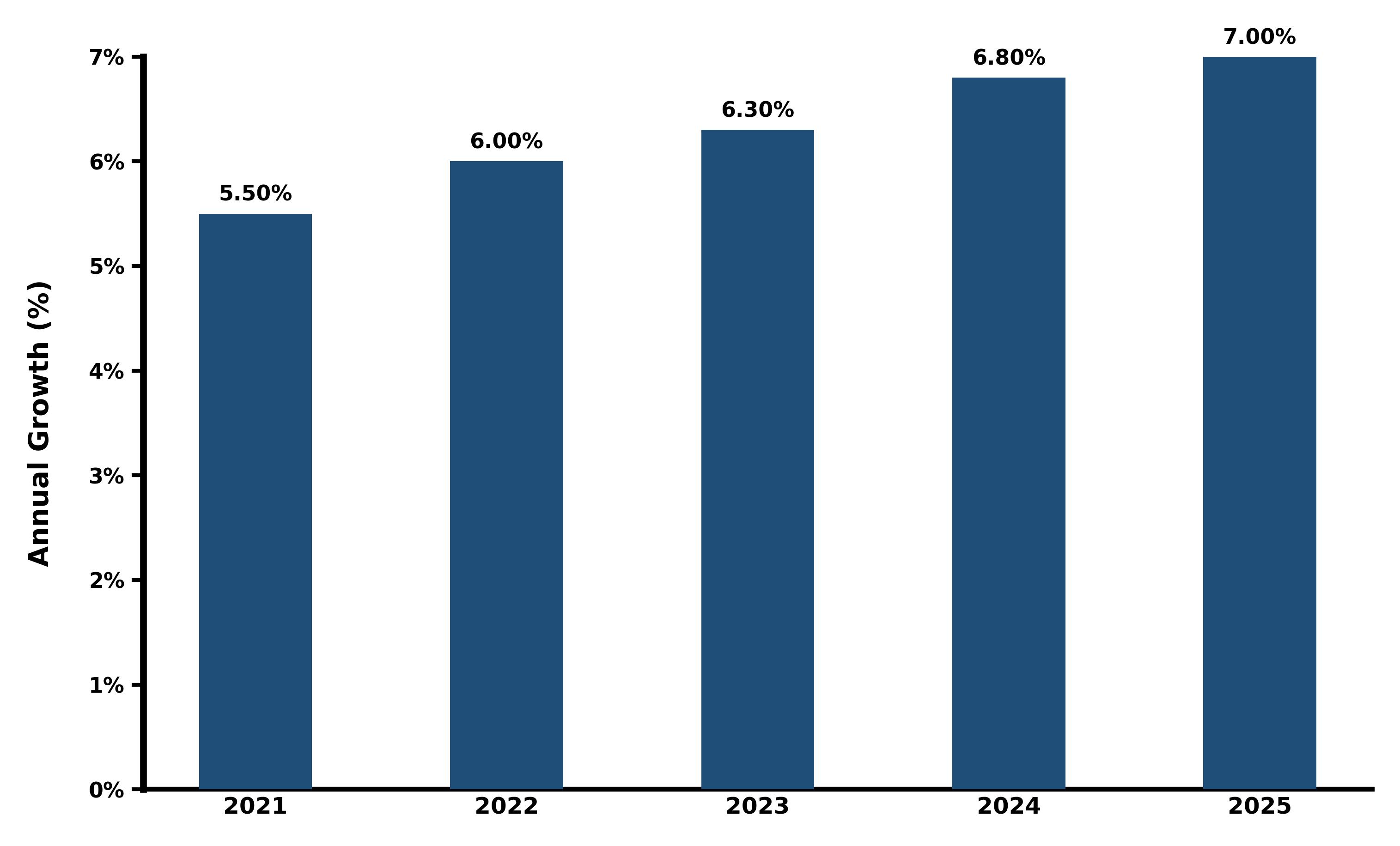
The table below presents the year‑wise growth rates along with the key drivers influencing the market
| Year | Est. Annual Growth in % | Growth Drivers |
| 2021 | 5.5% | More adoption among consumers for electric vehicles and renewable energy solutions. |
| 2022 | 6% | Consumers becoming more eco-conscious and increased regulatory push for battery recycling. |
| 2023 | 6.3% | Growth of battery manufacturing industries and higher consumption of batteries. |
| 2024 | 6.8% | Growth of consumer electronics and e-commerce markets driving battery usage. |
| 2025 | 7% | Government initiatives to support the recycling infrastructure and sustainability. |
Topics Covered in the Vietnam Battery Scrap Market Report
Vietnam Battery Scrap Market report thoroughly covers the market by products, applications, and sources. The market report provides an unbiased and detailed analysis of ongoing market trends, opportunities/high growth areas, and market drivers, which would help stakeholders devise and align their market strategies according to the current and future market dynamics.
Vietnam Battery Scrap Market Highlights
| Report Name | Vietnam Battery Scrap Market |
| Forecast Period | 2026-2032 |
| CAGR | 7.2% |
| Growing Sector | Recycling and Material Extraction |
Vietnam Battery Scrap Market Synopsis
Vietnam Battery Scrap Market is expected to grow significantly. The market shows growth as more industries start using batteries especially in automotive electric vehicles, consumer electronics and renewable energy sectors. The market grows as environmental concerns increase and more people adopt electric vehicles and government regulations support recycling efforts. The Vietnamese battery scrap market expands as more people need to dispose of and recycle batteries.
Evaluation of Growth Drivers in the Vietnam Battery Scrap Market
Below mentioned are some growth drivers and their impact on market dynamics:
| Drivers | Primary Segments Affected | Why It Matters |
| Government Support & Regulations | Recycling Infrastructure, Material Extraction | Encourages battery recycling and promotes sustainability through regulations. |
| Increasing Adoption of Electric Vehicles | Automotive, Nickel Metal Hydride, Lead Acid | EV growth creates a steady demand for battery recycling and scrap collection. |
| Environmental Awareness | Material Extraction, Reuse, Disposal | Makes consumers to opt for eco-friendly and sustainable products. |
| Growing Industrialization | Consumer Electronics, Automotive, Marine | Nowadays industries are using batteries which is increasing battery waste and scrap for recycling. |
| Development of Recycling Infrastructure | Recycling, Disposal, Material Extraction | Increases collection capabilities and makes the scrap processing efficiency higher. |
The Vietnam Battery Scrap Market is projected to grow at a CAGR of 7.2% during the forecast period of 2026-2032. The key drivers of the Vietnam Battery Scrap Market include the growing adoption of electric vehicles which increases battery waste together with rising consumer electronics demand. Also, government regulations that support recycling initiatives and sustainability efforts create additional opportunities for the market growth. The demand for material extraction from battery scrap which includes lithium cobalt and nickel to supply new batteries worldwide drives market expansion. The demand for recycling systems that operate effectively has increased as people now understand environmental issues better.
Evaluation of Restraints in the Vietnam Battery Scrap Market
Below mentioned are some major restraints and their influence on market dynamics:
| Restraints | Primary Segments Affected | What This Means |
| Limited Recycling Infrastructure | Recycling Infrastructure, Disposal | Hinders the efficiency of scrap collection and processing. |
| High Recycling Costs | Material Extraction, Reuse, Disposal | Increases operational costs, making recycling less economically viable. |
| Lack of Consumer Awareness | Consumer Electronics, Automotive | Slows down battery disposal efforts and lower recycling rates. |
| Regulatory Barriers | Material Extraction, Disposal | Hampers market entry for new players and makes complex recycling processes. |
| Contamination Issues | Recycling, Material Extraction | Reduces the quality of recycled materials and hinders market growth. |
Vietnam Battery Scrap Market Challenges
Vietnam Battery Scrap Market faces a major obstacle as its recycling facilities do not exist in multiple regions which need battery scrap processing. The recycling process becomes less efficient as of two main factors: high recycling costs and contamination problems. Other than that, the market faces major obstacles such as regulatory barriers and consumer awareness deficits which create difficulties for new businesses entering the market. Altogether, the above challenges are needed to be addressed for having continued growth of the market.
Vietnam Battery Scrap Market Trends
Some major trends contributing to the Vietnam Battery Scrap Market Growth are:
- Growth of the Circular Economy: To reduce waste and environmental impact a greater emphasis can be seen on the sustainability and a circular economy encouraging the recycling and reuse of battery materials.
- Technological Advancements in Recycling: The recycling is becoming more efficient due to new technologies in battery recycling such as hydrometallurgical processes which are improving extraction of materials.
- Increase in EV Battery Recycling: Due to the growing demand for electric vehicles, a growing need can be seen for the recycling of EV batteries to extract valuable materials like lithium, cobalt, and nickel.
Investment Opportunities in the Vietnam Battery Scrap Industry
Here are some investment opportunities in the Vietnam Battery Scrap Industry:
- Recycling Infrastructure: Investing in advanced recycling facilities and technologies to improve processing efficiency and reduce environmental impact.
- Battery Collection Networks: Developing nationwide collection systems for used batteries to increase scrap availability for recycling will fuel the industry expansion.
- Material Extraction Technologies: Investment in innovative technologies to extract valuable metals from battery scrap, such as lithium, nickel, and cobalt, for reuse in new battery production.
Top 5 Leading Players in the Vietnam Battery Scrap Market
Here are some top companies contributing to the Vietnam Battery Scrap Market Share:
1. VietBattery Recycling
| Company Name | VietBattery Recycling |
| Headquarters | Ho Chi Minh City, Vietnam |
| Established | 2010 |
| Website | - |
VietBattery Recycling specializes in the collection, recycling, and material extraction from used batteries, including lithium-ion and lead-acid batteries. Their advanced technology and eco-friendly processes have established them as a leader in Vietnam's battery scrap recycling market.
2. Vinacomin
| Company Name | Vinacomin |
| Headquarters | Hanoi, Vietnam |
| Established | 1995 |
| Website | - |
Vinacomin is one of Vietnam’s largest conglomerates, involved in mining and battery recycling. They focus on extracting precious metals from used batteries and improving recycling processes to support sustainable energy production.
3. Sustainable Resources Co., Ltd.
| Company Name | Sustainable Resources Co., Ltd. |
| Headquarters | Da Nang, Vietnam |
| Established | 2008 |
| Website | - |
Sustainable Resources Co. is a key player in the Vietnamese market, offering recycling services for various battery types, including automotive and industrial batteries. They focus on sustainable practices and extracting valuable materials from battery waste.
4. EV Battery Recycling Vietnam
| Company Name | EV Battery Recycling Vietnam |
| Headquarters | Ho Chi Minh City, Vietnam |
| Established | 2015 |
| Website | - |
EV Battery Recycling Vietnam is at the forefront of recycling electric vehicle batteries. They focus on extracting valuable metals like lithium and cobalt from spent EV batteries, supporting the growing electric vehicle industry in Vietnam.
5. Green Metal Vietnam
| Company Name | Green Metal Vietnam |
| Headquarters | Hanoi, Vietnam |
| Established | 2012 |
| Website | - |
Green Metal Vietnam specializes in the recycling and extraction of metals from used batteries. They play a significant role in collecting battery scrap and providing recycled materials for reuse in new batteries, contributing to the circular economy.
Government Regulations Introduced in the Vietnam Battery Scrap Market
According to Vietnamese government data, the Vietnam Battery Scrap Market develops through its connection to the Vietnam Ministry of Natural Resources and Environment (MONRE) which serves as its main regulatory body. The Circular No. 32/2019/TT-BTNMT regulation establishes waste management and recycling standards which define the correct methods for disposing and recycling used batteries. The government established the National Waste Recycling Program as an initiative to boost battery scrap collection and processing which helps advance sustainable practices and circular economy business models.
Future Insights of the Vietnam Battery Scrap Market
The Vietnam Battery Scrap Market shows positive future development as strong growth is expected to occur. The volume of battery waste will increase with the rising demand for electric vehicles and consumer electronics. The market will expand as the government supports recycling infrastructure and people become more aware of environmental issues. The implementation of recycling technology and material extraction methods will create additional growth opportunities which will help establish a sustainable circular economy.
Market Segmentation Analysis
The report offers a comprehensive study of the subsequent market segments and their leading categories.
Lithium-Ion to Dominate the Market – By Product
According to Guneet Kaur, Senior Research Analyst at 6Wreaserch, lithium-ion batteries is leading the market due to their widespread use in electric vehicles and renewable energy storage solutions. The growing demand for these applications drives the need for efficient recycling processes, positioning lithium-ion battery scrap as the fastest-growing segment.
Material Extraction to Dominate the Market – By Application
Material extraction is leading the market by application. As extracting valuable metals like lithium, cobalt, and nickel from battery scrap is important for the production of new batteries. Also, this process supports the growing demand for sustainable energy solutions and the circular economy.
Consumer Electronics to Dominate the Market – By Source
Consumer electronics is leading the market. The rapid growth in mobile devices and other electronics significantly are contributing to the volume of battery waste generated which is driving the need for efficient recycling methods and infrastructure.
Key attractiveness of the Report
- 10 Years Market Numbers.
- Historical Data Starting from 2022 to 2025.
- Base Year: 2025
- Forecast Data until 2032.
- Key Performance Indicators Impacting the Market.
- Major Upcoming Developments and Projects.
Key Highlights of the Report:
- Vietnam Battery Scrap Market Outlook
- Market Size of Vietnam Battery Scrap Market, 2025
- Forecast of Vietnam Battery Scrap Market, 2032
- Historical Data and Forecast of Vietnam Battery Scrap Revenues & Volume for the Period 2022-2032
- Vietnam Battery Scrap Market Trend Evolution
- Vietnam Battery Scrap Market Drivers and Challenges
- Vietnam Battery Scrap Price Trends
- Vietnam Battery Scrap Porter's Five Forces
- Vietnam Battery Scrap Industry Life Cycle
- Historical Data and Forecast of Vietnam Battery Scrap Market Revenues & Volume By Product for the Period 2022-2032
- Historical Data and Forecast of Vietnam Battery Scrap Market Revenues & Volume By Lead Acid for the Period 2022-2032
- Historical Data and Forecast of Vietnam Battery Scrap Market Revenues & Volume By Lithium Ion for the Period 2022-2032
- Historical Data and Forecast of Vietnam Battery Scrap Market Revenues & Volume By Nickel Cadmium for the Period 2022-2032
- Historical Data and Forecast of Vietnam Battery Scrap Market Revenues & Volume By Nickel??Metal Hydride for the Period 2022-2032
- Historical Data and Forecast of Vietnam Battery Scrap Market Revenues & Volume By Others for the Period 2022-2032
- Historical Data and Forecast of Vietnam Battery Scrap Market Revenues & Volume By Application for the Period 2022-2032
- Historical Data and Forecast of Vietnam Battery Scrap Market Revenues & Volume By Material Extraction for the Period 2022-2032
- Historical Data and Forecast of Vietnam Battery Scrap Market Revenues & Volume By Reuse or Second Life for the Period 2022-2032
- Historical Data and Forecast of Vietnam Battery Scrap Market Revenues & Volume By Disposal for the Period 2022-2032
- Historical Data and Forecast of Vietnam Battery Scrap Market Revenues & Volume By Others for the Period 2022-2032
- Historical Data and Forecast of Vietnam Battery Scrap Market Revenues & Volume By Source for the Period 2022-2032
- Historical Data and Forecast of Vietnam Battery Scrap Market Revenues & Volume By Consumer Electronics for the Period 2022-2032
- Historical Data and Forecast of Vietnam Battery Scrap Market Revenues & Volume By Automotive for the Period 2022-2032
- Historical Data and Forecast of Vietnam Battery Scrap Market Revenues & Volume By Industrial for the Period 2022-2032
- Historical Data and Forecast of Vietnam Battery Scrap Market Revenues & Volume By Marine for the Period 2022-2032
- Historical Data and Forecast of Vietnam Battery Scrap Market Revenues & Volume By Others for the Period 2022-2032
- Vietnam Battery Scrap Import Export Trade Statistics
- Market Opportunity Assessment By Product
- Market Opportunity Assessment By Application
- Market Opportunity Assessment By Source
- Vietnam Battery Scrap Top Companies Market Share
- Vietnam Battery Scrap Competitive Benchmarking By Technical and Operational Parameters
- Vietnam Battery Scrap Company Profiles
- Vietnam Battery Scrap Key Strategic Recommendations
Market Covered
The report subsequently covers the market by following segments and subsegments.
By Product
- Lead Acid
- Lithium Ion
- Nickel Cadmium
- Nickel Metal Hydride
- Others
By Application
- Material Extraction
- Reuse or Second Life
- Disposal
- Others
By Source
- Consumer Electronics
- Automotive
- Industrial
- Marine
- Others






































