Vietnam Wine Market Summary
The vietnam wine market was estimated at USD 444 Million in 2025 and is projected to reach USD 625 Million by 2032, growing at a CAGR of 7.8% from 2026 to 2032.
Vietnam Wine Market Year-wise Growth Rate and Key Drivers
This graph highlights how the Vietnam Wine Market has steadily grown over the past five years, supported by major growth factors.
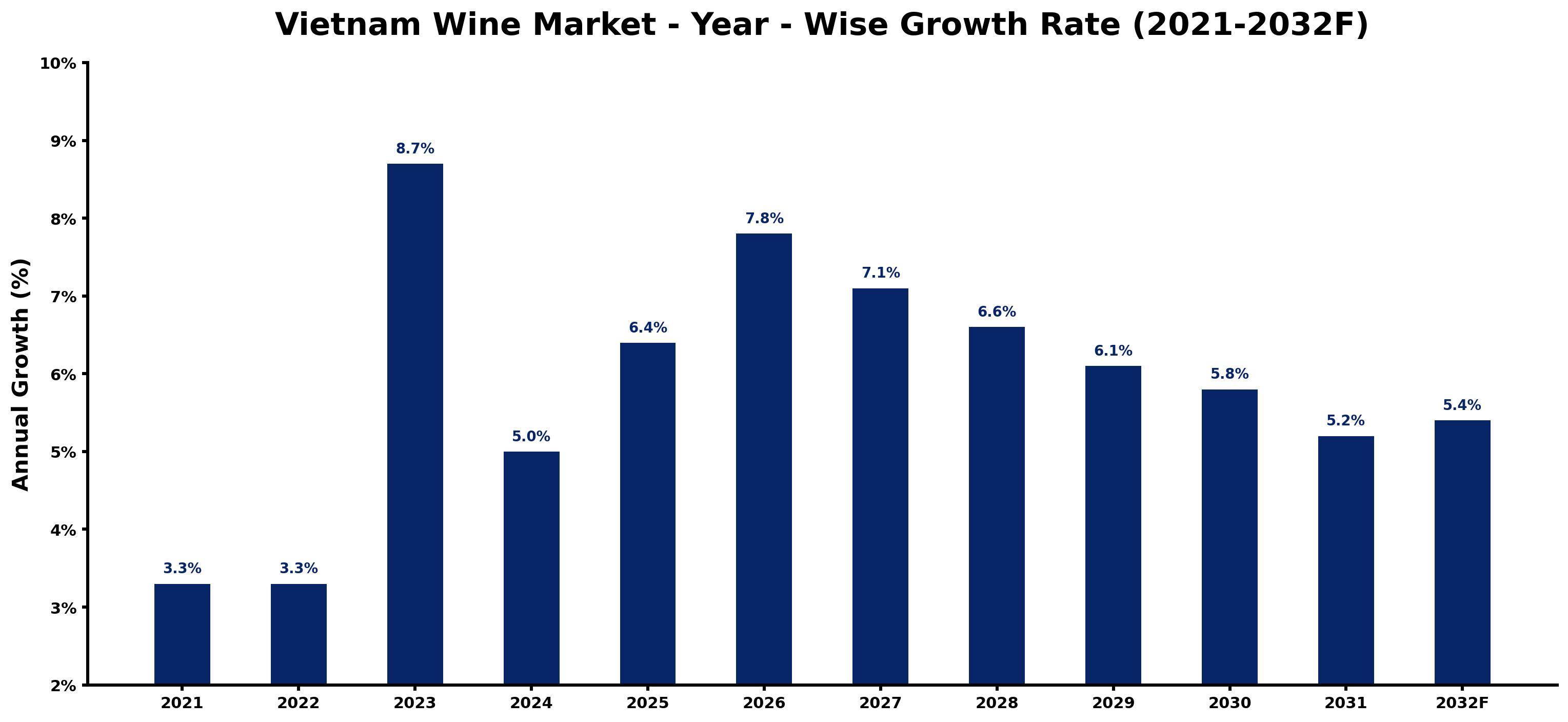
The table below presents the year wise growth rates along with the key drivers influencing the market
| Year | Growth Rate | Major Drivers |
| 2021 | 3.3% | Post-lockdown retail projects highlighted Vietnam's potential for wine consumption growth. |
| 2022 | 3.3% | Urban centers began embracing wine culture, shifting consumption from traditional spirits. |
| 2023 | 8.7% | Local vineyards attracted investment, enhancing quality and variety in domestic wine production. |
| 2024 | 5.0% | Increased expatriate presence in cities elevated interest in global wine brands. |
| 2025 | 6.4% | Millennials and Gen Z consumers prioritize experiential dining, focusing on wine pairings. |
| 2026 | 7.8% | Online retail platforms emerged, simplifying wine accessibility for consumers nationwide. |
| 2027 | 7.1% | Tourism recovery stimulated wine appreciation among international visitors and locals alike. |
| 2028 | 6.6% | Growing interest in health and wellness prompted consumers to explore lighter wines. |
| 2029 | 6.1% | Wine festivals and events became popular, enhancing local community engagement with wines. |
| 2030 | 5.8% | Social media influencers started highlighting wine, shaping consumer preferences and trends. |
| 2031 | 5.2% | Collaborations between local chefs and wineries created unique dining experiences focused on wine. |
| 2032 | 5.4% | Sustainable practices in wine production gained traction, appealing to environmentally conscious consumers. |
Note - Market size estimations and growth projections presented in this report are based on 6Wresearch's advanced forecasting approach, validated with industry datasets as of June 2026.
Vietnam Wine Market Synopsis
The Vietnam Wine Market is projected to reach 7.8% and witness significant growth during the forecast period (2026-2032). This burgeoning sector encompasses the production, import, distribution, and consumption of a diverse array of wines, including red, white, rosé, sparkling, and fortified varieties. The demand for wine in Vietnam has escalated, fueled by shifting consumer preferences, rising disposable incomes, and the influence of urbanization.
Vietnam Wine Market Growth Drivers
Several factors are driving growth in the Vietnam Wine Market. The rapid expansion of the country's middle class has substantially increased the disposable income available for premium and luxury products, including fine wines. Moreover, the cultural shift towards Western lifestyles has made wine consumption more appealing among the younger generation, who view wine as an elegant and sophisticated beverage choice. Additionally, the perception of wine as a healthier alternative to traditional spirits and beers has contributed to its growing acceptance.
- Urbanization is leading to a more cosmopolitan lifestyle, where wine is increasingly preferred in social settings.
- The tourism and hospitality sector is expanding, creating substantial demand for wine in hotels, restaurants, and bars.
- Wine education and appreciation initiatives are becoming more prevalent, enhancing consumer knowledge and interest in wine.
- Marketing strategies targeting affluent consumers are effectively promoting wine consumption as a status symbol.
- Government programs aimed at improving agricultural practices in viticulture are encouraging local production.
Vietnam Wine Market Challenges and Restraints
Despite the favorable growth prospects, the Vietnam Wine Market faces certain challenges. One significant hurdle is the entrenched preference for beer and spirits, which dominate the traditional drinking culture. Moreover, high import taxes and tariffs can inflate the prices of imported wines, reducing their affordability and attractiveness to consumers. The prevalence of counterfeit wines is another concern, eroding consumer trust and damaging the reputation of legitimate brands.
- Market education is required to shift consumer habits that have historically favored beer and spirits.
- High tariffs can deter foreign investment and limit the availability of diverse wine selections in the market.
- The issue of counterfeit wines poses a substantial risk to brand equity and consumer confidence.
- Supply chain disruptions can impact the timely availability of wines, leading to potential sales losses.
- Economic fluctuations may lead to decreased spending on luxury items, including premium wines.
Vietnam Wine Market COVID-19 Impact
The COVID-19 pandemic had a profound impact on the Vietnam Wine Market. The enforcement of lockdowns and social distancing measures resulted in the temporary closure of restaurants, bars, and hotels, significantly affecting on-trade wine consumption. Additionally, supply chain disruptions and logistical challenges hampered the import and distribution of wines during this period. Furthermore, the economic ramifications of the pandemic have altered consumer spending behaviors, potentially affecting the demand for premium and luxury wine offerings.
Vietnam Wine Market Government Investment and Initiatives
The government of Vietnam has recognized the potential of the wine sector as a contributor to economic growth and cultural development. As such, it has initiated several policies aimed at promoting the wine industry. These initiatives include investment in the development of local vineyards and wineries to enhance domestic production and reduce dependency on imports. The government is also focused on improving regulatory frameworks to facilitate foreign investment in the wine sector, while incentivizing tourism ventures that incorporate wine tourism experiences.
- Government policies are encouraging partnerships between local producers and international wine experts to enhance quality.
- Investment in infrastructure for wine distribution and logistics is being prioritized to streamline market access.
- Public campaigns are being launched to educate consumers about wine appreciation and consumption.
- Development of agricultural policies is aimed at improving grape cultivation practices within Vietnam.
- Incentives for hospitality businesses are being explored to promote wine sales in dining establishments.
Vietnam Wine Market Latest Developments (May 2025 - June 2026)
The recent period from May 2025 to June 2026 has witnessed significant developments in the Vietnam Wine Market. There has been a noticeable increase in collaboration between local producers and international wine brands, enhancing the quality and variety available in Vietnam. Additionally, market players have been focusing on sustainability, adopting eco-friendly practices in wine production and packaging. Consumer engagement strategies have also become more sophisticated, utilizing digital platforms for marketing and education about wine.
- Innovative marketing campaigns have been successful in targeting younger demographics and promoting wine culture.
- Increased participation in international wine exhibitions has improved Vietnam's visibility on the global stage.
- Wine tourism has gained traction, with several regions capitalizing on their local vineyards to attract visitors.
- Emerging trends indicate a growing interest in organic and natural wines among consumers.
- Investment in e-commerce solutions has facilitated better access to wines for consumers, particularly during periods of limited physical retail activity.
Vietnam Wine Market - Key Attractiveness of the Report
- 10 Years of Market Numbers
- Historical Data Starting from 2022 to 2025
- Base Year: 2025
- Forecast Data until 2032
- Key Performance Indicators Impacting the Market
- Major Upcoming Developments and Projects
Key Highlights of the Report:
- Vietnam Wine Market Outlook
- Market Size of Vietnam Wine Market, 2025
- Forecast of Vietnam Wine Market, 2032
- Historical Data and Forecast of Vietnam Wine Revenues & Volume for the Period 2022-2032F
- Vietnam Wine Market Trend Evolution
- Vietnam Wine Market Drivers and Challenges
- Vietnam Wine Price Trends
- Vietnam Wine Porter's Five Forces
- Vietnam Wine Industry Life Cycle
- Historical Data and Forecast of Vietnam Wine Market Revenues & Volume By Product Types for the Period 2022-2032F
- Historical Data and Forecast of Vietnam Wine Market Revenues & Volume By Still Wine for the Period 2022-2032F
- Historical Data and Forecast of Vietnam Wine Market Revenues & Volume By Sparkling Wine for the Period 2022-2032F
- Historical Data and Forecast of Vietnam Wine Market Revenues & Volume By Dessert Wine for the Period 2022-2032F
- Historical Data and Forecast of Vietnam Wine Market Revenues & Volume By Fortified Wine for the Period 2022-2032F
- Historical Data and Forecast of Vietnam Wine Market Revenues & Volume By Colors for the Period 2022-2032F
- Historical Data and Forecast of Vietnam Wine Market Revenues & Volume By Red Wine for the Period 2022-2032F
- Historical Data and Forecast of Vietnam Wine Market Revenues & Volume By Rose Wine for the Period 2022-2032F
- Historical Data and Forecast of Vietnam Wine Market Revenues & Volume By White Wine for the Period 2022-2032F
- Historical Data and Forecast of Vietnam Wine Market Revenues & Volume By Other Colors for the Period 2022-2032F
- Historical Data and Forecast of Vietnam Wine Market Revenues & Volume By Distribution Channel for the Period 2022-2032F
- Historical Data and Forecast of Vietnam Wine Market Revenues & Volume By Offline for the Period 2022-2032F
- Historical Data and Forecast of Vietnam Wine Market Revenues & Volume By Online for the Period 2022-2032F
- Vietnam Wine Import Export Trade Statistics
- Market Opportunity Assessment By Product Types
- Market Opportunity Assessment By Colors
- Market Opportunity Assessment By Distribution Channel
- Vietnam Wine Top Companies Market Share
- Vietnam Wine Competitive Benchmarking By Technical and Operational Parameters
- Vietnam Wine Company Profiles
- Vietnam Wine Key Strategic Recommendations






































