Angola Cellulose Acetate Market Growth Rate Analysis (2021 - 2031)
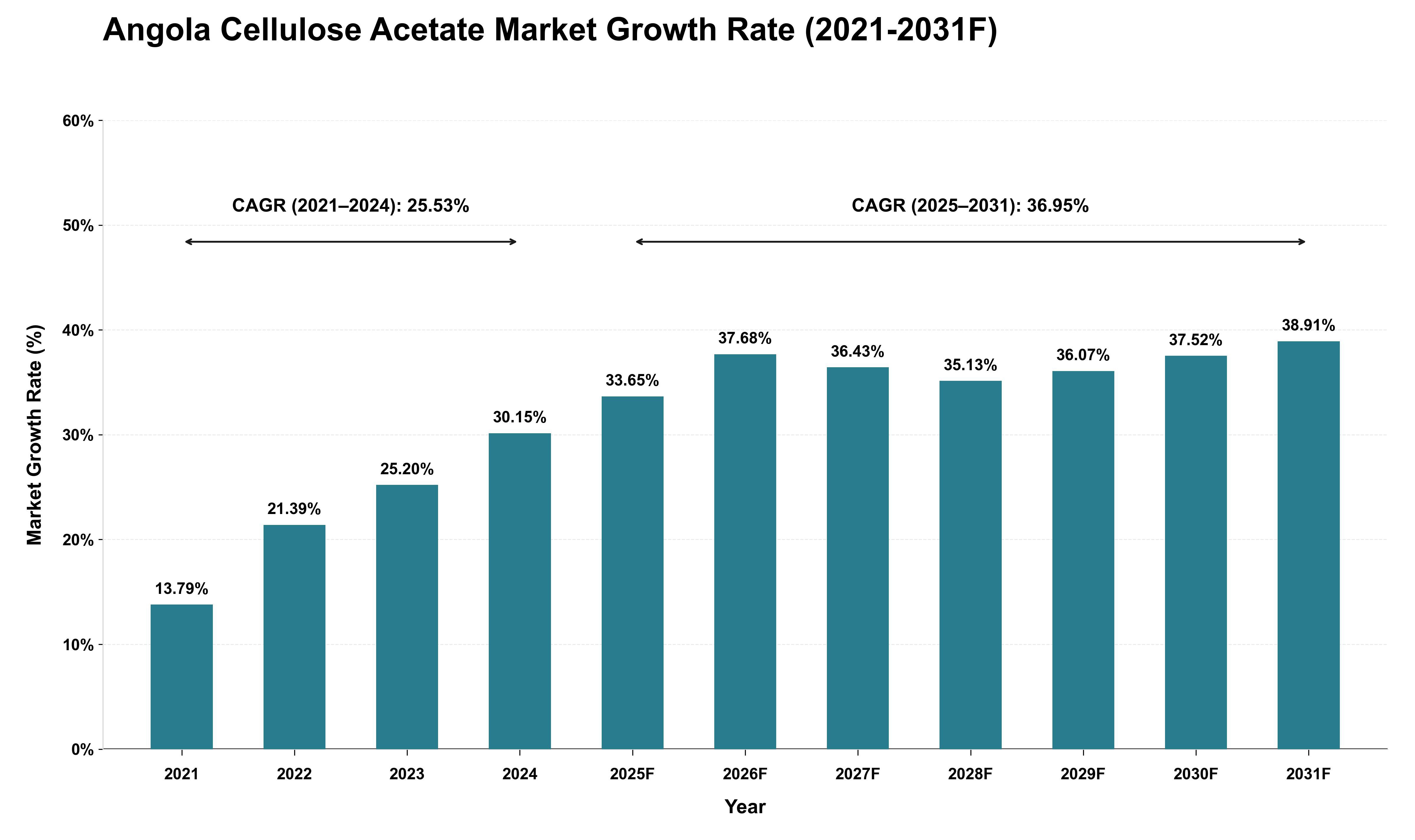
Between 2021 and 2024, the Angola cellulose acetate market experienced a robust CAGR of 25.53%, driven by increasing demand for sustainable materials in various applications, including textiles and packaging. The annual growth rates reflected a significant acceleration, particularly in 2024, where growth reached 30.15%. This trend can be attributed to global shifts towards eco-friendly alternatives amid rising commodity prices and supply chain disruptions that prompted manufacturers to seek substitutes for traditional plastics. Looking ahead to the forecast period from 2025 to 2031, the market is projected to expand at an even more impressive CAGR of 36.95%. This anticipated growth will likely stem from ongoing technological advancements in cellulose acetate production processes and heightened consumer preference for biodegradable products, further enhancing its competitive edge against conventional materials. As global trade dynamics evolve, Angola's reliance on imports may also influence local production capabilities and market positioning within the broader cellulose acetate landscape.
Key Highlights of the Report:
- Angola Cellulose Acetate Market Outlook
- Market Size of Angola Cellulose Acetate Market, 2024
- Forecast of Angola Cellulose Acetate Market, 2031
- Historical Data and Forecast of Angola Cellulose Acetate Revenues & Volume for the Period 2021-2031
- Angola Cellulose Acetate Market Trend Evolution
- Angola Cellulose Acetate Market Drivers and Challenges
- Angola Cellulose Acetate Price Trends
- Angola Cellulose Acetate Porter`s Five Forces
- Angola Cellulose Acetate Industry Life Cycle
- Historical Data and Forecast of Angola Cellulose Acetate Market Revenues & Volume By Type for the Period 2021-2031
- Historical Data and Forecast of Angola Cellulose Acetate Market Revenues & Volume By Fiber for the Period 2021-2031
- Historical Data and Forecast of Angola Cellulose Acetate Market Revenues & Volume By Plastic for the Period 2021-2031
- Historical Data and Forecast of Angola Cellulose Acetate Market Revenues & Volume By Application for the Period 2021-2031
- Historical Data and Forecast of Angola Cellulose Acetate Market Revenues & Volume By Cigarette Filters for the Period 2021-2031
- Historical Data and Forecast of Angola Cellulose Acetate Market Revenues & Volume By Textiles & Apparel for the Period 2021-2031
- Historical Data and Forecast of Angola Cellulose Acetate Market Revenues & Volume By Photographic Films for the Period 2021-2031
- Historical Data and Forecast of Angola Cellulose Acetate Market Revenues & Volume By Tapes & Labels for the Period 2021-2031
- Angola Cellulose Acetate Import Export Trade Statistics
- Market Opportunity Assessment By Type
- Market Opportunity Assessment By Application
- Angola Cellulose Acetate Top Companies Market Share
- Angola Cellulose Acetate Competitive Benchmarking By Technical and Operational Parameters
- Angola Cellulose Acetate Company Profiles
- Angola Cellulose Acetate Key Strategic Recommendations






































