Argentina Facade Market: Import Trend Analysis
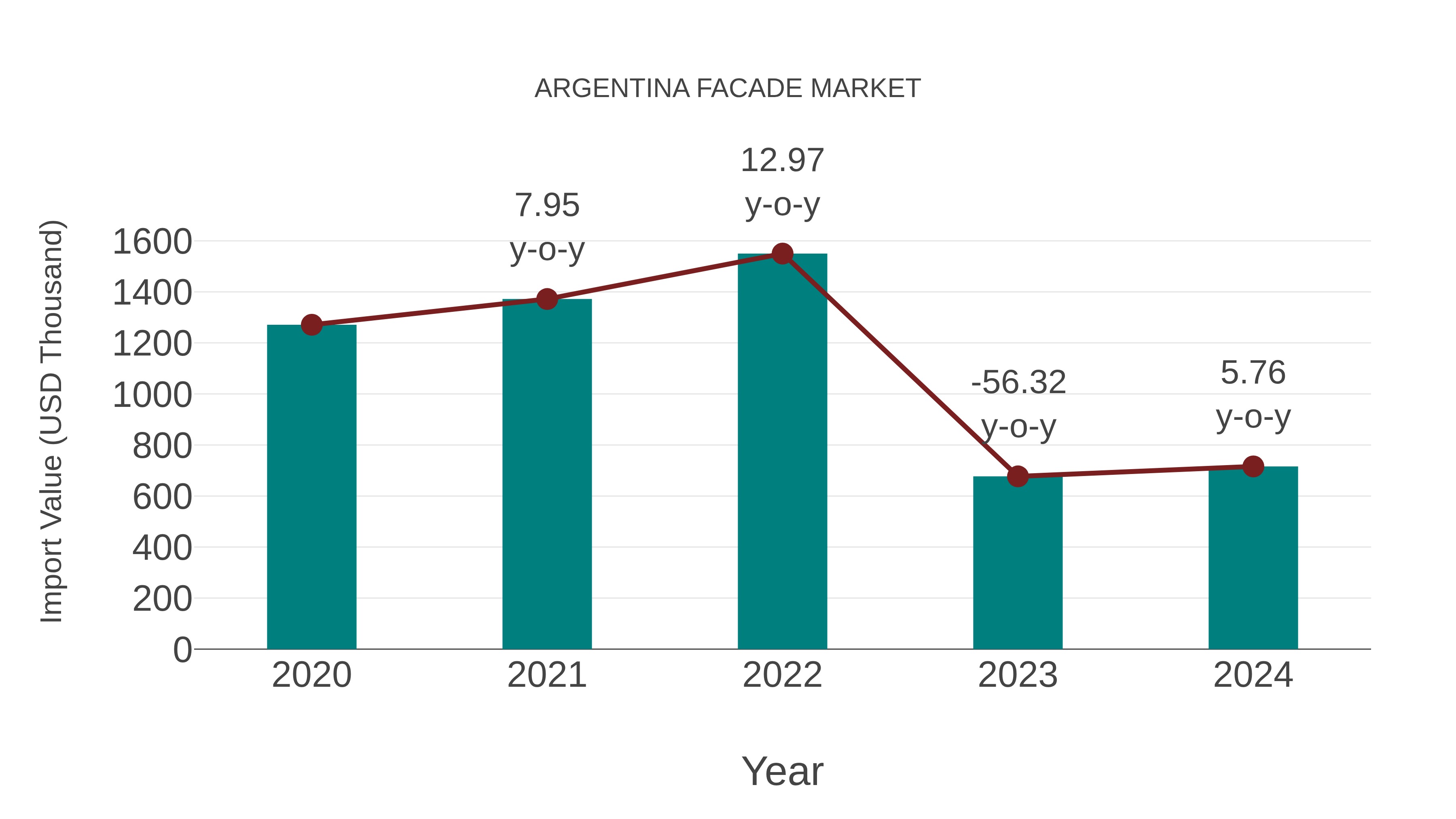
During 2020-2024, the Argentina facade market experienced a negative Compound Annual Growth Rate (CAGR) of -13.37%. However, in 2023-2024, there was a year-on-year growth rate of 5.76%, indicating a slight increase in imports during that period.
Argentina Facade Market Synopsis
The Argentina Facade Market is witnessing steady growth driven by increasing construction activities in residential, commercial, and industrial sectors. Factors such as urbanization, modernization, and the emphasis on energy efficiency are driving the demand for innovative facade solutions in the country. The market offers a wide range of facade materials including glass, aluminum, stone, and composite materials, catering to diverse aesthetic and functional requirements. Key players in the market are focusing on product innovations, sustainability, and customization to meet the evolving needs of customers. Government initiatives promoting sustainable construction practices and regulations mandating energy-efficient building designs are further boosting the adoption of advanced facade systems in Argentina. Overall, the Argentina Facade Market presents significant opportunities for growth and investment in the coming years.
Argentina Facade Market Trends
The Argentina Facade Market is experiencing a shift towards sustainable and energy-efficient building solutions. The increasing awareness of environmental impact and the need to reduce energy consumption has led to a growing demand for facades that offer better insulation, natural lighting, and ventilation. Additionally, there is a trend towards incorporating innovative materials and designs in facades to enhance aesthetics and functionality. The market is also witnessing a preference for smart facades that can dynamically respond to environmental conditions and improve overall building performance. With a focus on sustainability and technological advancements, the Argentina Facade Market is expected to continue evolving towards more efficient and environmentally friendly solutions in the coming years.
Argentina Facade Market Challenges
In the Argentina Facade Market, some challenges faced include economic instability leading to fluctuations in construction activity, lack of standardized building regulations resulting in inconsistencies in facade design requirements, and limited availability of skilled labor for facade installation and maintenance. Additionally, the market faces competition from cheaper imported facade materials, which can impact the demand for locally manufactured products. Political uncertainties and currency fluctuations also pose risks to the market, influencing investment decisions and overall growth. To succeed in this market, companies need to stay abreast of regulatory changes, invest in training programs to develop a skilled workforce, and focus on innovation to differentiate their products and services in a competitive landscape.
Argentina Facade Market Investment Opportunities
The Argentina Facade Market presents various investment opportunities due to the increasing demand for energy-efficient and aesthetically pleasing building exteriors. Investors can explore opportunities in the growing market for sustainable facade materials such as insulated panels, ventilated facades, and green walls. With the government`s focus on promoting sustainable construction practices and the rising trend of green buildings in Argentina, there is a significant potential for investments in innovative facade technologies and solutions. Additionally, the renovation and retrofitting segment of the market offers opportunities for investors to provide cost-effective and environmentally friendly facade solutions to existing buildings. Overall, the Argentina Facade Market offers a promising landscape for investors looking to capitalize on the country`s evolving construction industry and sustainability goals.
Jordan Agar Market Government Policies
In Argentina, government policies related to the facade market focus on promoting energy efficiency and sustainability in building construction. The government introduced the Green Building Council to provide certifications for environmentally friendly buildings, which has led to an increased demand for facade materials that are energy-efficient and environmentally sustainable. Additionally, there are tax incentives and subsidies available for developers and building owners who incorporate green building practices, including the use of energy-efficient facades. The government also enforces strict regulations on facade materials to ensure safety and quality standards are met. Overall, the Argentine government`s policies are aimed at encouraging the adoption of sustainable facade solutions to reduce energy consumption and promote environmentally responsible construction practices.
Argentina Facade Market Future Outlook
The Argentina Facade Market is expected to witness steady growth in the coming years driven by increasing construction activities in the residential, commercial, and industrial sectors. The demand for innovative and energy-efficient facade solutions is likely to rise as building owners and developers focus on reducing energy consumption and environmental impact. Additionally, factors such as urbanization, infrastructure development, and government initiatives promoting sustainable construction practices will further propel market growth. Technological advancements, such as the integration of smart building technologies and the use of sustainable materials, are anticipated to drive the adoption of modern facade systems in Argentina. Overall, the Argentina Facade Market is poised for expansion, offering opportunities for market players to introduce cutting-edge solutions and capitalize on the evolving construction landscape in the country.
Key Highlights of the Report:
- Argentina Facade Market Outlook
- Market Size of Argentina Facade Market, 2025
- Forecast of Argentina Facade Market, 2032
- Historical Data and Forecast of Argentina Facade Revenues & Volume for the Period 2022 - 2032F
- Argentina Facade Market Trend Evolution
- Argentina Facade Market Drivers and Challenges
- Argentina Facade Price Trends
- Argentina Facade Porter's Five Forces
- Argentina Facade Industry Life Cycle
- Historical Data and Forecast of Argentina Facade Market Revenues & Volume By Product for the Period 2022 - 2032F
- Historical Data and Forecast of Argentina Facade Market Revenues & Volume By Ventilated Facades for the Period 2022 - 2032F
- Historical Data and Forecast of Argentina Facade Market Revenues & Volume By Non-ventilated Facades for the Period 2022 - 2032F
- Historical Data and Forecast of Argentina Facade Market Revenues & Volume By Others for the Period 2022 - 2032F
- Historical Data and Forecast of Argentina Facade Market Revenues & Volume By End-use for the Period 2022 - 2032F
- Historical Data and Forecast of Argentina Facade Market Revenues & Volume By Commercial for the Period 2022 - 2032F
- Historical Data and Forecast of Argentina Facade Market Revenues & Volume By Residential for the Period 2022 - 2032F
- Historical Data and Forecast of Argentina Facade Market Revenues & Volume By Industrial for the Period 2022 - 2032F
- Argentina Facade Import Export Trade Statistics
- Market Opportunity Assessment By Product
- Market Opportunity Assessment By End-use
- Argentina Facade Top Companies Market Share
- Argentina Facade Competitive Benchmarking By Technical and Operational Parameters
- Argentina Facade Company Profiles
- Argentina Facade Key Strategic Recommendations






































