Argentina Frozen Processed Meat Market Size, Share & Growth Rate
The Argentina Frozen Processed Meat Market was estimated at USD 291 Million in 2025 and is projected to reach USD 393 Million by 2032, growing at a CAGR of 4.4% from 2026 to 2032. This growth is primarily fueled by the rising consumer inclination towards convenient meal solutions, reflecting a broader trend towards time-saving food options amidst busy lifestyles. Additionally, the increasing accessibility of frozen processed meats through enhanced distribution channels aligns well with the shifting preferences of modern consumers.
Argentina Frozen Processed Meat Market Year-wise Growth Rate and Key Drivers
This graph highlights how the Argentina Frozen Processed Meat Market has steadily grown over the years, supported by major growth factors.
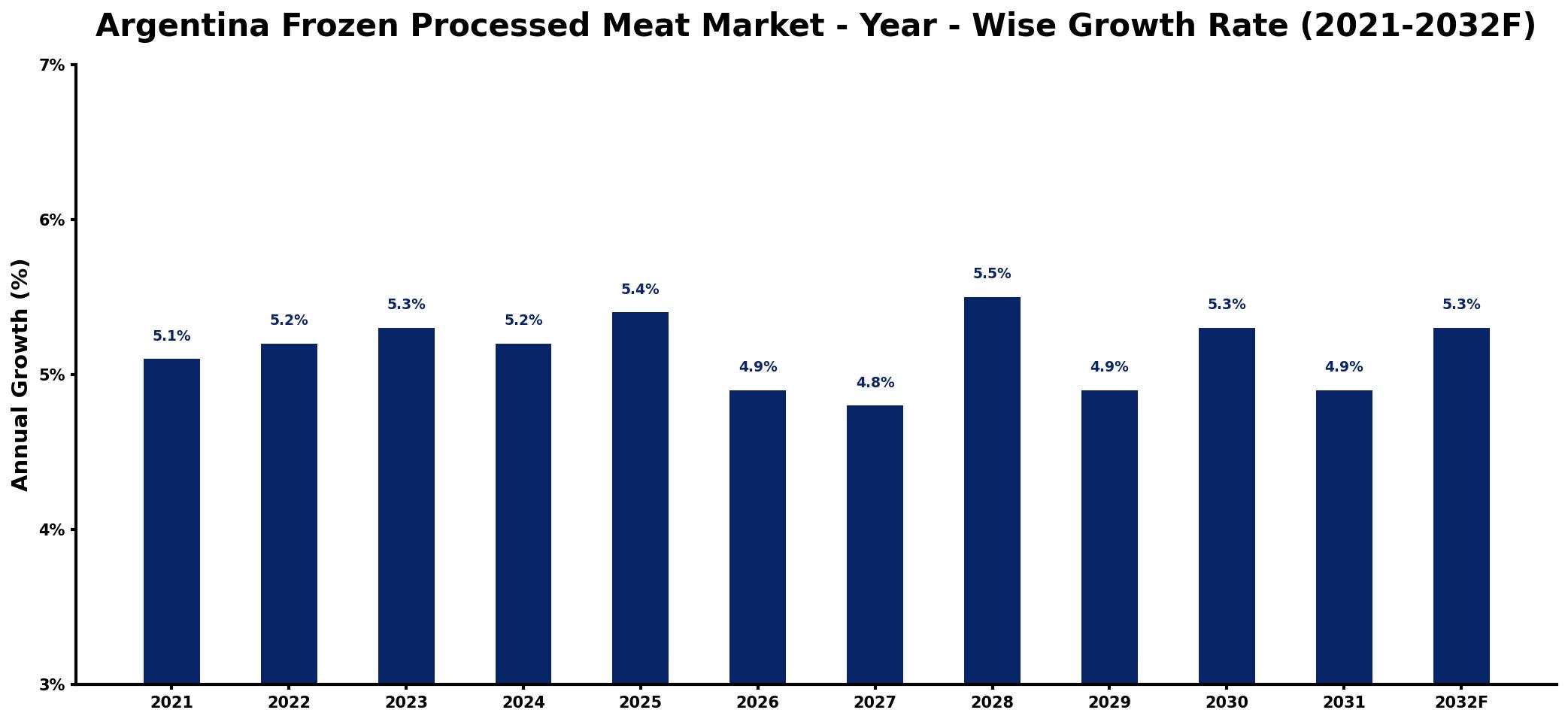
The table below presents the year‑wise growth rates along with the key drivers influencing the market
| Year | Growth Rate | Major Drivers |
| 2021 | 5.1% | Rising consumer health consciousness |
| 2022 | 5.2% | Expansion of retail distribution channels |
| 2023 | 5.3% | Increased demand for convenience foods |
| 2024 | 5.2% | Growing popularity of meal kits |
| 2025 | 5.4% | Surge in online grocery shopping |
| 2026 | 4.9% | Shift towards sustainable sourcing practices |
| 2027 | 4.8% | Emerging trends in gourmet offerings |
| 2028 | 5.5% | Innovations in packaging technology |
| 2029 | 4.9% | Rising interest in plant-based diets |
| 2030 | 5.3% | Increased focus on food safety |
| 2031 | 4.9% | Growth in international trade agreements |
| 2032 | 5.3% | improved raw material availability |
Note: Market size estimations and growth projections presented in this report are based on 6Wresearch's proprietary forecasting methodology, utilizing the latest available industry data, government publications, and primary research inputs.
Argentina Frozen Processed Meat Market Synopsis
The strongest force shaping the Argentina Frozen Processed Meat Market currently is the increasing consumer demand for convenience in food preparation. Busy urban lifestyles are driving consumers to seek out easy-to-cook products, making frozen processed meats like burgers, sausages, and nuggets particularly popular.
Moreover, the landscape is further influenced by a surge in online food delivery services, creating a new avenue for growth. As dietary preferences evolve, consumers are leaning towards innovative and varied offerings, prompting companies to enhance product quality and variety to meet these expectations.
Argentina Frozen Processed Meat Market Key Takeaways
- Consumer preferences are shifting towards ready-to-eat and convenient frozen meat products.
- There is a growing demand for gourmet and premium frozen meat options due to increased disposable incomes.
- Health-conscious consumers are influencing the market towards more natural and perceived healthier processed meat alternatives.
- The market is experiencing a trend towards sustainable sourcing and environmentally-friendly production methods.
- Technological advancements in freezing and packaging are enhancing product shelf life and quality.
Evaluation of Restraints in Argentina Frozen Processed Meat Market
Despite its growth potential, the Argentina Frozen Processed Meat Market faces significant restraints. Economic instability and fluctuating currency rates are impacting production costs and consumer purchasing power. Additionally, stringent food safety regulations necessitate compliance and can pose challenges for manufacturers aiming to maintain quality while managing expenses. There is also increasing competition from both domestic brands and fresh meat alternatives, leading to price pressures and necessitating strategic adaptability among market players.
Argentina Frozen Processed Meat Market Trends
Current trends in the Argentina Frozen Processed Meat Market highlight a pronounced consumer preference for convenience, with ready-to-eat products gaining traction. The rise of premium frozen meat offerings reflects a shift in dietary habits, driven by higher disposable incomes and a focus on gourmet experiences. Furthermore, health and wellness are significant factors influencing purchasing decisions, prompting a demand for products perceived as healthier or more natural. Sustainability considerations are also reshaping the market as consumers prioritize ethically sourced and environmentally responsible food options.
Argentina Frozen Processed Meat Market Opportunities
The Argentina Frozen Processed Meat Market is ripe with investment opportunities. The increasing demand for convenient meal solutions positions frozen processed meats as a strategic segment for growth. Argentinas reputation for high-quality meat production further enhances its attractiveness for investors. Moreover, advancements in freezing technology and packaging present avenues for innovation, providing a potential edge for companies willing to invest in modernizing their offerings. With a favorable market environment and evolving consumer preferences, opportunities for expansion and profitability abound.
Government Initiatives in the Argentina Frozen Processed Meat Market
Government initiatives in Argentina aim to uphold food safety standards and product traceability in the Frozen Processed Meat Market. Regulatory frameworks have been established to monitor production practices, ensuring compliance with hygiene and safety protocols. These initiatives also include support for export processes, facilitating trade agreements that help enhance the industrys competitiveness on a global scale. Overall, government policies play a crucial role in maintaining quality and fostering growth within the market.
Future Insights of the Argentina Frozen Processed Meat Market
Looking forward to the period of 2026-2032, the Argentina Frozen Processed Meat Market is positioned for continued growth. Key drivers such as urbanization and an ongoing shift towards convenience foods will likely sustain demand. Innovation in product offerings, particularly those that align with health trends, will be essential as consumers increasingly seek quality and nutritional value. Additionally, expanding distribution channels and the potential entry of international players can stimulate competition, ultimately enhancing the market landscape.
Argentina Frozen Processed Meat Market Latest Developments (2025 - 2026)
Recent developments in the Argentina Frozen Processed Meat Market indicate a growing focus on sustainability and health-oriented product innovations. Companies are increasingly investing in research and development to create offerings that cater to health-conscious consumers while ensuring compliance with rigorous food safety standards. Moreover, collaborations between food manufacturers and technology providers are emerging to enhance product preservation and quality through advanced freezing techniques.
Argentina Frozen Processed Meat Market - Key Attractiveness of the Report
- 10 Years of Market Numbers
- Historical Data Starting from 2022 to 2025
- Base Year: 2025
- Forecast Data until 2032
- Key Performance Indicators Impacting the Market
- Major Upcoming Developments and Projects
Key Highlights of the Report:
- Argentina Frozen Processed Meat Market Outlook
- Market Size of Argentina Frozen Processed Meat Market, 2025
- Forecast of Argentina Frozen Processed Meat Market, 2032
- Historical Data and Forecast of Argentina Frozen Processed Meat Revenues & Volume for the Period 2022-2032F
- Argentina Frozen Processed Meat Market Trend Evolution
- Argentina Frozen Processed Meat Market Drivers and Challenges
- Argentina Frozen Processed Meat Price Trends
- Argentina Frozen Processed Meat Porter's Five Forces
- Argentina Frozen Processed Meat Industry Life Cycle
- Historical Data and Forecast of Argentina Frozen Processed Meat Market Revenues & Volume By Product Type for the Period 2022-2032F
- Historical Data and Forecast of Argentina Frozen Processed Meat Market Revenues & Volume By Beef for the Period 2022-2032F
- Historical Data and Forecast of Argentina Frozen Processed Meat Market Revenues & Volume By Pork for the Period 2022-2032F
- Historical Data and Forecast of Argentina Frozen Processed Meat Market Revenues & Volume By Chicken for the Period 2022-2032F
- Historical Data and Forecast of Argentina Frozen Processed Meat Market Revenues & Volume By Mutton for the Period 2022-2032F
- Historical Data and Forecast of Argentina Frozen Processed Meat Market Revenues & Volume By Others for the Period 2022-2032F
- Historical Data and Forecast of Argentina Frozen Processed Meat Market Revenues & Volume By Application for the Period 2022-2032F
- Historical Data and Forecast of Argentina Frozen Processed Meat Market Revenues & Volume By Retail Store for the Period 2022-2032F
- Historical Data and Forecast of Argentina Frozen Processed Meat Market Revenues & Volume By Online Sale for the Period 2022-2032F
- Argentina Frozen Processed Meat Import Export Trade Statistics
- Market Opportunity Assessment By Product Type
- Market Opportunity Assessment By Application
- Argentina Frozen Processed Meat Top Companies Market Share
- Argentina Frozen Processed Meat Competitive Benchmarking By Technical and Operational Parameters
- Argentina Frozen Processed Meat Company Profiles
- Argentina Frozen Processed Meat Key Strategic Recommendations






































