Argentina Kefir Market Size, Share & Growth Rate
The Argentina Kefir Market was estimated at USD 292 Million in 2025 and is projected to reach USD 409 Million by 2032, growing at a CAGR of 4.9% from 2026 to 2032. This upward trajectory is driven largely by the increasing consumer demand for probiotic-rich foods, which are recognized for their substantial health benefits. Additionally, the rising trend towards clean-label products and local sourcing is enhancing the appeal of kefir among Argentine consumers, creating a fertile ground for growth.
Argentina Kefir Market Year-wise Growth Rate and Key Drivers
This graph highlights how the Argentina Kefir Market has steadily grown over the years, supported by major growth factors.
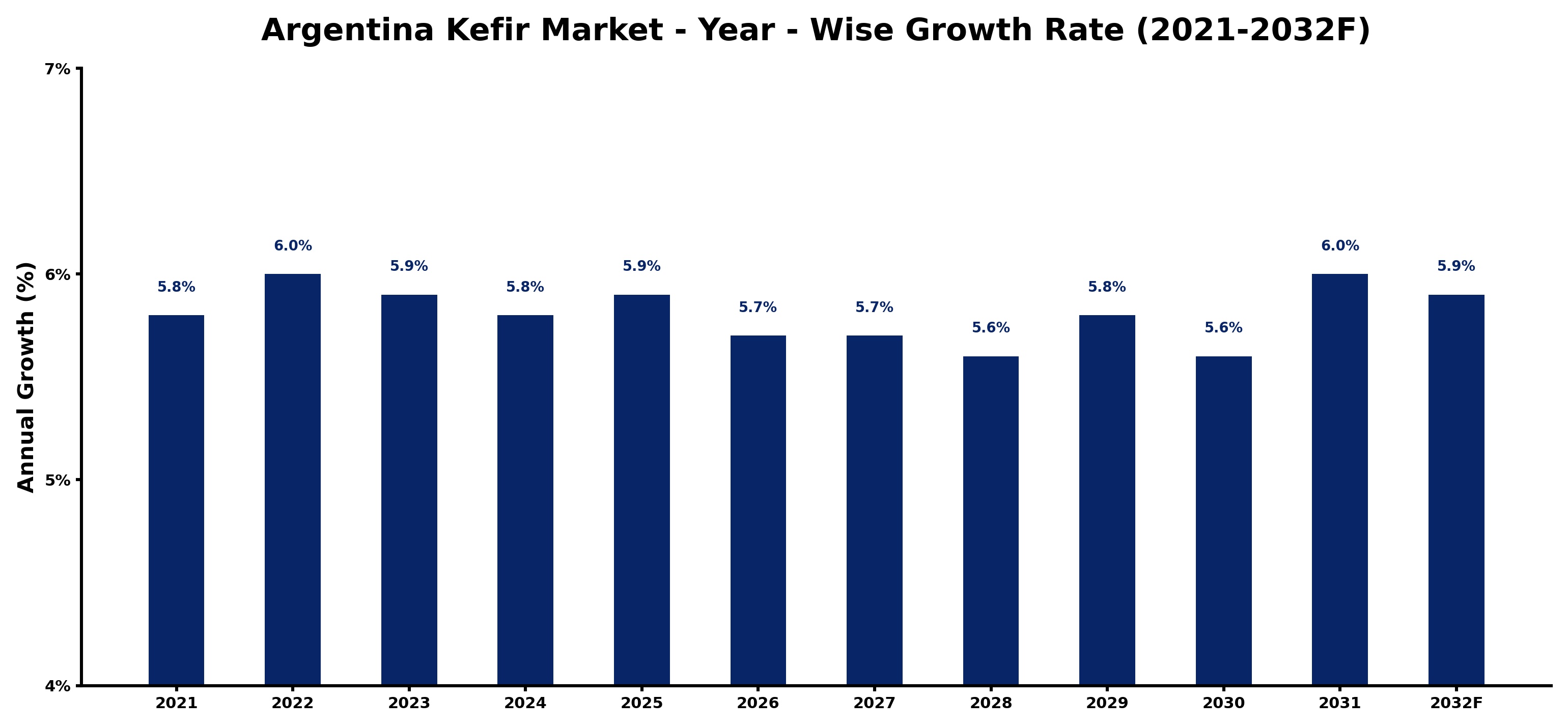
The table below presents the year‑wise growth rates along with the key drivers influencing the market
| Year | Growth Rate | Major Drivers |
| 2021 | 5.8% | Health benefits gained consumer attention |
| 2022 | 6.0% | Increased awareness of probiotics |
| 2023 | 5.9% | Diverse flavor offerings attracted consumers |
| 2024 | 5.8% | Growing demand for organic kefir |
| 2025 | 5.9% | Innovative packaging enhanced shelf appeal |
| 2026 | 5.7% | Rising popularity of dairy alternatives |
| 2027 | 5.7% | Kefir-based products entered new markets |
| 2028 | 5.6% | Increased marketing efforts drove sales |
| 2029 | 5.8% | Industrial activity supported growth |
| 2030 | 5.6% | Emerging trends in functional beverages |
| 2031 | 6.0% | Sustainability initiatives attracted eco-conscious buyers |
| 2032 | 5.9% | Enhanced distribution networks improved availability |
Note - Market size estimations and growth projections presented in this report are based on 6Wresearch’s advanced forecasting approach, validated with industry datasets as of June 2026.
Argentina Kefir Market Synopsis
In Argentina, kefir has recently emerged as a staple for health-conscious consumers seeking functional foods that support digestive health and immunity. The rising awareness about these benefits, combined with a growing lactose-intolerant population, is positioning kefir as a favored alternative in the dairy sector.
Market players are actively responding to this demand surge by diversifying their offerings and enhancing product visibility. Innovative marketing initiatives aimed at educating consumers on the nutritional value of kefir are becoming increasingly crucial for driving market penetration in a competitive landscape dominated by traditional dairy products.
Argentina Kefir Market Key Takeaways
- The market is projected to achieve significant growth driven by heightened health consciousness among consumers.
- Kefir's probiotic properties and benefits for lactose-intolerant individuals are key demand drivers.
- Growing trends for clean-label and organic products are influencing product formulations.
- Distribution challenges remain, particularly in remote areas lacking adequate cold chain infrastructure.
- Strategic education campaigns are essential to raise awareness of kefir's health benefits among potential consumers.
Evaluation of Restraints in Argentina Kefir Market
Despite the promising growth trajectory of the Argentina kefir market, several restraints are hindering broader market adoption. A significant challenge is the general lack of awareness and understanding surrounding kefir's health benefits among consumers. This knowledge gap limits the market's penetration, as many potential consumers remain unaware of the nutritional advantages kefir offers. Furthermore, the perishable nature of kefir creates complexities in distribution and shelf-life management. In regions where cold chain logistics are inadequate, the availability of kefir products diminishes, particularly in smaller towns and remote areas. These constraints necessitate innovative strategies from industry stakeholders to effectively raise consumer awareness and improve distribution networks.
Argentina Kefir Market Trends
Current trends indicate a strong preference among consumers for natural, organic ingredients in their food and beverages, which is propelling the kefir market forward. Health-conscious consumers are gravitating toward products that align with their lifestyle choices, favoring those that are free from artificial additives. Additionally, the rise of social media as a platform for wellness education is fostering interest in kefir, with influencers and health advocates promoting its digestive and immune-boosting properties. As these trends continue to evolve, we can expect more innovative product formats and flavor profiles to emerge, catering to diverse consumer preferences.
Argentina Kefir Market Opportunities
The Argentina kefir market presents considerable growth and investment opportunities, particularly in the realms of product innovation and consumer education. Developing diverse flavor options and formulations, such as lactose-free or plant-based variants, can attract a wider audience. Furthermore, expanding the distribution channels to include e-commerce platforms and specialty health stores can enhance market accessibility. Collaborative efforts with health professionals to promote kefir's benefits will also encourage more consumers to incorporate this probiotic-rich food into their diets, thus fueling market expansion.
Government Initiatives in the Argentina Kefir Market
The Argentine government is actively engaged in ensuring the quality and safety of food products, including kefir. Regulations are in place that govern food processing standards and labeling requirements, which aim to promote transparency for consumers. These initiatives not only help to guarantee product safety but also support domestic production efforts. Furthermore, government-backed programs may provide incentives for local producers to innovate and expand their offerings, fostering a robust environment for the kefir market.
Future Insights of the Argentina Kefir Market
Looking ahead to the period from 2026 to 2032, the Argentina kefir market is expected to continue its upward trend, driven by ongoing consumer interest in health and wellness. The integration of technology in production and distribution processes will likely enhance product quality and availability, particularly in under-served regions. Additionally, as more consumers become educated about the benefits of probiotics, the demand for kefir is poised to surge. Strategic partnerships within the food and wellness sectors will also play a critical role in shaping the future landscape of the market.
Argentina Kefir Market Latest Developments (May 2025 - June 2026)
Recently, the Argentine kefir market has seen a notable increase in product launches that emphasize natural and organic ingredients. Companies are focusing on enhancing their brand presence through targeted marketing campaigns that highlight the health benefits of kefir. Moreover, several initiatives aimed at improving distribution efficiency are being implemented, particularly in regions with less access to cold chain logistics, allowing for wider consumer reach. Collaborations with health-focused organizations are also becoming more common, signaling a collective effort to educate consumers about the advantages of incorporating kefir into their diets.
Argentina Kefir Market - Key Attractiveness of the Report
- 10 Years of Market Numbers
- Historical Data Starting from 2022 to 2025
- Base Year: 2025
- Forecast Data until 2032
- Key Performance Indicators Impacting the Market
- Major Upcoming Developments and Projects
Key Highlights of the Report:
- Argentina Kefir Market Outlook
- Market Size of Argentina Kefir Market, 2025
- Forecast of Argentina Kefir Market, 2032
- Historical Data and Forecast of Argentina Kefir Revenues & Volume for the Period 2022-2032F
- Argentina Kefir Market Trend Evolution
- Argentina Kefir Market Drivers and Challenges
- Argentina Kefir Price Trends
- Argentina Kefir Porter's Five Forces
- Argentina Kefir Industry Life Cycle
- Historical Data and Forecast of Argentina Kefir Market Revenues & Volume By Nature for the Period 2022-2032F
- Historical Data and Forecast of Argentina Kefir Market Revenues & Volume By Organic for the Period 2022-2032F
- Historical Data and Forecast of Argentina Kefir Market Revenues & Volume By Conventional for the Period 2022-2032F
- Historical Data and Forecast of Argentina Kefir Market Revenues & Volume By Product Types for the Period 2022-2032F
- Historical Data and Forecast of Argentina Kefir Market Revenues & Volume By Flavored for the Period 2022-2032F
- Historical Data and Forecast of Argentina Kefir Market Revenues & Volume By Unflavored for the Period 2022-2032F
- Historical Data and Forecast of Argentina Kefir Market Revenues & Volume By Applications for the Period 2022-2032F
- Historical Data and Forecast of Argentina Kefir Market Revenues & Volume By Foods and beverages for the Period 2022-2032F
- Historical Data and Forecast of Argentina Kefir Market Revenues & Volume By Pharmaceutical for the Period 2022-2032F
- Historical Data and Forecast of Argentina Kefir Market Revenues & Volume By Source for the Period 2022-2032F
- Historical Data and Forecast of Argentina Kefir Market Revenues & Volume By Animal milk for the Period 2022-2032F
- Historical Data and Forecast of Argentina Kefir Market Revenues & Volume By Soy milk for the Period 2022-2032F
- Historical Data and Forecast of Argentina Kefir Market Revenues & Volume By Coconut milk for the Period 2022-2032F
- Historical Data and Forecast of Argentina Kefir Market Revenues & Volume By Others for the Period 2022-2032F
- Argentina Kefir Import Export Trade Statistics
- Market Opportunity Assessment By Nature
- Market Opportunity Assessment By Product Types
- Market Opportunity Assessment By Applications
- Market Opportunity Assessment By Source
- Argentina Kefir Top Companies Market Share
- Argentina Kefir Competitive Benchmarking By Technical and Operational Parameters
- Argentina Kefir Company Profiles
- Argentina Kefir Key Strategic Recommendations






































