Azerbaijan Digital Signature Market Size & Growth Rate (2026-2032)
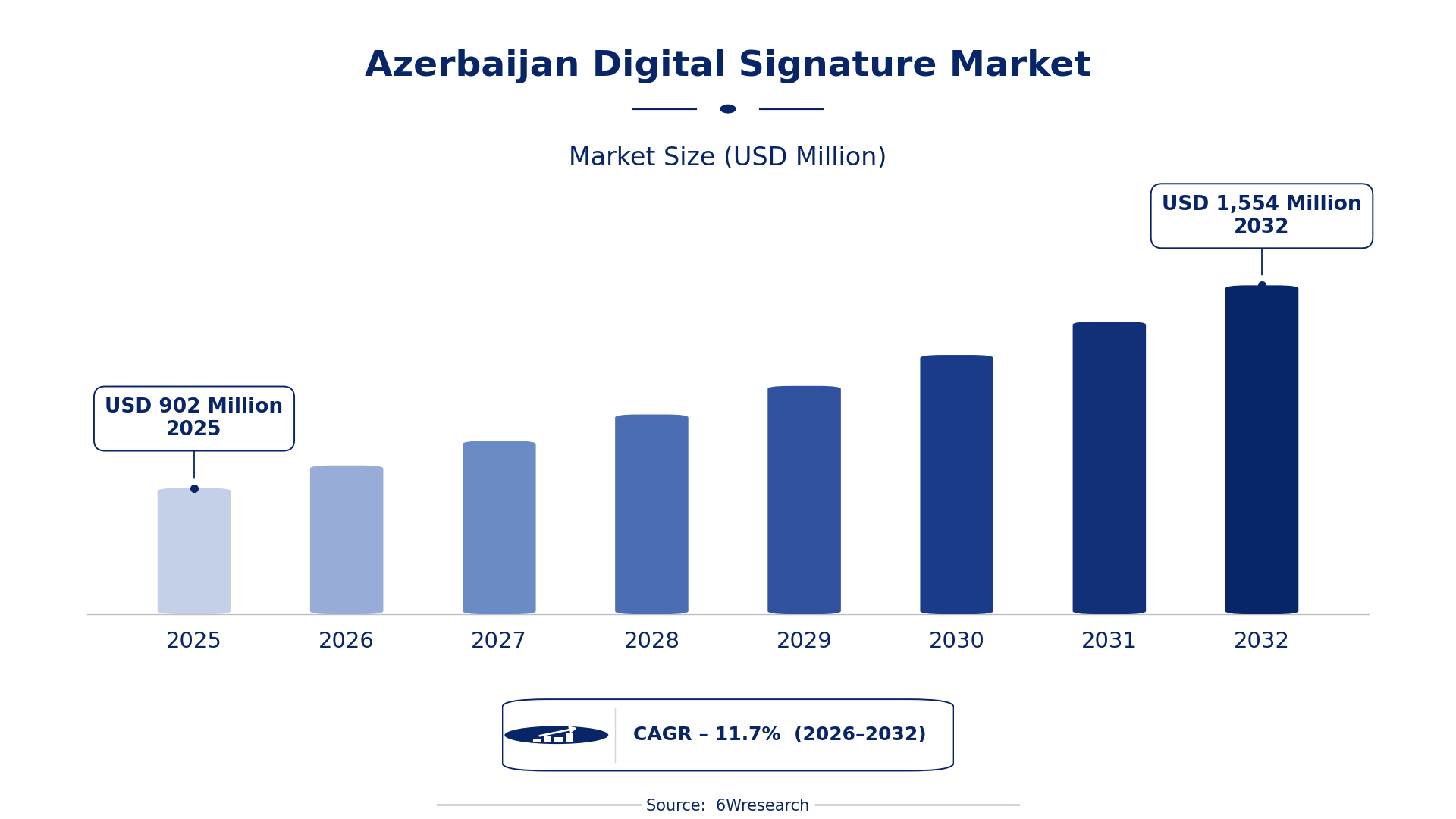
The Azerbaijan Digital Signature Market was estimated at USD 902 Million in 2025 and is projected to reach USD 1554 Million by 2032, growing at a CAGR of 11.7% from 2026 to 2032.
Azerbaijan Digital Signature Market Synopsis
The digital signature market in Azerbaijan is experiencing notable growth, driven by the increased reliance on secure electronic transactions. As organizations move away from traditional paper-based methods, the demand for reliable electronic signatures is surging, reshaping how businesses operate.
Looking ahead, the market is set to expand even further, fueled by ongoing digital transformation initiatives across various sectors. As businesses and government agencies increasingly prioritize security and efficiency, the adoption of digital signatures will likely accelerate, leading to a more streamlined approach to document management.
Azerbaijan Digital Signature Market Year-wise Growth Rate and Key Drivers
This graph illustrates the annual growth rates of the Azerbaijan Digital Signature Market from 2021 to 2032, highlighting a steady upward trajectory and projected expansion over the forecast period.
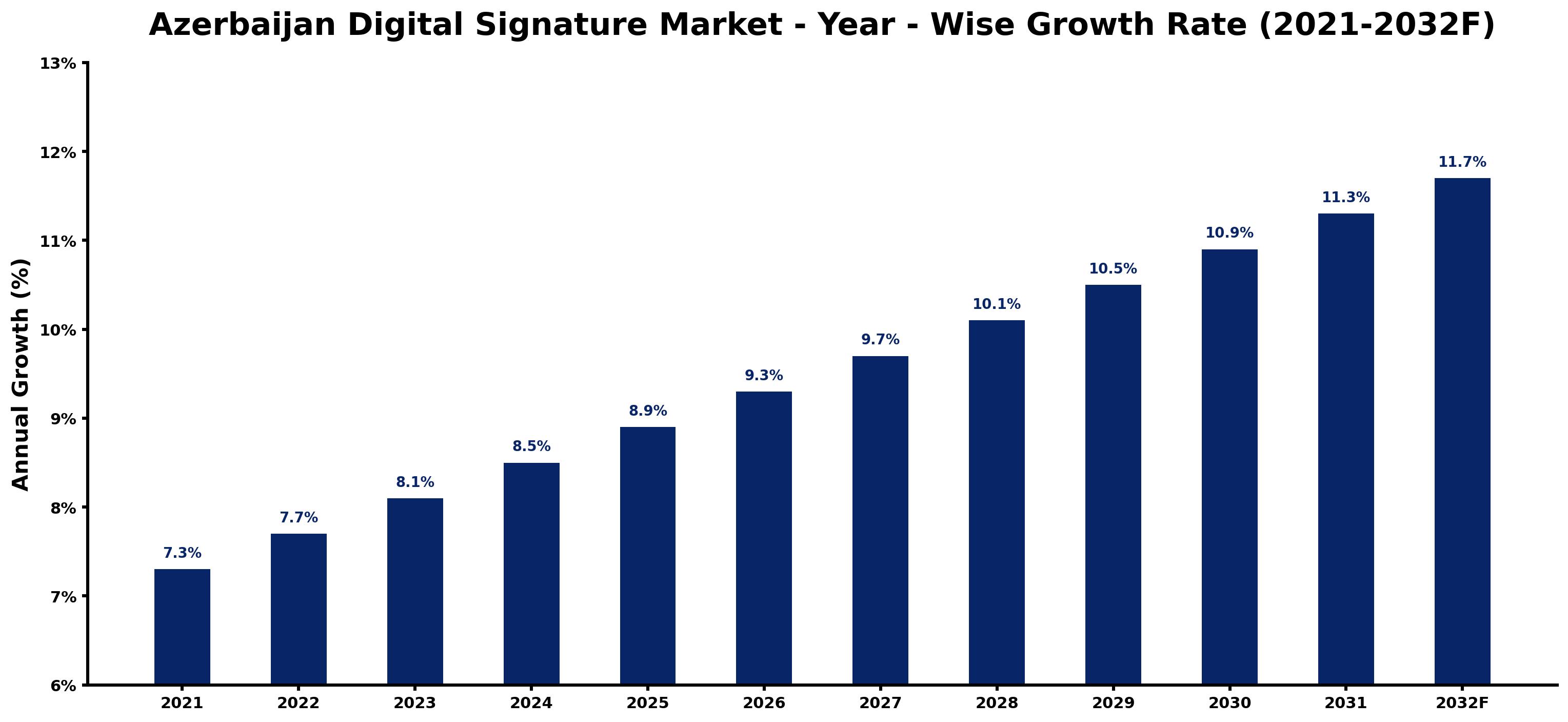
The table below presents the year‑wise growth rates along with the key drivers influencing the market
| Year | Growth Rate | Major Drivers |
| 2021 | 7.3% | Adoption of e-Government framework by Azerbaijan government. |
| 2022 | 7.7% | Increased cybersecurity regulations mandating digital identity verification. |
| 2023 | 8.1% | Growing use of blockchain for secure online transactions. |
| 2024 | 8.5% | Launch of nationwide digital identity card program. |
| 2025 | 8.9% | Regulatory pressure for secure electronic document management. |
| 2026 | 9.3% | Surge in digital transactions driving electronic signature need. |
| 2027 | 9.7% | Rise in public sector digitization initiatives boosting usage. |
| 2028 | 10.1% | Partnerships with tech firms enhancing digital signature solutions. |
| 2029 | 10.5% | Emergence of fintech innovations incorporating digital signatures. |
| 2030 | 10.9% | Increased foreign investment in Azerbaijan's digital infrastructure. |
| 2031 | 11.3% | Mandatory use of digital signatures in government contracts. |
| 2032 | 11.7% | Expanding digital literacy among population enhances adoption. |
Note: Market size estimations and growth projections presented in this report are based on 6Wresearch's proprietary forecasting methodology, utilizing the latest available industry data, government publications, and primary research inputs.
Azerbaijan Digital Signature Market Key Takeaways
Below are some of the specific key takeaways from the market, including:
- The market is on a growth trajectory, projected to reach USD 1554 Million by 2032.
- Government initiatives are playing a crucial role in promoting digital signatures.
- There is a rising demand for secure electronic document signing solutions among enterprises.
- Concerns over data privacy and document integrity are driving adoption.
- Technological advancements in cryptography are enhancing the security of digital signatures.
Evaluation of Restraints in Azerbaijan Digital Signature Market
Despite the positive outlook, challenges remain that could hinder market growth. One of the primary issues is a lack of awareness regarding the benefits and legality of digital signatures. Many businesses still cling to traditional methods, hampering the shift to digital solutions. Additionally, concerns about the security of digital signature systems often cause hesitancy among potential users.
Furthermore, organizations must navigate the complex legal and regulatory environment surrounding digital signatures. Keeping up with compliance and ensuring interoperability with existing systems adds another layer of difficulty for businesses looking to adopt these technologies.
Azerbaijan Digital Signature Market Trends
The trend toward digital transformation is undeniably shaping the Azerbaijan Digital Signature Market. Organizations are increasingly adopting e-commerce and remote work models, creating a heightened need for secure electronic signatures. This shift is amplifying the focus on regulatory compliance and data security, compelling businesses to implement robust solutions.
Another emerging trend is the integration of advanced technologies, such as biometric authentication and enhanced cryptographic methods. These innovations are not only improving the security of digital signatures but also increasing user trust, which is essential for widespread adoption.
Azerbaijan Digital Signature Market Opportunities
Investment opportunities abound in the Azerbaijan Digital Signature Market. With government support for digital initiatives and the ongoing push for efficient document management solutions, businesses that provide innovative digital signature technologies stand to gain significantly. Furthermore, as industries adapt to more stringent compliance measures, there is a growing need for advanced solutions that meet regulatory standards.
The rising trend of remote work also opens doors for service providers offering cloud-based digital signature solutions. This model not only enhances accessibility but also meets the evolving demands of the workforce, creating a fertile ground for growth.
Government Initiatives in the Azerbaijan Digital Signature Market
The Azerbaijani government is actively shaping the digital signature market through various policies aimed at bolstering electronic authentication. These efforts not only provide regulatory clarity but also enhance consumer confidence in digital transactions. As the government prioritizes digital initiatives, the regulatory environment is evolving to support broader adoption of electronic signatures.
- A recently completed initiative involved the establishment of a national electronic signature framework to standardize practices and boost trust in digital transactions.
- Currently underway is a government program focused on integrating digital signature solutions within e-government services, aiming to streamline public sector processes.
- A planned public-private partnership is expected to enhance technological infrastructure for secure digital transactions, set to begin in mid-2026.
- Recent regulatory updates have been introduced to ensure that digital signatures comply with international standards, reinforcing their legality and acceptance.
- A national awareness campaign is planned to educate businesses and consumers about the benefits and legality of digital signatures, expected to launch in early 2025.
Future Insights of the Azerbaijan Digital Signature Market
Between 2026 and 2032, the Azerbaijan Digital Signature Market is anticipated to undergo significant evolution. With ongoing government support and increasing demand for secure electronic transactions, the adoption rate is likely to accelerate. As organizations continue to embrace digital solutions, those that focus on delivering innovative and compliant technologies will capture the lion's share of the market.
Additionally, partnerships between technology providers and regulatory bodies will play an essential role in establishing trust. As the market matures, standardization and improved interoperability will further enhance the effectiveness of digital signatures, paving the way for increased efficiency and reduced operational costs.
Azerbaijan Digital Signature Market Latest Developments
In the past year, activity within the Azerbaijan Digital Signature Market has accelerated, marked by innovative developments and regulatory updates. As organizations adopt digital signatures at a growing pace, the emphasis on security and compliance has never been more pronounced. This surge reflects a significant shift in how businesses approach document signing and transaction management.
- Launched in early 2025, a new digital signature platform aims to improve user experience and streamline document workflows for businesses across various sectors.
- A major technology vendor is currently implementing an upgrade to its digital signature services, enhancing security features and user accessibility.
- An initiative that began in Q4 2025 focuses on establishing partnerships with local businesses to foster the adoption of digital signatures in SMEs.
- Upcoming in late 2026 is the introduction of a comprehensive regulatory framework designed to ensure the interoperability of digital signature solutions across different industries.
- A pilot program is set to be rolled out in early 2026, testing new biometric authentication methods for digital signatures to enhance security.
Azerbaijan Digital Signature Market - Key Attractiveness of the Report
- 10 Years of Market Numbers
- Historical Data Starting from 2022 to 2025
- Base Year: 2025
- Forecast Data until 2032
- Key Performance Indicators Impacting the Market
- Major Upcoming Developments and Projects
Key Highlights of the Report:
- Azerbaijan Digital Signature Market Outlook
- Market Size of Azerbaijan Digital Signature Market, 2025
- Forecast of Azerbaijan Digital Signature Market, 2032
- Historical Data and Forecast of Azerbaijan Digital Signature Revenues & Volume for the Period 2022-2032F
- Azerbaijan Digital Signature Market Trend Evolution
- Azerbaijan Digital Signature Market Drivers and Challenges
- Azerbaijan Digital Signature Price Trends
- Azerbaijan Digital Signature Porter's Five Forces
- Azerbaijan Digital Signature Industry Life Cycle
- Historical Data and Forecast of Azerbaijan Digital Signature Market Revenues & Volume By Component for the Period 2022-2032F
- Historical Data and Forecast of Azerbaijan Digital Signature Market Revenues & Volume By Solutions for the Period 2022-2032F
- Historical Data and Forecast of Azerbaijan Digital Signature Market Revenues & Volume By Services for the Period 2022-2032F
- Historical Data and Forecast of Azerbaijan Digital Signature Market Revenues & Volume By Solution for the Period 2022-2032F
- Historical Data and Forecast of Azerbaijan Digital Signature Market Revenues & Volume By Software for the Period 2022-2032F
- Historical Data and Forecast of Azerbaijan Digital Signature Market Revenues & Volume By Hardware for the Period 2022-2032F
- Historical Data and Forecast of Azerbaijan Digital Signature Market Revenues & Volume By Vertical for the Period 2022-2032F
- Historical Data and Forecast of Azerbaijan Digital Signature Market Revenues & Volume By BFSI for the Period 2022-2032F
- Historical Data and Forecast of Azerbaijan Digital Signature Market Revenues & Volume By Government for the Period 2022-2032F
- Historical Data and Forecast of Azerbaijan Digital Signature Market Revenues & Volume By Defense for the Period 2022-2032F
- Historical Data and Forecast of Azerbaijan Digital Signature Market Revenues & Volume By Legal for the Period 2022-2032F
- Historical Data and Forecast of Azerbaijan Digital Signature Market Revenues & Volume By Real Estate for the Period 2022-2032F
- Historical Data and Forecast of Azerbaijan Digital Signature Market Revenues & Volume By Organization Size for the Period 2022-2032F
- Historical Data and Forecast of Azerbaijan Digital Signature Market Revenues & Volume By Large Enterprises for the Period 2022-2032F
- Historical Data and Forecast of Azerbaijan Digital Signature Market Revenues & Volume By Small and Medium-Sized Enterprises (SMEs) for the Period 2022-2032F
- Historical Data and Forecast of Azerbaijan Digital Signature Market Revenues & Volume By Deployment Mode for the Period 2022-2032F
- Historical Data and Forecast of Azerbaijan Digital Signature Market Revenues & Volume By Cloud for the Period 2022-2032F
- Historical Data and Forecast of Azerbaijan Digital Signature Market Revenues & Volume By On-Premises for the Period 2022-2032F
- Azerbaijan Digital Signature Import Export Trade Statistics
- Market Opportunity Assessment By Component
- Market Opportunity Assessment By Solution
- Market Opportunity Assessment By Vertical
- Market Opportunity Assessment By Organization Size
- Market Opportunity Assessment By Deployment Mode
- Azerbaijan Digital Signature Top Companies Market Share
- Azerbaijan Digital Signature Competitive Benchmarking By Technical and Operational Parameters
- Azerbaijan Digital Signature Company Profiles
- Azerbaijan Digital Signature Key Strategic Recommendations






































