Azerbaijan Octopus Market Size Growth Rate
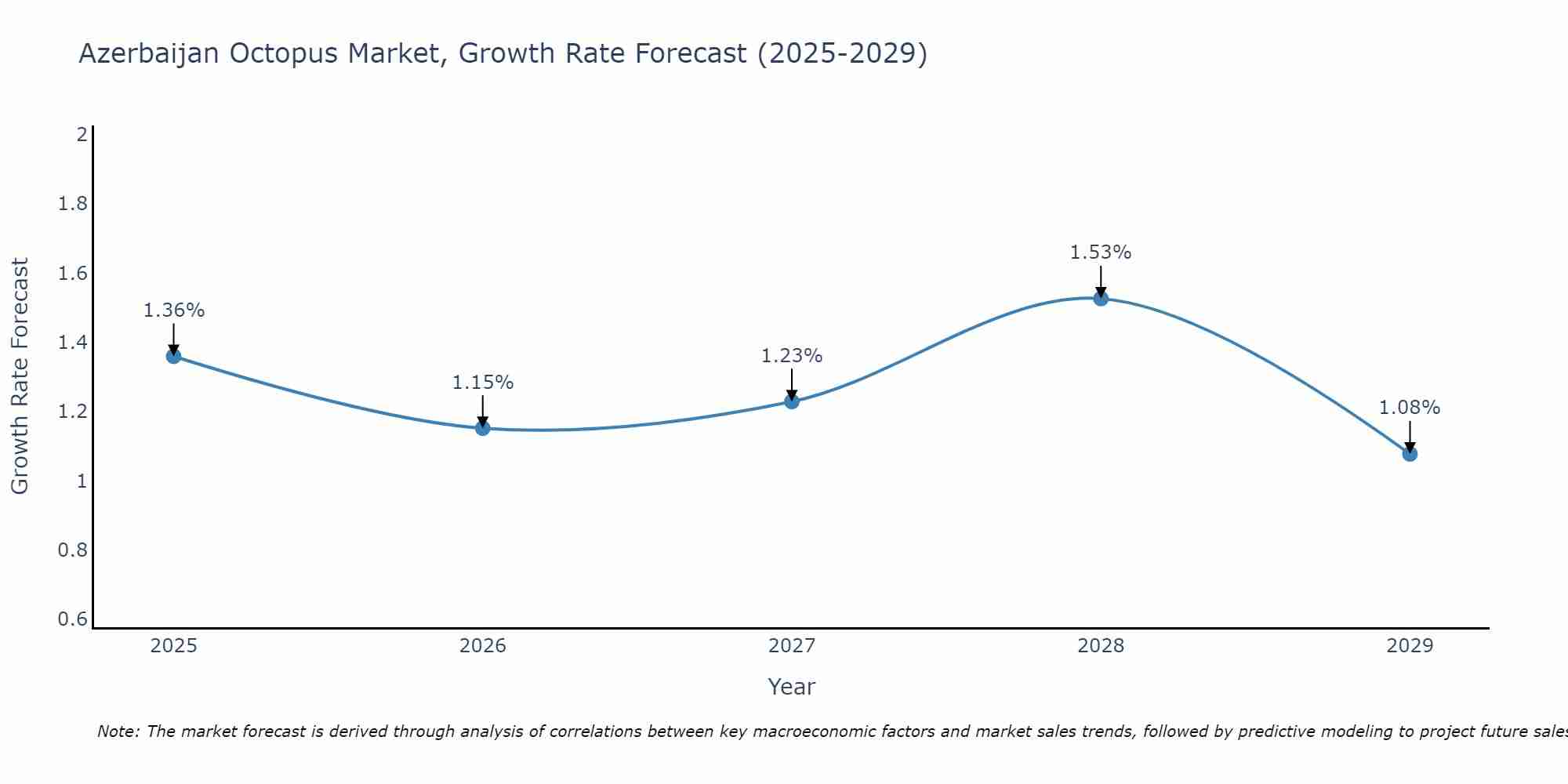
The Azerbaijan Octopus Market is projected to witness mixed growth rate patterns during 2025 to 2029. Growth accelerates to 1.53% in 2028, following an initial rate of 1.36%, before easing to 1.08% at the end of the period.
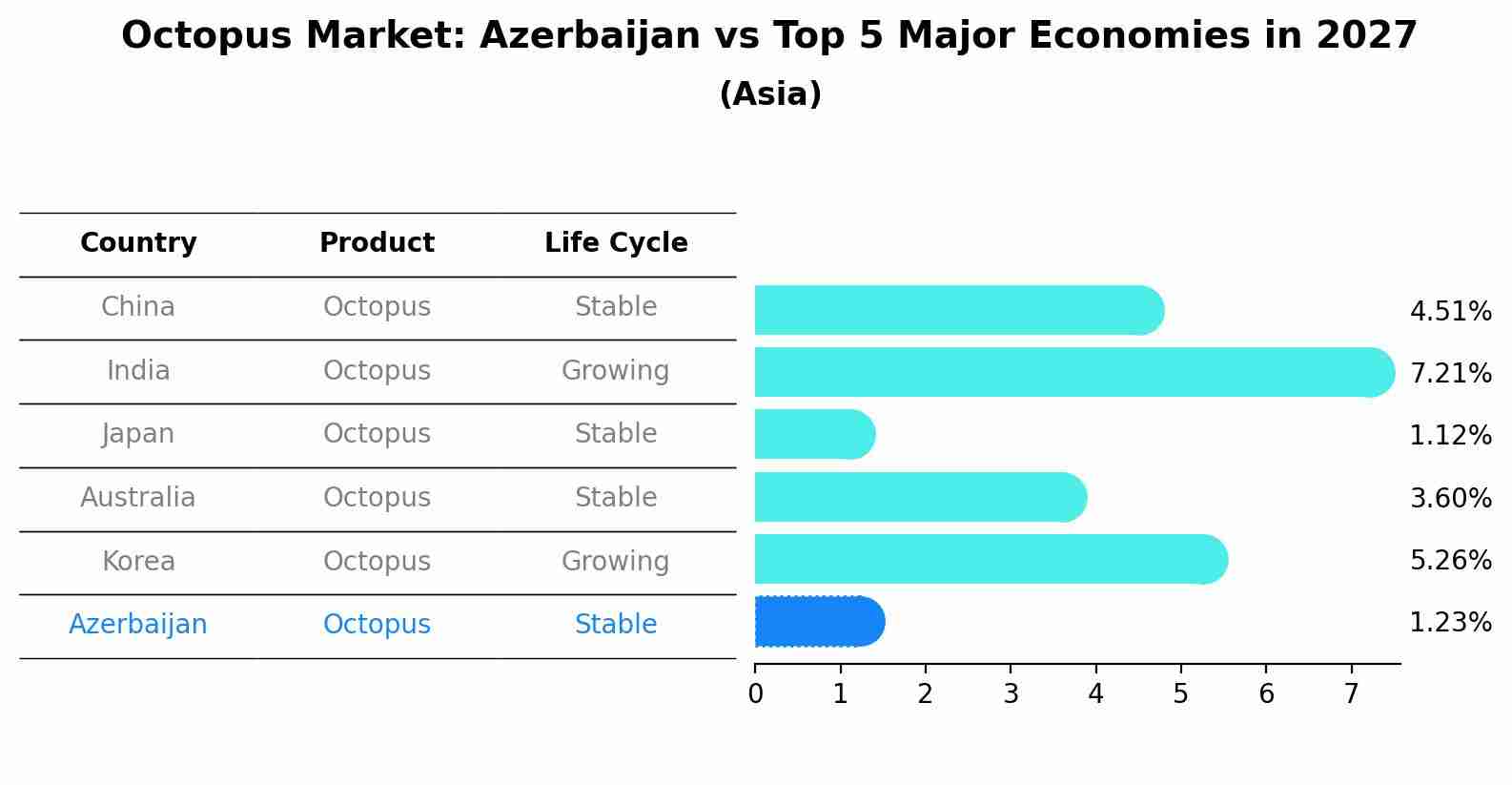
Octopus Market: Azerbaijan vs Top 5 Major Economies in 2027 (Asia)
By 2027, the Octopus market in Azerbaijan is anticipated to reach a growth rate of 1.23%, as part of an increasingly competitive Asia region, where China remains at the forefront, supported by India, Japan, Australia and South Korea, driving innovations and market adoption across sectors.
Azerbaijan Octopus Market Synopsis
The Azerbaijan octopus market is characterized by steady growth driven by increasing consumer demand for seafood products. Octopus is a popular delicacy in Azerbaijani cuisine, with a notable presence in traditional dishes. The market is primarily supplied by domestic catches from the Caspian Sea, as well as imports from other countries. Key market players include seafood suppliers, restaurants, and supermarkets that cater to the growing demand for octopus products. The market is also influenced by factors such as changing consumer preferences, economic conditions, and government regulations related to fishing practices and sustainability. As the market continues to expand, there are opportunities for market players to innovate in terms of product offerings, sourcing practices, and marketing strategies to capture a larger share of this niche but growing market segment.
Azerbaijan Octopus Market Trends
The Azerbaijan Octopus Market is experiencing a growing demand for octopus products due to an increasing consumer interest in seafood and exotic cuisines. The market is witnessing a rise in imported octopus varieties, particularly from Mediterranean and Asian regions, to meet the demand for high-quality and diverse options. Local restaurants and culinary enthusiasts are incorporating octopus into their menus, driving sales in the foodservice sector. Additionally, health-conscious consumers are attracted to octopus for its low fat content and high protein levels, further boosting market growth. The market is also seeing innovations in packaging and processing technologies to extend the shelf life of octopus products and ensure product quality. Overall, the Azerbaijan Octopus Market is poised for continued expansion and diversification in the coming years.
Azerbaijan Octopus Market Challenges
In the Azerbaijan Octopus Market, some of the key challenges faced include limited supply due to overfishing and environmental concerns, fluctuating prices due to global market dynamics and currency exchange rates, as well as competition from imported octopus products. Additionally, lack of proper infrastructure for octopus fishing and processing, inadequate storage facilities, and inconsistent quality standards further hinder the market`s growth potential. The seasonality of octopus availability and the need for sustainable fishing practices also pose challenges for market players. Overcoming these hurdles would require investments in technology, improved regulations, and greater collaboration between industry stakeholders to ensure a more stable and sustainable octopus market in Azerbaijan.
Azerbaijan Octopus Market Investment Opportunities
In the Azerbaijan Octopus Market, there are several investment opportunities for potential investors. One option is to invest in octopus farming operations, as there is a growing demand for octopus both domestically and internationally. Another opportunity lies in the processing and export of octopus products, leveraging Azerbaijan`s strategic location between Europe and Asia. Additionally, investing in technology and innovation within the octopus industry could provide a competitive edge, such as implementing sustainable farming practices or developing value-added octopus products for niche markets. Overall, the Azerbaijan Octopus Market presents various avenues for investment, from primary production to processing and export, with potential for growth and profitability in the global seafood industry.
Jordan Agar Market Government Policies
The Azerbaijan government has implemented policies aimed at regulating the octopus market to ensure sustainability and prevent overfishing. These policies include setting quotas on octopus catches, establishing closed seasons to protect breeding populations, and enforcing size limits to allow octopuses to reach maturity before being harvested. Additionally, licensing requirements have been put in place to control the number of fishermen participating in the octopus fishery and to monitor compliance with regulations. The government also works with local communities and stakeholders to promote responsible fishing practices and raise awareness about the importance of conservation. Overall, these policies are designed to balance the economic interests of the fishing industry with the long-term protection of octopus populations in Azerbaijani waters.
Azerbaijan Octopus Market Future Outlook
The Azerbaijan Octopus Market is expected to witness steady growth in the coming years due to increasing consumer demand for seafood products and the rise of upscale dining experiences in the region. Factors such as growing disposable income, changing dietary preferences, and a shift towards healthier food options are driving the demand for octopus in Azerbaijan. Additionally, the country`s strategic location on the Caspian Sea provides a rich source of seafood, including octopus, further boosting the market potential. With advancements in aquaculture techniques and increasing awareness about the nutritional benefits of octopus meat, the market is poised for expansion. However, challenges such as sustainability concerns and fluctuating seafood prices may impact the growth trajectory of the Azerbaijan Octopus Market in the future.
Key Highlights of the Report:
- Azerbaijan Octopus Market Outlook
- Market Size of Azerbaijan Octopus Market, 2024
- Forecast of Azerbaijan Octopus Market, 2031
- Historical Data and Forecast of Azerbaijan Octopus Revenues & Volume for the Period 2021 - 2031
- Azerbaijan Octopus Market Trend Evolution
- Azerbaijan Octopus Market Drivers and Challenges
- Azerbaijan Octopus Price Trends
- Azerbaijan Octopus Porter's Five Forces
- Azerbaijan Octopus Industry Life Cycle
- Historical Data and Forecast of Azerbaijan Octopus Market Revenues & Volume By Product Type for the Period 2021 - 2031
- Historical Data and Forecast of Azerbaijan Octopus Market Revenues & Volume By Fresh for the Period 2021 - 2031
- Historical Data and Forecast of Azerbaijan Octopus Market Revenues & Volume By Processed for the Period 2021 - 2031
- Historical Data and Forecast of Azerbaijan Octopus Market Revenues & Volume By Application for the Period 2021 - 2031
- Historical Data and Forecast of Azerbaijan Octopus Market Revenues & Volume By Commercial for the Period 2021 - 2031
- Historical Data and Forecast of Azerbaijan Octopus Market Revenues & Volume By Food and Beverage for the Period 2021 - 2031
- Historical Data and Forecast of Azerbaijan Octopus Market Revenues & Volume By Distribution Channel for the Period 2021 - 2031
- Historical Data and Forecast of Azerbaijan Octopus Market Revenues & Volume By Direct for the Period 2021 - 2031
- Historical Data and Forecast of Azerbaijan Octopus Market Revenues & Volume By Indirect for the Period 2021 - 2031
- Azerbaijan Octopus Import Export Trade Statistics
- Market Opportunity Assessment By Product Type
- Market Opportunity Assessment By Application
- Market Opportunity Assessment By Distribution Channel
- Azerbaijan Octopus Top Companies Market Share
- Azerbaijan Octopus Competitive Benchmarking By Technical and Operational Parameters
- Azerbaijan Octopus Company Profiles
- Azerbaijan Octopus Key Strategic Recommendations






































