Bhutan Canned Tuna Market Size Growth Rate
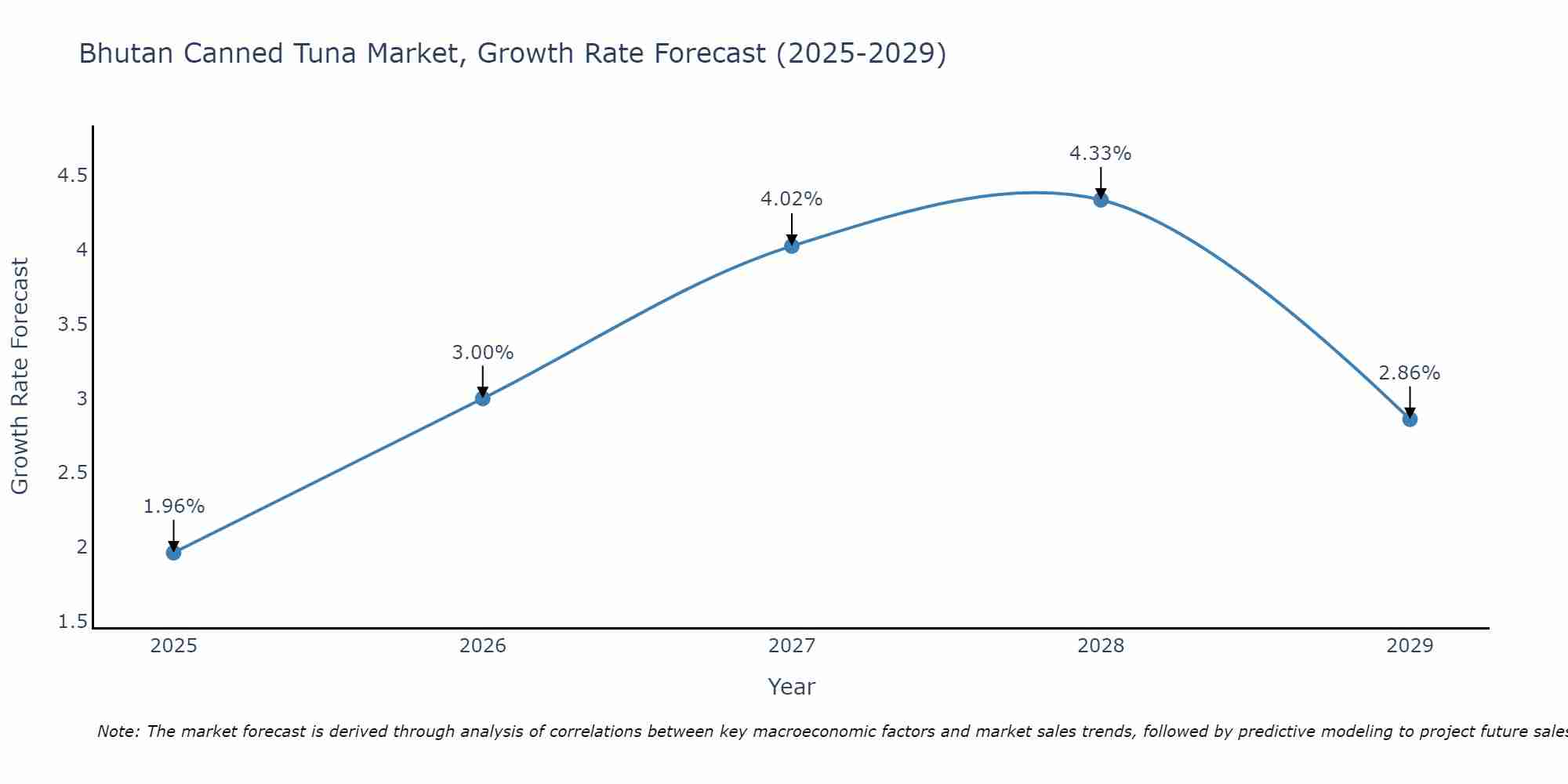
The Bhutan Canned Tuna Market is projected to witness mixed growth rate patterns during 2025 to 2029. The growth rate begins at 1.96% in 2025, climbs to a high of 4.33% in 2028, and moderates to 2.86% by 2029.
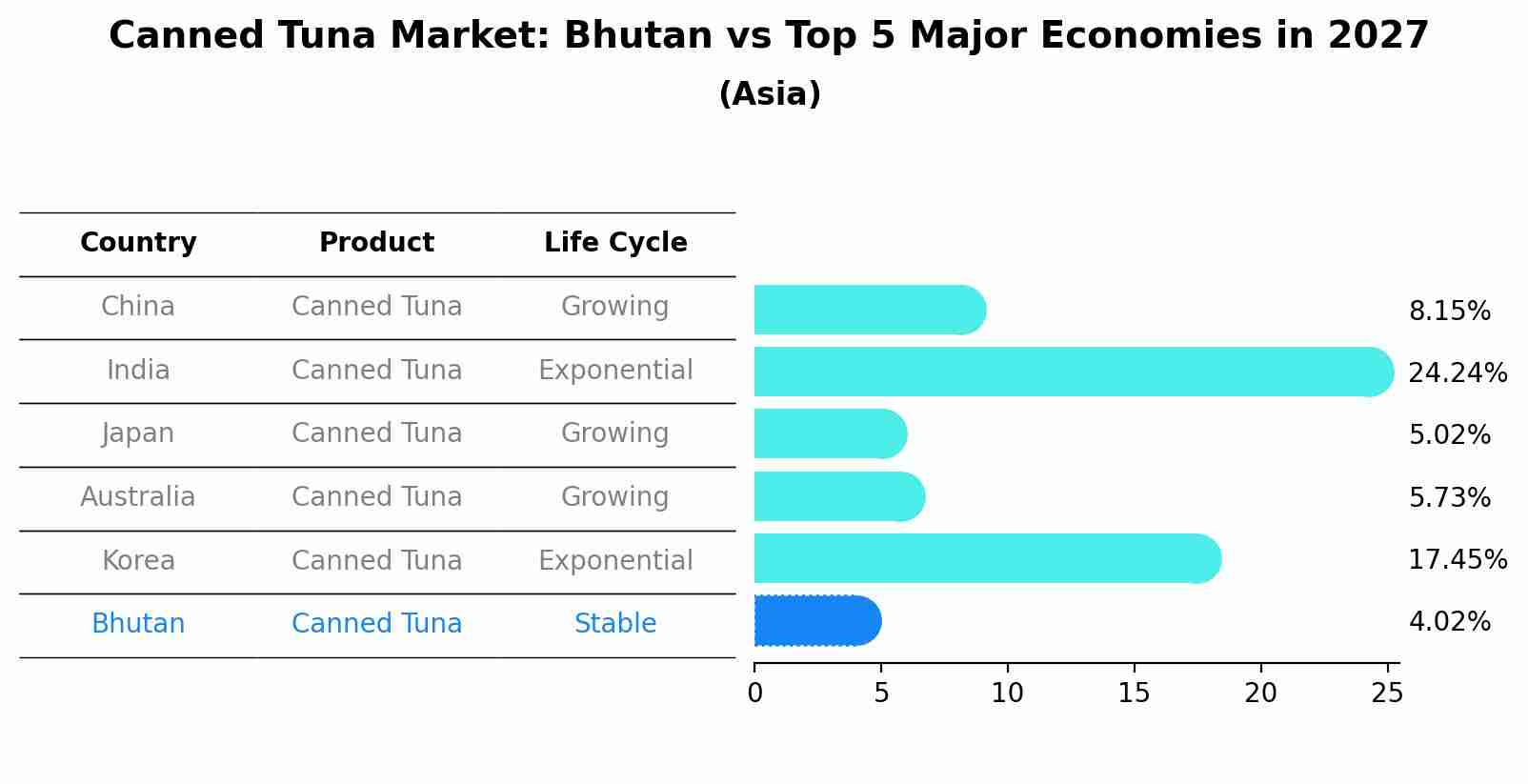
Canned Tuna Market: Bhutan vs Top 5 Major Economies in 2027 (Asia)
In the Asia region, the Canned Tuna market in Bhutan is projected to expand at a stable growth rate of 4.02% by 2027. The largest economy is China, followed by India, Japan, Australia and South Korea.
Bhutan Canned Tuna Market Overview
Canned tuna is one of the most popular seafood products in Bhutan, valued for its convenience and high protein content. The market is primarily served by imports, although there is potential for developing local canning industries. Government policies focus on ensuring food safety and quality standards, as well as supporting sustainable fishing practices to maintain ecological balance.
Drivers of the market
The Bhutan canned tuna market is driven by the high nutritional value of tuna, which is rich in protein and omega-3 fatty acids, making it a popular choice for health-conscious consumers. The convenience and long shelf life of canned tuna make it a staple in households and for individuals with busy lifestyles. The market benefits from the increasing demand for ready-to-eat meals and snacks, where canned tuna is a versatile ingredient. Additionally, the growth of the foodservice industry, including restaurants and catering services, fuels the demand for canned tuna as it provides a quick and easy protein source for various dishes.
Challenges of the market
The canned tuna market in Bhutan struggles with high import costs and limited consumer demand. The small market size and preference for fresh or locally sourced fish reduce the appeal of canned tuna. Additionally, concerns about the sustainability and quality of imported canned tuna affect consumer trust and demand. The lack of marketing and awareness about the convenience and health benefits of canned tuna also hampers market growth.
Government Policy of the market
Canned tuna is part of Bhutan`s broader canned seafood market, heavily dependent on imports. Government policies on food imports and tariffs can significantly impact the availability and pricing of canned tuna. Efforts to ensure food safety and promote balanced nutrition among the population might drive demand for such protein sources. Additionally, Bhutans initiatives to promote tourism and modern lifestyles could indirectly influence the market by increasing exposure to international food trends.
Key Highlights of the Report:
- Bhutan Canned Tuna Market Outlook
- Market Size of Bhutan Canned Tuna Market, 2024
- Forecast of Bhutan Canned Tuna Market, 2031
- Historical Data and Forecast of Bhutan Canned Tuna Revenues & Volume for the Period 2021-2031
- Bhutan Canned Tuna Market Trend Evolution
- Bhutan Canned Tuna Market Drivers and Challenges
- Bhutan Canned Tuna Price Trends
- Bhutan Canned Tuna Porter`s Five Forces
- Bhutan Canned Tuna Industry Life Cycle
- Historical Data and Forecast of Bhutan Canned Tuna Market Revenues & Volume By Product for the Period 2021-2031
- Historical Data and Forecast of Bhutan Canned Tuna Market Revenues & Volume By Skipjack for the Period 2021-2031
- Historical Data and Forecast of Bhutan Canned Tuna Market Revenues & Volume By Yellowfin for the Period 2021-2031
- Historical Data and Forecast of Bhutan Canned Tuna Market Revenues & Volume By Others for the Period 2021-2031
- Historical Data and Forecast of Bhutan Canned Tuna Market Revenues & Volume By Distribution Channel for the Period 2021-2031
- Historical Data and Forecast of Bhutan Canned Tuna Market Revenues & Volume By Hypermarket & Supermarket for the Period 2021-2031
- Historical Data and Forecast of Bhutan Canned Tuna Market Revenues & Volume By Specialty Stores for the Period 2021-2031
- Historical Data and Forecast of Bhutan Canned Tuna Market Revenues & Volume By Online for the Period 2021-2031
- Bhutan Canned Tuna Import Export Trade Statistics
- Market Opportunity Assessment By Product
- Market Opportunity Assessment By Distribution Channel
- Bhutan Canned Tuna Top Companies Market Share
- Bhutan Canned Tuna Competitive Benchmarking By Technical and Operational Parameters
- Bhutan Canned Tuna Company Profiles
- Bhutan Canned Tuna Key Strategic Recommendations






































