Botswana Lawn Mower Market Year-wise Growth Rate (2021-2031F)
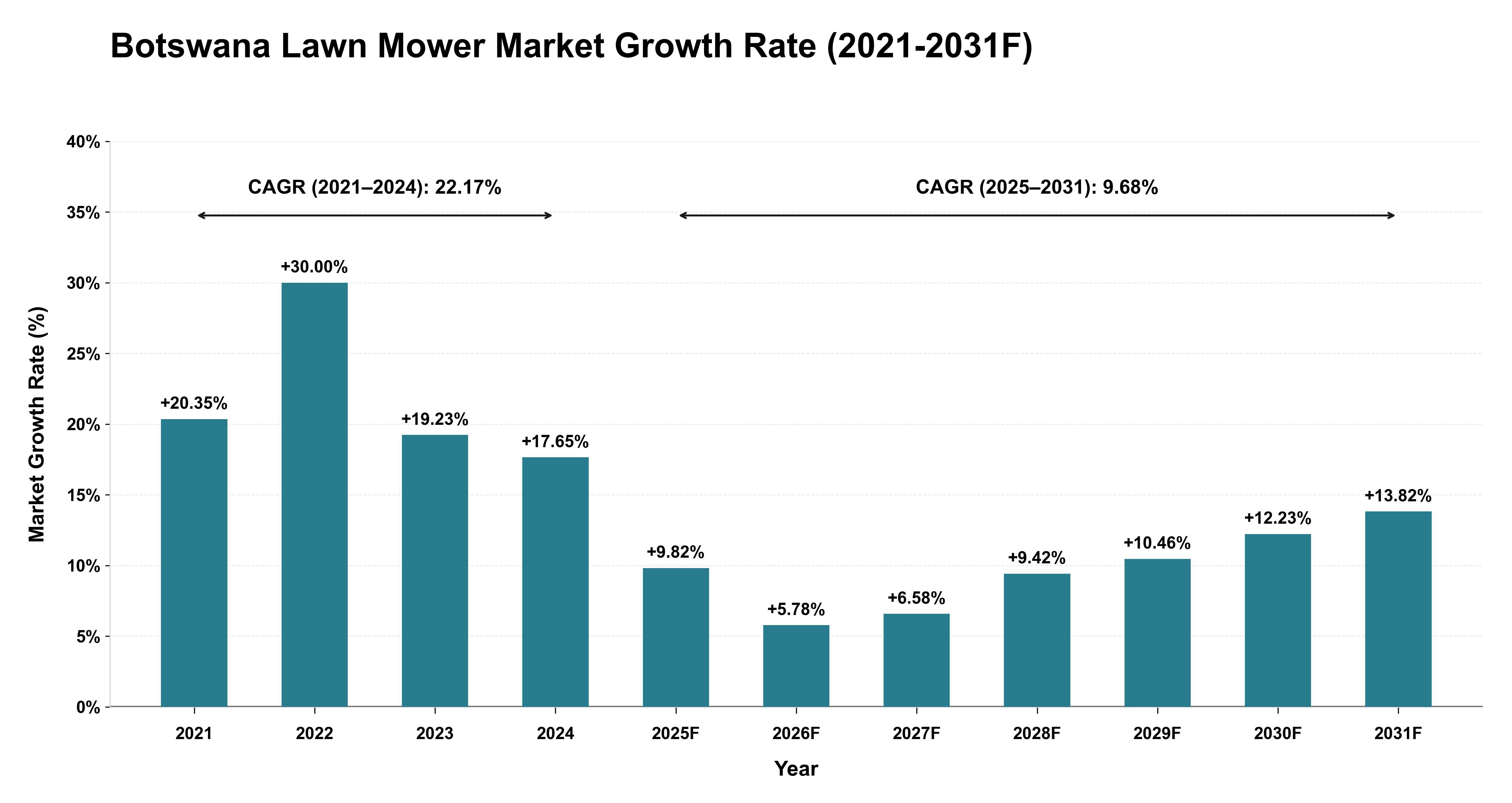
In the Botswana Lawn Mower Market, from 2021 to 2024, the robust CAGR of 22.17% reflected increasing urbanization, higher disposable incomes, and a growing focus on landscaping aesthetics in residential and commercial properties. The accelerating growth rates in 2022 at 30.00% indicated a spike in demand, driven by technological advancements in lawn mower efficiency and ease of use. However, the gradual deceleration in growth towards 2024 at 17.65% signified market stabilization as penetration levels normalized. Looking ahead to 2025-2031 with a forecast CAGR of 9.68%, the market is poised for steady expansion supported by sustained demand for lawn maintenance equipment as landscaping practices become more prevalent among Botswana's population, albeit at a more moderate pace compared to the previous years.
Botswana Lawn Mower Market Overview
This market covers the demand for lawn mowers, which are essential tools for maintaining gardens and public spaces. The market likely caters to both residential and commercial customers.
Drivers of the market
The lawn mower market in Botswana benefits from rising disposable incomes and an increasing interest in maintaining residential and commercial landscapes. Urbanization and the growth of real estate developments contribute to this trend, as homeowners and businesses seek efficient tools for lawn care. Technological advancements in lawn mowers, such as electric and robotic models, also drive market expansion by offering more convenient and environmentally friendly options.
Challenges of the market
The lawn mower market in Botswana encounters challenges related to limited market size and low demand in rural areas. The high initial cost of advanced lawn mowers can be prohibitive for many consumers, and the lack of widespread awareness about the benefits of modern lawn care equipment can further restrict market growth. Additionally, importing high-quality lawn mowers may lead to higher prices due to transportation and import taxes.
Government Policy of the market
The lawn mower market in Botswana is influenced by agricultural policies and urban development plans. The government promotes sustainable land management practices, which may include the use of modern lawn maintenance equipment. Import regulations and standards ensure that lawn mowers meet safety and environmental requirements. Policies may also support local manufacturing initiatives and offer incentives for adopting eco-friendly technologies.
Key Highlights of the Report:
- Botswana Lawn Mower Market Outlook
- Market Size of Botswana Lawn Mower Market, 2024
- Forecast of Botswana Lawn Mower Market, 2031
- Historical Data and Forecast of Botswana Lawn Mower Revenues & Volume for the Period 2021-2031
- Botswana Lawn Mower Market Trend Evolution
- Botswana Lawn Mower Market Drivers and Challenges
- Botswana Lawn Mower Price Trends
- Botswana Lawn Mower Porter`s Five Forces
- Botswana Lawn Mower Industry Life Cycle
- Historical Data and Forecast of Botswana Lawn Mower Market Revenues & Volume By Product Types for the Period 2021-2031
- Historical Data and Forecast of Botswana Lawn Mower Market Revenues & Volume By Ride On Mowers for the Period 2021-2031
- Historical Data and Forecast of Botswana Lawn Mower Market Revenues & Volume By Push Mowers for the Period 2021-2031
- Historical Data and Forecast of Botswana Lawn Mower Market Revenues & Volume By Robotic Mowers for the Period 2021-2031
- Historical Data and Forecast of Botswana Lawn Mower Market Revenues & Volume By End-Users for the Period 2021-2031
- Historical Data and Forecast of Botswana Lawn Mower Market Revenues & Volume By Residential for the Period 2021-2031
- Historical Data and Forecast of Botswana Lawn Mower Market Revenues & Volume By Non-residential for the Period 2021-2031
- Historical Data and Forecast of Botswana Lawn Mower Market Revenues & Volume By Fuel Types for the Period 2021-2031
- Historical Data and Forecast of Botswana Lawn Mower Market Revenues & Volume By Electronic for the Period 2021-2031
- Historical Data and Forecast of Botswana Lawn Mower Market Revenues & Volume By Non-electronic for the Period 2021-2031
- Botswana Lawn Mower Import Export Trade Statistics
- Market Opportunity Assessment By Product Types
- Market Opportunity Assessment By End-Users
- Market Opportunity Assessment By Fuel Types
- Botswana Lawn Mower Top Companies Market Share
- Botswana Lawn Mower Competitive Benchmarking By Technical and Operational Parameters
- Botswana Lawn Mower Company Profiles
- Botswana Lawn Mower Key Strategic Recommendations






































