Brazil Acetate Yarn Market Size, Share & Growth Rate
The Brazil Acetate Yarn Market was estimated at USD 298 Million in 2025 and is projected to reach USD 356 Million by 2032, growing at a CAGR of 2.6% from 2026 to 2032. This growth trajectory is fueled by the increasing demand for synthetic yarns that offer not only aesthetic appeal but also performance-driven qualities. As fashion trends evolve, designers are increasingly opting for acetate yarns due to their luxurious feel and adaptability, which further stimulates market expansion.
Brazil Acetate Yarn Market Year-wise Growth Rate and Key Drivers
This graph highlights how the Brazil Acetate Yarn Market has steadily grown over the years, supported by major growth factors.
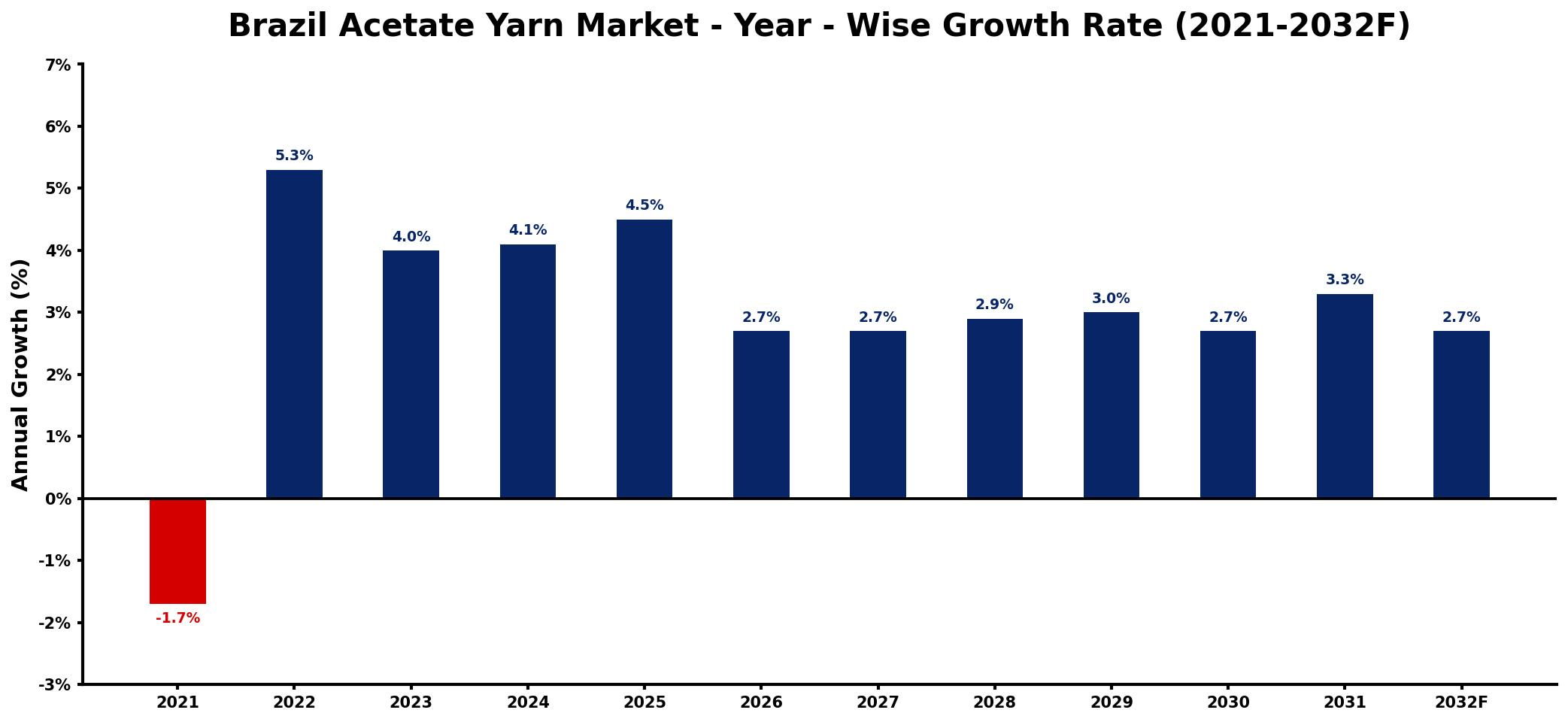
The table below presents the year‑wise growth rates along with the key drivers influencing the market
| Year | Growth Rate | Major Drivers |
| 2021 | -1.7% | decreased consumer spending trends |
| 2022 | 5.3% | increased textile industry investments |
| 2023 | 4.0% | growing fashion sustainability initiatives |
| 2024 | 4.1% | rising demand for eco-friendly materials |
| 2025 | 4.5% | expansion of global export markets |
| 2026 | 2.7% | innovations in textile manufacturing processes |
| 2027 | 2.7% | increased consumer preference for luxury |
| 2028 | 2.9% | growth in online retail channels |
| 2029 | 3.0% | emerging markets driving demand |
| 2030 | 2.7% | strengthened supply chain collaborations |
| 2031 | 3.3% | enhanced technological advancements adoption |
| 2032 | 2.7% | wider applications in diverse industries |
Note: Market size estimations and growth projections presented in this report are based on 6Wresearch's proprietary forecasting methodology, utilizing the latest available industry data, government publications, and primary research inputs.
Brazil Acetate Yarn Market Synopsis
In Brazil, the acetate yarn market is witnessing a surge in interest as manufacturers seek to develop innovative textiles that cater to consumer preferences for style and comfort. The silky texture and draping capabilities of acetate yarns position them as a favored choice for upscale garments and home textiles.
Furthermore, the market is also being shaped by a growing awareness of the environmental impact associated with yarn production. As brands move towards more sustainable practices, the demand for eco-friendly acetate alternatives is expected to rise, influencing production strategies across the sector.
Brazil Acetate Yarn Market Key Takeaways
- The Brazil Acetate Yarn market is poised for steady growth, driven by fashion trends favoring innovative textiles.
- Government regulations ensure that acetate yarns meet strict quality and safety standards.
- Consumer preferences are shifting towards sustainability, necessitating eco-friendly production methods.
- The luxury segment of the fashion industry is a key driver of acetate yarn demand.
- Technological advancements in yarn production are enhancing the properties of acetate yarns.
Evaluation of Restraints in Brazil Acetate Yarn Market
Despite its promising growth, the Brazil acetate yarn market faces significant challenges related to environmental sustainability. The production processes inherent to acetate yarn manufacturing are often criticized for their ecological impact. Businesses are increasingly tasked with finding sustainable solutions to mitigate waste and reduce carbon footprints. Without effective strategies, the market may struggle to align with the growing consumer demand for eco-friendly products, hindering overall growth.
Brazil Acetate Yarn Market Trends
Current trends indicate a rising preference for multifunctional textiles that marry style with practicality. Acetate yarns, with their unique properties, are at the forefront of this movement. Designers are exploring new blends and finishes, pushing the boundaries of traditional applications. Additionally, technology advancements are leading to innovations in the dyeing and finishing processes, offering new color and texture options that appeal to fashion-forward consumers.
Brazil Acetate Yarn Market Opportunities
The potential for growth in the Brazil acetate yarn market lies significantly in the development of sustainable production methods and materials. Businesses that prioritize eco-friendly practices can differentiate themselves in a competitive landscape. Moreover, expanding into untapped segments, such as activewear and athleisure, presents a promising opportunity for increased market penetration. Innovations in product offerings and enhancements in consumer education about acetate yarns can further fuel demand.
Government Initiatives in the Brazil Acetate Yarn Market
The Brazilian government plays a critical role in shaping the acetate yarn market through regulatory frameworks aimed at quality control and environmental protection. Policies that promote research and development of sustainable practices are gaining traction. Additionally, initiatives aimed at educating manufacturers about eco-friendly alternatives and investing in technological advancements create a conducive environment for responsible growth in the market.
Future Insights of the Brazil Acetate Yarn Market
Looking ahead to 2026-2032, the Brazil acetate yarn market is expected to embrace a new era of sustainability and innovation. With consumers becoming more discerning about the environmental impact of their purchases, brands are likely to increasingly prioritize sustainable acetate options. This shift, combined with ongoing advancements in textile technology, will drive the creation of new, versatile products. Therefore, industry stakeholders who adapt to these changes are positioned to thrive in this evolving landscape.
Brazil Acetate Yarn Market Latest Developments (2025 - 2026)
Recent developments in the Brazil acetate yarn market indicate a growing collaboration among industry players focused on sustainability. Partnerships aimed at enhancing recycling processes and reducing production waste have been initiated. Additionally, there is an increasing emphasis on transparency in the supply chain, with companies investing in technologies that provide consumers with insight into the sourcing of materials. These trends reflect a collective movement towards more responsible manufacturing practices.
Brazil Acetate Yarn Market - Key Attractiveness of the Report
- 10 Years of Market Numbers
- Historical Data Starting from 2022 to 2025
- Base Year: 2025
- Forecast Data until 2032
- Key Performance Indicators Impacting the Market
- Major Upcoming Developments and Projects
Key Highlights of the Report:
- Brazil Acetate Yarn Market Outlook
- Market Size of Brazil Acetate Yarn Market, 2025
- Forecast of Brazil Acetate Yarn Market, 2032
- Historical Data and Forecast of Brazil Acetate Yarn Revenues & Volume for the Period 2022-2032F
- Brazil Acetate Yarn Market Trend Evolution
- Brazil Acetate Yarn Market Drivers and Challenges
- Brazil Acetate Yarn Price Trends
- Brazil Acetate Yarn Porter's Five Forces
- Brazil Acetate Yarn Industry Life Cycle
- Historical Data and Forecast of Brazil Acetate Yarn Market Revenues & Volume By Type for the Period 2022-2032F
- Historical Data and Forecast of Brazil Acetate Yarn Market Revenues & Volume By Triacetate Fiber for the Period 2022-2032F
- Historical Data and Forecast of Brazil Acetate Yarn Market Revenues & Volume By Diacetate Fiber for the Period 2022-2032F
- Historical Data and Forecast of Brazil Acetate Yarn Market Revenues & Volume By Application for the Period 2022-2032F
- Historical Data and Forecast of Brazil Acetate Yarn Market Revenues & Volume By Ladies Clothing for the Period 2022-2032F
- Historical Data and Forecast of Brazil Acetate Yarn Market Revenues & Volume By Clothes Lining for the Period 2022-2032F
- Historical Data and Forecast of Brazil Acetate Yarn Market Revenues & Volume By Pajamas for the Period 2022-2032F
- Historical Data and Forecast of Brazil Acetate Yarn Market Revenues & Volume By Label for the Period 2022-2032F
- Historical Data and Forecast of Brazil Acetate Yarn Market Revenues & Volume By Others for the Period 2022-2032F
- Brazil Acetate Yarn Import Export Trade Statistics
- Market Opportunity Assessment By Type
- Market Opportunity Assessment By Application
- Brazil Acetate Yarn Top Companies Market Share
- Brazil Acetate Yarn Competitive Benchmarking By Technical and Operational Parameters
- Brazil Acetate Yarn Company Profiles
- Brazil Acetate Yarn Key Strategic Recommendations






































