Chile Eyewear Market Size Growth Rate
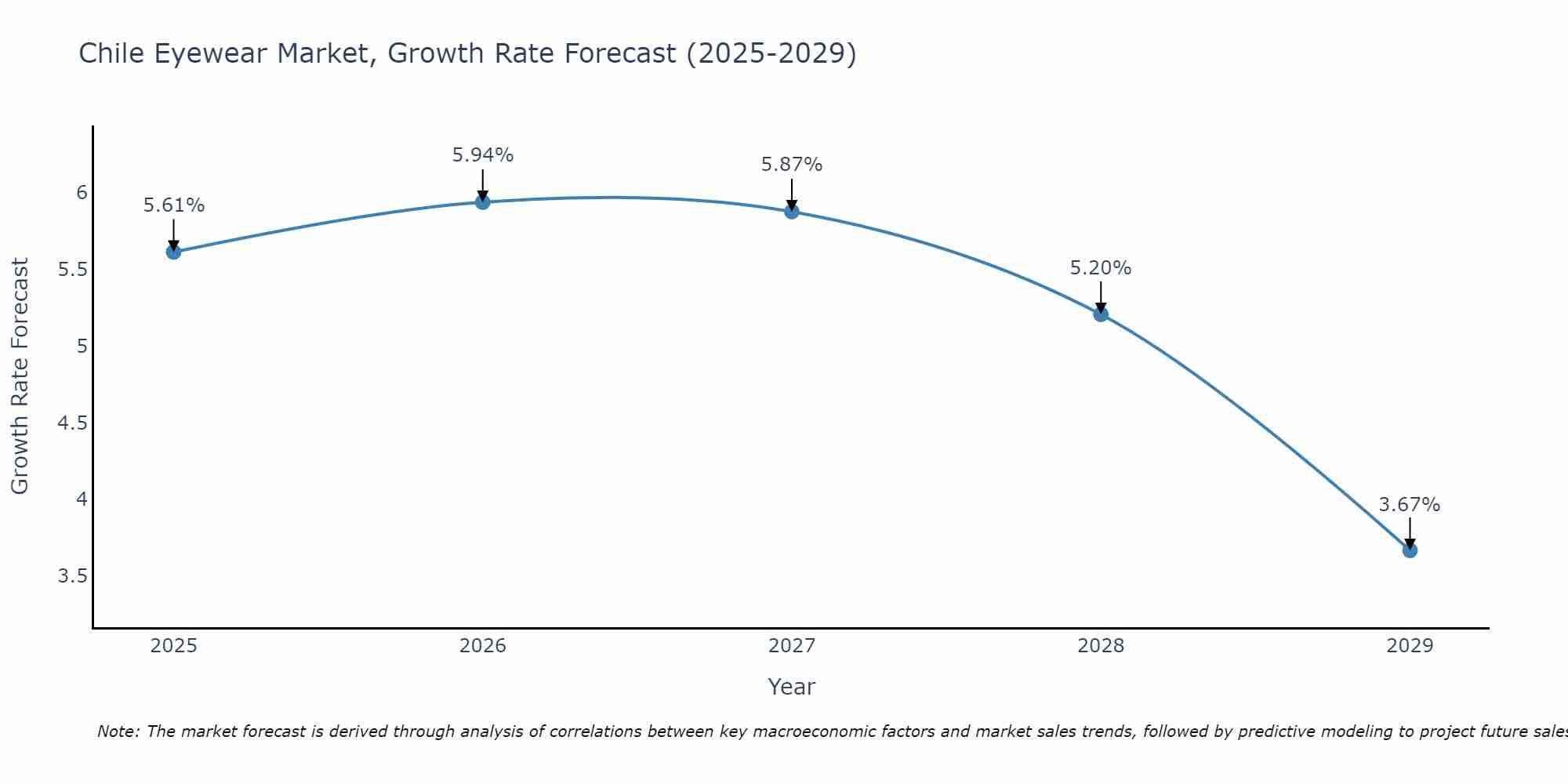
The Chile Eyewear Market is projected to witness mixed growth rate patterns during 2025 to 2029. Starting at 5.61% in 2025, the market peaks at 5.94% in 2026, and settles at 3.67% by 2029.
Chile Eyewear Market Synopsis
The Chile eyewear market is witnessing steady growth driven by factors such as increasing awareness about eye health, fashion trends, and the rising prevalence of vision-related issues. The market is characterized by a mix of local and international eyewear brands offering a wide range of products including prescription glasses, sunglasses, and contact lenses. Consumers in Chile are increasingly opting for eyewear as a fashion accessory, leading to a surge in demand for trendy and stylish frames. Additionally, the growing elderly population in the country is contributing to the demand for prescription eyewear. Key players in the Chile eyewear market are focusing on product innovation, online retail channels, and strategic partnerships to expand their market presence and cater to the diverse needs of consumers.
Chile Eyewear Market Trends
The Chile Eyewear Market is experiencing several key trends. One prominent trend is the increasing popularity of fashion-forward and stylish eyewear designs, driven by consumers` desire to make a fashion statement with their eyewear choices. Additionally, there is a growing interest in purchasing eyewear online, with more consumers opting for the convenience and wide selection offered by e-commerce platforms. Another notable trend is the rising awareness of the importance of UV protection in eyewear, leading to a higher demand for sunglasses with advanced UV-blocking technologies. Finally, sustainability is becoming a more significant factor in purchasing decisions, with consumers showing a preference for eco-friendly eyewear materials and brands that prioritize sustainability practices. Overall, these trends are shaping the Chile Eyewear Market towards more fashionable, convenient, and sustainable options.
Chile Eyewear Market Challenges
The Chile Eyewear Market faces several challenges, including increasing competition from both domestic and international brands, counterfeit products flooding the market, and a relatively low level of awareness about the importance of eye protection and vision care among the general population. Additionally, economic fluctuations and consumer purchasing power can impact the demand for eyewear products. The market also grapples with changing fashion trends and preferences, requiring companies to constantly innovate and adapt to meet consumer expectations. Regulatory hurdles, such as import restrictions and quality control standards, further add to the challenges faced by companies operating in the Chilean eyewear market. Overcoming these obstacles requires strategic marketing efforts, product differentiation, and a focus on providing value and quality to the consumers.
Chile Eyewear Market Investment Opportunities
The Chile eyewear market presents attractive investment opportunities due to rising disposable incomes, increasing awareness of eye health, and evolving fashion trends. There is a growing demand for high-quality eyewear products, including prescription glasses, sunglasses, and contact lenses. Investing in innovative and sustainable eyewear technologies, such as blue light blocking lenses and eco-friendly materials, can cater to the environmentally conscious consumer segment. Additionally, expanding into online sales channels and leveraging digital marketing strategies can help reach a broader customer base in Chile. Collaborating with local optometry clinics and fashion influencers can also enhance brand visibility and credibility in the market. Overall, investing in the Chile eyewear market offers potential for growth and profitability in a dynamic and evolving industry landscape.
Jordan Agar Market Government Policies
The Chilean government has implemented policies aimed at regulating the eyewear market to ensure consumer protection and quality standards. The Ministry of Health oversees regulations related to the sale and distribution of prescription eyewear, ensuring that optical prescriptions are accurate and that eyewear meets safety standards. Additionally, import regulations are in place to control the quality and authenticity of eyewear products entering the market. The government also encourages the use of locally produced eyewear through initiatives supporting domestic manufacturers. Overall, the government`s policies in the Chile eyewear market focus on promoting consumer safety, quality control, and supporting the local industry.
Chile Eyewear Market Future Outlook
The Chile Eyewear Market is expected to show steady growth in the coming years, driven by factors such as increasing awareness about eye health, changing fashion trends, and a growing aging population. The market is also likely to benefit from technological advancements in eyewear, such as the rise of smart glasses and blue light blocking lenses. Additionally, the increasing penetration of e-commerce platforms for eyewear sales is expected to further boost market growth by providing consumers with a convenient purchasing option. Overall, with a growing focus on eye protection and style, coupled with technological innovations and changing consumer preferences, the Chile Eyewear Market is anticipated to expand and offer lucrative opportunities for eyewear companies in the foreseeable future.
Key Highlights of the Report:
- Chile Eyewear Market Outlook
- Market Size of Chile Eyewear Market, 2021
- Forecast of Chile Eyewear Market, 2031
- Historical Data and Forecast of Chile Eyewear Revenues & Volume for the Period 2018 - 2031
- Chile Eyewear Market Trend Evolution
- Chile Eyewear Market Drivers and Challenges
- Chile Eyewear Price Trends
- Chile Eyewear Porter's Five Forces
- Chile Eyewear Industry Life Cycle
- Historical Data and Forecast of Chile Eyewear Market Revenues & Volume By Product Type for the Period 2018 - 2031
- Historical Data and Forecast of Chile Eyewear Market Revenues & Volume By Prescription glasses/spectacles for the Period 2018 - 2031
- Historical Data and Forecast of Chile Eyewear Market Revenues & Volume By Sunglasses for the Period 2018 - 2031
- Historical Data and Forecast of Chile Eyewear Market Revenues & Volume By Contact lenses for the Period 2018 - 2031
- Historical Data and Forecast of Chile Eyewear Market Revenues & Volume By Mode of Sale for the Period 2018 - 2031
- Historical Data and Forecast of Chile Eyewear Market Revenues & Volume By Retail stores for the Period 2018 - 2031
- Historical Data and Forecast of Chile Eyewear Market Revenues & Volume By Online stores for the Period 2018 - 2031
- Historical Data and Forecast of Chile Eyewear Market Revenues & Volume By End User for the Period 2018 - 2031
- Historical Data and Forecast of Chile Eyewear Market Revenues & Volume By Men for the Period 2018 - 2031
- Historical Data and Forecast of Chile Eyewear Market Revenues & Volume By Women for the Period 2018 - 2031
- Chile Eyewear Import Export Trade Statistics
- Market Opportunity Assessment By Product Type
- Market Opportunity Assessment By Mode of Sale
- Market Opportunity Assessment By End User
- Chile Eyewear Top Companies Market Share
- Chile Eyewear Competitive Benchmarking By Technical and Operational Parameters
- Chile Eyewear Company Profiles
- Chile Eyewear Key Strategic Recommendations






































