China Aircraft Operational Software Market Size & Growth Rate
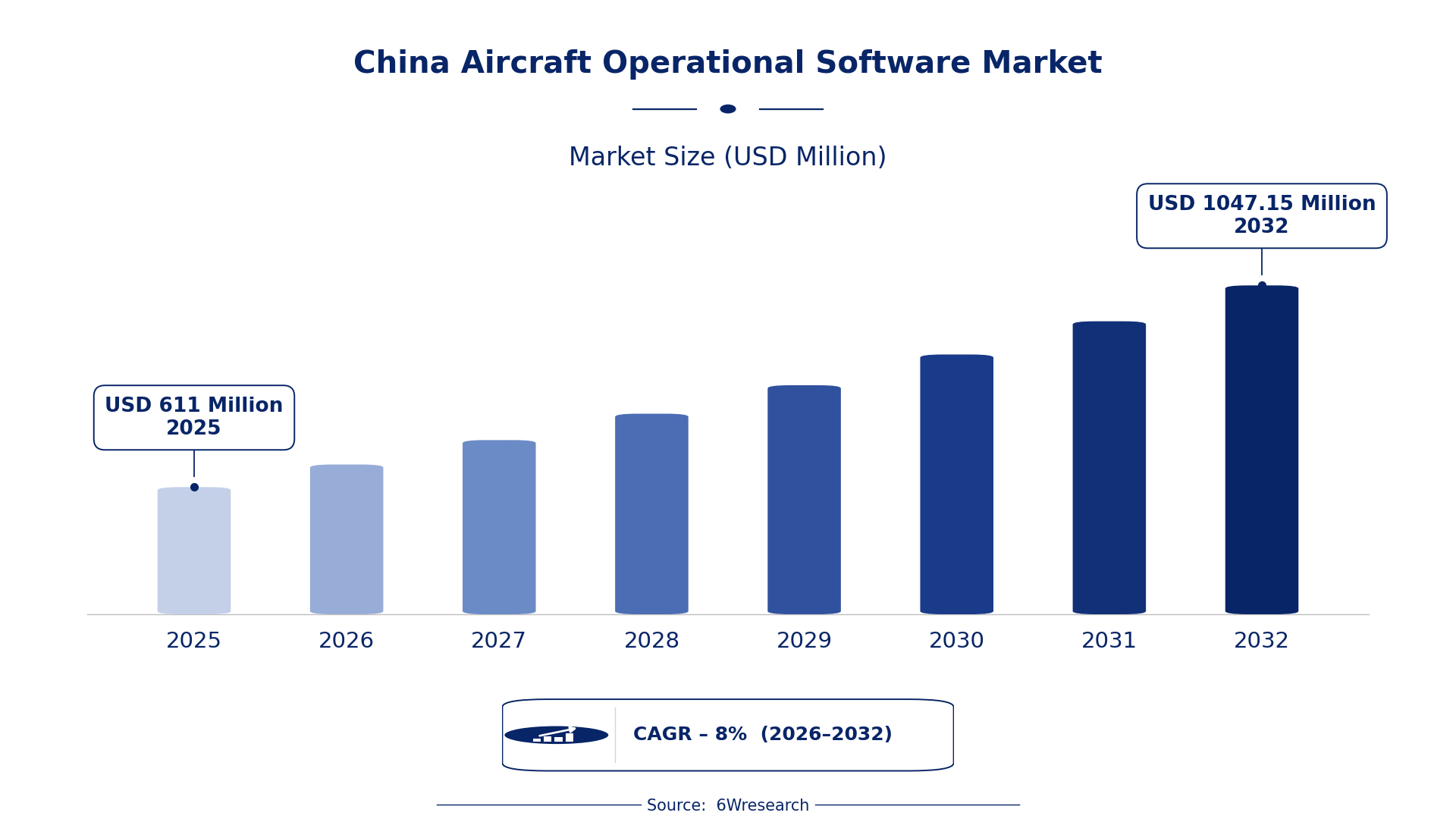
According to 6Wresearch internal database and industry insights, the China Aircraft Operational Software Market was valued at USD 611.0 million in 2025 and is projected to reach USD 1,047.15 million by 2032, growing at a CAGR of approximately 8% during 2026–2032.
China Aircraft Operational Software Market Highlights
| Report Metric | Details |
| Report Name | China Aircraft Operational Software Market |
| Market Size 2025 | USD 611.0 million |
| Market Size 2032 | USD 1,047.15 million |
| Absolute Growth 2025–2032 | USD 436.15 million |
| CAGR 2026–2032 | 8% |
| Peak Annual Growth | 10.4% in 2030 |
| Forecast Period | 2026–2032 |
| Historical Data | 2022–2025 |
| Base Year | 2025 |
| Leading Software Type, 2025 | Flight Scheduling (41% share) |
| Leading Deployment Mode, 2025 | Cloud-Based (50% share) |
| Leading Distribution Channel, 2025 | Online Platforms (46% share) |
| Leading End User, 2025 | Airline Operators (51% share) |
| Fastest-Growing Software Type | Crew Management (9.1% CAGR) |
| Fastest-Growing Deployment Mode | SaaS (9.1% CAGR) |
| Fastest-Growing Distribution Channel | Direct Sales (9.4% CAGR) |
| Fastest-Growing End User | Charter Companies (9.4% CAGR) |
| Growing Sector | Aviation |
| Key End Users | Airline Operators, Charter Companies, Cargo Airlines |
China Aircraft Operational Software Market Year-wise Growth Rate and Key Drivers (2022–2032)
This graph illustrates the annual growth rates of the market from 2022 to 2032, highlighting a steady upward trajectory and projected market expansion over the forecast period.
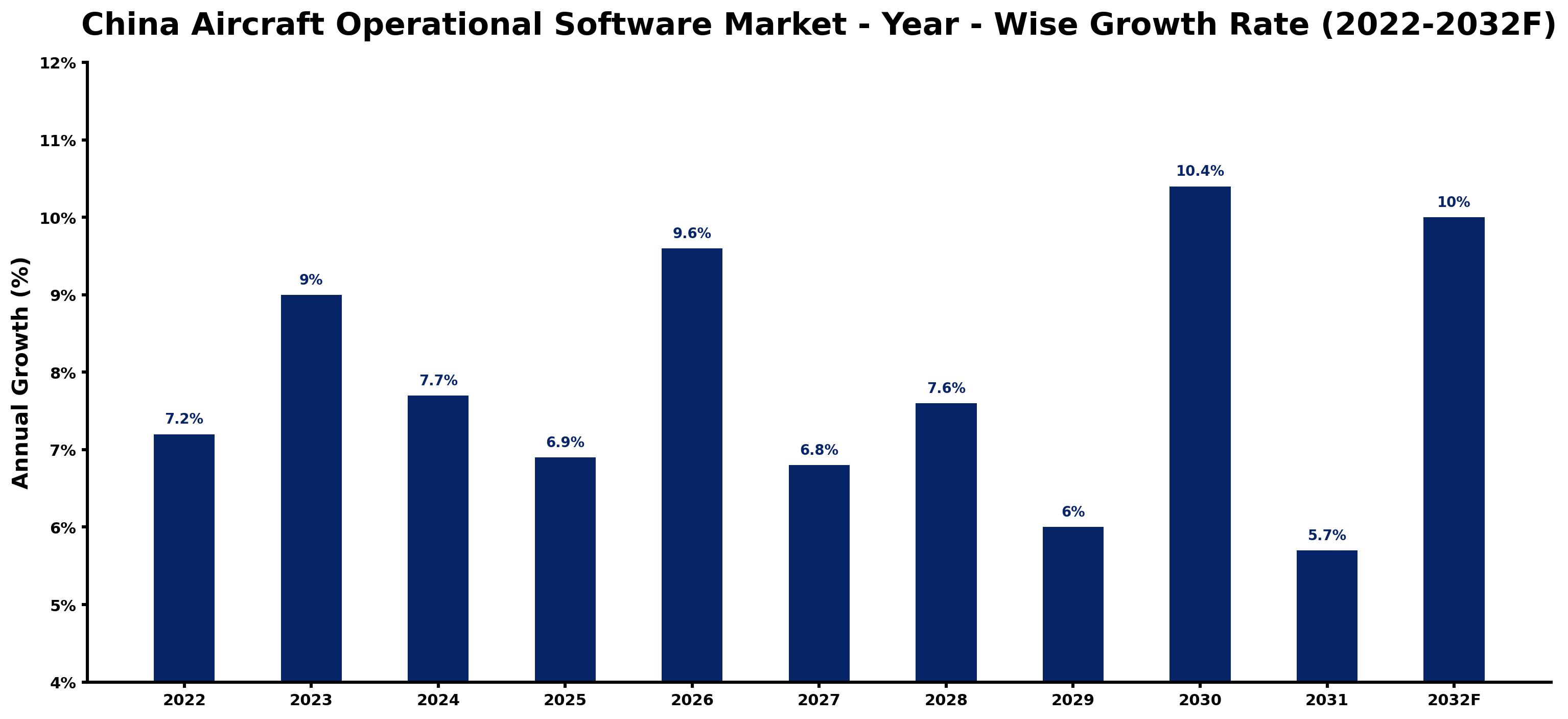
Annual growth estimates for each year appear below with the principal reason behind them, explaining the shifts that set the pace of the market.
| Year | Estimated Annual Growth (%) | Market Rationale |
| 2022 | 7.2 | The aviation sector was recovering from impacts, driving demand for operational software. |
| 2023 | 9.0 | Increased air travel and passenger numbers boosted the need for efficient scheduling and crew management. |
| 2024 | 7.7 | The market experienced a slowdown as airlines adjusted to new operational standards and technologies. |
| 2025 | 6.9 | Demand for crew management software remained strong due to compliance with labor regulations. |
| 2026 | 9.6 | The introduction of new safety initiatives is expected to spur growth in operational software adoption among airlines. |
| 2027 | 6.8 | The market is projected to slow as airlines consolidate their software solutions for efficiency. |
| 2028 | 7.6 | Growing interest in charter services will increase the demand for specialized operational software. |
| 2029 | 6.0 | The market is expected to slow as airlines focus on integrating new technologies into existing systems. |
| 2030 | 10.4 | A surge in air traffic will lead to a peak in demand for operational software solutions. |
| 2031 | 5.7 | The market is projected to slow as airlines begin to prioritise cost management strategies. |
| 2032 | 10.0 | Strong growth is expected as airlines continue to modernise their operations and invest in technology. |
Note: Market size estimations and growth projections presented in this report are based on 6Wresearch's proprietary forecasting methodology, utilizing the latest available industry data, government publications, and primary research inputs.
China Aircraft Operational Software Market Synopsis
Aircraft Operational Software in China encompasses software designed for managing aviation operations such as scheduling and crew management. This software streamlines flight schedules, oversees crew assignments, and tracks aircraft performance. The Aircraft Operational Software Market is growing due to a rise in domestic travel and the expansion of airline operators. In 2022, air passenger numbers reached 600 million, highlighting the demand for effective operational solutions. The shift to cloud-based solutions is reshaping operational practices for airlines, improving their efficiency and scalability.
Market Dynamics Impact Analysis (2026–2032)
| Factor | Type | Impact | Primary Segment Affected |
| Rising air passenger numbers drive demand for efficient scheduling and crew management solutions. | Driver | High | Flight Scheduling |
| The increasing number of commercial airlines necessitates advanced operational software for competitive advantage. | Driver | High | Crew Management |
| The shift towards cloud-based solutions presents opportunities for software providers to enhance flexibility. | Opportunity | High | Cloud-Based |
| The growing charter flight market creates demand for tailored operational software solutions. | Opportunity | Medium | Charter Companies |
| Compliance with evolving aviation regulations can hinder software adoption among smaller airlines. | Restraint | High | Crew Management |
| The high cost of implementing advanced software solutions can deter investment from smaller operators. | Restraint | Medium | Load & Trim Software |
| Integration challenges with legacy systems can delay software implementation for airlines. | Challenge | High | Real-time Monitoring |
| Limited awareness of the benefits of advanced software can restrict market growth among smaller airlines. | Challenge | Medium | Cloud-Based |
Evaluation of Drivers in China Aircraft Operational Software Market (2026–2032)
Below mentioned are some major drivers and their influence on market dynamics.
| Drivers | Primary Segment Affected | Why It Matters (Evidence) |
| Increased air travel necessitates efficient scheduling solutions. | Flight Scheduling | The surge in air passengers, reaching 600 million in 2022, drives airlines to optimize their flight schedules. |
| Compliance with labor regulations boosts demand for crew management software. | Crew Management | The need for adherence to labor laws compels airlines to invest in crew management solutions. |
| Cloud-based software offers flexibility and scalability for airlines. | Cloud-Based | More than 40% of airlines in China adopted cloud solutions, improving operational efficiency and reducing costs. |
| The rise of charter services increases the need for specialized operational software. | Charter Companies | The 15% year-over-year increase in charter flights necessitates tailored solutions for operational efficiency. |
| Real-time monitoring enhances safety and operational oversight for airlines. | Real-time Monitoring | The focus on safety standards drives airlines to implement real-time monitoring systems for their fleets. |
Growth in the Aircraft Operational Software market in China comes from rising air passenger numbers, increasing compliance requirements, and the shift towards cloud-based solutions. The number of air passengers reached 600 million in 2022, prompting airlines to optimize scheduling and crew management. Over 40% of airlines have adopted cloud solutions, providing flexibility and scalability. The growth of charter services, which increased by 15% year-over-year, has created demand for specialized operational software. Real-time monitoring systems are gaining traction as safety standards evolve, further driving software adoption among airlines.
Evaluation of Restraints in China Aircraft Operational Software Market
The key brakes on demand, and where they bite hardest, are shown below.
| Market Restraint | Primary Segment Affected | Why It Matters (Evidence) |
| Compliance with evolving regulations can hinder software adoption. | Crew Management | The need to meet stringent labor regulations can complicate the implementation of crew management software. |
| High implementation costs deter smaller operators from adopting advanced solutions. | Load & Trim Software | Smaller airlines may struggle to invest in costly software solutions, limiting their operational efficiency. |
| Integration challenges with legacy systems delay software implementation. | Real-time Monitoring | Airlines face difficulties in integrating new software with existing systems, causing delays in deployment. |
| Limited awareness of software benefits restricts market growth. | Cloud-Based | Smaller airlines often lack knowledge about the advantages of cloud-based operational software. |
| Market consolidation may reduce competition among software providers. | Flight Scheduling | As airlines merge, fewer players in the market can lead to less innovation and higher prices. |
China Aircraft Operational Software Market Challenges
Buyers in the China Aircraft Operational Software market encounter several challenges, starting with high costs. The average investment in software solutions can account for over 20% of an airline's operational budget, placing financial strain on smaller operators. Compliance with regulations presents another hurdle, as the Civil Aviation Administration of China enforces strict standards that can delay software updates, leading to increased costs for developers. Supply chain disruptions also impede progress, with over 40% of airlines reporting delays in software integration due to reliance on external vendors, negatively affecting operational efficiency.
Trends in the China Aircraft Operational Software Market
Buyers and suppliers in the China Aircraft Operational Software Market are adjusting to the following trends.
- Shift from On-Premise to Cloud-Based Solutions: In 2023, over 40% of airlines in China adopted cloud-based operational software, indicating a growing preference for flexibility. This transition enables airlines to scale their operations effectively, enhancing overall performance.
- Increase in Charter Flights: The number of charter flights in China has risen by 15% year-over-year since 2022. This trend underscores the increasing demand for operational software tailored to charter companies, ensuring efficient management of these services.
- Growing Demand for Real-Time Monitoring: The emphasis on safety has resulted in a surge in demand for real-time monitoring software among airlines. In 2023, numerous airlines began implementing these systems to enhance operational oversight and safety compliance.
- Rise of SaaS Models: SaaS models are gaining traction among small to medium-sized airlines in China. This trend allows these operators to access advanced software solutions without incurring substantial upfront costs.
Investment Opportunities in the China Aircraft Operational Software Market
Below are the investment opportunities with the strongest case in the China Aircraft Operational Software Market.
- Airline Operators Seeking Efficiency: Airline operators in China need advanced operational software to improve efficiency. With over 300 commercial airlines, investing in tailored solutions can streamline operations and boost profitability.
- Supply of Cloud-Based Solutions: The demand for cloud-based operational software is rising among airlines. With over 40% adoption, suppliers can enter the market by partnering with local airlines to provide scalable solutions.
- Charter Companies Expanding Operations: Charter companies in China are increasingly looking for specialized operational software. Suppliers can target this segment by offering tailored solutions that improve operational efficiency.
- Entry through Joint Ventures: Forming joint ventures with local aviation technology firms can facilitate market entry. This approach allows for shared resources and expertise, particularly in the Shanghai Free Trade Zone.
Government Initiatives in the China Aircraft Operational Software Market
The National Standard for Aviation Software Development was updated in 2021, mandating compliance for all operational software in China. This law ensures that software meets safety and performance standards, benefiting both producers and buyers. In 2023, the CAAC launched a new initiative aimed at improving operational compliance for airlines, which will require software developers to align their products with new standards. These measures are essential for maintaining high safety levels in the aviation sector.
The CAAC oversees the approval of aviation software solutions and funds initiatives aimed at improving air traffic management systems. In 2023, the CAAC announced a plan to enhance these systems, which will require software developers to align their products with new standards. The agency also supports training programs for aviation personnel, ensuring that users of operational software are well-equipped to manage the technology effectively.
Future Insight of the China Aircraft Operational Software Market
By 2032, buyers and suppliers in the China Aircraft Operational Software market can expect substantial changes driven by advancements in air traffic management systems and a new government subsidy programme for aviation technology development. The move towards improved operational capabilities will be supported by increased investment in training programmes for aviation personnel. Suppliers will focus on developing compliant software to meet evolving labour regulations, ensuring that operational tools align with industry standards. The aviation sector's growing contribution to GDP will further accelerate modernisation efforts across the market.
Market Segmentation Analysis
The analysis below covers each segmentation, its leading category in 2025 and its fastest-growing category through 2032.
By Software Type – Flight Scheduling Dominated, Crew Management Expected to Grow Fastest
According to Shubham Padhi, Research Analyst at 6Wresearch, Flight Scheduling accounted for a 41% market share by software type in 2025. Flight Scheduling software holds the largest market share as it is vital for managing efficient flight operations across China's extensive network of over 300 commercial airlines. This software is indispensable for optimising flight schedules, directly influencing the operational success of these airlines. Crew Management is set to record the highest CAGR in this split, 9.1% over 2026–2032. Crew Management software is experiencing rapid growth as airlines increasingly prioritise compliance with labour regulations and efficient staffing solutions. The demand for effective crew management is underscored by the significant air passenger traffic in 2022, reaching 600 million. Suppliers should focus on enhancing features that improve compliance and operational efficiency to cater to the growing demand in the market.
By Deployment Mode – Cloud-Based Dominated, SaaS Expected to Grow Fastest
With a 50% revenue share in 2025, Cloud-Based was the largest deployment mode category. Cloud-Based deployment leads the market due to its flexibility and scalability, making it a preferred choice for many airlines in China. Over 40% of airlines have adopted cloud solutions, which facilitate easier updates and integration with existing systems. The quickest growth will come from SaaS, forecast to expand at a CAGR of 9.1% between 2026 and 2032. SaaS models are gaining traction rapidly among small to medium-sized airlines, driven by their cost-effective nature and ease of use. The increasing shift towards SaaS is indicative of a broader trend towards more accessible software solutions in the aviation sector. Providers must consider developing SaaS offerings to meet the needs of smaller airlines looking for budget-friendly operational solutions.
By Distribution Channel – Online Platforms Dominated, Direct Sales Expected to Grow Fastest
The largest distribution channel category in 2025 was Online Platforms, with a 46% share of total revenue. Online Platforms lead the distribution channel, offering a convenient method for airlines to access operational software, reflecting a shift in procurement practices. Although not the primary method, their growing use indicates a trend towards digital solutions in the aviation sector. Over 2026–2032, Direct Sales is expected to post the fastest growth, at a CAGR of 9.4%. Direct Sales is the fastest-growing channel, particularly for enterprise-level solutions where personal engagement is essential. This trend underscores the importance of establishing strong relationships with larger airline operators who require tailored software solutions. Vendors should refine their direct sales strategies to effectively address the needs of enterprise clients seeking customised software solutions.
By End User – Airline Operators Dominated, Charter Companies Expected to Grow Fastest
Airline Operators held a 51% share of the China Aircraft Operational Software Market by end user in 2025. Airline Operators dominate the market share as they are the primary users of operational software, essential for managing their extensive flight operations. With thousands of registered aircraft, these operators depend heavily on such software for efficiency and adherence to regulatory standards. Charter Companies are projected to grow fastest, at a CAGR of 9.4% during 2026–2032. Charter Companies are the fastest-growing segment, increasingly adopting operational software to improve efficiency and manage their expanding flight operations. The 15% year-over-year increase in charter flights highlights the rising need for effective operational management in this sector. Suppliers should tailor their offerings to meet the specific operational needs of charter companies, which are becoming more prominent in the market.
Key Attractiveness of the Report
- 10 Years of Market Numbers
- Historical Data Starting from 2022 to 2025
- Base Year 2025
- Forecast Data until 2032
- Key Performance Indicators Impacting the Market
- Major Upcoming Developments and Projects
Key Highlights of the Report:
- China Aircraft Operational Software Market Outlook
- Market Size of China Aircraft Operational Software Market, 2025
- Forecast of China Aircraft Operational Software Market, 2032
- Historical Data and Forecast of China Aircraft Operational Software Revenues & Volume for the Period 2022 - 2032F
- China Aircraft Operational Software Market Trend Evolution
- China Aircraft Operational Software Market Drivers and Challenges
- China Aircraft Operational Software Price Trends
- China Aircraft Operational Software Porter's Five Forces
- China Aircraft Operational Software Industry Life Cycle
- Historical Data and Forecast of China Aircraft Operational Software Market Revenues & Volume By Software Type for the Period 2022 - 2032F
- Historical Data and Forecast of China Aircraft Operational Software Market Revenues & Volume By Flight Scheduling for the Period 2022 - 2032F
- Historical Data and Forecast of China Aircraft Operational Software Market Revenues & Volume By Crew Management for the Period 2022 - 2032F
- Historical Data and Forecast of China Aircraft Operational Software Market Revenues & Volume By Load & Trim Software for the Period 2022 - 2032F
- Historical Data and Forecast of China Aircraft Operational Software Market Revenues & Volume By Real-time Monitoring for the Period 2022 - 2032F
- Historical Data and Forecast of China Aircraft Operational Software Market Revenues & Volume By Deployment Mode for the Period 2022 - 2032F
- Historical Data and Forecast of China Aircraft Operational Software Market Revenues & Volume By Cloud-Based for the Period 2022 - 2032F
- Historical Data and Forecast of China Aircraft Operational Software Market Revenues & Volume By SaaS for the Period 2022 - 2032F
- Historical Data and Forecast of China Aircraft Operational Software Market Revenues & Volume By On-Premise for the Period 2022 - 2032F
- Historical Data and Forecast of China Aircraft Operational Software Market Revenues & Volume By Hybrid for the Period 2022 - 2032F
- Historical Data and Forecast of China Aircraft Operational Software Market Revenues & Volume By Distribution Channel for the Period 2022 - 2032F
- Historical Data and Forecast of China Aircraft Operational Software Market Revenues & Volume By Online Platforms for the Period 2022 - 2032F
- Historical Data and Forecast of China Aircraft Operational Software Market Revenues & Volume By Direct Sales for the Period 2022 - 2032F
- Historical Data and Forecast of China Aircraft Operational Software Market Revenues & Volume By Industrial Suppliers for the Period 2022 - 2032F
- Historical Data and Forecast of China Aircraft Operational Software Market Revenues & Volume By OEM Distributors for the Period 2022 - 2032F
- Historical Data and Forecast of China Aircraft Operational Software Market Revenues & Volume By End User for the Period 2022 - 2032F
- Historical Data and Forecast of China Aircraft Operational Software Market Revenues & Volume By Airline Operators for the Period 2022 - 2032F
- Historical Data and Forecast of China Aircraft Operational Software Market Revenues & Volume By Charter Companies for the Period 2022 - 2032F
- Historical Data and Forecast of China Aircraft Operational Software Market Revenues & Volume By Cargo Airlines for the Period 2022 - 2032F
- Historical Data and Forecast of China Aircraft Operational Software Market Revenues & Volume By Ground Handlers for the Period 2022 - 2032F
- China Aircraft Operational Software Import Export Trade Statistics
- Market Opportunity Assessment By Software Type
- Market Opportunity Assessment By Deployment Mode
- Market Opportunity Assessment By Distribution Channel
- Market Opportunity Assessment By End User
- China Aircraft Operational Software Top Companies Market Share
- China Aircraft Operational Software Competitive Benchmarking By Technical and Operational Parameters
- China Aircraft Operational Software Company Profiles
- China Aircraft Operational Software Key Strategic Recommendations
Market Covered
Segments analysed in this report are listed below.
By Software Type
- Flight Scheduling
- Crew Management
- Load & Trim Software
- Real-time Monitoring
By Deployment Mode
- Cloud-Based
- SaaS
- On-Premise
- Hybrid
By Distribution Channel
- Online Platforms
- Direct Sales
- Industrial Suppliers
- OEM Distributors
By End User
- Airline Operators
- Charter Companies
- Cargo Airlines
- Ground Handlers































