China Immunology Diagnostics Market Size & Growth Rate
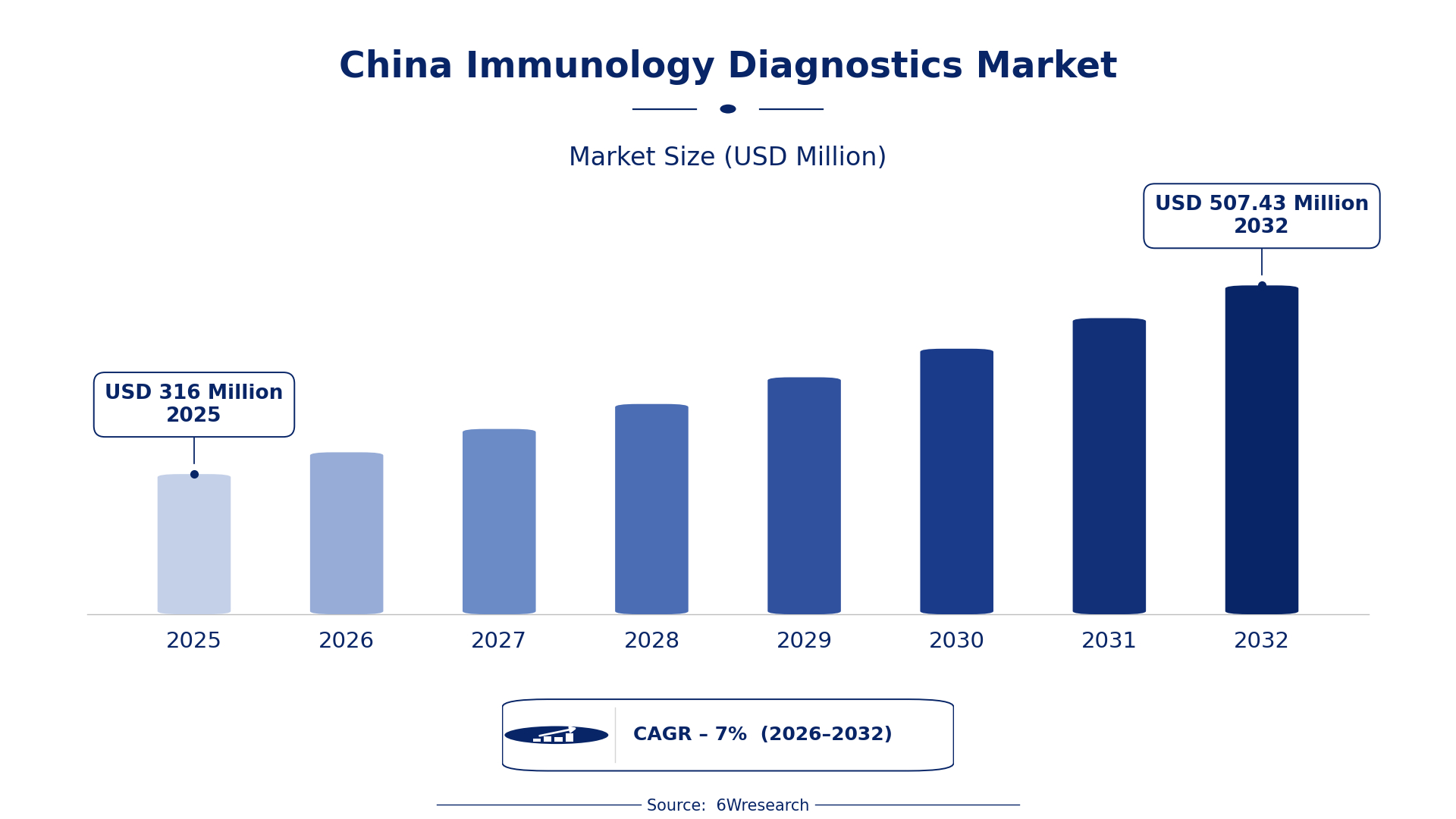
According to 6Wresearch internal database and industry insights, the China Immunology Diagnostics Market was valued at USD 316.0 million in 2025 and is projected to reach USD 507.43 million by 2032, growing at a CAGR of approximately 7% during 2026–2032.
China Immunology Diagnostics Market Highlights
| Report Metric | Details |
| Report Name | China Immunology Diagnostics Market |
| Market Size 2025 | USD 316.0 million |
| Market Size 2032 | USD 507.43 million |
| Absolute Growth 2025–2032 | USD 191.43 million |
| CAGR 2026–2032 | 7% |
| Peak Annual Growth | 9.6% in 2032 |
| Forecast Period | 2026–2032 |
| Historical Data | 2022–2025 |
| Base Year | 2025 |
| Leading Diagnostic Area, 2025 | Cancer Immunodiagnostics (36% share) |
| Leading Sample Type, 2025 | Blood/Serum (48% share) |
| Leading Technology Used, 2025 | ELISA (34% share) |
| Leading End User, 2025 | Oncology Hospitals (45% share) |
| Fastest-Growing Diagnostic Area | Allergy Tests (8.9% CAGR) |
| Fastest-Growing Sample Type | Skin Prick/IgE Panels (9.5% CAGR) |
| Fastest-Growing Technology Used | Multiplex Immunoassays (8.3% CAGR) |
| Fastest-Growing End User | ENT/Allergy Clinics (8.7% CAGR) |
| Growing Sector | ENT/Allergy Clinics |
| Key End Users | Oncology Hospitals, Specialized Labs, Transplant Units, ENT/Allergy Clinics |
China Immunology Diagnostics Market Year-wise Growth Rate and Key Drivers (2022–2032)
This graph illustrates the annual growth rates of the market from 2022 to 2032, highlighting a steady upward trajectory and projected market expansion over the forecast period.
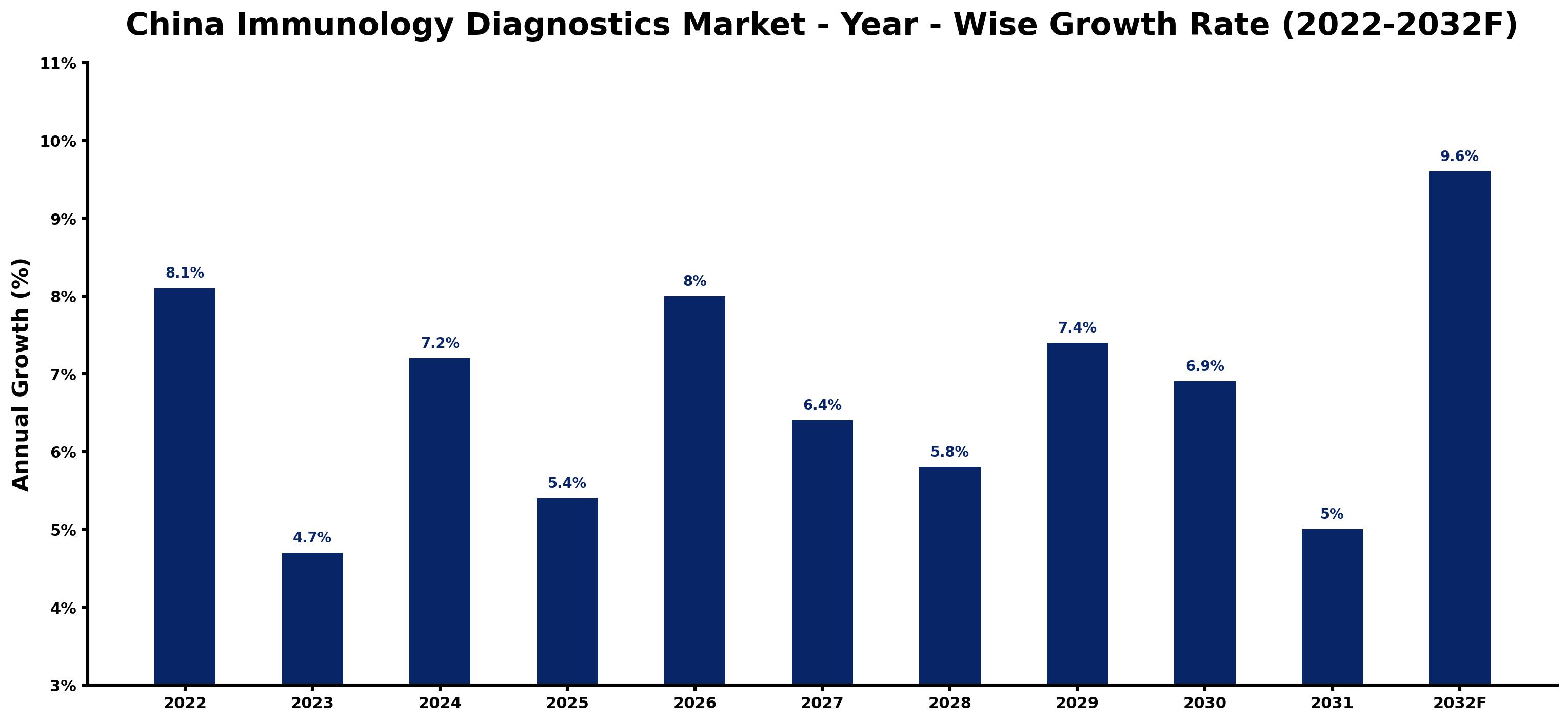
The following table presents the estimated annual growth rate for each year together with the principal factor influencing market performance.
| Year | Estimated Annual Growth (%) | Market Rationale |
| 2022 | 8.1 | The market experienced strong demand as healthcare providers expanded immunology testing capabilities. |
| 2023 | 4.7 | Growth slowed due to adjustments in healthcare spending and resource allocation among providers. |
| 2024 | 7.2 | Demand increased as more oncology hospitals adopted advanced immunology diagnostics. |
| 2025 | 5.4 | Growth slowed again as the National Immunology Diagnostics Improvement Plan began to affect investments. |
| 2026 | 8.0 | The market is expected to rebound with rising investments in immunology diagnostics infrastructure. |
| 2027 | 6.4 | Growth is projected to slow as regulatory processes for new tests become more stringent. |
| 2028 | 5.8 | Demand is expected to continue rising as urban allergy prevalence increases, driving test adoption. |
| 2029 | 7.4 | Growth will accelerate as specialized labs expand their testing services for multiple conditions. |
| 2030 | 6.9 | Growth is projected to slow as competition intensifies among diagnostic service providers. |
| 2031 | 5.0 | Demand will remain steady as healthcare institutions focus on improving diagnostic accuracy. |
| 2032 | 9.6 | The market is expected to peak as innovative diagnostic technologies gain widespread acceptance. |
Note: Market size estimations and growth projections presented in this report are based on 6Wresearch's proprietary forecasting methodology, utilizing the latest available industry data, government publications, and primary research inputs.
China Immunology Diagnostics Market Synopsis
Immunology Diagnostics in China encompasses tests that detect immune system disorders using biological samples such as blood or serum. These tests employ technologies like ELISA and multiplex immunoassays. The launch of the National Immunology Diagnostics Improvement Plan in 2023 will further improve testing capabilities across the country, supporting market growth.
Market Dynamics Impact Analysis (2026–2032)
| Factor | Type | Impact | Primary Segment Affected |
| Rising prevalence of autoimmune diseases and allergies drives demand for immunology diagnostics. | Driver | High | Autoimmune Panels |
| Increasing number of oncology hospitals adopting advanced diagnostic technologies boosts cancer immunodiagnostics. | Driver | High | Cancer Immunodiagnostics |
| Growing demand for allergy tests in urban areas presents new market opportunities. | Opportunity | High | Allergy Tests |
| Expansion of specialized labs creates a need for advanced immunology diagnostic products. | Opportunity | Medium | Blood/Serum |
| Regulatory hurdles can delay the introduction of new diagnostic tests in the market. | Restraint | High | ELISA |
| Market saturation limits growth potential for existing diagnostic service providers. | Restraint | Medium | Multiplex Immunoassays |
| High competition among diagnostic service providers pressures pricing strategies. | Challenge | High | Oncology Hospitals |
| The need for continuous training of healthcare professionals in immunology diagnostics remains critical. | Challenge | Medium | Specialized Labs |
Evaluation of Drivers in China Immunology Diagnostics Market (2026–2032)
The factors lifting demand, and the evidence behind each, are summarised below.
| Drivers | Primary Segment Affected | Why It Matters (Evidence) |
| Rising prevalence of autoimmune diseases and allergies increases testing demand. | Autoimmune Panels | In urban areas, the prevalence of allergies is around 20%, leading to higher test requests. |
| The number of oncology hospitals adopting immunology diagnostics is increasing. | Cancer Immunodiagnostics | Over 200 oncology hospitals across China are now utilizing advanced diagnostic tests. |
| The expansion of specialized labs increases the availability of immunology diagnostics. | Blood/Serum | China has over 1,000 specialized labs conducting immunology diagnostics. |
| The introduction of new testing technologies boosts market growth. | Multiplex Immunoassays | Luminex technology is increasingly adopted for multiplex testing in specialized labs, enhancing testing capabilities. |
| Government initiatives support the development of immunology diagnostics. | ELISA | The National Immunology Diagnostics Improvement Plan aims to improve testing capabilities across the country. |
The Immunology Diagnostics market in China is expanding due to the increasing prevalence of autoimmune diseases, the growing adoption of advanced diagnostic technologies, and the proliferation of specialised labs. Urban areas show an allergy prevalence of around 20%, resulting in more test requests. More than 200 oncology hospitals across China are employing advanced diagnostic tests, which drives demand for cancer immunodiagnostics. The number of specialised labs conducting immunology diagnostics exceeds 1,000, improving access to testing. The National Immunology Diagnostics Improvement Plan is set to enhance testing capabilities across the country, further stimulating growth in the sector.
Evaluation of Restraints in China Immunology Diagnostics Market
The table below lists the restraints and the evidence behind each.
| Market Restraint | Primary Segment Affected | Why It Matters (Evidence) |
| High testing costs due to inflated fees from specialized labs | Blood/Serum | Over 1,000 specialized labs charge inflated fees, increasing expenses by approximately 30%. |
| Limited access to advanced diagnostic technologies | Cancer Immunodiagnostics | Supply chain issues cause delays in test results for hospitals and clinics by an average of two weeks. |
| Market saturation leading to price wars | Oncology Hospitals | More than 50,000 diagnostic devices saturate the market, compromising service quality for buyers. |
| Significant investments required for technological advancements | Transplant Monitoring | Discourages smaller clinics from upgrading their equipment, limiting their ability to provide a full range of services. |
| Regulatory hurdles for new diagnostic tests | Allergy Tests | The Fast-Track Approval Pathway is not widely understood, causing delays in bringing new tests to market. |
China Immunology Diagnostics Market Challenges
Buyers in the China immunology diagnostics market encounter high testing costs, as over 1,000 specialised labs frequently charge inflated fees, increasing expenses by about 30%. Supply chain challenges arise from limited access to advanced diagnostic technologies, causing delays in test results for hospitals and clinics by an average of two weeks. Competition intensifies with more than 50,000 diagnostic devices saturating the market, leading to price wars that may compromise service quality for buyers. Technological advancements require substantial investments, discouraging smaller clinics from upgrading their equipment and limiting their ability to offer a full range of services.
Trends in the China Immunology Diagnostics Market
Below mentioned are some of the trends shaping the China Immunology Diagnostics Market growth.
- Shift towards Multiplex Testing in Specialized Labs: In 2023, specialized labs are increasingly adopting multiplex immunoassays, allowing simultaneous detection of multiple targets. This shift is supported as Luminex technology gains traction, with over 50,000 units installed nationwide.
- Transition from Traditional to Advanced Allergy Testing: Since 2022, there has been a notable change in allergy testing methods, with skin prick tests being replaced by more accurate immunoassays. This transition is driven by the 20% allergy prevalence in urban areas, improving diagnostic accuracy.
- Oncology Hospitals Embracing Advanced Diagnostics: Starting in 2023, oncology hospitals are prioritizing advanced immunodiagnostics for cancer detection. This trend is supported by the increasing use of cancer immunodiagnostics in over 200 hospitals nationwide.
- Expansion of Training Programs for Healthcare Professionals: In 2022, the Ministry of Health initiated the Immunology Diagnostics Training Program, improving skills among healthcare professionals. This program aims to enhance testing accuracy and is essential for over 300 accredited ENT/allergy clinics.
Investment Opportunities in the China Immunology Diagnostics Market
Investors looking at the China Immunology Diagnostics Market should consider the following areas.
- Investment in Specialized Labs: With over 1,000 specialised labs in China, there is a strong opportunity to invest in advanced diagnostic technologies. Now is the time to enter this market due to the increasing demand for immunology diagnostics, projected to grow at an average annual rate of 8% from 2023 to 2028.
- Partnerships with Oncology Hospitals: As oncology hospitals adopt advanced immunology diagnostics, there is a need for local partnerships to supply effective testing solutions. This is a prime opportunity given the 200 hospitals utilising these technologies, enhancing patient care.
- Expansion into Allergy Testing: The prevalence of allergies in urban areas, at around 20%, presents a strong opportunity to supply advanced allergy testing solutions. Engaging with ENT/allergy clinics can facilitate market entry and improve diagnostic accuracy.
- Development of Multiplex Immunoassays: The growing demand for multiplex testing creates an opportunity to develop and supply multiplex immunoassays. This is timely as specialised labs increasingly adopt Luminex technology, enhancing their testing capabilities.
Government Initiatives in the China Immunology Diagnostics Market
In 2023, the State Administration for Market Regulation updated the Standards for Immunology Diagnostic Products to improve quality control measures. This update builds on the National Plan for the Development of Immunology Diagnostics launched in 2021, which aimed to improve testing infrastructure and accessibility. These measures ensure that diagnostic products meet stringent quality standards, benefiting both producers and buyers in the market by enhancing reliability and safety.
The Immunology Diagnostics Training Program initiated by the Ministry of Health in 2022 aims to improve the skills of healthcare professionals. This program funds training sessions and workshops, ensuring that over 300 accredited ENT/allergy clinics can maintain high testing standards. Additionally, the Immunology Diagnostics Innovation Program approved by the Ministry of Science and Technology in 2022 allocates 500 million RMB for research and development, further supporting advancements in the field and enhancing the capabilities of diagnostic providers.
Future Insight of the China Immunology Diagnostics Market
Several forward-looking factors should support the immunology diagnostics market in China over the coming years. The National Immunology Diagnostics Improvement Plan will boost testing capabilities, benefiting hospitals and clinics. The growing use of multiplex immunoassays will streamline testing processes, allowing specialised labs to improve efficiency. By 2032, the prevalence of allergies in urban areas, affecting around 20% of the population, will drive demand for allergy tests, resulting in a wider array of advanced diagnostic options for buyers.
Market Segmentation Analysis
The report offers a comprehensive study of the following market segments and their leading categories in the market.
By Diagnostic Area – Cancer Immunodiagnostics Dominated, Allergy Tests Expected to Grow Fastest
According to Sachin Kumar Rai, Senior Research Analyst at 6Wresearch, the largest diagnostic area category in 2025 was Cancer Immunodiagnostics, with a 36% share of total revenue. Cancer immunodiagnostics holds the largest market share due to the high cancer incidence in China, with over 200 oncology hospitals relying on these tests for effective patient management. The focus on early detection and ongoing monitoring of cancer patients reinforces its strong position in the market. Over 2026–2032, Allergy Tests are expected to post the fastest growth, at a CAGR of 8.9%. The allergy tests segment is experiencing rapid growth, driven by the prevalence of allergies affecting around 20% of the urban population. This demand surge is further supported by the establishment of over 300 accredited ENT/allergy clinics across the country, enhancing access to testing services. Suppliers should enhance their allergy testing offerings to capitalise on this increasing demand.
By Sample Type – Blood/Serum Dominated, Skin Prick/IgE Panels Expected to Grow Fastest
Blood/Serum held a 48% share of the China Immunology Diagnostics Market by sample type in 2025. Blood and serum are the primary sample types for immunology diagnostics, leading the market due to their extensive application in various tests. The significant installed base of over 50,000 diagnostic devices reinforces their dominant position in the industry. Skin Prick/IgE Panels are projected to grow fastest, at a CAGR of 9.5% during 2026–2032. Skin prick and IgE panels are rapidly gaining traction, particularly for allergy testing, as they provide quick and reliable results. The growth is bolstered by the increasing number of clinics dedicated to allergy management, driving demand for these specific tests. Buyers should consider investing in advanced testing options to address the rising demand for allergy diagnostics.
By Technology Used – ELISA Dominated, Multiplex Immunoassays Expected to Grow Fastest
ELISA took a 34% share of technology used in 2025, more than any other category. ELISA technology commands the largest market share in immunology diagnostics, widely utilised for various immunoassays due to its reliability and effectiveness. Its established presence in specialised labs ensures consistent demand for this testing method across the industry. The quickest growth will come from Multiplex Immunoassays, forecast to expand at a CAGR of 8.3% between 2026 and 2032. Multiplex immunoassays are emerging as the fastest-growing technology, allowing simultaneous detection of multiple targets, significantly enhancing testing efficiency. This capability is increasingly appealing to laboratories aiming to optimise their workflows and meet rising testing demands. Suppliers should prioritise the development of multiplex technologies to meet the evolving needs of testing facilities.
By End User – Oncology Hospitals Dominated, ENT/Allergy Clinics Expected to Grow Fastest
In 2025, Oncology Hospitals led the end user split with a 45% share. Oncology hospitals represent the largest market share, as they are crucial for managing cancer patients and heavily rely on immunology diagnostics for treatment decisions. Their extensive use of these tests solidifies their dominant position in the immunology diagnostics market. ENT/Allergy Clinics are set to record the highest CAGR in this split, 8.7% over 2026–2032. ENT and allergy clinics are the fastest-growing end-user segment, frequently employing immunology diagnostics for patient diagnosis and management. The rising awareness of allergy-related health issues propels this rapid expansion, creating robust demand for testing services. Suppliers should tailor their strategies to meet the specific needs of ENT and allergy clinics to leverage this growth opportunity.
Key Attractiveness of the Report
- 10 Years of Market Numbers
- Historical Data Starting from 2022 to 2025
- Base Year 2025
- Forecast Data until 2032
- Key Performance Indicators Impacting the Market
- Major Upcoming Developments and Projects
Key Highlights of the Report:
- China Immunology Diagnostics Market Outlook
- Market Size of China Immunology Diagnostics Market, 2025
- Forecast of China Immunology Diagnostics Market, 2032
- Historical Data and Forecast of China Immunology Diagnostics Revenues & Volume for the Period 2022 - 2032F
- China Immunology Diagnostics Market Trend Evolution
- China Immunology Diagnostics Market Drivers and Challenges
- China Immunology Diagnostics Price Trends
- China Immunology Diagnostics Porter's Five Forces
- China Immunology Diagnostics Industry Life Cycle
- Historical Data and Forecast of China Immunology Diagnostics Market Revenues & Volume By Diagnostic Area for the Period 2022 - 2032F
- Historical Data and Forecast of China Immunology Diagnostics Market Revenues & Volume By Autoimmune Panels for the Period 2022 - 2032F
- Historical Data and Forecast of China Immunology Diagnostics Market Revenues & Volume By Allergy Tests for the Period 2022 - 2032F
- Historical Data and Forecast of China Immunology Diagnostics Market Revenues & Volume By Cancer Immunodiagnostics for the Period 2022 - 2032F
- Historical Data and Forecast of China Immunology Diagnostics Market Revenues & Volume By Transplant Monitoring for the Period 2022 - 2032F
- Historical Data and Forecast of China Immunology Diagnostics Market Revenues & Volume By Sample Type for the Period 2022 - 2032F
- Historical Data and Forecast of China Immunology Diagnostics Market Revenues & Volume By Blood/Serum for the Period 2022 - 2032F
- Historical Data and Forecast of China Immunology Diagnostics Market Revenues & Volume By Skin Prick/IgE Panels for the Period 2022 - 2032F
- Historical Data and Forecast of China Immunology Diagnostics Market Revenues & Volume By Tumor Marker Panels for the Period 2022 - 2032F
- Historical Data and Forecast of China Immunology Diagnostics Market Revenues & Volume By HLA Antibody Screening for the Period 2022 - 2032F
- Historical Data and Forecast of China Immunology Diagnostics Market Revenues & Volume By Technology Used for the Period 2022 - 2032F
- Historical Data and Forecast of China Immunology Diagnostics Market Revenues & Volume By ELISA, IFA for the Period 2022 - 2032F
- Historical Data and Forecast of China Immunology Diagnostics Market Revenues & Volume By Immunoblot/RAST for the Period 2022 - 2032F
- Historical Data and Forecast of China Immunology Diagnostics Market Revenues & Volume By Multiplex Immunoassays for the Period 2022 - 2032F
- Historical Data and Forecast of China Immunology Diagnostics Market Revenues & Volume By Luminex for the Period 2022 - 2032F
- Historical Data and Forecast of China Immunology Diagnostics Market Revenues & Volume By End User for the Period 2022 - 2032F
- Historical Data and Forecast of China Immunology Diagnostics Market Revenues & Volume By Specialized Labs for the Period 2022 - 2032F
- Historical Data and Forecast of China Immunology Diagnostics Market Revenues & Volume By ENT/Allergy Clinics for the Period 2022 - 2032F
- Historical Data and Forecast of China Immunology Diagnostics Market Revenues & Volume By Oncology Hospitals for the Period 2022 - 2032F
- Historical Data and Forecast of China Immunology Diagnostics Market Revenues & Volume By Transplant Units for the Period 2022 - 2032F
- China Immunology Diagnostics Import Export Trade Statistics
- Market Opportunity Assessment By Diagnostic Area
- Market Opportunity Assessment By Sample Type
- Market Opportunity Assessment By Technology Used
- Market Opportunity Assessment By End User
- China Immunology Diagnostics Top Companies Market Share
- China Immunology Diagnostics Competitive Benchmarking By Technical and Operational Parameters
- China Immunology Diagnostics Company Profiles
- China Immunology Diagnostics Key Strategic Recommendations
Market Covered
This report examines the market across the segments below.
By Diagnostic Area
- Autoimmune Panels
- Allergy Tests
- Cancer Immunodiagnostics
- Transplant Monitoring
By Sample Type
- Blood/Serum
- Skin Prick/IgE Panels
- Tumor Marker Panels
- HLA Antibody Screening
By Technology Used
- ELISA
- IFA
- Immunoblot/RAST
- Multiplex Immunoassays
- Luminex
By End User
- Specialized Labs
- ENT/Allergy Clinics
- Oncology Hospitals
- Transplant Units































