China Prefabricated Building Market Size Growth Rate
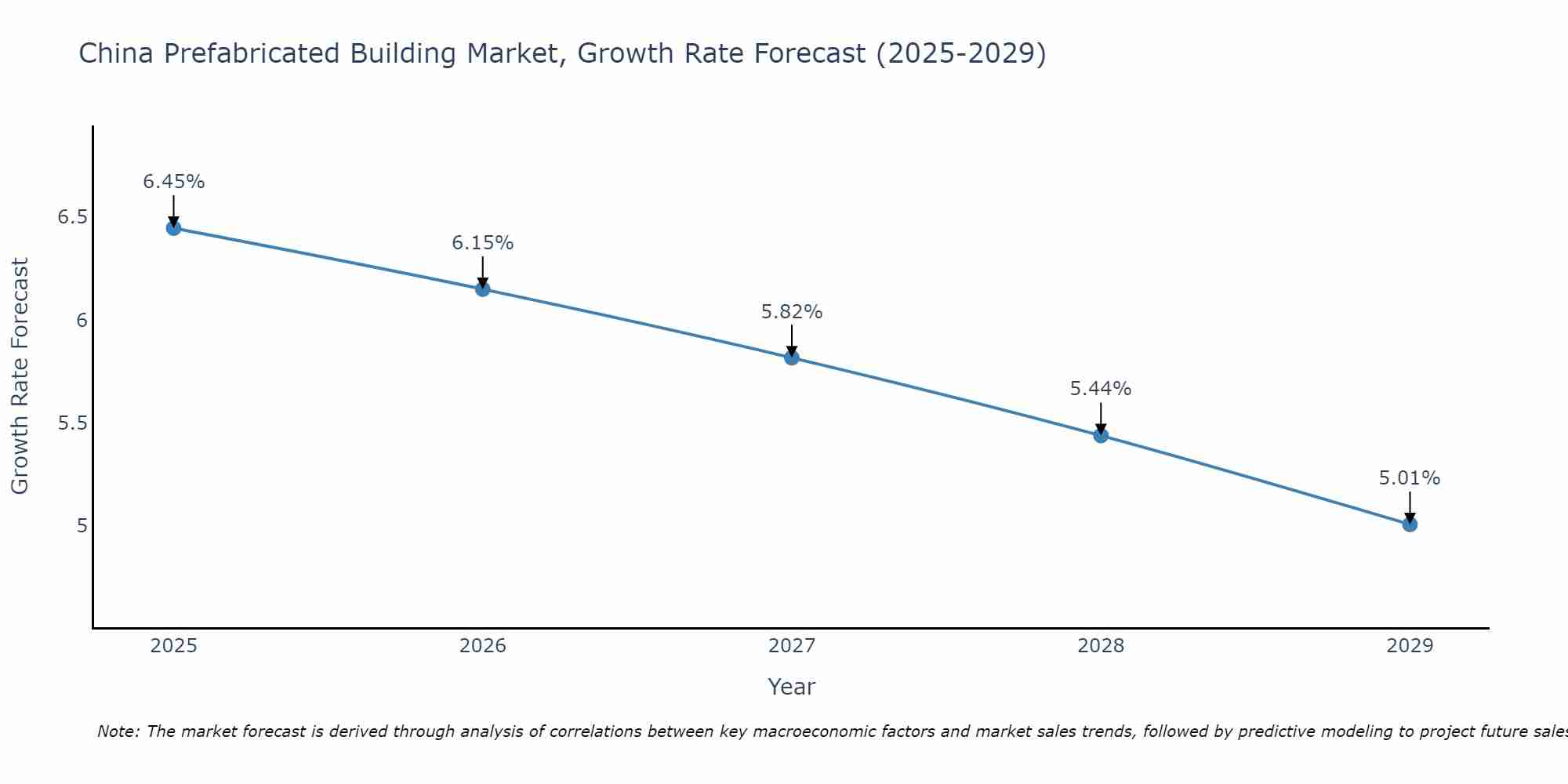
The China Prefabricated Building Market could see a tapering of growth rates over 2025 to 2029. Beginning strongly at 6.45% in 2025, growth softens to 5.01% in 2029.
China Prefabricated Building Market Overview
The China prefabricated building market is experiencing significant growth due to factors such as rapid urbanization, government support for green building initiatives, and a push for more efficient construction methods. Prefabricated buildings offer advantages like reduced construction time, cost savings, and improved quality control. The market is driven by demand for residential, commercial, and industrial structures, with modular construction techniques gaining popularity. Key players in the market include companies offering prefabricated components, modular building systems, and integrated solutions. Despite facing challenges like regulatory hurdles and quality concerns, the China prefabricated building market is poised for continued expansion as stakeholders increasingly recognize the benefits of off-site construction methods.
China Prefabricated Building Market Trends
The China Prefabricated Building Market is currently experiencing significant growth driven by factors such as urbanization, increasing demand for affordable housing, and the government`s push for sustainable construction practices. Modular construction techniques are gaining popularity due to their efficiency and cost-effectiveness in addressing housing shortages in urban areas. Moreover, advancements in technology and materials are improving the quality and design flexibility of prefabricated buildings, making them more appealing to developers and consumers. The market is also witnessing a shift towards off-site construction methods to reduce construction time and minimize environmental impact. Overall, the China Prefabricated Building Market is poised for continued expansion as the industry embraces innovation and sustainability to meet the evolving needs of the construction sector.
China Prefabricated Building Market Challenges
In the China Prefabricated Building Market, challenges include varying quality standards among manufacturers leading to concerns about safety and durability of prefabricated structures. Additionally, there is a lack of skilled labor for installation and assembly of prefabricated components, which can impact the efficiency and speed of construction projects. Regulatory hurdles and bureaucratic processes also pose challenges, as obtaining necessary permits and approvals can be time-consuming. Moreover, traditional construction methods are still prevalent in China, leading to a slow adoption rate of prefabricated building technologies. Lastly, there is a need for greater awareness and education among stakeholders about the benefits and potential of prefabricated construction to drive market growth and acceptance.
China Prefabricated Building Market Investment Opportunities
The China Prefabricated Building Market presents various investment opportunities due to the increasing demand for affordable and sustainable construction solutions in the country. Key areas for investment include prefabricated modular construction, green buildings, and smart technology integration within prefabricated structures. With the government`s strong support for the development of prefabricated buildings to address housing shortages and promote environmental sustainability, investors can explore partnerships with local manufacturers, technology providers, and real estate developers. Additionally, investing in research and development to enhance design capabilities and construction efficiency in the prefabricated building sector can lead to long-term growth and profitability in the Chinese market.
China Prefabricated Building Market Government Policy
The government policies related to the China Prefabricated Building Market aim to promote sustainable urban development, improve construction efficiency, and address housing shortages. The Chinese government has implemented initiatives such as the "Made in China 2025" plan, which encourages the adoption of prefabricated construction methods to increase productivity and reduce environmental impact. Additionally, policies like the "New Urbanization Plan" and the "Belt and Road Initiative" support the growth of the prefabricated building sector by promoting standardization, innovation, and international cooperation. These policies offer incentives, subsidies, and regulatory support to companies involved in prefabricated building manufacturing and construction, fostering market expansion and technological advancement in the industry.
China Prefabricated Building Market Future Outlook
The future outlook for the China Prefabricated Building Market appears promising, driven by factors such as rapid urbanization, government support for sustainable construction practices, and the increasing need for affordable and efficient building solutions. With a growing emphasis on high-quality, environmentally friendly construction methods, prefabricated buildings offer a cost-effective and time-efficient alternative to traditional construction. Additionally, advancements in technology and innovative design capabilities are expected to further propel the market`s growth. As demand for infrastructure development and residential housing continues to rise in China, the prefabricated building sector is likely to experience significant expansion, attracting both domestic and international players looking to capitalize on the market opportunities presented by this burgeoning industry.
Key Highlights of the Report:
- China Prefabricated Building Market Outlook
- Market Size of China Prefabricated Building Market, 2021
- Forecast of China Prefabricated Building Market, 2031
- Historical Data and Forecast of China Prefabricated Building Revenues & Volume for the Period 2018 - 2031
- China Prefabricated Building Market Trend Evolution
- China Prefabricated Building Market Drivers and Challenges
- China Prefabricated Building Price Trends
- China Prefabricated Building Porter's Five Forces
- China Prefabricated Building Industry Life Cycle
- Historical Data and Forecast of China Prefabricated Building Market Revenues & Volume By Dimensions for the Period 2018 - 2031
- Historical Data and Forecast of China Prefabricated Building Market Revenues & Volume By Skeleton System for the Period 2018 - 2031
- Historical Data and Forecast of China Prefabricated Building Market Revenues & Volume By Panel System for the Period 2018 - 2031
- Historical Data and Forecast of China Prefabricated Building Market Revenues & Volume By Cellular System for the Period 2018 - 2031
- Historical Data and Forecast of China Prefabricated Building Market Revenues & Volume By Combined System for the Period 2018 - 2031
- Historical Data and Forecast of China Prefabricated Building Market Revenues & Volume By Application for the Period 2018 - 2031
- Historical Data and Forecast of China Prefabricated Building Market Revenues & Volume By Residential for the Period 2018 - 2031
- Historical Data and Forecast of China Prefabricated Building Market Revenues & Volume By Non-Residential for the Period 2018 - 2031
- China Prefabricated Building Import Export Trade Statistics
- Market Opportunity Assessment By Dimensions
- Market Opportunity Assessment By Application
- China Prefabricated Building Top Companies Market Share
- China Prefabricated Building Competitive Benchmarking By Technical and Operational Parameters
- China Prefabricated Building Company Profiles
- China Prefabricated Building Key Strategic Recommendations






































