China Sliding Door Market Size & Growth Rate
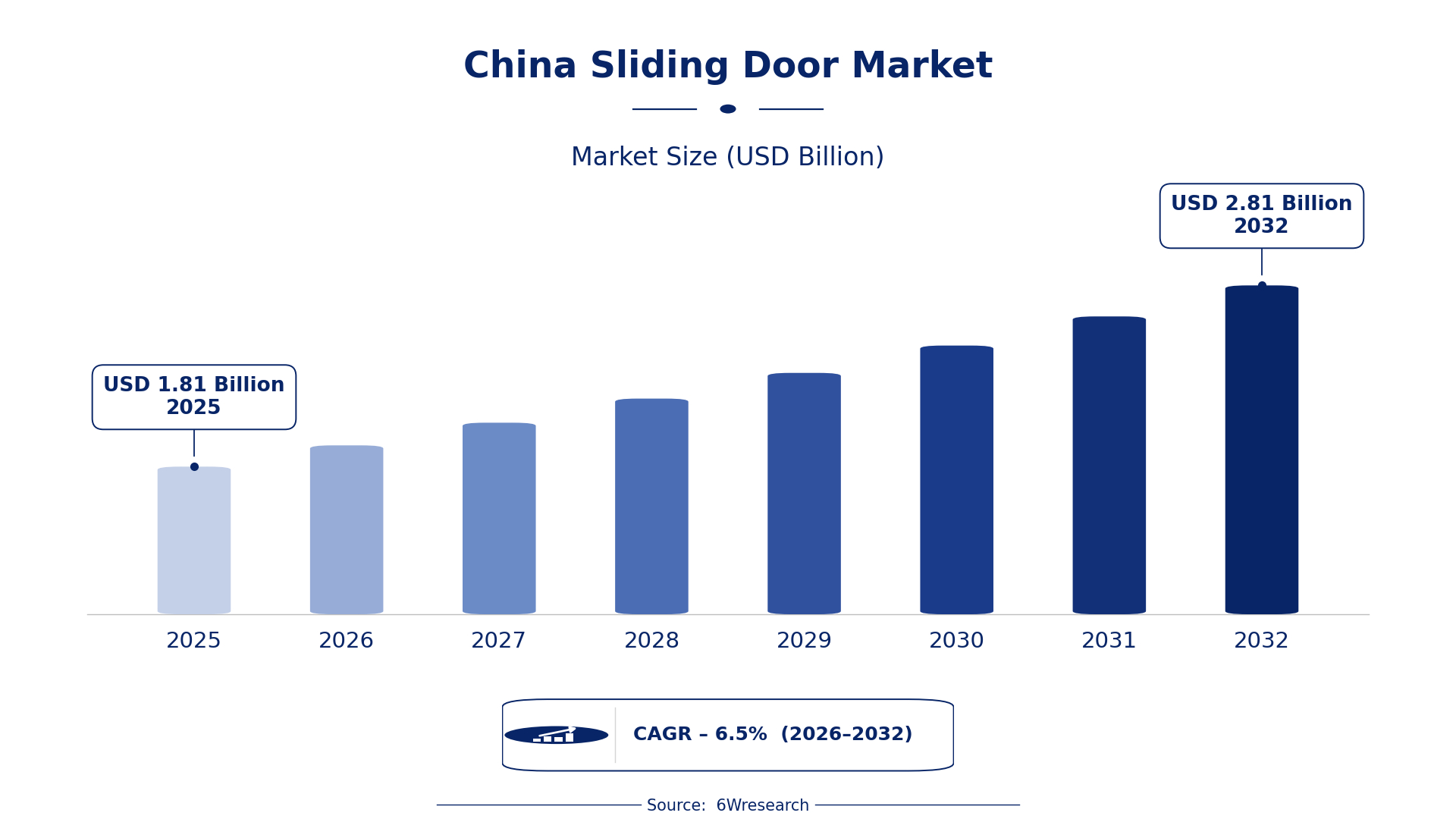
According to 6Wresearch internal database and industry insights, the China Sliding Door Market was valued at USD 1.81 billion in 2025 and is projected to reach USD 2.81 billion by 2032, growing at a CAGR of approximately 6.5% during 2026–2032.
China Sliding Door Market Highlights
| Report Metric | Details |
| Report Name | China Sliding Door Market |
| Market Size 2025 | USD 1.81 billion |
| Market Size 2032 | USD 2.81 billion |
| Absolute Growth 2025–2032 | USD 1 billion |
| CAGR 2026–2032 | 6.5% |
| Peak Annual Growth | 8.8% in 2032 |
| Forecast Period | 2026–2032 |
| Historical Data | 2022–2025 |
| Base Year | 2025 |
| Leading Door Type, 2025 | Glass Sliding Doors (46% share) |
| Leading Frame Material, 2025 | Aluminum/UPVC (41% share) |
| Leading Application Area, 2025 | Balconies/Patios (48% share) |
| Leading End User, 2025 | Residential Builders (57% share) |
| Fastest-Growing Door Type | Automatic Sliding Doors (8.0% CAGR) |
| Fastest-Growing Frame Material | Sensor-Based (8.8% CAGR) |
| Fastest-Growing Application Area | Commercial Entryways (8.2% CAGR) |
| Fastest-Growing End User | Malls & Offices (9.2% CAGR) |
| Growing Sector | Residential Construction |
| Key End Users | Residential Builders, Commercial Developers, Luxury Home Builders, Industrial Constructors |
China Sliding Door Market Year-wise Growth Rate and Key Drivers (2022–2032)
This graph illustrates the annual growth rates of the market from 2022 to 2032, highlighting a steady upward trajectory and projected market expansion over the forecast period.
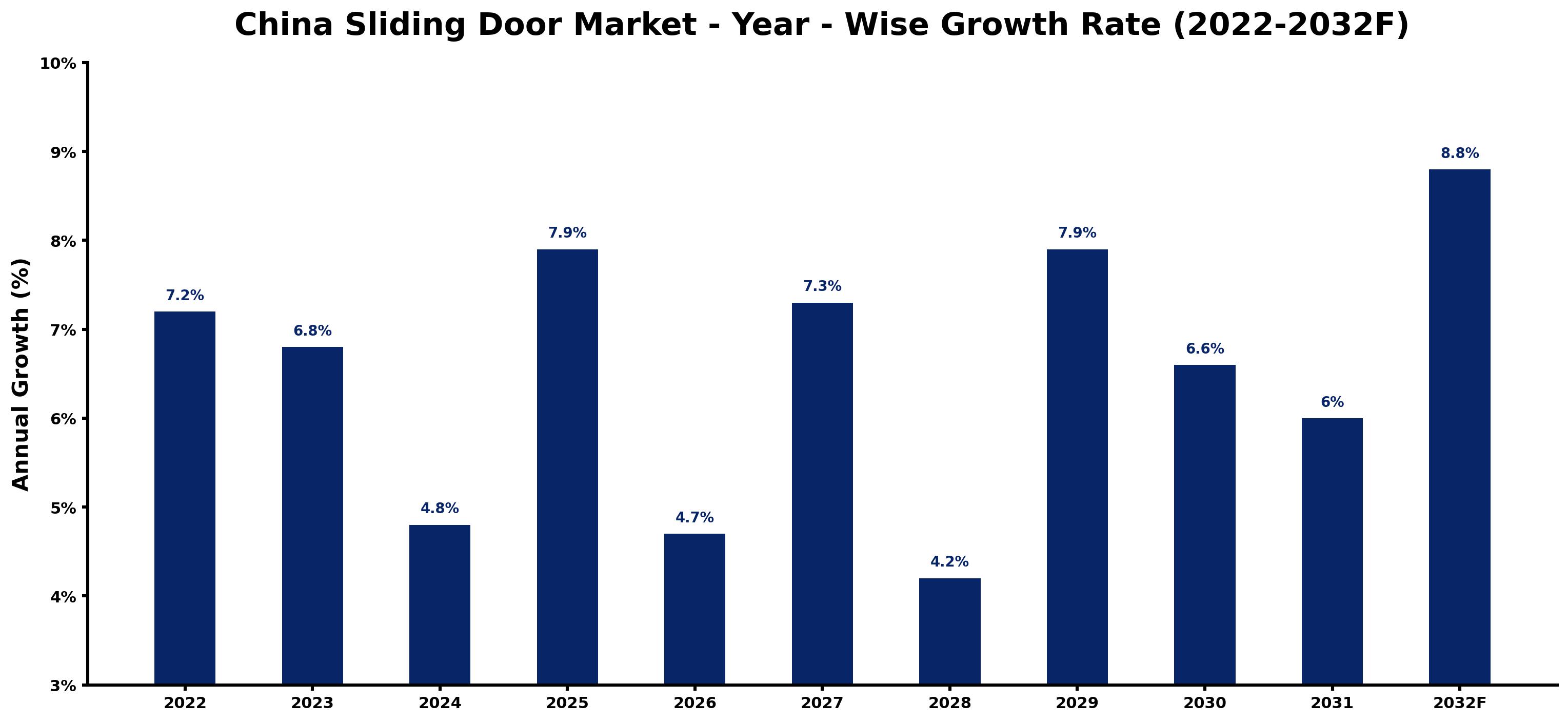
Below, each year's estimated growth is shown next to the factor that most influenced it.
| Year | Estimated Annual Growth (%) | Market Rationale |
| 2022 | 7.2 | The market experienced steady demand from residential builders and construction projects. |
| 2023 | 6.8 | Growth slowed due to a focus on sustainability in building materials, particularly among urban developers. |
| 2024 | 4.8 | Demand continued to decelerate as buyers sought more energy-efficient sliding door solutions. |
| 2025 | 7.9 | The market rebounded with increased investments in residential construction projects, particularly in urban areas. |
| 2026 | 4.7 | Growth is expected to slow as the market adjusts to new building regulations and energy efficiency standards. |
| 2027 | 7.3 | Demand is projected to pick up again due to a surge in urban residential developments and new housing projects. |
| 2028 | 4.2 | The market is expected to slow as buyers become more selective in their material choices, focusing on energy efficiency. |
| 2029 | 7.9 | Demand is anticipated to surge again as luxury home builders expand their projects significantly, particularly in metropolitan areas. |
| 2030 | 6.6 | Growth is projected to slow as competition intensifies among sliding door manufacturers, impacting pricing strategies. |
| 2031 | 6.0 | The market will continue to grow, albeit at a slower pace, due to rising material costs affecting buyers. |
| 2032 | 8.8 | Demand is expected to peak as automatic sliding doors gain popularity in commercial spaces, driven by urbanisation. |
Note: Market size estimations and growth projections presented in this report are based on 6Wresearch's proprietary forecasting methodology, utilizing the latest available industry data, government publications, and primary research inputs.
China Sliding Door Market Synopsis
The China Sliding Door Market includes a variety of doors tailored for both residential and commercial applications. Typically constructed from materials like aluminium and glass, these doors blend functionality with visual appeal. The market is expanding due to urbanisation, increasing disposable incomes, and a trend towards contemporary architectural styles. Demand from residential builders and commercial properties is propelling this growth, supported by substantial investments in urban housing and commercial projects.
Market Dynamics Impact Analysis (2026–2032)
| Factor | Type | Impact | Primary Segment Affected |
| Increasing urbanisation is driving demand for residential and commercial properties. | Driver | High | Glass Sliding Doors |
| The growing trend towards energy-efficient designs creates opportunities for innovative products. | Opportunity | High | Sensor-Based |
| Rising disposable incomes lead to higher spending on home renovations and improvements. | Driver | High | Automatic Sliding Doors |
| Commercial entryways are expanding, creating demand for durable sliding door solutions. | Opportunity | High | Commercial Entryways |
| High material costs are limiting the affordability of sliding doors for some buyers. | Restraint | High | Aluminum/UPVC |
| Regulatory compliance for energy efficiency is increasing production costs. | Restraint | High | Industrial Sliding Doors |
| Competition from alternative door solutions is affecting market share for sliding doors. | Challenge | Medium | Barn Sliding Doors |
| Supply chain disruptions are causing delays in material availability for manufacturers. | Challenge | Medium | Glass Sliding Doors |
Evaluation of Drivers in China Sliding Door Market (2026–2032)
The main growth drivers and the segments they affect most are set out below.
| Drivers | Primary Segment Affected | Why It Matters (Evidence) |
| Urbanisation drives demand for residential properties, increasing sliding door installations. | Glass Sliding Doors | In urban areas, approximately 60% of new housing projects incorporate sliding doors. |
| Rising disposable incomes lead to increased spending on home renovations. | Automatic Sliding Doors | Households with incomes above USD 30,000 are more likely to invest in modern home features. |
| Energy-efficient designs are becoming a priority for new constructions. | Sensor-Based | New building codes require energy-efficient solutions, boosting sensor-based sliding doors. |
| Commercial property development is expanding, increasing demand for sliding doors. | Commercial Entryways | The commercial sector is projected to grow by 5% annually, driving door installations. |
| Luxury home builders are focusing on modern aesthetics, favouring sliding doors. | Barn Sliding Doors | Luxury homes typically allocate 15% of their budget to high-end door solutions. |
The Sliding Door market in China is growing on the back of urbanisation, rising disposable incomes, and a focus on energy-efficient designs. Urbanisation has led to approximately 60% of new housing projects incorporating sliding doors, reflecting a shift towards modern aesthetics. Households with higher incomes are increasingly investing in home renovations, further boosting demand. New building codes requiring energy-efficient solutions are driving the adoption of sensor-based sliding doors. The commercial sector is expanding, projected to grow by 5% annually, leading to increased installations in commercial properties.
Evaluation of Restraints in China Sliding Door Market
The key brakes on demand, and where they bite hardest, are shown below.
| Market Restraint | Primary Segment Affected | Why It Matters (Evidence) |
| High material costs limit affordability for some buyers. | Aluminum/UPVC | Material costs have risen by 20% over the past year, affecting buyer decisions. |
| Regulatory compliance increases production costs for manufacturers. | Industrial Sliding Doors | Manufacturers face additional costs due to compliance with new energy efficiency standards, raising expenses by 15%. |
| Competition from alternative door solutions affects market share. | Barn Sliding Doors | Alternative door solutions have gained 15% market share, impacting sliding door sales. |
| Supply chain disruptions delay material availability for manufacturers. | Glass Sliding Doors | Manufacturers report a 30% increase in lead times for key materials, affecting production schedules. |
| Market saturation in urban areas limits growth potential. | Automatic Sliding Doors | Urban areas have reached a saturation point, slowing new installations. |
China Sliding Door Market Challenges
The China Sliding Door Market still has to solve a few problems, and the first is rising production costs. Manufacturers face increasing raw material prices, which can inflate production expenses by up to 15%, squeezing profit margins. Regulatory hurdles complicate operations; compliance with local safety standards can delay product launches by up to six months, frustrating distributors. A lack of skilled workers in advanced manufacturing techniques restricts producers' capacity to adopt new technologies, which can result in outdated designs. Buyers encounter limited options due to these challenges, causing prices to be 10% higher than anticipated and reducing market availability.
Trends in the China Sliding Door Market
The trends below show where the China Sliding Door Market is heading.
- Shift Towards Energy-Efficient Designs: Residential builders are increasingly prioritising energy-efficient sliding doors, reflecting a broader trend in sustainable construction. In 2023, 40% of new homes featured energy-efficient designs, influencing buyer choices.
- Growing Popularity of Automatic Sliding Doors: In urban centres, automatic sliding doors are becoming a standard feature in commercial buildings. By 2025, they are expected to account for 30% of all commercial door installations.
- Transition from Traditional to Modern Aesthetics: Luxury home builders are moving away from traditional doors to modern sliding door designs. In 2024, 50% of luxury homes are projected to feature sliding doors, enhancing their appeal.
- Increase in Smart Home Integration: Smart home technology is being integrated into sliding doors, offering enhanced security and convenience. By 2026, 25% of new sliding doors are expected to include smart features.
Investment Opportunities in the China Sliding Door Market
Below are the investment opportunities with the strongest case in the China Sliding Door Market.
- Residential Builders Seeking Modern Solutions: Residential builders are increasingly looking for modern sliding door solutions, with the market expected to reach USD 1.81 billion by 2025. Collaborating with local manufacturers can facilitate entry into this growing sector.
- Joint Ventures for Energy-Efficient Products: There is a significant gap in the market for energy-efficient sliding doors, with demand expected to rise. Partnering with local construction firms can help meet this need effectively.
- Expansion in Commercial Property Development: The commercial sector is projected to grow by 5% annually, creating opportunities for sliding door suppliers. Focusing on commercial entryways can yield substantial returns for manufacturers.
- Investment in Smart Sliding Door Technology: With 25% of new sliding doors expected to include smart features by 2026, investing in smart technology can position suppliers favourably in the market.
Government Initiatives in the China Sliding Door Market
In China, the regulatory framework for sliding doors is shaped by laws such as the Construction Law of 1997 and the Energy Conservation Law of 2007. These laws mandate energy efficiency standards for building materials, including sliding doors. The latest measures introduced in 2020, such as the Green Building Action Plan, further emphasise the need for sustainable construction practices. These regulations compel manufacturers to invest in energy-efficient designs and materials to comply with the standards set forth by the government.
The National Development and Reform Commission oversees the approval of building materials, including sliding doors. This agency ensures that manufacturers adhere to energy efficiency standards and sustainability practices. Additionally, the Ministry of Housing and Urban-Rural Development funds initiatives aimed at promoting green building technologies, further supporting the adoption of energy-efficient sliding doors in the market.
Future Insight of the China Sliding Door Market
The China Sliding Door Market is expected to evolve significantly by 2032, driven by advancements in automation technology and eco-friendly materials. New manufacturing facilities will focus on energy efficiency and sustainable designs. Increased investment in research and development will lead to diverse sliding door solutions that meet changing consumer preferences. By 2032, the market will likely see a rise in smart home integration, with automated sliding doors becoming standard in modern residences.
Market Segmentation Analysis
Each segment group is reviewed below, with the leader by share and the fastest grower by CAGR.
By Door Type – Glass Sliding Doors Dominated, Automatic Sliding Doors Expected to Grow Fastest
According to Dhaval Chaurasia, Assistant Manager at 6Wresearch, in 2025, Glass Sliding Doors led the door type split with a 46% share. Glass sliding doors hold the largest market share due to their aesthetic appeal and functionality, making them a preferred choice in both residential and commercial settings. Their extensive use in high-rise buildings and contemporary homes solidifies their position in the China sliding door market. Automatic Sliding Doors are projected to grow fastest, at a CAGR of 8.0% during 2026–2032. The surge in automatic sliding doors is fuelled by the growing need for convenience and accessibility in public areas. For example, the rising installation of automatic systems in shopping malls highlights a shift towards user-friendly designs that cater to modern demands. This trend suggests that suppliers should prioritise the development of automatic features to align with consumer preferences.
By Frame Material – Aluminum/UPVC Dominated, Sensor-Based Expected to Grow Fastest
Aluminum/UPVC accounted for a 41% market share by frame material in 2025. Aluminum/UPVC leads the market thanks to its durability and low maintenance requirements, appealing to builders and homeowners alike. Its extensive use in both residential and commercial projects solidifies its dominant market share. The quickest growth will come from Sensor-Based, forecast to expand at a CAGR of 8.8% between 2026 and 2032. The sensor-based frame material is experiencing rapid growth as smart technology integration becomes more prevalent in building designs. The increasing installation of smart systems in commercial properties drives this segment's expansion. Suppliers must invest in sensor technology to align with the market's shift towards smart building solutions.
By Application Area – Balconies/Patios Dominated, Commercial Entryways Expected to Grow Fastest
The largest application area category in 2025 was Balconies/Patios, with a 48% share of total revenue. Balconies and patios hold the largest share in the application area segment, primarily because they enhance outdoor living spaces. Their widespread use in residential projects that prioritise open-air designs contributes to their strong market position. Over 2026–2032, Commercial Entryways are expected to post the fastest growth, at a CAGR of 8.2%. Commercial entryways are seeing the fastest growth as businesses focus on improving customer access and experience. The surge in new retail developments is a key factor behind this segment's rapid expansion. Suppliers should prioritise commercial projects to capitalise on the increasing demand for accessible entry solutions.
By End User – Residential Builders Dominated, Malls & Offices Expected to Grow Fastest
Residential Builders held a 57% share of the China Sliding Door Market by end user in 2025. Residential builders lead the end-user segment, driven by ongoing home construction and renovation activities. Their preference for incorporating sliding doors in contemporary housing designs significantly influences their market share. Malls & Offices are set to record the highest CAGR in this split, 9.2% over 2026–2032. Malls and offices are the fastest-growing end-user segment, as the retail sector expands and aims to create inviting environments. The rise in the number of shopping centres and office buildings is a crucial factor fuelling this growth. Suppliers should focus on providing tailored solutions for commercial spaces to address the growing demand.
Key Attractiveness of the Report
- 10 Years of Market Numbers
- Historical Data Starting from 2022 to 2025
- Base Year 2025
- Forecast Data until 2032
- Key Performance Indicators Impacting the Market
- Major Upcoming Developments and Projects
Key Highlights of the Report:
- China Sliding Door Market Outlook
- Market Size of China Sliding Door Market, 2025
- Forecast of China Sliding Door Market, 2032
- Historical Data and Forecast of China Sliding Door Revenues & Volume for the Period 2022 - 2032F
- China Sliding Door Market Trend Evolution
- China Sliding Door Market Drivers and Challenges
- China Sliding Door Price Trends
- China Sliding Door Porter's Five Forces
- China Sliding Door Industry Life Cycle
- Historical Data and Forecast of China Sliding Door Market Revenues & Volume By Door Type for the Period 2022 - 2032F
- Historical Data and Forecast of China Sliding Door Market Revenues & Volume By Glass Sliding Doors for the Period 2022 - 2032F
- Historical Data and Forecast of China Sliding Door Market Revenues & Volume By Automatic Sliding Doors for the Period 2022 - 2032F
- Historical Data and Forecast of China Sliding Door Market Revenues & Volume By Barn Sliding Doors for the Period 2022 - 2032F
- Historical Data and Forecast of China Sliding Door Market Revenues & Volume By Industrial Sliding Doors for the Period 2022 - 2032F
- Historical Data and Forecast of China Sliding Door Market Revenues & Volume By Frame Material for the Period 2022 - 2032F
- Historical Data and Forecast of China Sliding Door Market Revenues & Volume By Aluminum/UPVC for the Period 2022 - 2032F
- Historical Data and Forecast of China Sliding Door Market Revenues & Volume By Sensor-Based for the Period 2022 - 2032F
- Historical Data and Forecast of China Sliding Door Market Revenues & Volume By Wood/Steel Frame for the Period 2022 - 2032F
- Historical Data and Forecast of China Sliding Door Market Revenues & Volume By Metal Panels for the Period 2022 - 2032F
- Historical Data and Forecast of China Sliding Door Market Revenues & Volume By Application Area for the Period 2022 - 2032F
- Historical Data and Forecast of China Sliding Door Market Revenues & Volume By Balconies/Patios for the Period 2022 - 2032F
- Historical Data and Forecast of China Sliding Door Market Revenues & Volume By Commercial Entryways for the Period 2022 - 2032F
- Historical Data and Forecast of China Sliding Door Market Revenues & Volume By Interior Rooms for the Period 2022 - 2032F
- Historical Data and Forecast of China Sliding Door Market Revenues & Volume By Warehouses/Factories for the Period 2022 - 2032F
- Historical Data and Forecast of China Sliding Door Market Revenues & Volume By End User for the Period 2022 - 2032F
- Historical Data and Forecast of China Sliding Door Market Revenues & Volume By Residential Builders for the Period 2022 - 2032F
- Historical Data and Forecast of China Sliding Door Market Revenues & Volume By Malls & Offices for the Period 2022 - 2032F
- Historical Data and Forecast of China Sliding Door Market Revenues & Volume By Luxury Home Builders for the Period 2022 - 2032F
- Historical Data and Forecast of China Sliding Door Market Revenues & Volume By Industrial Construction for the Period 2022 - 2032F
- China Sliding Door Import Export Trade Statistics
- Market Opportunity Assessment By Door Type
- Market Opportunity Assessment By Frame Material
- Market Opportunity Assessment By Application Area
- Market Opportunity Assessment By End User
- China Sliding Door Top Companies Market Share
- China Sliding Door Competitive Benchmarking By Technical and Operational Parameters
- China Sliding Door Company Profiles
- China Sliding Door Key Strategic Recommendations
Market Covered
The report offers an extensive study of the following market segments.
By Door Type
- Glass Sliding Doors
- Automatic Sliding Doors
- Barn Sliding Doors
- Industrial Sliding Doors
By Frame Material
- Aluminum/UPVC
- Sensor-Based
- Wood/Steel Frame
- Metal Panels
By Application Area
- Balconies/Patios
- Commercial Entryways
- Interior Rooms
- Warehouses/Factories
By End User
- Residential Builders
- Malls & Offices
- Luxury Home Builders
- Industrial Construction































