China Sustainable Cosmetics Market Size & Growth Rate
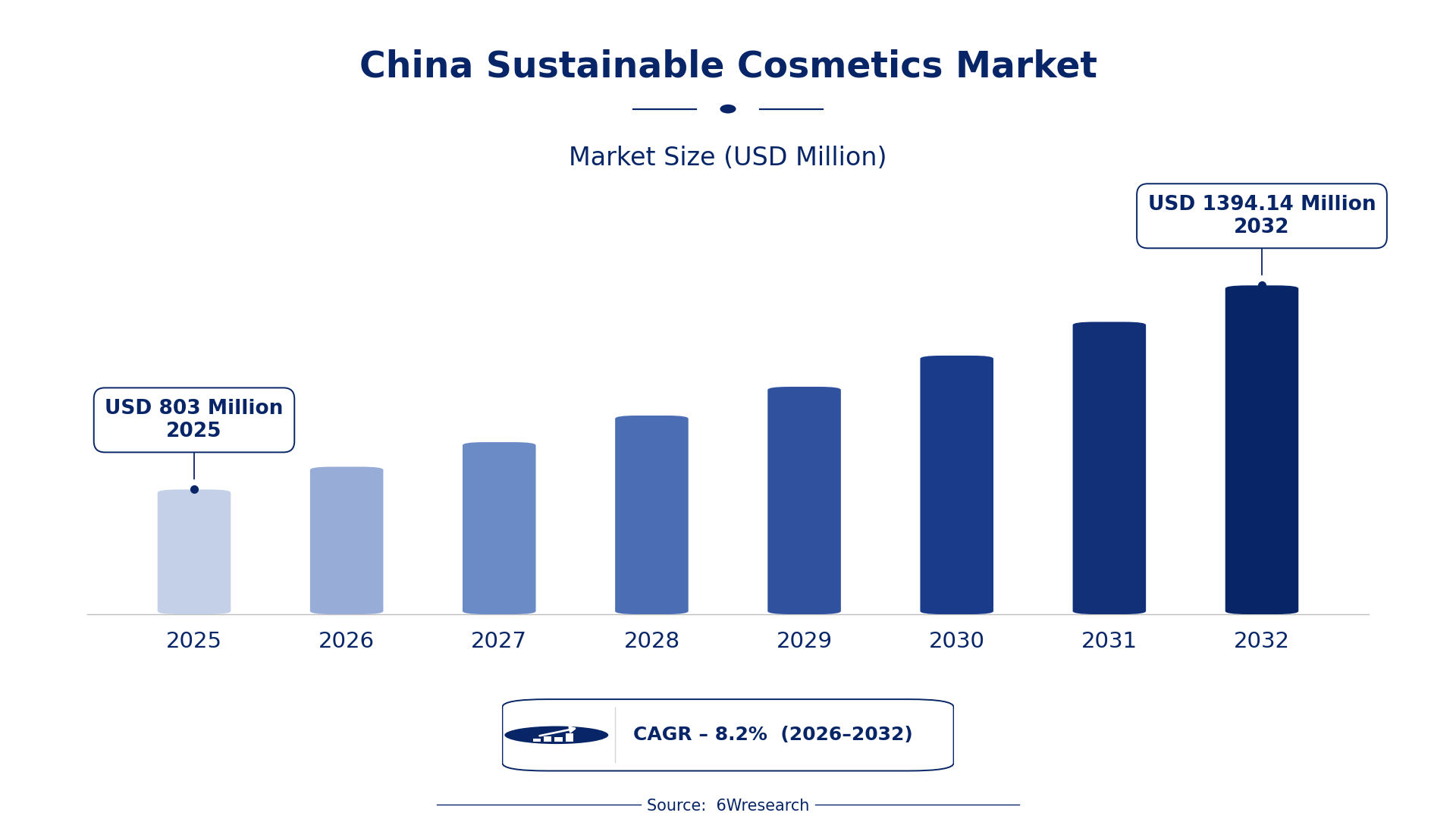
According to 6Wresearch internal database and industry insights, the China Sustainable Cosmetics Market was valued at USD 803.0 million in 2025 and is projected to reach USD 1,394.14 million by 2032, growing at a CAGR of approximately 8.2% during 2026–2032.
China Sustainable Cosmetics Market Highlights
| Report Metric | Details |
| Report Name | China Sustainable Cosmetics Market |
| Market Size 2025 | USD 803.0 million |
| Market Size 2032 | USD 1,394.14 million |
| Absolute Growth 2025–2032 | USD 591.14 million |
| CAGR 2026–2032 | 8.2% |
| Peak Annual Growth | 10.5% in 2030 |
| Forecast Period | 2026–2032 |
| Historical Data | 2022–2025 |
| Base Year | 2025 |
| Leading Product Type, 2025 | Lipsticks (40% share) |
| Leading Certification, 2025 | Vegan Certified (48% share) |
| Leading Packaging Type, 2025 | Refillable/Glass Tubes (36% share) |
| Leading End User, 2025 | Natural Beauty Brands (37% share) |
| Fastest-Growing Product Type | Foundations (10.0% CAGR) |
| Fastest-Growing Certification | Cruelty-Free (10.0% CAGR) |
| Fastest-Growing Packaging Type | Biodegradable Tubes (10.7% CAGR) |
| Fastest-Growing End User | Clean Cosmetics Retailers (10.8% CAGR) |
| Growing Sector | Natural Beauty Brands |
| Key End Users | Natural Beauty Brands, Clean Cosmetics Retailers, Sustainable Makeup Lines |
China Sustainable Cosmetics Market Year-wise Growth Rate and Key Drivers (2022–2032)
This graph illustrates the annual growth rates of the market from 2022 to 2032, highlighting a steady upward trajectory and projected market expansion over the forecast period.
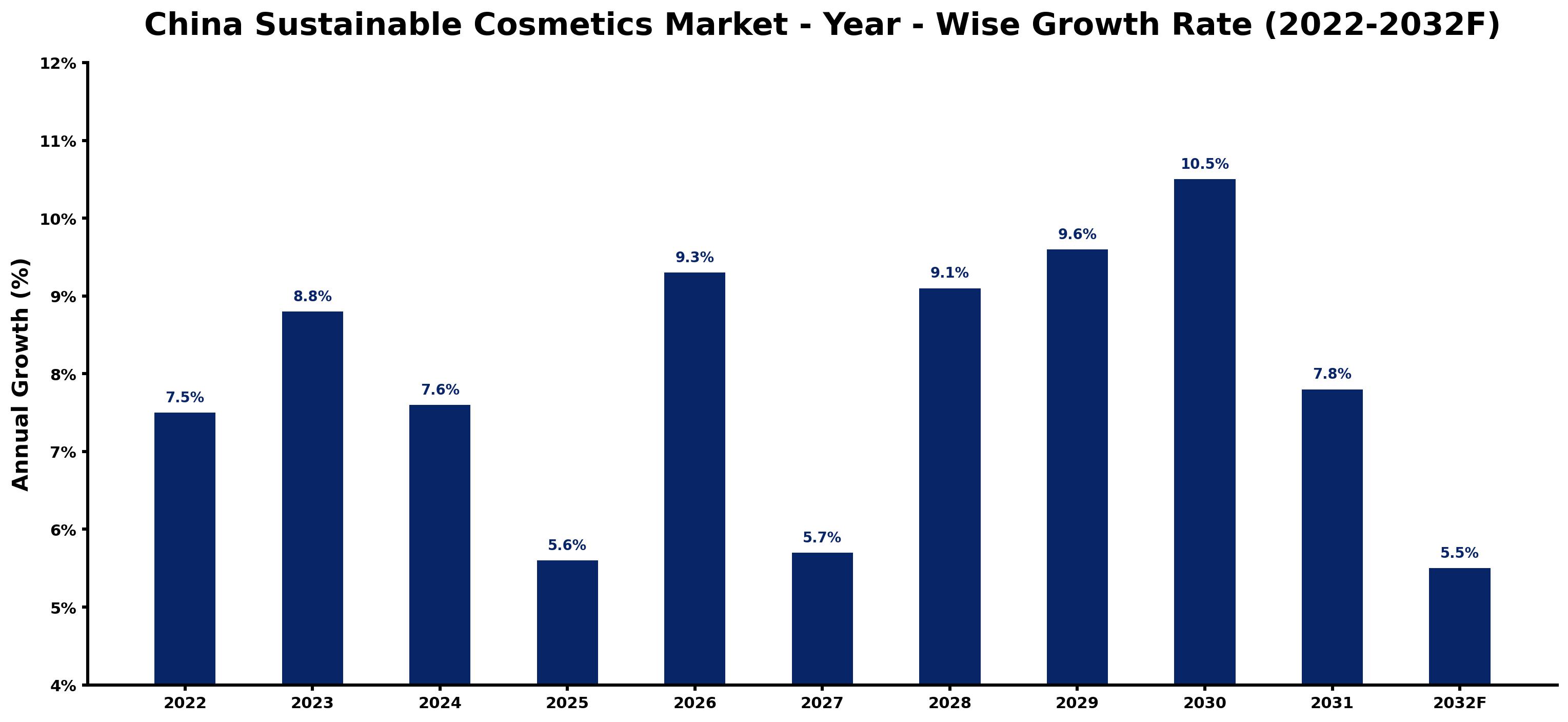
Year by year, the estimates below pair each growth rate with the development that shaped it.
| Year | Estimated Annual Growth (%) | Market Rationale |
| 2022 | 7.5 | The market experienced steady growth, driven by increasing consumer interest in eco-friendly products. |
| 2023 | 8.8 | Demand surged as urban consumers sought vegan certified cosmetics, reflecting changing beauty standards. |
| 2024 | 7.6 | Growth slowed slightly due to the updated National Standard for Organic Cosmetics, which introduced new certification criteria. |
| 2025 | 5.6 | The market continued to grow, although at a slower pace as consumers became more discerning in their choices. |
| 2026 | 9.3 | A resurgence in growth is expected as more brands adopt sustainable practices and offerings. |
| 2027 | 5.7 | Growth is projected to decelerate again, as consumers begin to prioritise product efficacy alongside sustainability. |
| 2028 | 9.1 | Renewed interest in sustainable beauty is anticipated, driven by influencer endorsements and marketing campaigns. |
| 2029 | 9.6 | Consumer demand is projected to continue rising, reflecting a broader trend towards eco-conscious purchasing. |
| 2030 | 10.5 | The peak growth rate is expected to be reached as sustainable makeup lines gain substantial market share. |
| 2031 | 7.8 | Growth is anticipated to moderate as the market matures, with consumers focusing on quality and transparency. |
| 2032 | 5.5 | The market is expected to grow steadily as sustainability remains a key consumer focus. |
Note: Market size estimations and growth projections presented in this report are based on 6Wresearch's proprietary forecasting methodology, utilizing the latest available industry data, government publications, and primary research inputs.
China Sustainable Cosmetics Market Synopsis
Sustainable Cosmetics in China refers to beauty products made from environmentally friendly ingredients and packaging. These products include natural, organic, and cruelty-free materials, primarily used in personal care, skincare, and makeup applications. The China Sustainable Cosmetics Market is experiencing growth, driven by rising consumer awareness of environmental issues and the demand for vegan certified products. In 2022, the market was valued at approximately 30 billion CNY, with expectations for sustainable makeup lines to capture 35% of the total cosmetics market by 2025. The Guangdong province is emerging as a key hub for sustainable cosmetics manufacturing.
Market Dynamics Impact Analysis (2026–2032)
| Factor | Type | Impact | Primary Segment Affected |
| Growing consumer preference for vegan certified products | Driver | High | Vegan Certified |
| Increased availability of cruelty-free options | Driver | High | Cruelty-Free |
| Rising demand for eco-friendly packaging solutions | Opportunity | High | Biodegradable Tubes |
| Expansion of clean cosmetics retailers in urban areas | Opportunity | High | Clean Cosmetics Retailers |
| Higher production costs for sustainable materials | Restraint | Medium | Organic Pigments |
| Limited consumer awareness of certification standards | Restraint | Medium | EWG Verified |
| Challenges in sourcing sustainable ingredients | Challenge | High | Natural Beauty Brands |
| Regulatory compliance costs for new products | Challenge | Medium | Sustainable Makeup Lines |
Evaluation of Drivers in China Sustainable Cosmetics Market (2026–2032)
The factors lifting demand, and the evidence behind each, are summarised below.
| Drivers | Primary Segment Affected | Why It Matters (Evidence) |
| Increased demand for vegan certified cosmetics | Vegan Certified | This demand has risen by 25% among urban consumers in 2023, leading brands to expand their offerings. |
| Growth in cruelty-free certified product availability | Cruelty-Free | With over 200 registered brands in 2023, consumers are more inclined to choose these options. |
| Rising interest in eco-friendly packaging solutions | Biodegradable Tubes | The number of clean cosmetics retailers has grown by 40% in major cities, increasing product accessibility. |
| Expansion of clean cosmetics retailers | Clean Cosmetics Retailers | The number of these retailers has grown by 40% in major cities, increasing product accessibility. |
| Higher usage of organic pigments in formulations | Organic Pigments | A reported 15% rise in organic pigment usage in 2023 reflects growing consumer preference for safe products. |
The Sustainable Cosmetics market in China is growing due to increasing end-use demand for eco-friendly products, alongside a strong supply response from manufacturers. In 2023, the demand for vegan certified cosmetics surged by 25% among urban consumers, prompting brands to expand their offerings. The number of clean cosmetics retailers has expanded by 40% in major cities, improving accessibility for consumers. A 15% rise in organic pigment usage indicates a shift towards safer formulations. As brands respond to these trends, the market is set to experience further growth driven by consumer preferences for sustainability and ethical products.
Evaluation of Restraints in China Sustainable Cosmetics Market
Below mentioned are some major restraints and their influence on market dynamics.
| Market Restraint | Primary Segment Affected | Why It Matters (Evidence) |
| Higher production costs for sustainable materials | Organic Pigments | Producers face increased costs, which can limit pricing flexibility and market entry for new brands. |
| Limited consumer awareness of certification standards | EWG Verified | Many consumers are unaware of certification criteria, affecting their purchasing decisions. |
| Challenges in sourcing sustainable ingredients | Natural Beauty Brands | Sourcing sustainable materials can be difficult, impacting product availability and pricing. |
| Regulatory compliance costs for new products | Sustainable Makeup Lines | Compliance with new regulations can increase costs, delaying product launches. |
| Inconsistent consumer demand for certain product types | Cruelty-Free | Fluctuating interest in specific categories can lead to inventory challenges for retailers. |
China Sustainable Cosmetics Market Challenges
The China Sustainable Cosmetics Market encounters several practical challenges, with cost being a primary concern. High production costs for eco-friendly ingredients can inflate prices, making it challenging for buyers to opt for these products when conventional alternatives are cheaper. Intense competition among over 200 registered brands leads to price wars, eroding profit margins for suppliers and limiting their capacity to invest in sustainable practices. Stricter regulations on packaging waste from the Ministry of Ecology and Environment increase compliance costs for producers, potentially raising prices for consumers by up to 15%. A shortage of skilled professionals in sustainable formulation techniques further delays product development for suppliers struggling to find qualified personnel.
Trends in the China Sustainable Cosmetics Market
Four trends stand out in the China Sustainable Cosmetics Market.
- Shift from Conventional to Sustainable Packaging: Since 2021, the trend towards sustainable packaging has accelerated, particularly in Guangdong province, where over 200 brands are adopting eco-friendly materials. This shift is expected to significantly reduce plastic waste.
- Rise of Clean Cosmetics Retailers: The growth of clean cosmetics retailers has been notable in major cities, with a 40% increase in the last two years. This trend reflects a rising consumer preference for accessible sustainable beauty products.
- Increased Use of Organic Pigments: In 2023, a 15% rise in organic pigment usage has been observed, particularly among natural beauty brands. This trend indicates a movement towards safer, environmentally friendly formulations.
- Expansion of Vegan Certified Products: The demand for vegan certified cosmetics has surged, with urban consumers driving a 25% increase in 2023. This trend underscores the growing importance of ethical consumerism in the beauty industry.
Investment Opportunities in the China Sustainable Cosmetics Market
Some of the investment opportunities in the China Sustainable Cosmetics Market are mentioned below.
- Gap in Eco-Friendly Packaging Solutions: With the market for biodegradable tubes projected to grow, brands can invest in sustainable packaging. Clean cosmetics retailers in urban areas are seeking solutions to meet consumer demand.
- Growing Demand for Vegan Certified Products: The increasing preference for vegan cosmetics presents opportunities for brands to expand their product lines. Collaborating with local manufacturers in major cities can facilitate market entry.
- Investment in Organic Pigment Production: The rise in organic pigment usage offers suppliers a chance to invest in production facilities. Natural beauty brands are particularly keen on sourcing these materials to enrich their product offerings.
- Expansion of Clean Cosmetics Retailers: The growth of clean cosmetics retailers highlights the need for diverse product offerings. Partnering with these retailers can grant brands access to a broader consumer base.
Government Initiatives in the China Sustainable Cosmetics Market
In 2021, the Chinese government launched the 'Green Product Certification' program to promote sustainable products. This initiative complements existing regulations by establishing clear guidelines for producers to follow, ensuring that products meet environmental standards. As a result, brands are encouraged to adopt more sustainable practices and improve their product offerings, aligning with consumer demand for eco-friendly options. In 2022, the National Standard for Organic Cosmetics was updated to include new certification criteria, enhancing product safety and quality for consumers.
The China National Center for Quality Supervision and Testing of Cosmetics oversees compliance with safety standards in cosmetics. This agency has been instrumental in approving new sustainable products, ensuring they meet the updated National Standard for Organic Cosmetics established in 2022. The agency's efforts help build consumer trust and confidence in sustainable cosmetics, facilitating market growth. In 2023, the Beijing government allocated 50 million CNY for promoting green beauty initiatives, further supporting the industry's development.
Future Insight of the China Sustainable Cosmetics Market
By 2032, the China Sustainable Cosmetics Market will undergo substantial changes driven by consumer demand and regulatory support. The 'Green Product Certification' program will encourage more brands to adopt eco-friendly practices, while the updated National Standard for Organic Cosmetics will enhance product quality and safety. The rise of social media influencers will continue to amplify the visibility of sustainable beauty, particularly among younger consumers. Sustainable makeup lines are projected to capture 35% of the total cosmetics market by 2025, indicating a strong move towards environmentally conscious products.
Market Segmentation Analysis
The report offers a comprehensive study of the following market segments and their leading categories in the market.
By Product Type – Lipsticks Dominated, Foundations Expected to Grow Fastest
According to Sumit Sagar, AM at 6Wresearch, the largest product type category in 2025 was Lipsticks, with a 40% share of total revenue. Lipsticks dominate the sustainable cosmetics market in China due to their widespread use in sustainable makeup lines, appealing to consumers who seek vibrant colour options. Their strong buyer base is evidenced by their significant contribution to the overall market value, reflecting a robust demand for these products. Foundations are set to record the highest CAGR in this split, 10.0% over 2026–2032. Foundations are experiencing rapid growth as they are essential for achieving a natural look in sustainable beauty, with consumers increasingly prioritising quality and eco-friendly formulations. This heightened interest is driving a surge in demand for foundations within the sustainable cosmetics sector. Suppliers should focus on enhancing their lipstick and foundation product lines to meet the growing consumer demand for sustainable cosmetics.
By Certification – Vegan Certified Dominated, Cruelty-Free Expected to Grow Fastest
Vegan Certified took a 48% share of certification in 2025, more than any other category. Vegan Certified cosmetics hold a substantial market share as they cater to consumers increasingly seeking ethical products that align with their values. The expanding number of brands offering vegan options underscores the strong demand from a conscientious consumer base. The quickest growth will come from Cruelty-Free, forecast to expand at a CAGR of 10.0% between 2026 and 2032. Cruelty-Free certification is rapidly gaining popularity, as it is crucial for attracting consumers who prioritise ethical standards in their purchases. The rising awareness surrounding animal welfare is propelling this segment's growth, making it a focal point for brands in the sustainable cosmetics market. Brands should prioritise obtaining vegan and cruelty-free certifications to effectively engage with ethically-minded consumers.
By Packaging Type – Refillable/Glass Tubes Dominated, Biodegradable Tubes Expected to Grow Fastest
Refillable/Glass Tubes held a 36% share of the China Sustainable Cosmetics Market by packaging type in 2025. Refillable/Glass Tubes are preferred by eco-conscious brands, making them the leading packaging type in the sustainable cosmetics market. Their appeal lies in their sustainability and ability to reduce waste, which resonates with environmentally aware consumers. Over 2026–2032, Biodegradable Tubes are expected to post the fastest growth, at a CAGR of 10.7%. Biodegradable Tubes are rapidly gaining popularity as they are preferred for reducing plastic waste in cosmetics, aligning with the increasing consumer demand for sustainable packaging solutions. This shift indicates a broader trend towards eco-friendly practices in the industry. Manufacturers should invest in developing biodegradable packaging options to meet the rising consumer expectations for sustainability.
By End User – Natural Beauty Brands Dominated, Clean Cosmetics Retailers Expected to Grow Fastest
With a 37% revenue share in 2025, Natural Beauty Brands was the largest end user category. Natural Beauty Brands are the primary users of sustainable cosmetic products, effectively addressing the needs of a growing market of environmentally conscious consumers. Their established presence and commitment to sustainability position them as leaders in promoting eco-friendly beauty practices across China. Clean Cosmetics Retailers are projected to grow fastest, at a CAGR of 10.8% during 2026–2032. Clean Cosmetics Retailers are emerging as essential distributors of sustainable beauty products, reflecting a shift in consumer shopping habits towards more ethical and clean options. This trend indicates a changing retail landscape where sustainability is becoming a key priority for consumers. Retailers should expand their clean cosmetics offerings to capitalise on the rising demand for sustainable beauty products.
Key Attractiveness of the Report
- 10 Years of Market Numbers
- Historical Data Starting from 2022 to 2025
- Base Year 2025
- Forecast Data until 2032
- Key Performance Indicators Impacting the Market
- Major Upcoming Developments and Projects
Key Highlights of the Report:
- China Sustainable Cosmetics Market Outlook
- Market Size of China Sustainable Cosmetics Market, 2025
- Forecast of China Sustainable Cosmetics Market, 2032
- Historical Data and Forecast of China Sustainable Cosmetics Revenues & Volume for the Period 2022 - 2032F
- China Sustainable Cosmetics Market Trend Evolution
- China Sustainable Cosmetics Market Drivers and Challenges
- China Sustainable Cosmetics Price Trends
- China Sustainable Cosmetics Porter's Five Forces
- China Sustainable Cosmetics Industry Life Cycle
- Historical Data and Forecast of China Sustainable Cosmetics Market Revenues & Volume By Product Type for the Period 2022 - 2032F
- Historical Data and Forecast of China Sustainable Cosmetics Market Revenues & Volume By Lipsticks for the Period 2022 - 2032F
- Historical Data and Forecast of China Sustainable Cosmetics Market Revenues & Volume By Foundations for the Period 2022 - 2032F
- Historical Data and Forecast of China Sustainable Cosmetics Market Revenues & Volume By Eyeliners for the Period 2022 - 2032F
- Historical Data and Forecast of China Sustainable Cosmetics Market Revenues & Volume By Moisturizers for the Period 2022 - 2032F
- Historical Data and Forecast of China Sustainable Cosmetics Market Revenues & Volume By Certification for the Period 2022 - 2032F
- Historical Data and Forecast of China Sustainable Cosmetics Market Revenues & Volume By Vegan Certified for the Period 2022 - 2032F
- Historical Data and Forecast of China Sustainable Cosmetics Market Revenues & Volume By Cruelty-Free for the Period 2022 - 2032F
- Historical Data and Forecast of China Sustainable Cosmetics Market Revenues & Volume By Organic Pigments for the Period 2022 - 2032F
- Historical Data and Forecast of China Sustainable Cosmetics Market Revenues & Volume By EWG Verified for the Period 2022 - 2032F
- Historical Data and Forecast of China Sustainable Cosmetics Market Revenues & Volume By Packaging Type for the Period 2022 - 2032F
- Historical Data and Forecast of China Sustainable Cosmetics Market Revenues & Volume By Refillable/Glass Tubes for the Period 2022 - 2032F
- Historical Data and Forecast of China Sustainable Cosmetics Market Revenues & Volume By Biodegradable Tubes for the Period 2022 - 2032F
- Historical Data and Forecast of China Sustainable Cosmetics Market Revenues & Volume By Paper-Based Pencils for the Period 2022 - 2032F
- Historical Data and Forecast of China Sustainable Cosmetics Market Revenues & Volume By Glass Jars for the Period 2022 - 2032F
- Historical Data and Forecast of China Sustainable Cosmetics Market Revenues & Volume By End User for the Period 2022 - 2032F
- Historical Data and Forecast of China Sustainable Cosmetics Market Revenues & Volume By Natural Beauty Brands for the Period 2022 - 2032F
- Historical Data and Forecast of China Sustainable Cosmetics Market Revenues & Volume By Clean Cosmetics Retailers for the Period 2022 - 2032F
- Historical Data and Forecast of China Sustainable Cosmetics Market Revenues & Volume By Sustainable Makeup Lines for the Period 2022 - 2032F
- Historical Data and Forecast of China Sustainable Cosmetics Market Revenues & Volume By Skincare Specialists for the Period 2022 - 2032F
- China Sustainable Cosmetics Import Export Trade Statistics
- Market Opportunity Assessment By Product Type
- Market Opportunity Assessment By Certification
- Market Opportunity Assessment By Packaging Type
- Market Opportunity Assessment By End User
- China Sustainable Cosmetics Top Companies Market Share
- China Sustainable Cosmetics Competitive Benchmarking By Technical and Operational Parameters
- China Sustainable Cosmetics Company Profiles
- China Sustainable Cosmetics Key Strategic Recommendations
Market Covered
Segments analysed in this report are listed below.
By Product Type
- Lipsticks
- Foundations
- Eyeliners
- Moisturizers
By Certification
- Vegan Certified
- Cruelty-Free
- Organic Pigments
- EWG Verified
By Packaging Type
- Refillable/Glass Tubes
- Biodegradable Tubes
- Paper-Based Pencils
- Glass Jars
By End User
- Natural Beauty Brands
- Clean Cosmetics Retailers
- Sustainable Makeup Lines
- Skincare Specialists































