China Targeted Cancer Therapies Market Size & Growth Rate
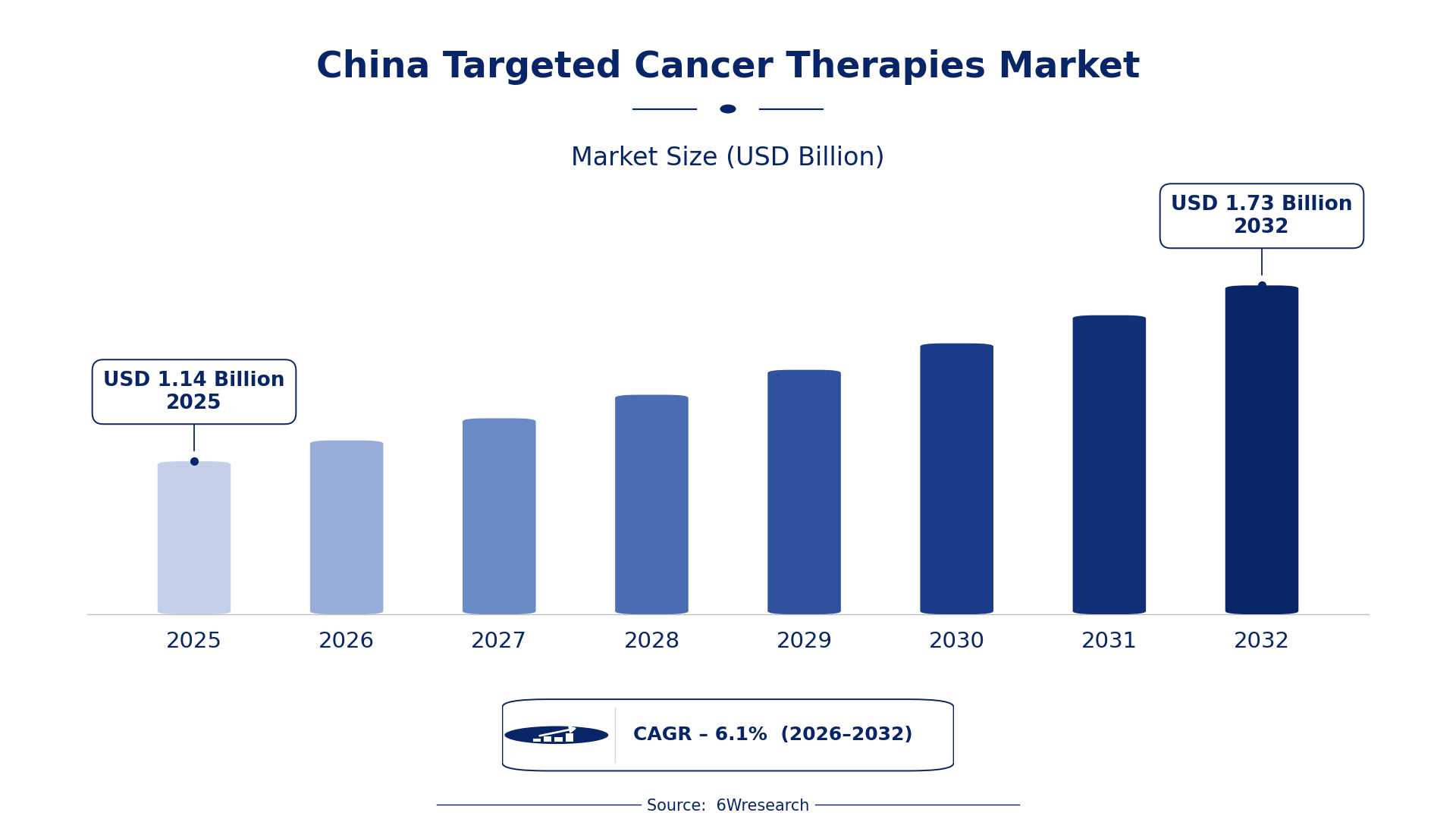
According to 6Wresearch internal database and industry insights, the China Targeted Cancer Therapies Market was valued at USD 1.14 billion in 2025 and is projected to reach USD 1.73 billion by 2032, growing at a CAGR of approximately 6.1% during 2026–2032.
China Targeted Cancer Therapies Market Highlights
| Report Metric | Details |
| Report Name | China Targeted Cancer Therapies Market |
| Market Size 2025 | USD 1.14 billion |
| Market Size 2032 | USD 1.73 billion |
| Absolute Growth 2025–2032 | USD 0.59 billion |
| CAGR 2026–2032 | 6.1% |
| Peak Annual Growth | 8.7% in 2030 |
| Forecast Period | 2026–2032 |
| Historical Data | 2022–2025 |
| Base Year | 2025 |
| Leading Therapy Type, 2025 | Monoclonal Antibodies (53% share) |
| Leading Target Biomarker, 2025 | HER2/EGFR (46% share) |
| Leading Administration Route, 2025 | Intravenous (42% share) |
| Leading End User, 2025 | Oncology Clinics (49% share) |
| Fastest-Growing Therapy Type | Tyrosine Kinase Inhibitors (7.9% CAGR) |
| Fastest-Growing Target Biomarker | BCR-ABL/VEGFR (7.8% CAGR) |
| Fastest-Growing Administration Route | Oral (8.5% CAGR) |
| Fastest-Growing End User | Hospitals (7.5% CAGR) |
| Growing Sector | Oncology |
| Key End Users | Oncology Clinics, Hospitals, Specialty Hospitals, Cancer Research Centers |
China Targeted Cancer Therapies Market Year-wise Growth Rate and Key Drivers (2022–2032)
This graph illustrates the annual growth rates of the market from 2022 to 2032, highlighting a steady upward trajectory and projected market expansion over the forecast period.
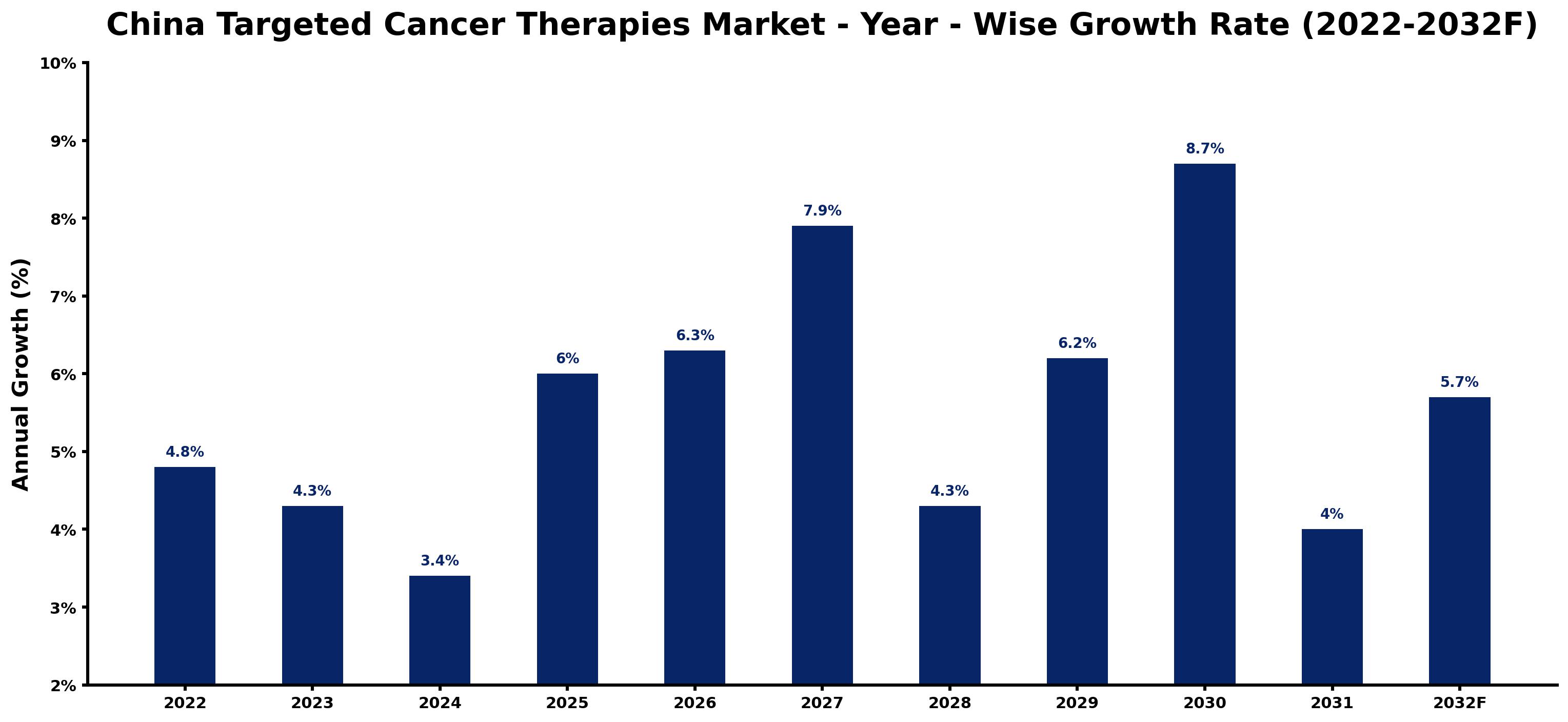
Each row of the following table gives one year's estimated growth and the event or demand shift that explains it.
| Year | Estimated Annual Growth (%) | Market Rationale |
| 2022 | 4.8 | The market exhibited steady growth due to increased awareness and treatment options from the China Anti-Cancer Association. |
| 2023 | 4.3 | Growth slowed as the market adjusted to the approval of 15 new therapies for clinical use. |
| 2024 | 3.4 | The market continued to experience a slowdown as investment in oncology clinics increased competition. |
| 2025 | 6.0 | Growth accelerated with the approval of new targeted therapies under the 2021 Drug Administration Law. |
| 2026 | 6.3 | The introduction of new therapies is expected to contribute to a rise in demand for targeted treatments. |
| 2027 | 7.9 | Increased investment in cancer research will lead to a surge in the market's growth rate. |
| 2028 | 4.3 | Growth is projected to slow again as the market stabilises following rapid expansions in previous years. |
| 2029 | 6.2 | Renewed interest in advanced treatment options is expected to boost the market. |
| 2030 | 8.7 | The peak growth rate will be driven by advancements in targeted therapy technologies. |
| 2031 | 4.0 | Growth is projected to slow as the market begins to normalise after reaching its peak. |
| 2032 | 5.7 | The market is expected to grow steadily as new therapies continue to emerge. |
Note: Market size estimations and growth projections presented in this report are based on 6Wresearch's proprietary forecasting methodology, utilizing the latest available industry data, government publications, and primary research inputs.
China Targeted Cancer Therapies Market Synopsis
Targeted Cancer Therapies represent advanced treatments aimed at specifically targeting cancer cells based on genetic characteristics. These therapies include monoclonal antibodies and small molecule inhibitors, focusing on improving treatment efficacy while minimising side effects. The China Targeted Cancer Therapies Market is expanding due to rising cancer incidence, with over 4 million patients reported in 2022, and substantial investments in research, reaching 10 billion CNY in 2023. Initiatives from the National Health Commission have also spurred growth in oncology clinics, which have increased by 20% since 2020.
Market Dynamics Impact Analysis (2026–2032)
| Factor | Type | Impact | Primary Segment Affected |
| Increasing cancer patient population driving demand for effective treatments. | Driver | High | Monoclonal Antibodies |
| Growing investment in cancer research fostering new therapy development. | Driver | High | Tyrosine Kinase Inhibitors |
| Rising prevalence of chronic diseases creating demand for targeted therapies. | Opportunity | High | Hormonal Therapies |
| Emerging technologies in cancer treatment providing new investment avenues. | Opportunity | High | Immunotherapies |
| Regulatory hurdles delaying the approval of new therapies. | Restraint | Medium | Monoclonal Antibodies |
| High costs associated with advanced therapies limiting accessibility. | Restraint | Medium | Monoclonal Antibodies |
| Limited availability of skilled professionals affecting treatment delivery. | Challenge | High | Oncology Clinics |
| Competition among treatment providers leading to pricing pressures. | Challenge | Medium | Hospitals |
Evaluation of Drivers in China Targeted Cancer Therapies Market (2026–2032)
Below mentioned are some major drivers and their influence on market dynamics.
| Drivers | Primary Segment Affected | Why It Matters (Evidence) |
| Rising cancer patient population increases demand for targeted therapies. | Monoclonal Antibodies | In 2022, over 4 million cancer patients in China drove higher expenditures on targeted treatments. |
| Investment in cancer research boosts therapy development. | Tyrosine Kinase Inhibitors | China's investment in cancer research reached 10 billion CNY in 2023, facilitating new treatment options. |
| Increased awareness of cancer treatment options boosts therapy adoption. | Hormonal Therapies | The China Anti-Cancer Association promotes awareness, leading to higher demand for effective therapies. |
| Technological advancements in treatment methods create new opportunities. | Immunotherapies | Innovations in immunotherapy have led to a 25% improvement in survival rates for patients, increasing demand. |
| Growing number of oncology clinics expands access to treatments. | Oncology Clinics | The National Health Commission reported a 20% increase in oncology clinics since 2020, improving patient access. |
Growth in the Targeted Cancer Therapies market in China stems from the increasing number of cancer patients, heightened research funding, and greater awareness of available treatments. In 2022, the presence of over 4 million cancer patients led to increased spending on targeted therapies. With 10 billion CNY invested in cancer research in 2023, new treatment options are becoming available. The rise in oncology clinics by 20% since 2020 has improved access to these therapies. Recent advancements in immunotherapy have markedly improved patient survival rates, further driving demand for targeted treatments.
Evaluation of Restraints in China Targeted Cancer Therapies Market
The table below lists the restraints and the evidence behind each.
| Market Restraint | Primary Segment Affected | Why It Matters (Evidence) |
| Regulatory hurdles delaying the approval of new therapies. | Monoclonal Antibodies | The National Medical Products Administration regulates therapies, which can prolong the approval process by up to 12 months. |
| High costs associated with advanced therapies limiting accessibility. | Monoclonal Antibodies | Monoclonal antibodies accounted for 30% of cancer treatment expenditures in 2022, impacting affordability for hospitals. |
| Limited availability of skilled professionals affecting treatment delivery. | Oncology Clinics | The shortage of trained oncologists can delay patient access to necessary therapies, impacting treatment timelines. |
| Competition among treatment providers affecting pricing strategies. | Hospitals | Increased competition can drive down prices, impacting profitability for providers and their ability to invest in new therapies. |
| Market saturation in certain therapy types limiting growth potential. | Hormonal Therapies | The proliferation of therapies can lead to diminished returns for existing treatments, affecting investment decisions. |
China Targeted Cancer Therapies Market Challenges
In 2022, over 4 million patients in China experienced delays in accessing targeted cancer therapies due to supply chain issues, which increased treatment costs for clinics. Limited technological progress has hindered the introduction of new therapies, with only 15 new targeted treatments approved in 2023, narrowing options for producers. Regulatory challenges arise as the National Medical Products Administration enforces strict guidelines under the 2021 Drug Administration Law, complicating the market for suppliers. Buyers face rising costs, as monoclonal antibodies represented 30% of treatment expenditures in 2022, placing financial pressure on hospitals and patients.
Trends in the China Targeted Cancer Therapies Market
Several trends are reshaping the China Targeted Cancer Therapies Market; the most important are set out below.
- Shift from Traditional to Targeted Therapies: Since 2022, there has been a notable shift towards targeted therapies in China, with increasing adoption rates among healthcare providers. In 2023, 15 new targeted therapies were approved for clinical use, reflecting this trend.
- Emergence of Immunotherapies as Preferred Treatment: In recent years, immunotherapies have gained prominence in cancer treatment, particularly in major cities like Shanghai. The average survival rate for patients using these therapies improved by 25%, indicating their effectiveness.
- Growth in Oncology Clinics: The number of oncology clinics in China has surged since 2020, with a 20% increase reported by the National Health Commission. This growth is vital for improving patient access to targeted cancer therapies.
- Rise of Oral Administration Routes: Oral administration routes for cancer therapies are becoming increasingly popular, with a projected CAGR of 8.5% for this segment. This shift is driven by patient preference for convenient outpatient treatment options.
Investment Opportunities in the China Targeted Cancer Therapies Market
Below are the investment opportunities with the strongest case in the China Targeted Cancer Therapies Market.
- Investment in Cancer Research Facilities: With China's investment in cancer research reaching 10 billion CNY in 2023, there is an opportunity to develop new therapies. Collaborating with Cancer Research Centers can drive innovation and access.
- Expansion of Oncology Clinics: The 20% increase in oncology clinics since 2020 presents an opportunity to supply advanced targeted therapies. Partnering with local clinics can facilitate entry into this growing market.
- Development of Affordable Treatment Options: The high costs of targeted therapies create a gap for affordable alternatives. Focusing on cost-effective solutions for hospitals can improve accessibility for patients.
- Enhancing Patient Awareness Programs: With increasing cancer awareness, investing in patient education initiatives can drive demand for targeted therapies. Collaborating with the China Anti-Cancer Association can amplify outreach efforts.
Government Initiatives in the China Targeted Cancer Therapies Market
The regulatory environment for targeted cancer therapies in China includes several key laws. The 2021 Drug Administration Law, enforced by the National Medical Products Administration, establishes guidelines for the approval of new therapies. Additionally, the Cancer Control Action Plan, launched in 2023, aims to improve treatment accessibility with a budget of 2 billion CNY. These measures ensure that producers comply with safety and efficacy standards while promoting innovation in therapy development. The Chinese Society of Clinical Oncology also provides treatment guidelines that help standardise care across facilities.
Oncology clinics benefit from government initiatives that streamline the approval process for new therapies. The National Medical Products Administration oversees the approval of targeted therapies, ensuring they meet safety and efficacy standards. The Cancer Control Action Plan also provides funding for training healthcare professionals, enhancing the capacity of clinics to deliver advanced treatments. Furthermore, the National Cancer Center plays a vital role in coordinating research efforts and implementing cancer control strategies, which directly impact patient care and treatment options. In 2023, the centre approved 50 new research projects aimed at improving cancer treatment.
Future Insight of the China Targeted Cancer Therapies Market
Several forward-looking factors should support the targeted cancer therapies market in China over the coming years. The 'Cancer Control Action Plan' will directly improve treatment accessibility for patients. Increased investment in cancer research is expected to drive the development of new therapies. The Shanghai region's emergence as a research hub will attract talent and resources, enhancing treatment options for both buyers and suppliers. By 2032, the average survival rate for patients using targeted therapies is projected to improve by 25%, reflecting advancements in treatment efficacy.
Market Segmentation Analysis
The report offers a comprehensive study of the following market segments and their leading categories in the market.
By Therapy Type – Monoclonal Antibodies Dominated, Tyrosine Kinase Inhibitors Expected to Grow Fastest
According to Sumit Sagar, AM at 6Wresearch, Monoclonal Antibodies held a 53% share of the China Targeted Cancer Therapies Market by therapy type in 2025. Monoclonal antibodies dominate the market share due to their widespread use in treating various cancers, especially breast and lung cancers. Their established efficacy and the growing installed base in oncology clinics contribute to their leading position. The quickest growth will come from Tyrosine Kinase Inhibitors, forecast to expand at a CAGR of 7.9% between 2026 and 2032. Tyrosine kinase inhibitors are rapidly gaining traction as they specifically target cancer cell pathways, particularly in chronic myeloid leukemia. This precise targeting aligns with the increasing demand for personalised medicine, further accelerating their growth in the market. Suppliers should prioritise the production of tyrosine kinase inhibitors to meet the rising demand for targeted cancer therapies.
By Target Biomarker – HER2/EGFR Dominated, BCR-ABL/VEGFR Expected to Grow Fastest
HER2/EGFR accounted for a 46% market share by target biomarker in 2025. HER2/EGFR biomarkers dominate the market share due to their essential role in treating specific breast and lung cancers, making them vital in targeted cancer therapies. Their integration into treatment protocols ensures a steady demand from oncology clinics across China. BCR-ABL/VEGFR is set to record the highest CAGR in this split, 7.8% over 2026–2032. BCR-ABL/VEGFR biomarkers are witnessing the fastest growth as they play a critical role in the treatment of certain leukemias and solid tumours, indicating a trend towards more precise oncology solutions. The recent surge in approved therapies targeting these biomarkers is significantly accelerating their market presence. Buyers should prioritise therapies that focus on BCR-ABL/VEGFR biomarkers to remain at the forefront of cancer treatment advancements.
By Administration Route – Intravenous Dominated, Oral Expected to Grow Fastest
Intravenous took a 42% share of administration route in 2025, more than any other category. Intravenous administration holds the largest market share as it is the standard delivery method for many targeted cancer therapies, ensuring effective treatment in clinical settings. Its widespread use in oncology clinics reinforces a robust installed base of these therapies. Oral is projected to grow fastest, at a CAGR of 8.5% during 2026–2032. Oral administration is the fastest-growing route due to its convenience for outpatient treatment, which appeals to both patients and healthcare providers. This shift towards more patient-friendly options is driving the rapid adoption of oral therapies in the market. Suppliers should concentrate on developing oral targeted therapies to meet the rising demand for more convenient treatment options.
By End User – Oncology Clinics Dominated, Hospitals Expected to Grow Fastest
In 2025, Oncology Clinics led the end user split with a 49% share. Oncology clinics capture the largest market share as they serve as primary treatment centres for cancer patients, providing specialised care and targeted therapies. Their focused approach allows for personalised treatment plans, contributing to improved patient outcomes. Over 2026–2032, Hospitals are expected to post the fastest growth, at a CAGR of 7.5%. Hospitals are the fastest-growing end user segment as they are the main facilities for administering therapies, particularly with the increase in outpatient services. The growing number of oncology patients seeking treatment in hospitals is significantly driving this growth. Buyers should consider forming partnerships with hospitals to ensure access to the latest targeted cancer therapies.
Key Attractiveness of the Report
- 10 Years of Market Numbers
- Historical Data Starting from 2022 to 2025
- Base Year 2025
- Forecast Data until 2032
- Key Performance Indicators Impacting the Market
- Major Upcoming Developments and Projects
Key Highlights of the Report:
- China Targeted Cancer Therapies Market Outlook
- Market Size of China Targeted Cancer Therapies Market, 2025
- Forecast of China Targeted Cancer Therapies Market, 2032
- Historical Data and Forecast of China Targeted Cancer Therapies Revenues & Volume for the Period 2022 - 2032F
- China Targeted Cancer Therapies Market Trend Evolution
- China Targeted Cancer Therapies Market Drivers and Challenges
- China Targeted Cancer Therapies Price Trends
- China Targeted Cancer Therapies Porter's Five Forces
- China Targeted Cancer Therapies Industry Life Cycle
- Historical Data and Forecast of China Targeted Cancer Therapies Market Revenues & Volume By Therapy Type for the Period 2022 - 2032F
- Historical Data and Forecast of China Targeted Cancer Therapies Market Revenues & Volume By Monoclonal Antibodies for the Period 2022 - 2032F
- Historical Data and Forecast of China Targeted Cancer Therapies Market Revenues & Volume By Tyrosine Kinase Inhibitors for the Period 2022 - 2032F
- Historical Data and Forecast of China Targeted Cancer Therapies Market Revenues & Volume By Hormonal Therapies for the Period 2022 - 2032F
- Historical Data and Forecast of China Targeted Cancer Therapies Market Revenues & Volume By Immunotherapies for the Period 2022 - 2032F
- Historical Data and Forecast of China Targeted Cancer Therapies Market Revenues & Volume By Target Biomarker for the Period 2022 - 2032F
- Historical Data and Forecast of China Targeted Cancer Therapies Market Revenues & Volume By HER2/EGFR for the Period 2022 - 2032F
- Historical Data and Forecast of China Targeted Cancer Therapies Market Revenues & Volume By BCR-ABL/VEGFR for the Period 2022 - 2032F
- Historical Data and Forecast of China Targeted Cancer Therapies Market Revenues & Volume By Estrogen/Testosterone for the Period 2022 - 2032F
- Historical Data and Forecast of China Targeted Cancer Therapies Market Revenues & Volume By PD-1/CTLA-4 for the Period 2022 - 2032F
- Historical Data and Forecast of China Targeted Cancer Therapies Market Revenues & Volume By Administration Route for the Period 2022 - 2032F
- Historical Data and Forecast of China Targeted Cancer Therapies Market Revenues & Volume By Intravenous for the Period 2022 - 2032F
- Historical Data and Forecast of China Targeted Cancer Therapies Market Revenues & Volume By Oral for the Period 2022 - 2032F
- Historical Data and Forecast of China Targeted Cancer Therapies Market Revenues & Volume By Oral/Injection for the Period 2022 - 2032F
- Historical Data and Forecast of China Targeted Cancer Therapies Market Revenues & Volume By IV/Subcutaneous for the Period 2022 - 2032F
- Historical Data and Forecast of China Targeted Cancer Therapies Market Revenues & Volume By End User for the Period 2022 - 2032F
- Historical Data and Forecast of China Targeted Cancer Therapies Market Revenues & Volume By Oncology Clinics for the Period 2022 - 2032F
- Historical Data and Forecast of China Targeted Cancer Therapies Market Revenues & Volume By Hospitals for the Period 2022 - 2032F
- Historical Data and Forecast of China Targeted Cancer Therapies Market Revenues & Volume By Specialty Hospitals for the Period 2022 - 2032F
- Historical Data and Forecast of China Targeted Cancer Therapies Market Revenues & Volume By Cancer Research Centers for the Period 2022 - 2032F
- China Targeted Cancer Therapies Import Export Trade Statistics
- Market Opportunity Assessment By Therapy Type
- Market Opportunity Assessment By Target Biomarker
- Market Opportunity Assessment By Administration Route
- Market Opportunity Assessment By End User
- China Targeted Cancer Therapies Top Companies Market Share
- China Targeted Cancer Therapies Competitive Benchmarking By Technical and Operational Parameters
- China Targeted Cancer Therapies Company Profiles
- China Targeted Cancer Therapies Key Strategic Recommendations
Market Covered
The report offers an extensive study of the following market segments.
By Therapy Type
- Monoclonal Antibodies
- Tyrosine Kinase Inhibitors
- Hormonal Therapies
- Immunotherapies
By Target Biomarker
- HER2/EGFR
- BCR-ABL/VEGFR
- Estrogen/Testosterone
- PD-1/CTLA-4
By Administration Route
- Intravenous
- Oral
- Oral/Injection
- IV/Subcutaneous
By End User
- Oncology Clinics
- Hospitals
- Specialty Hospitals
- Cancer Research Centers































