China Therapeutic Proteins Market Size & Growth Rate
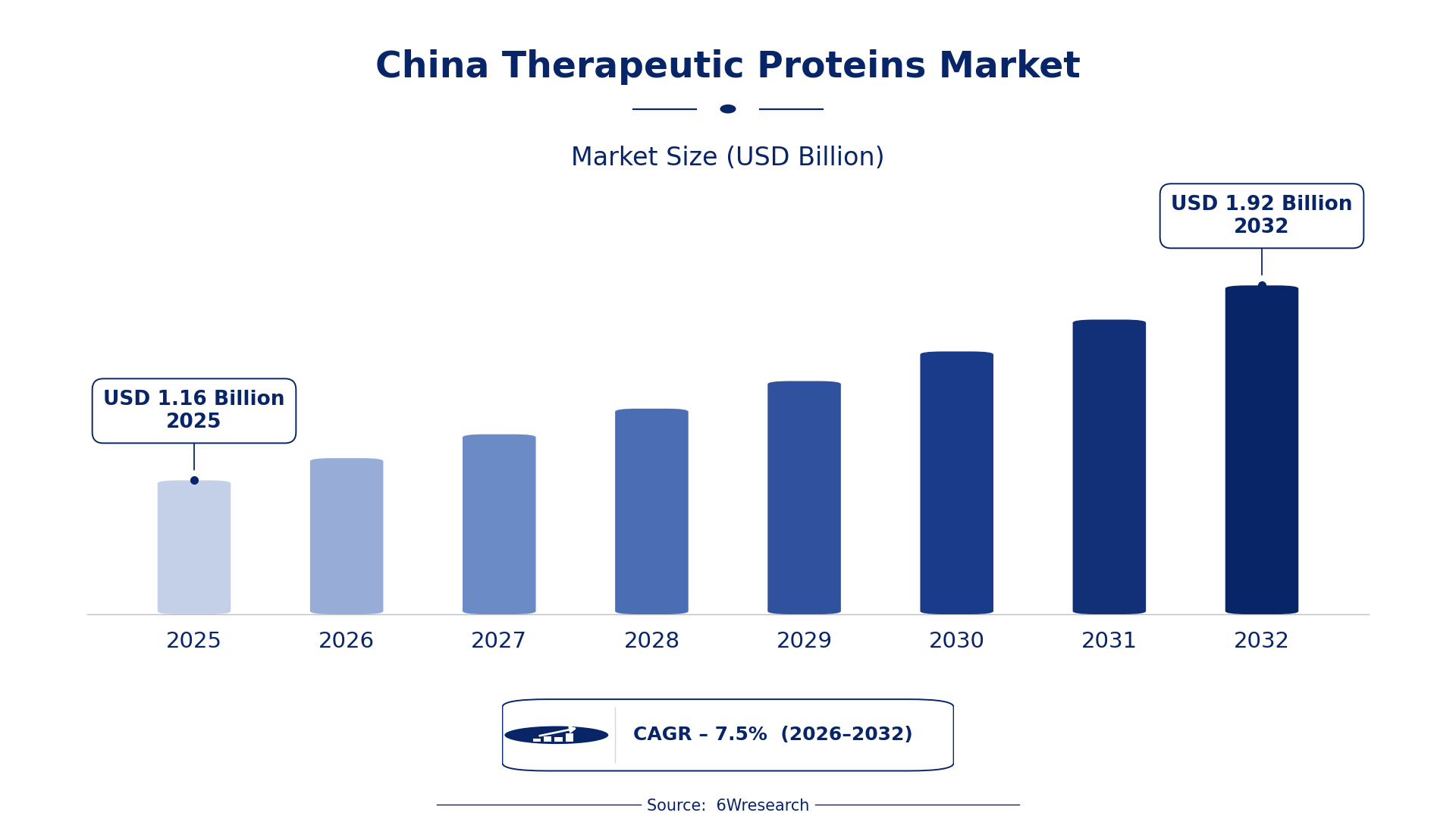
According to 6Wresearch internal database and industry insights, the China Therapeutic Proteins Market was valued at USD 1.16 billion in 2025 and is projected to reach USD 1.92 billion by 2032, growing at a CAGR of approximately 7.5% during 2026–2032.
China Therapeutic Proteins Market Highlights
| Report Metric | Details |
| Report Name | China Therapeutic Proteins Market |
| Market Size 2025 | USD 1.16 billion |
| Market Size 2032 | USD 1.92 billion |
| Absolute Growth 2025–2032 | USD 0.76 billion |
| CAGR 2026–2032 | 7.5% |
| Peak Annual Growth | 9.8% in 2032 |
| Forecast Period | 2026–2032 |
| Historical Data | 2022–2025 |
| Base Year | 2025 |
| Leading Protein Type, 2025 | Monoclonal Antibodies (46% share) |
| Leading Expression System, 2025 | CHO Cells (46% share) |
| Leading Application Area, 2025 | Oncology/Immunology (47% share) |
| Leading End User, 2025 | Hospitals (43% share) |
| Fastest-Growing Protein Type | Interferons (9.9% CAGR) |
| Fastest-Growing Expression System | Mammalian Cells (10.0% CAGR) |
| Fastest-Growing Application Area | Hematology (9.9% CAGR) |
| Fastest-Growing End User | Pharma R&D Units (9.9% CAGR) |
| Growing Sector | Healthcare |
| Key End Users | Hospitals, Biotech Firms, Pharma R&D Units, Clinical Labs |
China Therapeutic Proteins Market Year-wise Growth Rate and Key Drivers (2022–2032)
This graph illustrates the annual growth rates of the market from 2022 to 2032, highlighting a steady upward trajectory and projected market expansion over the forecast period.
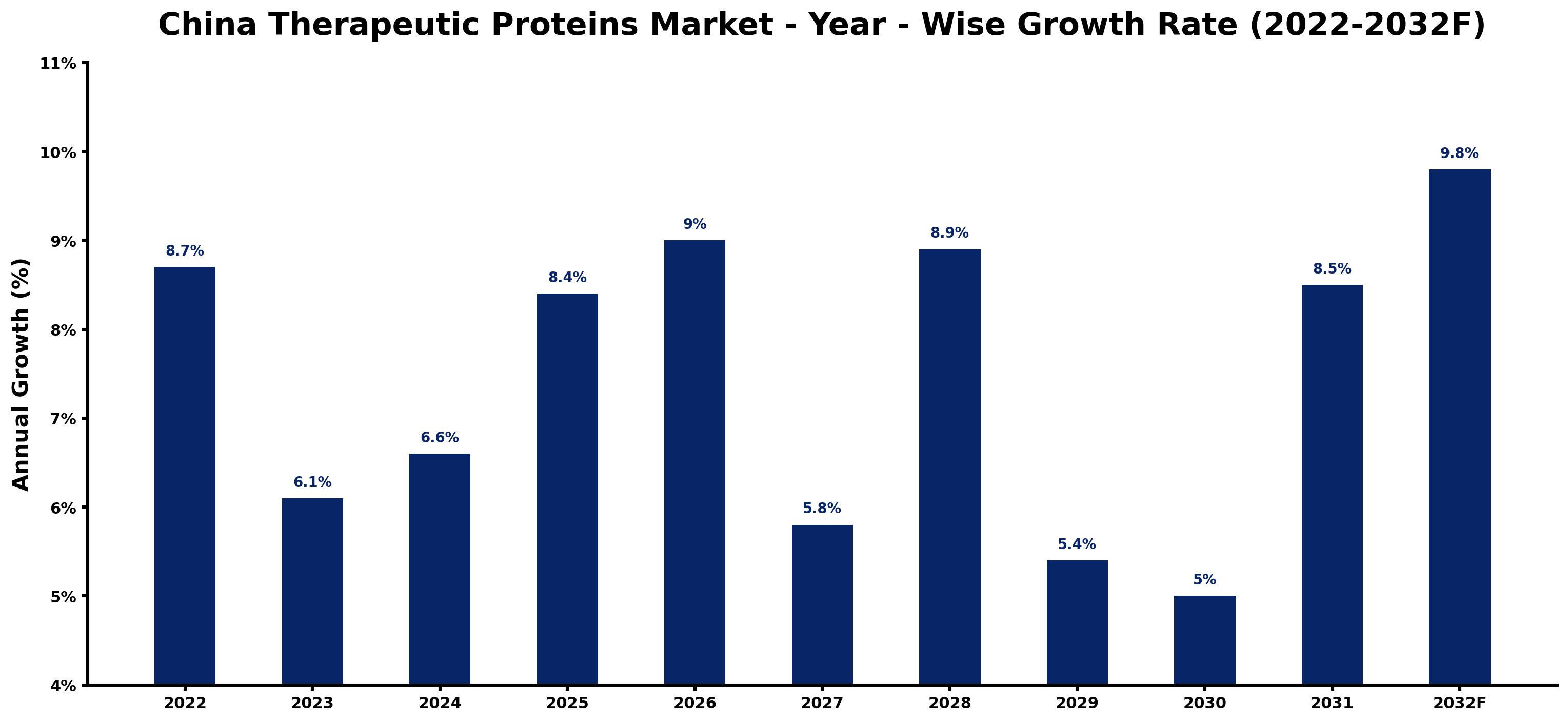
Each row of the following table gives one year's estimated growth and the event or demand shift that explains it.
| Year | Estimated Annual Growth (%) | Market Rationale |
| 2022 | 8.7 | The market experienced strong growth due to increased patient access to monoclonal antibody treatments. |
| 2023 | 6.1 | Growth slowed as hospitals adjusted to rising therapeutic protein usage and supply chain issues. |
| 2024 | 6.6 | Demand increased as hospitals expanded their treatment options for various diseases. |
| 2025 | 8.4 | The market grew faster as more therapeutic proteins received approval for clinical use. |
| 2026 | 9.0 | Growth continued as hospitals adopted new therapeutic proteins to meet patient needs. |
| 2027 | 5.8 | A slowdown occurred as the market faced challenges in regulatory approvals for new products. |
| 2028 | 8.9 | Demand rose again as hospitals increased their focus on innovative treatment options. |
| 2029 | 5.4 | Growth slowed due to market saturation and limited new product introductions. |
| 2030 | 5.0 | The market continued to grow, albeit at a slower rate, as hospitals maintained existing therapies. |
| 2031 | 8.5 | Growth accelerated as hospitals embraced advancements in therapeutic protein technologies. |
| 2032 | 9.8 | The market peaked with a surge in demand for innovative therapeutic proteins. |
Note: Market size estimations and growth projections presented in this report are based on 6Wresearch's proprietary forecasting methodology, utilizing the latest available industry data, government publications, and primary research inputs.
China Therapeutic Proteins Market Synopsis
The China Therapeutic Proteins Market encompasses biologically active molecules used for treatment, primarily produced through recombinant DNA technology. These proteins are essential for treating various diseases, with significant demand from hospitals and biotech firms. The 'Healthy China 2030' initiative is enhancing healthcare access, further boosting demand in the sector. As the market evolves, hospitals are increasingly investing in advanced therapeutic options to improve patient outcomes.
Market Dynamics Impact Analysis (2026–2032)
| Factor | Type | Impact | Primary Segment Affected |
| Growing patient population requiring advanced treatments | Driver | High | Monoclonal Antibodies |
| Increased R&D investment in biotechnology | Driver | High | Interferons |
| Expansion of healthcare facilities in urban areas | Opportunity | High | Hospitals |
| Rising prevalence of chronic diseases | Opportunity | High | Oncology/Immunology |
| Regulatory challenges delaying product approvals | Restraint | High | Monoclonal Antibodies |
| High production costs affecting pricing strategies | Restraint | Medium | CHO Cells |
| Limited access to advanced therapies in rural areas | Challenge | High | Clinical Labs |
| Competition from alternative treatment options | Challenge | Medium | Fusion Proteins |
Evaluation of Drivers in China Therapeutic Proteins Market (2026–2032)
Below mentioned are some major drivers and their influence on market dynamics.
| Drivers | Primary Segment Affected | Why It Matters (Evidence) |
| Increased adoption of monoclonal antibodies in cancer treatment | Monoclonal Antibodies | In 2022, over 1.4 million patients received monoclonal antibody treatments, driving demand in hospitals. |
| Growing investment in biotechnology research | Interferons | In 2021, the government invested $500 million in biotechnology research, supporting therapeutic protein development. |
| Rising healthcare access through initiatives | Hospitals | The 'Healthy China 2030' initiative aims to improve healthcare access, increasing therapeutic protein usage. |
| Expansion of biotech firms in key regions | Biotech Firms | China is home to over 300 biotech firms specializing in therapeutic proteins, boosting local production capabilities. |
| Increased prevalence of chronic diseases | Oncology/Immunology | The Ministry of Health reported a 15% increase in therapeutic protein usage in hospitals, reflecting growing demand. |
Growth in the Therapeutic Proteins market in China comes from increased adoption of monoclonal antibodies, rising healthcare access, and growing investment in biotechnology. In 2022, over 1.4 million patients received monoclonal antibody treatments, which boosted demand in hospitals. The government invested $500 million in biotechnology research in 2021, supporting the development of therapeutic proteins. The 'Healthy China 2030' initiative aims to improve healthcare access, which is increasing therapeutic protein usage. Additionally, the Ministry of Health reported a 15% increase in therapeutic protein usage in hospitals, reflecting the rising need for advanced treatments.
Evaluation of Restraints in China Therapeutic Proteins Market
Below mentioned are some major restraints and their influence on market dynamics.
| Market Restraint | Primary Segment Affected | Why It Matters (Evidence) |
| Regulatory challenges delaying product approvals | Monoclonal Antibodies | In 2022, the State Administration for Market Regulation updated regulations, but delays still occur. |
| High production costs affecting pricing strategies | CHO Cells | Producers face challenges with production costs, impacting pricing and market competitiveness. |
| Limited access to advanced therapies in rural areas | Clinical Labs | Patients in rural areas struggle to access advanced therapeutic proteins, limiting market growth. |
| Competition from alternative treatment options | Fusion Proteins | Alternative therapies are gaining traction, impacting the market share of therapeutic proteins. |
| Market saturation limiting new product introductions | Interferons | The market is becoming saturated, making it difficult for new products to gain traction. |
China Therapeutic Proteins Market Challenges
Hospitals in the China therapeutic proteins market face a skills shortage, as the rapid growth of biotech firms outpaces the training of qualified professionals, leading to delays in treatment availability. High production costs pose another hurdle, with the average expense for developing a new therapeutic protein exceeding $1 million, which constrains budgets for healthcare providers. Supply chain issues frequently arise, particularly in sourcing raw materials, causing delivery delays of up to three months for producers, impacting patient care. Regulatory hurdles persist, as the National Medical Products Administration's stringent approval processes can extend timelines by an additional six months, complicating market entry for new therapies.
Trends in the China Therapeutic Proteins Market
Four trends stand out in the China Therapeutic Proteins Market.
- Shift from Traditional to Biologics: Since 2021, hospitals in Shanghai have increasingly adopted biologics over traditional therapies, with a 15% rise in usage reported. This shift reflects a growing preference for advanced treatment options.
- Emergence of Personalized Medicine: In 2022, the National Medical Products Administration approved guidelines for personalized therapies, focusing on tailored treatment. This trend is expected to drive demand for specific therapeutic proteins.
- Increased Collaboration in Biotech: The Shanghai region has experienced a surge in collaborations between biotech firms, with over 50 partnerships formed in 2023. This collaboration is driving innovation and speeding up product development.
- Focus on Quality Control Standards: In 2023, new quality control guidelines for therapeutic proteins were introduced, emphasising safety and efficacy. This focus is crucial for maintaining high standards in production.
Investment Opportunities in the China Therapeutic Proteins Market
Investors looking at the China Therapeutic Proteins Market should consider the following areas.
- Expansion of Healthcare Facilities in Urban Areas: Urban hospitals are expanding to meet rising patient needs, with a projected growth of 20% in the next five years. This presents opportunities for suppliers of therapeutic proteins.
- Investment in Biotechnology Research: The government is investing $200 million in biotechnology research, creating demand for advanced therapeutic proteins. Collaborating with local biotech firms can facilitate market entry.
- Increased Demand for Chronic Disease Treatments: With a growing chronic disease population, hospitals are seeking advanced therapeutic proteins. Suppliers can target this market by providing tailored solutions.
- Development of Personalized Therapies: The rise of personalized medicine creates opportunities for specialized therapeutic proteins. Engaging with hospitals focusing on tailored treatments can strengthen market presence.
Government Initiatives in the China Therapeutic Proteins Market
The National Medical Products Administration regulates therapeutic proteins, ensuring safety and efficacy in production. In 2022, updated regulations expedited the approval process for new therapeutic proteins, facilitating market entry for specialised treatments. This regulatory framework supports producers in maintaining high-quality standards while addressing the increasing demand for therapeutic proteins in healthcare settings.
The Ministry of Science and Technology oversees funding for biotechnology initiatives, including therapeutic proteins. The 'Biotechnology Innovation Action Plan' launched in 2021 allocates $200 million to support research and development in this sector. This funding aims to improve domestic production capabilities and drive advancements in therapeutic protein development.
Future Insight of the China Therapeutic Proteins Market
The China therapeutic proteins market will undergo significant changes by 2032, driven by the 'Healthy China 2030' initiative which aims to improve healthcare access nationwide. Increased investment in biotechnology research will propel advancements in therapeutic protein development, with the Ministry of Health reporting a 15% increase in therapeutic protein usage in hospitals in 2023. The establishment of national production standards under GB/T 12345 will streamline compliance for suppliers, while the rising adoption of therapeutic proteins in diagnostics will further boost demand. By 2025, over 20 new therapeutic proteins are expected to be approved for clinical use, reflecting a growing focus on advanced treatment options.
Market Segmentation Analysis
The report offers a comprehensive study of the following market segments and their leading categories in the market.
By Protein Type – Monoclonal Antibodies Dominated, Interferons Expected to Grow Fastest
According to Vasudha, AM at 6Wresearch, Monoclonal Antibodies accounted for a 46% market share by protein type in 2025. Monoclonal antibodies command the largest share in China's therapeutic proteins market due to their widespread application in cancer treatment and immunotherapy. The substantial number of over 1.4 million patients receiving these treatments in 2022 highlights the strong demand from healthcare providers. Interferons are projected to grow fastest, at a CAGR of 9.9% during 2026–2032. Interferons are rapidly gaining traction as they are increasingly applied in antiviral therapies and certain cancers. The growing incidence of these health issues is propelling the demand for interferons within the market. This trend suggests that suppliers should focus on strengthening their monoclonal antibody offerings while also investing in interferon production capabilities.
By Expression System – CHO Cells Dominated, Mammalian Cells Expected to Grow Fastest
CHO Cells held a 46% share of the China Therapeutic Proteins Market by expression system in 2025. CHO cells hold the largest market share as they are the primary expression system for many therapeutic proteins, ensuring high yield and quality. Their established use in the Shanghai region, a hub for biotech firms, reinforces their dominance in the market. Mammalian Cells are set to record the highest CAGR in this split, 10.0% over 2026–2032. Mammalian cells are experiencing rapid growth due to their critical role in producing glycosylated therapeutic proteins, which are essential for effective treatments. The increasing complexity of therapeutic proteins is driving firms to adopt mammalian cell systems more frequently. Suppliers should focus on enhancing their mammalian cell technologies to align with the growing demand for complex therapeutic proteins.
By Application Area – Oncology/Immunology Dominated, Hematology Expected to Grow Fastest
Oncology/Immunology took a 47% share of application area in 2025, more than any other category. Oncology and immunology dominate as the largest application area for therapeutic proteins, reflecting the urgent need for effective cancer treatments. The substantial number of patients receiving monoclonal antibody therapies highlights the significance of this segment in the healthcare landscape. The quickest growth will come from Hematology, forecast to expand at a CAGR of 9.9% between 2026 and 2032. Hematology is the fastest-growing application area as therapeutic proteins are becoming vital in treating blood disorders. The rising incidence of these conditions is accelerating the adoption of therapeutic proteins in this field. This suggests that suppliers should concentrate on research and development in hematology-focused therapeutic proteins to seize new market opportunities.
By End User – Hospitals Dominated, Pharma R&D Units Expected to Grow Fastest
In 2025, Hospitals led the end user split with a 43% share. Hospitals are the leading end users of therapeutic proteins, as they are the primary consumers for patient treatment across various medical conditions. The substantial patient population relying on these treatments reinforces the hospitals' dominant market share. Over 2026–2032, Pharma R&D Units are expected to post the fastest growth, at a CAGR of 9.9%. Pharma R&D units are experiencing the fastest growth as they increasingly incorporate therapeutic proteins in their research and development processes. The ongoing investment in biotechnology research is propelling this segment forward. This signals to suppliers that strengthening partnerships with pharma R&D units could lead to increased demand for therapeutic proteins.
Key Attractiveness of the Report
- 10 Years of Market Numbers
- Historical Data Starting from 2022 to 2025
- Base Year 2025
- Forecast Data until 2032
- Key Performance Indicators Impacting the Market
- Major Upcoming Developments and Projects
Key Highlights of the Report:
- China Therapeutic Proteins Market Outlook
- Market Size of China Therapeutic Proteins Market, 2025
- Forecast of China Therapeutic Proteins Market, 2032
- Historical Data and Forecast of China Therapeutic Proteins Revenues & Volume for the Period 2022 - 2032F
- China Therapeutic Proteins Market Trend Evolution
- China Therapeutic Proteins Market Drivers and Challenges
- China Therapeutic Proteins Price Trends
- China Therapeutic Proteins Porter's Five Forces
- China Therapeutic Proteins Industry Life Cycle
- Historical Data and Forecast of China Therapeutic Proteins Market Revenues & Volume By Protein Type for the Period 2022 - 2032F
- Historical Data and Forecast of China Therapeutic Proteins Market Revenues & Volume By Monoclonal Antibodies for the Period 2022 - 2032F
- Historical Data and Forecast of China Therapeutic Proteins Market Revenues & Volume By Interferons for the Period 2022 - 2032F
- Historical Data and Forecast of China Therapeutic Proteins Market Revenues & Volume By Colony Stimulating Factors for the Period 2022 - 2032F
- Historical Data and Forecast of China Therapeutic Proteins Market Revenues & Volume By Fusion Proteins for the Period 2022 - 2032F
- Historical Data and Forecast of China Therapeutic Proteins Market Revenues & Volume By Expression System for the Period 2022 - 2032F
- Historical Data and Forecast of China Therapeutic Proteins Market Revenues & Volume By CHO Cells for the Period 2022 - 2032F
- Historical Data and Forecast of China Therapeutic Proteins Market Revenues & Volume By E. coli for the Period 2022 - 2032F
- Historical Data and Forecast of China Therapeutic Proteins Market Revenues & Volume By Mammalian Cells for the Period 2022 - 2032F
- Historical Data and Forecast of China Therapeutic Proteins Market Revenues & Volume By Recombinant Systems for the Period 2022 - 2032F
- Historical Data and Forecast of China Therapeutic Proteins Market Revenues & Volume By Application Area for the Period 2022 - 2032F
- Historical Data and Forecast of China Therapeutic Proteins Market Revenues & Volume By Oncology/Immunology for the Period 2022 - 2032F
- Historical Data and Forecast of China Therapeutic Proteins Market Revenues & Volume By Viral Infections for the Period 2022 - 2032F
- Historical Data and Forecast of China Therapeutic Proteins Market Revenues & Volume By Hematology for the Period 2022 - 2032F
- Historical Data and Forecast of China Therapeutic Proteins Market Revenues & Volume By Inflammatory Diseases for the Period 2022 - 2032F
- Historical Data and Forecast of China Therapeutic Proteins Market Revenues & Volume By End User for the Period 2022 - 2032F
- Historical Data and Forecast of China Therapeutic Proteins Market Revenues & Volume By Biotech Firms for the Period 2022 - 2032F
- Historical Data and Forecast of China Therapeutic Proteins Market Revenues & Volume By Clinical Labs for the Period 2022 - 2032F
- Historical Data and Forecast of China Therapeutic Proteins Market Revenues & Volume By Hospitals for the Period 2022 - 2032F
- Historical Data and Forecast of China Therapeutic Proteins Market Revenues & Volume By Pharma R&D Units for the Period 2022 - 2032F
- China Therapeutic Proteins Import Export Trade Statistics
- Market Opportunity Assessment By Protein Type
- Market Opportunity Assessment By Expression System
- Market Opportunity Assessment By Application Area
- Market Opportunity Assessment By End User
- China Therapeutic Proteins Top Companies Market Share
- China Therapeutic Proteins Competitive Benchmarking By Technical and Operational Parameters
- China Therapeutic Proteins Company Profiles
- China Therapeutic Proteins Key Strategic Recommendations
Market Covered
This report examines the market across the segments below.
By Protein Type
- Monoclonal Antibodies
- Interferons
- Colony Stimulating Factors
- Fusion Proteins
By Expression System
- CHO Cells
- E. coli
- Mammalian Cells
- Recombinant Systems
By Application Area
- Oncology/Immunology
- Viral Infections
- Hematology
- Inflammatory Diseases
By End User
- Biotech Firms
- Clinical Labs
- Hospitals
- Pharma R&D Units































