China Urological Devices Market Size & Growth Rate
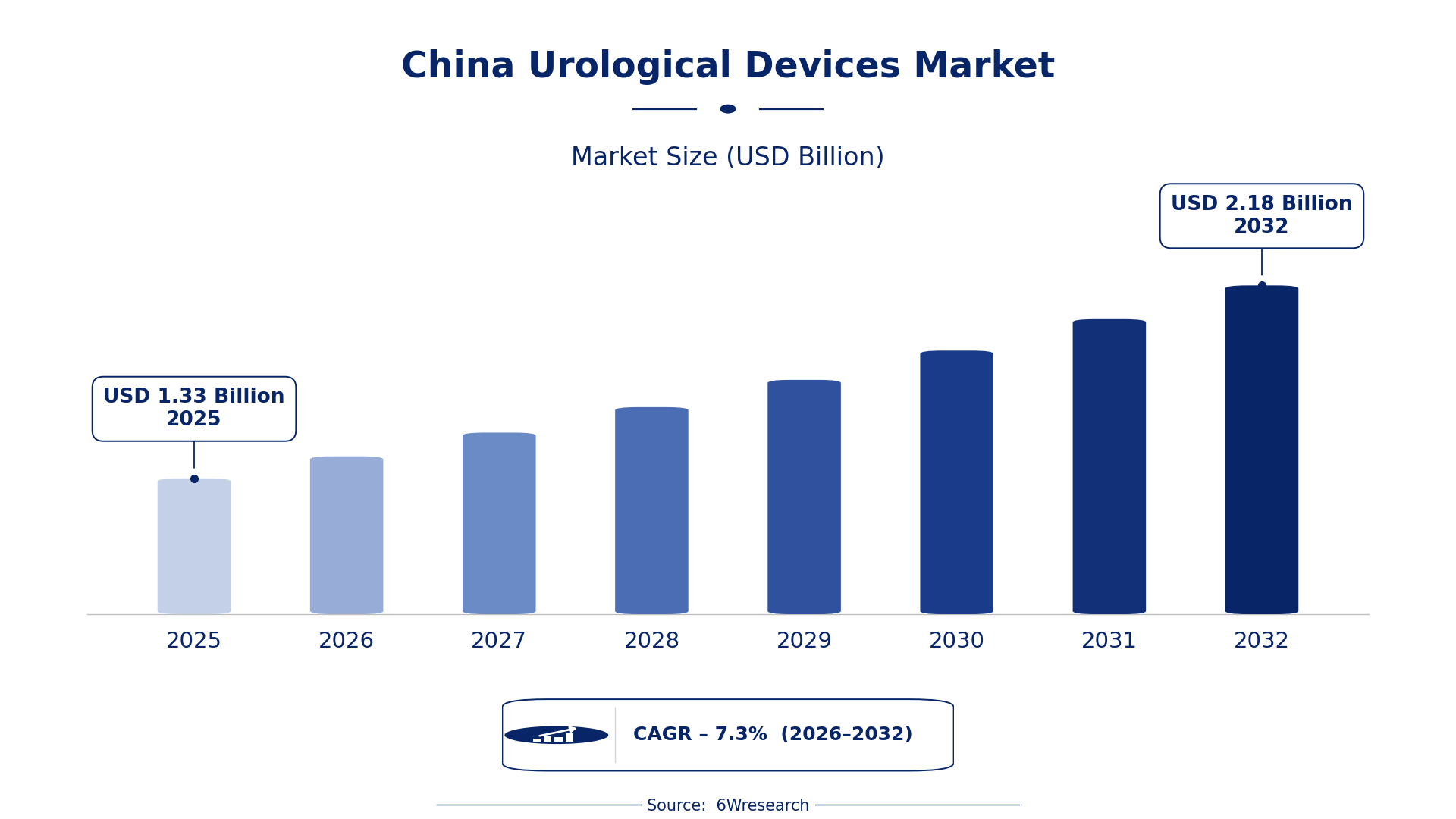
According to 6Wresearch internal database and industry insights, the China Urological Devices Market was valued at USD 1.33 billion in 2025 and is projected to reach USD 2.18 billion by 2032, growing at a CAGR of approximately 7.3% during 2026–2032.
China Urological Devices Market Highlights
| Report Metric | Details |
| Report Name | China Urological Devices Market |
| Market Size 2025 | USD 1.33 billion |
| Market Size 2032 | USD 2.18 billion |
| Absolute Growth 2025–2032 | USD 0.85 billion |
| CAGR 2026–2032 | 7.3% |
| Peak Annual Growth | 9.2% in 2030 |
| Forecast Period | 2026–2032 |
| Historical Data | 2022–2025 |
| Base Year | 2025 |
| Leading Device Type, 2025 | Catheters (49% share) |
| Leading Application Area, 2025 | Urine Drainage (47% share) |
| Leading Usage Environment, 2025 | Inpatient (49% share) |
| Leading End User, 2025 | Hospitals (38% share) |
| Fastest-Growing Device Type | Endoscopes (8.5% CAGR) |
| Fastest-Growing Application Area | Ureteral Obstruction (8.9% CAGR) |
| Fastest-Growing Usage Environment | Outpatient (8.7% CAGR) |
| Fastest-Growing End User | Clinics (8.8% CAGR) |
| Growing Sector | Urology Departments |
| Key End Users | Hospitals, Urology Departments, Clinics, Surgeons |
China Urological Devices Market Year-wise Growth Rate and Key Drivers (2022–2032)
This graph illustrates the annual growth rates of the market from 2022 to 2032, highlighting a steady upward trajectory and projected market expansion over the forecast period.
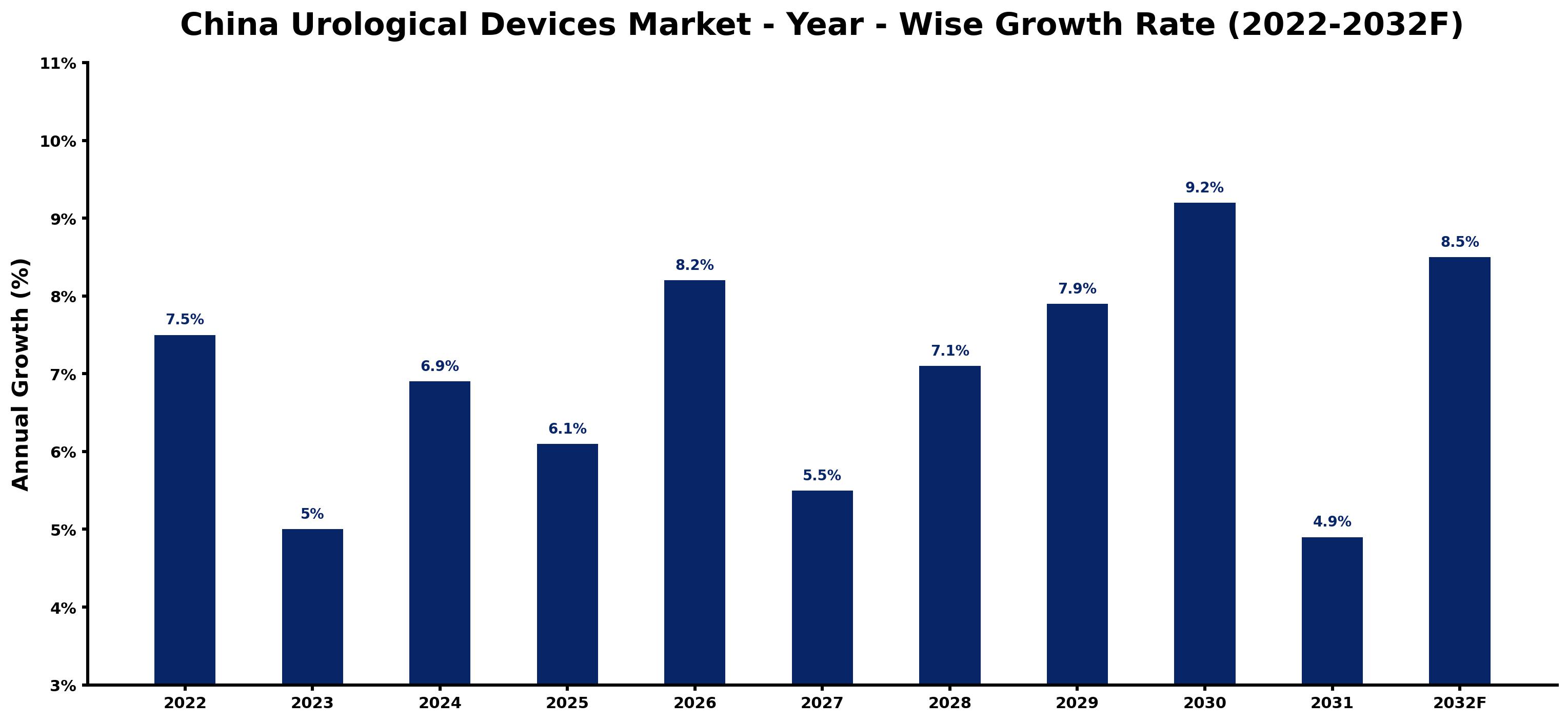
Year by year, the estimates below pair each growth rate with the development that shaped it.
| Year | Estimated Annual Growth (%) | Market Rationale |
| 2022 | 7.5 | The market experienced strong growth due to increasing healthcare expenditure and a rising elderly population. |
| 2023 | 5.0 | Growth slowed as hospitals adjusted to new regulations and demand patterns in urological services. |
| 2024 | 6.9 | Recovery in growth occurred as the demand for endoscopic procedures increased significantly. |
| 2025 | 6.1 | A slight slowdown was observed as hospitals focused on cost management and efficiency. |
| 2026 | 8.2 | Growth accelerated with the introduction of new minimally invasive surgical techniques in hospitals. |
| 2027 | 5.5 | A slowdown was noted as hospitals faced challenges in supply chain management for devices. |
| 2028 | 7.1 | Growth picked up again as outpatient clinics expanded services and patient visits increased. |
| 2029 | 7.9 | Continued growth was driven by rising demand for urological procedures in urban areas. |
| 2030 | 9.2 | The market peaked as advancements in technology enhanced patient care and treatment options. |
| 2031 | 4.9 | Growth slowed as the market adjusted to new standards and regulations in device approvals. |
| 2032 | 8.5 | A recovery in growth is anticipated as healthcare investments increase and services expand. |
Note: Market size estimations and growth projections presented in this report are based on 6Wresearch's proprietary forecasting methodology, utilizing the latest available industry data, government publications, and primary research inputs.
China Urological Devices Market Synopsis
Urological Devices in China include medical instruments used for diagnosing and treating urinary tract conditions. These devices, crafted from biocompatible materials, play a crucial role in procedures such as catheterization and stenting. The China Urological Devices Market is expanding, driven by a growing population and increased healthcare spending, which reached 6 trillion CNY in 2022. Furthermore, initiatives from the National Health Commission aimed at improving access to urological care are stimulating demand. With over 3,000 hospitals featuring urological departments, the market is set for considerable growth in the years ahead.
Market Dynamics Impact Analysis (2026–2032)
| Factor | Type | Impact | Primary Segment Affected |
| Rising healthcare expenditure | Driver | High | Urology Departments |
| Increasing prevalence of urinary tract infections | Driver | High | Diagnostic Imaging |
| Expansion of outpatient clinics | Opportunity | High | Clinics |
| Growing demand for minimally invasive procedures | Opportunity | High | Endoscopes |
| Regulatory challenges in device approval | Restraint | High | Catheters |
| Limited access to advanced urological care in rural areas | Restraint | Medium | Ureteral Obstruction |
| Supply chain disruptions affecting device availability | Challenge | High | Stents |
| Rising costs of urological devices due to material shortages | Challenge | Medium | Dilators |
Evaluation of Drivers in China Urological Devices Market (2026–2032)
Below mentioned are some major drivers and their influence on market dynamics.
| Drivers | Primary Segment Affected | Why It Matters (Evidence) |
| Increasing healthcare expenditure | Urology Departments | China's healthcare expenditure reached 6 trillion CNY in 2022, leading hospitals to invest more in urological devices. |
| High prevalence of urinary tract infections | Diagnostic Imaging | With around 10% of the population affected, hospitals are increasing purchases of diagnostic imaging devices to manage these conditions. |
| Growth in outpatient services | Clinics | Urban urology clinics have seen a 20% increase in patient visits, driving demand for urological devices to accommodate more patients. |
| Adoption of minimally invasive procedures | Endoscopes | The promotion of minimally invasive surgery is boosting demand for advanced endoscopic devices in hospitals, enhancing treatment options. |
| Aging population | Urology Departments | The average age of patients requiring urological devices is around 60, increasing the need for such devices in healthcare settings. |
Growth across the Urological Devices market in China is anchored in rising healthcare expenditure, increasing prevalence of urinary tract infections, and growth in outpatient services. China's healthcare expenditure reached 6 trillion CNY in 2022, leading hospitals to invest more in urological devices. Approximately 10% of the population suffers from urinary tract infections, prompting hospitals to increase purchases of diagnostic imaging devices. Urban urology clinics have experienced a 20% rise in patient visits, which drives demand for urological devices. The promotion of minimally invasive surgery is boosting demand for advanced endoscopic devices, improving patient outcomes and recovery times.
Evaluation of Restraints in China Urological Devices Market
The key brakes on demand, and where they bite hardest, are shown below.
| Market Restraint | Primary Segment Affected | Why It Matters (Evidence) |
| Regulatory challenges in device approval | Catheters | The National Medical Products Administration's stringent regulations can delay the introduction of new catheter devices, impacting availability. |
| Limited access to advanced urological care in rural areas | Ureteral Obstruction | The Urology Development Plan aims to improve access but still faces challenges in rural implementation, limiting patient care. |
| Supply chain disruptions affecting device availability | Stents | Global supply chain issues have caused delays in the availability of critical stent devices for hospitals, affecting treatment timelines. |
| Rising costs of urological devices due to material shortages | Dilators | Material shortages have increased the average cost of urological devices, impacting hospital budgets and procurement decisions. |
| Inconsistent adoption of new technologies in hospitals | Endoscopes | Some hospitals are slow to adopt advanced endoscopic technologies, limiting market growth and patient access to innovative treatments. |
China Urological Devices Market Challenges
The high cost of urological devices in China, ranging from 500 to 5,000 CNY, restricts access for hospitals, particularly in rural areas with limited budgets. A shortage of trained urologists causes delays in procedures, placing additional pressure on healthcare systems and extending wait times for patients. The slow adoption of digital health technologies hampers efficiency in treatment processes, leading to frustration for clinics that require timely solutions. Compliance with ISO 13485 standards imposes regulatory challenges for manufacturers, potentially raising prices and affecting affordability for buyers, especially smaller healthcare facilities.
Trends in the China Urological Devices Market
Buyers and suppliers in the China Urological Devices Market are adjusting to the following trends.
- Shift Towards Minimally Invasive Procedures: In urban hospitals, a trend towards minimally invasive urological procedures is emerging, with a 20% increase in patient visits over the last five years. This shift is supported by initiatives from the Ministry of Health.
- Increase in Outpatient Services: Outpatient clinics are experiencing a notable surge in demand, with a 20% increase in patient visits over the last five years. This trend underscores the growing need for urological devices in these facilities.
- Rising Adoption of Digital Health Technologies: Digital health technologies are increasingly being integrated into urology, improving patient care and monitoring. This trend is clear as hospitals invest in digital solutions to enhance service delivery.
- Growing Focus on Patient-Centric Care: A shift towards patient-centric care is becoming apparent in urology, with hospitals prioritising patient outcomes. This change is reflected in the rising demand for advanced urological devices.
Investment Opportunities in the China Urological Devices Market
Some of the investment opportunities in the China Urological Devices Market are mentioned below.
- Hospitals seeking advanced urological devices: With over 3,000 hospitals in China, there exists a substantial opportunity to provide advanced urological devices, particularly in urban areas where demand is escalating.
- Urology clinics expanding services: The 20% increase in patient visits at urology clinics offers an opportunity to supply more devices and technologies to satisfy growing demand.
- Investment in minimally invasive technologies: The government's emphasis on minimally invasive procedures presents an opportunity to invest in and supply advanced endoscopic devices to hospitals.
- Partnerships with urban hospitals: Establishing partnerships with urban hospitals can facilitate market entry, especially for suppliers of advanced urological devices.
Government Initiatives in the China Urological Devices Market
The National Health Commission's 'Urology Development Plan' launched in 2021 aims to improve access to urological care in underserved regions, with a budget of 500 million CNY. This initiative is crucial for enhancing device availability and training for healthcare professionals. Additionally, the 'Minimally Invasive Surgery Promotion Program' initiated in 2022 encourages hospitals to adopt advanced urological devices, further stimulating market demand. These measures aim to standardise practices and improve patient outcomes across the country.
The National Medical Products Administration manages the approval process for urological devices, ensuring adherence to safety and efficacy standards. In 2023, updated regulations streamlined the approval process for manufacturers, allowing for quicker market entry of new devices. The Ministry of Health also funds training programmes for healthcare professionals in urological surgery techniques, improving the skills of the workforce. These efforts are critical for maintaining high standards in urological care and ensuring that hospitals are equipped with the latest technologies.
Future Insight of the China Urological Devices Market
The China urological devices market is set for notable transformation by 2032, driven by government initiatives to improve healthcare access in rural areas and a growing workforce of over 30,000 urologists. The emphasis on minimally invasive procedures is expected to yield better patient outcomes and shorter recovery times. Advancements in digital health technologies will enhance diagnostic and treatment efficiency, benefiting both buyers and suppliers. With over 1 million endoscopic procedures performed annually, demand for urological devices is anticipated to surge as healthcare providers strive to meet this increasing need.
Market Segmentation Analysis
Each segment group is reviewed below, with the leader by share and the fastest grower by CAGR.
By Device Type – Catheters Dominated, Endoscopes Expected to Grow Fastest
According to Bhawna Singh, Assistant Manager at 6Wresearch, Catheters held a 49% share of the China Urological Devices Market by device type in 2025. Catheters hold the largest share in the China Urological Devices Market due to their essential role in urine drainage and management of urinary conditions. With over 500,000 units installed in hospitals, they are critical to patient care across the country. Endoscopes are projected to grow fastest, at a CAGR of 8.5% during 2026–2032. Endoscopes are experiencing rapid growth as they are increasingly utilised for diagnostic imaging and procedures, with over 1 million endoscopic procedures performed annually in China. This trend indicates a shift towards minimally invasive techniques in urology, suggesting that catheters will maintain their lead as endoscopes expand. Suppliers should focus on enhancing the availability of endoscopes to capitalise on the growing demand for advanced diagnostic tools.
By Application Area – Urine Drainage Dominated, Ureteral Obstruction Expected to Grow Fastest
Urine Drainage accounted for a 47% market share by application area in 2025. Urine Drainage dominates the market as it serves as the primary function of many urological devices, making it essential for effective patient care. The prevalence of urinary tract infections, affecting around 10% of the population, further drives the necessity for reliable urine drainage solutions. Ureteral Obstruction is set to record the highest CAGR in this split, 8.9% over 2026–2032. Ureteral Obstruction is witnessing the fastest growth as it addresses significant clinical needs for stents and catheters, particularly with the 20% increase in patient visits to urology clinics over the last five years. This trend indicates a rising focus on effectively managing urinary obstructions, while urine drainage remains critical. Buyers should prepare for an increased availability of innovative solutions targeting ureteral obstruction as demand continues to rise.
By Usage Environment – Inpatient Dominated, Outpatient Expected to Grow Fastest
Inpatient took a 49% share of usage environment in 2025, more than any other category. Inpatient settings account for the largest share of the market as urological devices are extensively used in hospitals for various procedures. The average length of stay for urological surgeries, around 5 days, underscores the need for reliable inpatient care. Over 2026–2032, Outpatient is expected to post the fastest growth, at a CAGR of 8.7%. Outpatient environments are growing rapidly due to the increasing number of patients seeking urological care in clinics, which have seen a 20% increase in visits over the last five years. This shift towards outpatient care reflects broader trends in healthcare accessibility. Suppliers should consider expanding their product lines to cater to the growing outpatient market, ensuring devices are suitable for clinic use.
By End User – Hospitals Dominated, Clinics Expected to Grow Fastest
The largest end user category in 2025 was Hospitals, with a 38% share of total revenue. Hospitals represent the largest share of end users in the China Urological Devices Market, as they are the primary facilities employing these devices for patient treatment. With over 3,000 hospitals equipped with urological departments, the demand for urological devices remains strong and consistent. The quickest growth will come from Clinics, forecast to expand at a CAGR of 8.8% between 2026 and 2032. Clinics are emerging as the fastest-growing end user segment, driven by the increasing number of outpatient visits and the rising demand for accessible urological services. This shift indicates a preference for more convenient care options, while hospitals will continue to play a crucial role. Manufacturers should enhance their distribution strategies to ensure clinics have access to the latest urological devices, aligning with the growing trend in outpatient care.
Key Attractiveness of the Report
- 10 Years of Market Numbers
- Historical Data Starting from 2022 to 2025
- Base Year 2025
- Forecast Data until 2032
- Key Performance Indicators Impacting the Market
- Major Upcoming Developments and Projects
Key Highlights of the Report:
- China Urological Devices Market Outlook
- Market Size of China Urological Devices Market, 2025
- Forecast of China Urological Devices Market, 2032
- Historical Data and Forecast of China Urological Devices Revenues & Volume for the Period 2022 - 2032F
- China Urological Devices Market Trend Evolution
- China Urological Devices Market Drivers and Challenges
- China Urological Devices Price Trends
- China Urological Devices Porter's Five Forces
- China Urological Devices Industry Life Cycle
- Historical Data and Forecast of China Urological Devices Market Revenues & Volume By Device Type for the Period 2022 - 2032F
- Historical Data and Forecast of China Urological Devices Market Revenues & Volume By Catheters for the Period 2022 - 2032F
- Historical Data and Forecast of China Urological Devices Market Revenues & Volume By Stents for the Period 2022 - 2032F
- Historical Data and Forecast of China Urological Devices Market Revenues & Volume By Endoscopes for the Period 2022 - 2032F
- Historical Data and Forecast of China Urological Devices Market Revenues & Volume By Dilators for the Period 2022 - 2032F
- Historical Data and Forecast of China Urological Devices Market Revenues & Volume By Application Area for the Period 2022 - 2032F
- Historical Data and Forecast of China Urological Devices Market Revenues & Volume By Urine Drainage for the Period 2022 - 2032F
- Historical Data and Forecast of China Urological Devices Market Revenues & Volume By Ureteral Obstruction for the Period 2022 - 2032F
- Historical Data and Forecast of China Urological Devices Market Revenues & Volume By Diagnostic Imaging for the Period 2022 - 2032F
- Historical Data and Forecast of China Urological Devices Market Revenues & Volume By Stricture Treatment for the Period 2022 - 2032F
- Historical Data and Forecast of China Urological Devices Market Revenues & Volume By Usage Environment for the Period 2022 - 2032F
- Historical Data and Forecast of China Urological Devices Market Revenues & Volume By Inpatient for the Period 2022 - 2032F
- Historical Data and Forecast of China Urological Devices Market Revenues & Volume By Surgical for the Period 2022 - 2032F
- Historical Data and Forecast of China Urological Devices Market Revenues & Volume By Outpatient for the Period 2022 - 2032F
- Historical Data and Forecast of China Urological Devices Market Revenues & Volume By Operating Room for the Period 2022 - 2032F
- Historical Data and Forecast of China Urological Devices Market Revenues & Volume By End User for the Period 2022 - 2032F
- Historical Data and Forecast of China Urological Devices Market Revenues & Volume By Hospitals for the Period 2022 - 2032F
- Historical Data and Forecast of China Urological Devices Market Revenues & Volume By Urology Departments for the Period 2022 - 2032F
- Historical Data and Forecast of China Urological Devices Market Revenues & Volume By Clinics for the Period 2022 - 2032F
- Historical Data and Forecast of China Urological Devices Market Revenues & Volume By Surgeons for the Period 2022 - 2032F
- China Urological Devices Import Export Trade Statistics
- Market Opportunity Assessment By Device Type
- Market Opportunity Assessment By Application Area
- Market Opportunity Assessment By Usage Environment
- Market Opportunity Assessment By End User
- China Urological Devices Top Companies Market Share
- China Urological Devices Competitive Benchmarking By Technical and Operational Parameters
- China Urological Devices Company Profiles
- China Urological Devices Key Strategic Recommendations
Market Covered
This report examines the market across the segments below.
By Device Type
- Catheters
- Stents
- Endoscopes
- Dilators
By Application Area
- Urine Drainage
- Ureteral Obstruction
- Diagnostic Imaging
- Stricture Treatment
By Usage Environment
- Inpatient
- Surgical
- Outpatient
- Operating Room
By End User
- Hospitals
- Urology Departments
- Clinics
- Surgeons































