China Uterine Disorders Market Size & Growth Rate
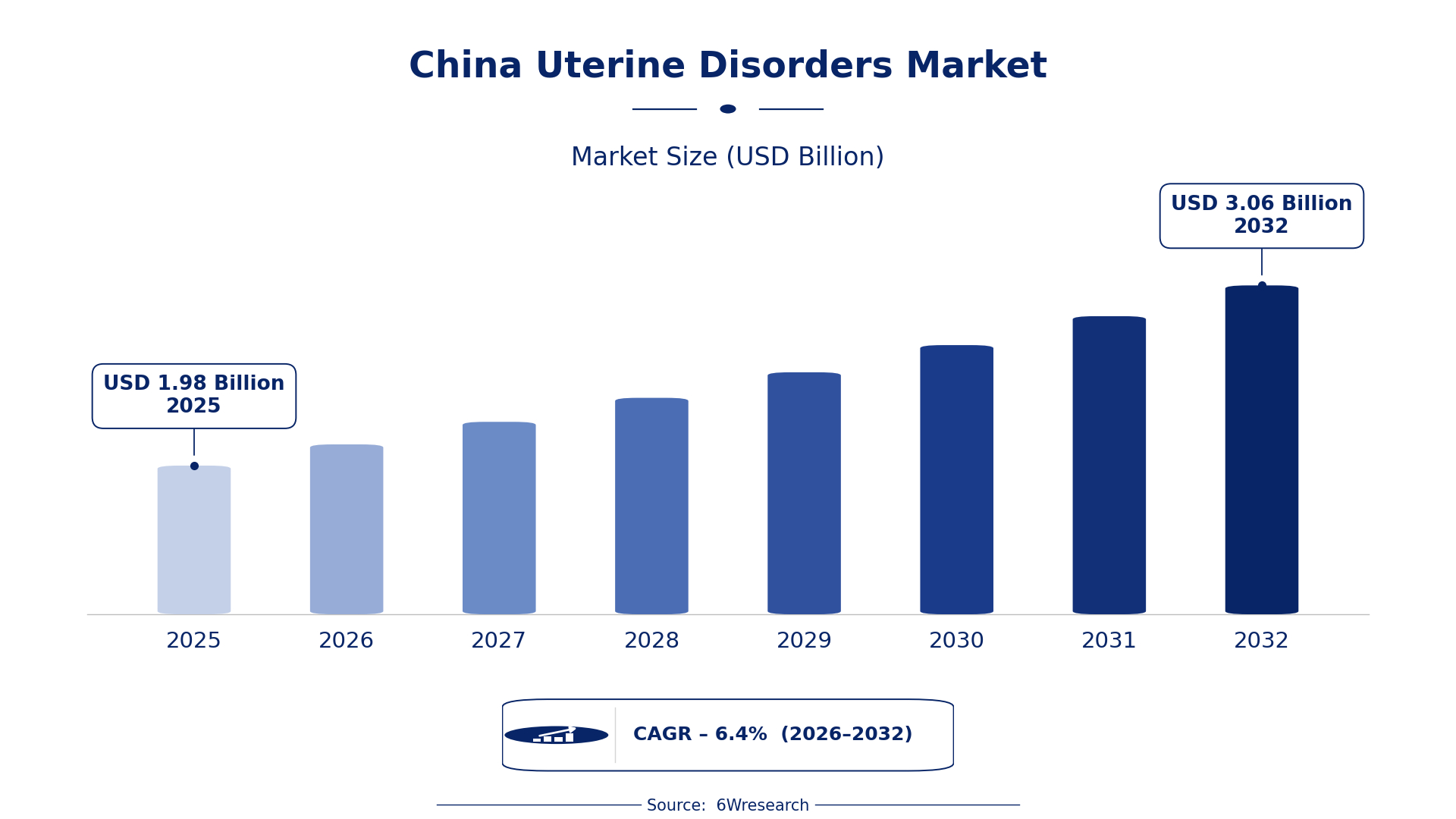
According to 6Wresearch internal database and industry insights, the China Uterine Disorders Market was valued at USD 1.98 billion in 2025 and is projected to reach USD 3.06 billion by 2032, growing at a CAGR of approximately 6.4% during 2026–2032.
China Uterine Disorders Market Highlights
| Report Metric | Details |
| Report Name | China Uterine Disorders Market |
| Market Size 2025 | USD 1.98 billion |
| Market Size 2032 | USD 3.06 billion |
| Absolute Growth 2025–2032 | USD 1.08 billion |
| CAGR 2026–2032 | 6.4% |
| Peak Annual Growth | 9.0% in 2031 |
| Forecast Period | 2026–2032 |
| Historical Data | 2022–2025 |
| Base Year | 2025 |
| Leading Disorder Type, 2025 | Uterine Fibroids (39% share) |
| Leading Treatment Type, 2025 | Surgery (37% share) |
| Leading Diagnostic Tool, 2025 | Ultrasound/MRI (38% share) |
| Leading End User, 2025 | OB-GYN Clinics (44% share) |
| Fastest-Growing Disorder Type | Endometriosis (9.0% CAGR) |
| Fastest-Growing Treatment Type | Hormonal (7.9% CAGR) |
| Fastest-Growing Diagnostic Tool | Laparoscopy (8.0% CAGR) |
| Fastest-Growing End User | Women (20–40) (7.5% CAGR) |
| Growing Sector | OB-GYN Clinics |
| Key End Users | Women aged 20-40, Senior Women, Oncology Centers, OB-GYN Clinics |
China Uterine Disorders Market Year-wise Growth Rate and Key Drivers (2022–2032)
This graph illustrates the annual growth rates of the market from 2022 to 2032, highlighting a steady upward trajectory and projected market expansion over the forecast period.
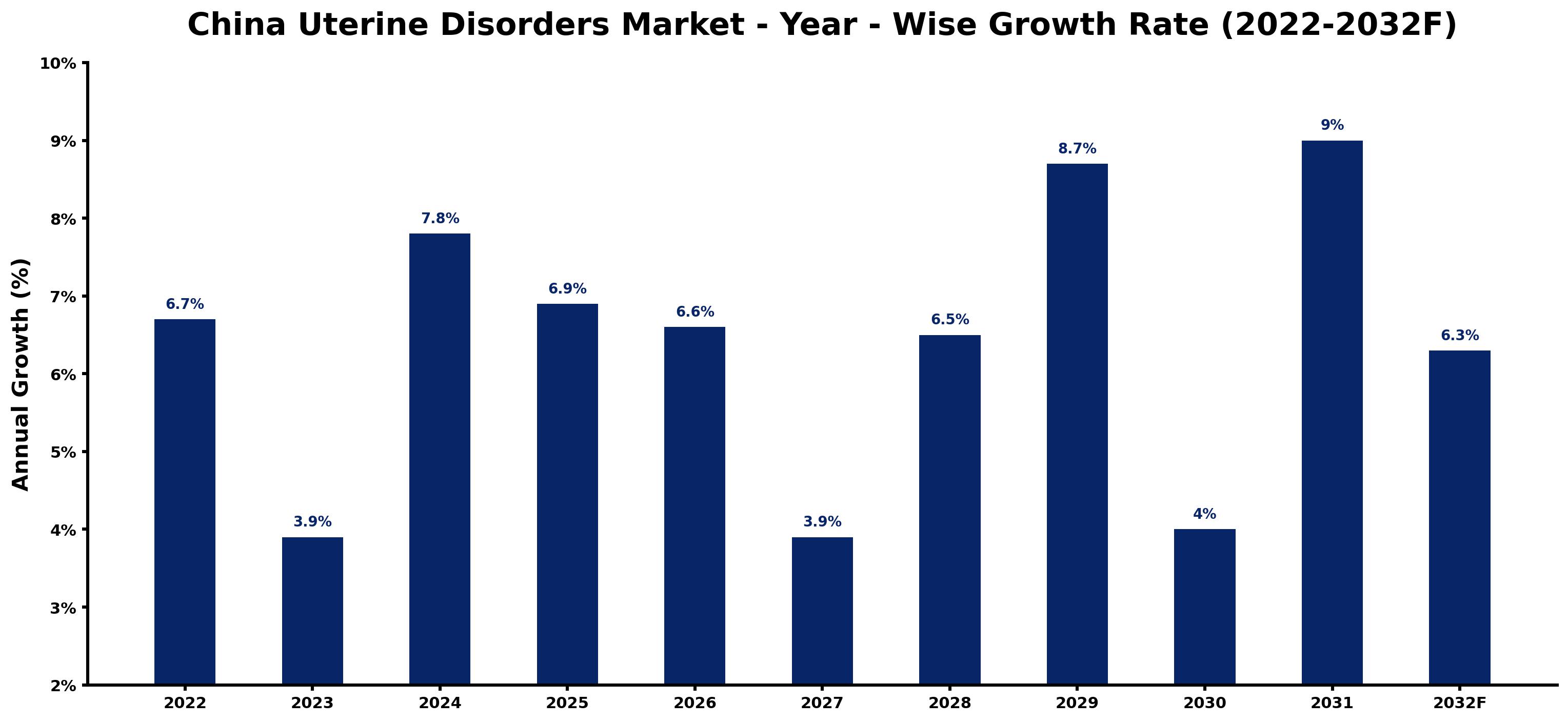
Below, each year's estimated growth is shown next to the factor that most influenced it.
| Year | Estimated Annual Growth (%) | Market Rationale |
| 2022 | 6.7 | The market experienced steady growth due to increased awareness of uterine disorders among women. |
| 2023 | 3.9 | Growth slowed as the effects of the Women's Health Initiative began to take shape in urban areas. |
| 2024 | 7.8 | Demand accelerated with heightened focus on early diagnosis and treatment protocols for uterine disorders. |
| 2025 | 6.9 | The market continued to grow as urban healthcare facilities expanded their service offerings. |
| 2026 | 6.6 | Growth slowed as competition among healthcare providers intensified in major cities. |
| 2027 | 3.9 | Demand remained steady, supported by ongoing public health campaigns targeting uterine health. |
| 2028 | 6.5 | The market rebounded with increased investments in diagnostic technology and treatment options. |
| 2029 | 8.7 | Growth accelerated as the prevalence of uterine disorders rose among younger women. |
| 2030 | 4.0 | Demand slowed slightly as healthcare providers adjusted to new treatment standards. |
| 2031 | 9.0 | A surge in demand was driven by the introduction of innovative treatment options for uterine cancer. |
| 2032 | 6.3 | The market growth rate slowed as the sector stabilised after rapid advancements in treatment. |
Note: Market size estimations and growth projections presented in this report are based on 6Wresearch's proprietary forecasting methodology, utilizing the latest available industry data, government publications, and primary research inputs.
China Uterine Disorders Market Synopsis
The China Uterine Disorders Market includes a range of conditions affecting the uterus, primarily managed through surgical interventions and hormonal therapies. The healthcare sector addressing these disorders remains active, with strong demand from women aged 20-40 and older women. Market growth stems from heightened awareness and initiatives such as the Women's Health Initiative, which aims to improve diagnosis and treatment services across the country. Furthermore, the increasing prevalence of uterine disorders is anticipated to drive demand for effective healthcare solutions.
Market Dynamics Impact Analysis (2026–2032)
| Factor | Type | Impact | Primary Segment Affected |
| Increased awareness of uterine disorders among women drives demand for diagnosis and treatment. | Driver | High | Uterine Fibroids |
| Expansion of OB-GYN clinics in urban areas enhances accessibility to treatment. | Driver | High | OB-GYN Clinics |
| Rising prevalence of uterine cancer creates a need for advanced treatment options. | Opportunity | High | Uterine Cancer |
| Growing demand for minimally invasive diagnostic tools presents investment opportunities. | Opportunity | Medium | Uterine Fibroids |
| Limited access to specialized care in rural areas restricts market growth. | Restraint | High | Uterine Prolapse |
| High costs associated with surgical procedures may deter potential patients. | Restraint | Medium | Surgery |
| Competition among healthcare providers can lead to pricing pressures and service variability. | Challenge | High | Hormonal |
| Regulatory hurdles in approving new treatment methods can delay market entry. | Challenge | Medium | Chemotherapy |
Evaluation of Drivers in China Uterine Disorders Market (2026–2032)
The table below links each growth driver to the segment it affects and the evidence for it.
| Drivers | Primary Segment Affected | Why It Matters (Evidence) |
| Increased awareness of uterine disorders among women drives demand for diagnosis and treatment. | Uterine Fibroids | Approximately 30% of women in their reproductive years are affected by uterine fibroids, prompting more consultations and treatments. |
| Expansion of OB-GYN clinics in urban areas improves accessibility to treatment. | OB-GYN Clinics | Healthcare facilities are concentrated in cities like Beijing and Shanghai, facilitating easier access for patients seeking care. |
| Rising prevalence of uterine cancer creates a need for advanced treatment options. | Uterine Cancer | The prevalence of uterine cancer in China is around 6.5 per 100,000 women, necessitating effective treatments and interventions. |
| Growing demand for minimally invasive diagnostic tools presents investment opportunities. | Uterine Fibroids | The adoption rate of ultrasound technology in diagnostics exceeds 80% in major hospitals, driving purchases of advanced imaging equipment. |
| Government initiatives to improve women's health services increase market activity. | Hormonal | The National Health Commission's funding for women's health programs rose by 15% in 2023, boosting service availability and access. |
Growth across the Uterine Disorders market in China is anchored in increased awareness of uterine health, the expansion of OB-GYN clinics, and rising uterine cancer prevalence. Approximately 30% of women in their reproductive years are affected by uterine fibroids, leading to more consultations and treatments. The prevalence of uterine cancer necessitates effective interventions, particularly in urban healthcare settings. The adoption rate of ultrasound technology in diagnostics exceeds 80% in major hospitals, driving purchases of advanced imaging equipment.
Evaluation of Restraints in China Uterine Disorders Market
The key brakes on demand, and where they bite hardest, are shown below.
| Market Restraint | Primary Segment Affected | Why It Matters (Evidence) |
| Limited access to specialized care in rural areas restricts market growth. | Uterine Prolapse | Healthcare facilities are concentrated in urban regions, leaving rural women with fewer options for treatment. |
| High costs associated with surgical procedures may deter potential patients. | Surgery | The average hospital stay for uterine surgery is 3-5 days, increasing overall treatment costs and affecting patient decisions. |
| Regulatory hurdles in approving new treatment methods can delay market entry. | Chemotherapy | New chemotherapy protocols for uterine cancer require extensive testing and approvals, slowing implementation and limiting patient access. |
| Competition among healthcare providers can lead to pricing pressures and service variability. | Hormonal | As clinics compete, service quality may vary, affecting patient choices and satisfaction in treatment options. |
| Limited public awareness of uterine disorders can hinder early diagnosis and treatment. | Endometriosis | Despite campaigns, many women remain unaware of symptoms, delaying their access to care and treatment. |
China Uterine Disorders Market Challenges
The China Uterine Disorders Market encounters several practical challenges, starting with fierce competition among healthcare providers. This saturation in urban centres like Beijing and Shanghai limits service differentiation, making it challenging for clinics to attract patients. Supply chain issues arise from dependence on imported medical equipment, causing delays in the availability of advanced diagnostic tools, which impacts treatment timelines for hospitals. Rising surgical costs, driven by increased demand for laparoscopic techniques, can burden patients, particularly with over 200,000 surgeries performed in 2022. Regulatory changes, such as the updated National Standard for Gynecological Health, require clinics to adapt quickly, straining resources and compliance efforts.
Trends in the China Uterine Disorders Market
Four trends stand out in the China Uterine Disorders Market.
- Shift Towards Minimally Invasive Procedures: China is increasingly adopting minimally invasive procedures for uterine disorders, as shown by the rising use of laparoscopy for endometriosis diagnosis. In 2022, over 200,000 surgeries for uterine disorders were performed, reflecting a trend towards less invasive options.
- Growing Emphasis on Women's Health Education: The National Health Commission's "Women's Health Initiative" launched in 2023 aims to improve awareness and education about uterine disorders. The initiative targets a 20% increase in diagnosis rates by 2025, demonstrating a commitment to women's health.
- Increased Investment in Diagnostic Technology: Healthcare facilities are investing in advanced diagnostic tools, with over 100,000 ultrasound machines installed in hospitals by 2022. This trend supports improved early detection of uterine disorders among women.
- Expansion of OB-GYN Clinics in Urban Areas: Urban regions like Beijing and Shanghai are experiencing a rise in OB-GYN clinics, which are crucial for women's health. By 2025, OB-GYN clinics are expected to account for 44% of the market, improving access to care.
Investment Opportunities in the China Uterine Disorders Market
Investors looking at the China Uterine Disorders Market should consider the following areas.
- OB-GYN Clinics Seeking Advanced Treatment Options: With a large number of women aged 20-40 in China, OB-GYN clinics are seeking advanced treatment options for uterine disorders. The estimated 50 million women in this age group represent a substantial market opportunity.
- Investment in Diagnostic Imaging Technologies: The demand for improved diagnostic imaging technologies is increasing, with over 80% adoption of ultrasound in major hospitals. Suppliers can target urban healthcare facilities to meet this growing need.
- Hormonal Treatments Gaining Popularity: The hormonal treatment segment is projected to grow as more women seek effective symptom management. Clinics are increasingly adopting these therapies to meet the rising demand from patients.
- Partnerships with Healthcare Providers: Collaborating with urban healthcare providers can facilitate entry into the growing uterine disorders market. Establishing joint ventures with OB-GYN clinics will improve service offerings and patient access.
Government Initiatives in the China Uterine Disorders Market
The "Women's Health Initiative" launched by the National Health Commission in 2023 aims to improve services for uterine disorders, targeting a 20% increase in diagnosis rates by 2025. This initiative encourages healthcare providers to adopt updated treatment protocols and diagnostic criteria, ensuring compliance with national standards. As a result, more women are expected to receive timely and effective treatment for their conditions. The initiative also supports training programmes for healthcare professionals to improve the quality of care.
In 2022, the "Comprehensive Women's Health Strategy" was approved, allocating 1 billion CNY to enhance access to gynecological care nationwide. This funding supports various initiatives, including training for healthcare professionals and the establishment of new clinics. The Ministry of Health oversees the implementation of this strategy, ensuring that resources are allocated effectively to improve women's health services across the country.
Future Insight of the China Uterine Disorders Market
Several forward-looking factors are expected to support the China Uterine Disorders Market in the coming years. The launch of the "Women's Health Initiative" in 2023 aims to enhance diagnosis and treatment accessibility, benefiting both patients and healthcare providers. Advances in ultrasound technology will improve diagnostic accuracy, with the adoption rate exceeding 80% in major hospitals. The government's allocation of 500 million CNY for women's reproductive health programmes will facilitate necessary treatments. The rising prevalence of uterine disorders due to an aging population will drive demand for comprehensive care solutions.
Market Segmentation Analysis
The report offers a comprehensive study of the following market segments and their leading categories in the market.
By Disorder Type – Uterine Fibroids Dominated, Endometriosis Expected to Grow Fastest
According to Bhawna Singh, Assistant Manager at 6Wresearch, with a 39% revenue share in 2025, Uterine Fibroids was the largest disorder type category. Uterine fibroids represent a common condition affecting around 30% of women in their reproductive years, making them a primary concern for healthcare providers. With approximately 50 million women aged 20-40 in China, the demand for treatment options is substantial, especially in urban centres. Endometriosis is projected to grow fastest, at a CAGR of 9.0% during 2026–2032. The increasing awareness and diagnosis of endometriosis, particularly with the average age of diagnosis being 27 years, is propelling its growth in the market. The National Health Commission's "Women's Health Initiative" aims to improve treatment and awareness, further driving this segment's expansion. Suppliers should focus on developing targeted treatments and educational resources to meet the rising demand for uterine disorder management.
By Treatment Type – Surgery Dominated, Hormonal Expected to Grow Fastest
The largest treatment type category in 2025 was Surgery, with a 37% share of total revenue. Surgery serves as the primary treatment method for severe cases of uterine disorders, with over 200,000 surgeries performed in 2022 across China. This high volume underscores the critical role of surgical interventions in managing complex conditions effectively. The quickest growth will come from Hormonal, forecast to expand at a CAGR of 7.9% between 2026 and 2032. Hormonal treatments are becoming increasingly popular for managing symptoms of uterine disorders, particularly as awareness of women's health issues rises. The government's 15% increase in funding for women's health programs in 2023 will likely enhance access to these therapies. Healthcare providers must ensure the availability of both surgical and hormonal treatment options to effectively address the needs of the expanding patient base.
By Diagnostic Tool – Ultrasound/MRI Dominated, Laparoscopy Expected to Grow Fastest
In 2025, Ultrasound/MRI led the diagnostic tool split with a 38% share. Ultrasound and MRI are vital diagnostic tools, with an adoption rate exceeding 80% in major hospitals, establishing them as the preferred choice for diagnosing uterine disorders. Their widespread use highlights the essential role of imaging in accurate diagnosis and treatment planning. Laparoscopy is set to record the highest CAGR in this split, 8.0% over 2026–2032. Laparoscopy is gaining traction due to its minimally invasive approach, allowing for precise diagnosis with reduced recovery time. As hospitals increasingly adopt advanced diagnostic methods, the demand for laparoscopy is expected to rise significantly. Providers of diagnostic tools should focus on enhancing imaging technologies to satisfy the growing need for accurate and efficient diagnostic solutions.
By End User – OB-GYN Clinics Dominated, Women (20–40) Expected to Grow Fastest
OB-GYN Clinics took a 44% share of end user in 2025, more than any other category. OB-GYN clinics serve as the primary healthcare facility for women, catering specifically to their reproductive health needs. The concentration of these clinics in urban areas like Beijing and Shanghai ensures that a large segment of the population has access to necessary care. Over 2026–2032, Women (20–40) is expected to post the fastest growth, at a CAGR of 7.5%. Women aged 20-40 represent a major demographic affected by uterine disorders, driving the demand for targeted healthcare services. As awareness increases, this age group will likely seek more frequent consultations and treatments. Suppliers should tailor their services and products to meet the specific needs of OB-GYN clinics and the younger female demographic.
Key Attractiveness of the Report
- 10 Years of Market Numbers
- Historical Data Starting from 2022 to 2025
- Base Year 2025
- Forecast Data until 2032
- Key Performance Indicators Impacting the Market
- Major Upcoming Developments and Projects
Key Highlights of the Report:
- China Uterine Disorders Market Outlook
- Market Size of China Uterine Disorders Market, 2025
- Forecast of China Uterine Disorders Market, 2032
- Historical Data and Forecast of China Uterine Disorders Revenues & Volume for the Period 2022 - 2032F
- China Uterine Disorders Market Trend Evolution
- China Uterine Disorders Market Drivers and Challenges
- China Uterine Disorders Price Trends
- China Uterine Disorders Porter's Five Forces
- China Uterine Disorders Industry Life Cycle
- Historical Data and Forecast of China Uterine Disorders Market Revenues & Volume By Disorder Type for the Period 2022 - 2032F
- Historical Data and Forecast of China Uterine Disorders Market Revenues & Volume By Uterine Fibroids for the Period 2022 - 2032F
- Historical Data and Forecast of China Uterine Disorders Market Revenues & Volume By Endometriosis for the Period 2022 - 2032F
- Historical Data and Forecast of China Uterine Disorders Market Revenues & Volume By Uterine Cancer for the Period 2022 - 2032F
- Historical Data and Forecast of China Uterine Disorders Market Revenues & Volume By Uterine Prolapse for the Period 2022 - 2032F
- Historical Data and Forecast of China Uterine Disorders Market Revenues & Volume By Treatment Type for the Period 2022 - 2032F
- Historical Data and Forecast of China Uterine Disorders Market Revenues & Volume By Surgery, Hormonal for the Period 2022 - 2032F
- Historical Data and Forecast of China Uterine Disorders Market Revenues & Volume By Hormonal/Drug for the Period 2022 - 2032F
- Historical Data and Forecast of China Uterine Disorders Market Revenues & Volume By Chemotherapy for the Period 2022 - 2032F
- Historical Data and Forecast of China Uterine Disorders Market Revenues & Volume By Physical Therapy, Pessary for the Period 2022 - 2032F
- Historical Data and Forecast of China Uterine Disorders Market Revenues & Volume By Diagnostic Tool for the Period 2022 - 2032F
- Historical Data and Forecast of China Uterine Disorders Market Revenues & Volume By Ultrasound/MRI for the Period 2022 - 2032F
- Historical Data and Forecast of China Uterine Disorders Market Revenues & Volume By Laparoscopy for the Period 2022 - 2032F
- Historical Data and Forecast of China Uterine Disorders Market Revenues & Volume By Biopsy & Imaging for the Period 2022 - 2032F
- Historical Data and Forecast of China Uterine Disorders Market Revenues & Volume By Pelvic Exam for the Period 2022 - 2032F
- Historical Data and Forecast of China Uterine Disorders Market Revenues & Volume By End User for the Period 2022 - 2032F
- Historical Data and Forecast of China Uterine Disorders Market Revenues & Volume By OB-GYN Clinics for the Period 2022 - 2032F
- Historical Data and Forecast of China Uterine Disorders Market Revenues & Volume By Women (20 40) for the Period 2022 - 2032F
- Historical Data and Forecast of China Uterine Disorders Market Revenues & Volume By Oncology Centers for the Period 2022 - 2032F
- Historical Data and Forecast of China Uterine Disorders Market Revenues & Volume By Senior Women for the Period 2022 - 2032F
- China Uterine Disorders Import Export Trade Statistics
- Market Opportunity Assessment By Disorder Type
- Market Opportunity Assessment By Treatment Type
- Market Opportunity Assessment By Diagnostic Tool
- Market Opportunity Assessment By End User
- China Uterine Disorders Top Companies Market Share
- China Uterine Disorders Competitive Benchmarking By Technical and Operational Parameters
- China Uterine Disorders Company Profiles
- China Uterine Disorders Key Strategic Recommendations
Market Covered
The report offers an extensive study of the following market segments.
By Disorder Type
- Uterine Fibroids
- Endometriosis
- Uterine Cancer
- Uterine Prolapse
By Treatment Type
- Surgery
- Hormonal
- Hormonal/Drug
- Chemotherapy
- Physical Therapy
- Pessary
By Diagnostic Tool
- Ultrasound/MRI
- Laparoscopy
- Biopsy & Imaging
- Pelvic Exam
By End User
- OB-GYN Clinics
- Women (20–40)
- Oncology Centers
- Senior Women































