Croatia Milk Chocolate - Market Production Statistics (2019-2025)
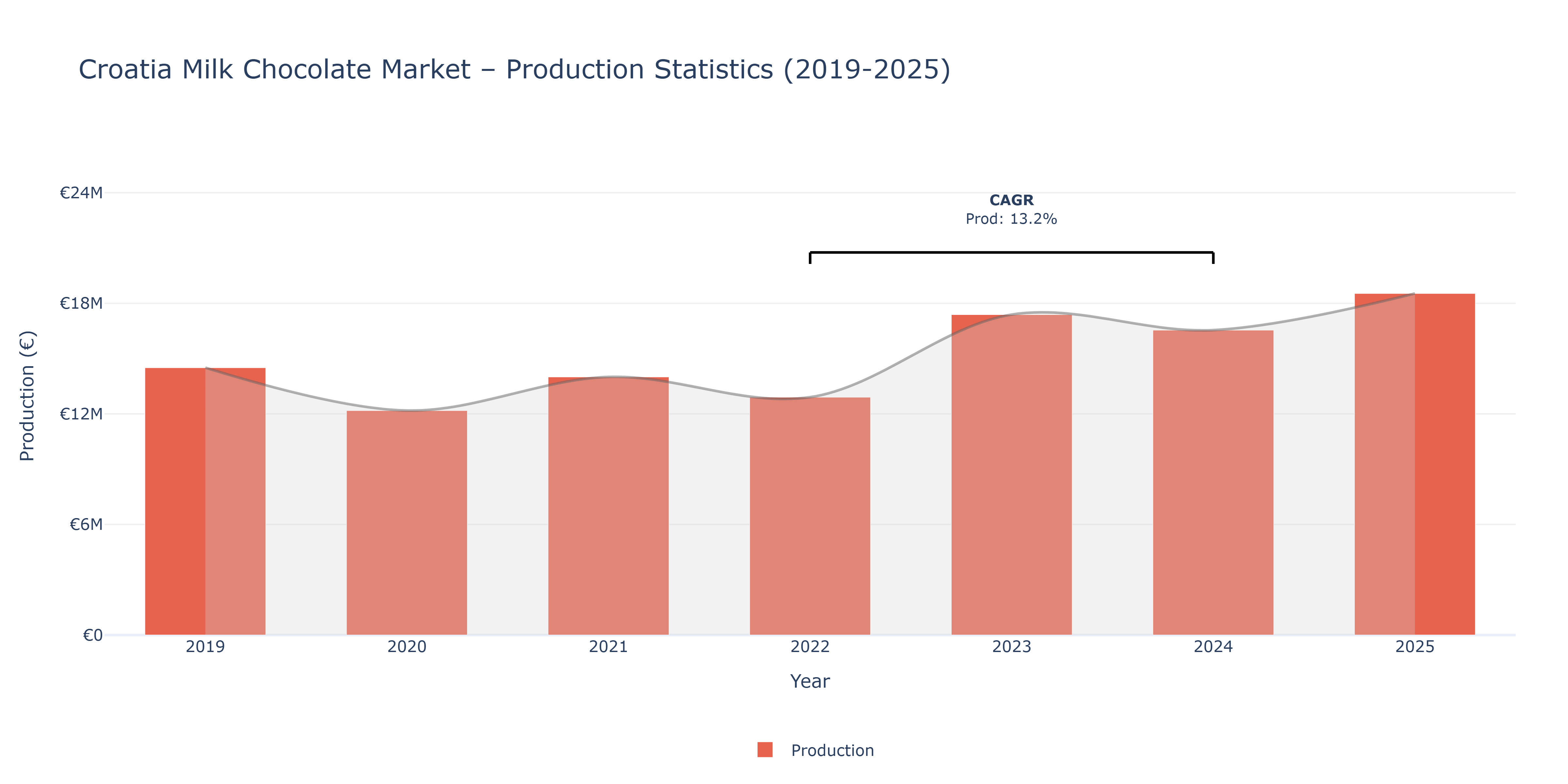
The production of milk chocolate in the Croatia market exhibited fluctuations over the years, with a noticeable increase from €12.18 million in 2020 to €17.39 million in 2023. This surge can be attributed to factors such as changing consumer preferences towards premium milk chocolate products, innovative product launches by key market players, and effective marketing strategies. The subsequent slight decrease to €16.55 million in 2024 could be due to temporary supply chain disruptions or market saturation. The overall Compound Annual Growth Rate (CAGR) of 13.23% from 2022 to 2024 indicates a strong growth trend in production, reflecting the market's resilience and potential for expansion in the coming years. This growth trajectory suggests promising opportunities for milk chocolate manufacturers to capitalize on the increasing demand and sustainably grow their production capabilities.
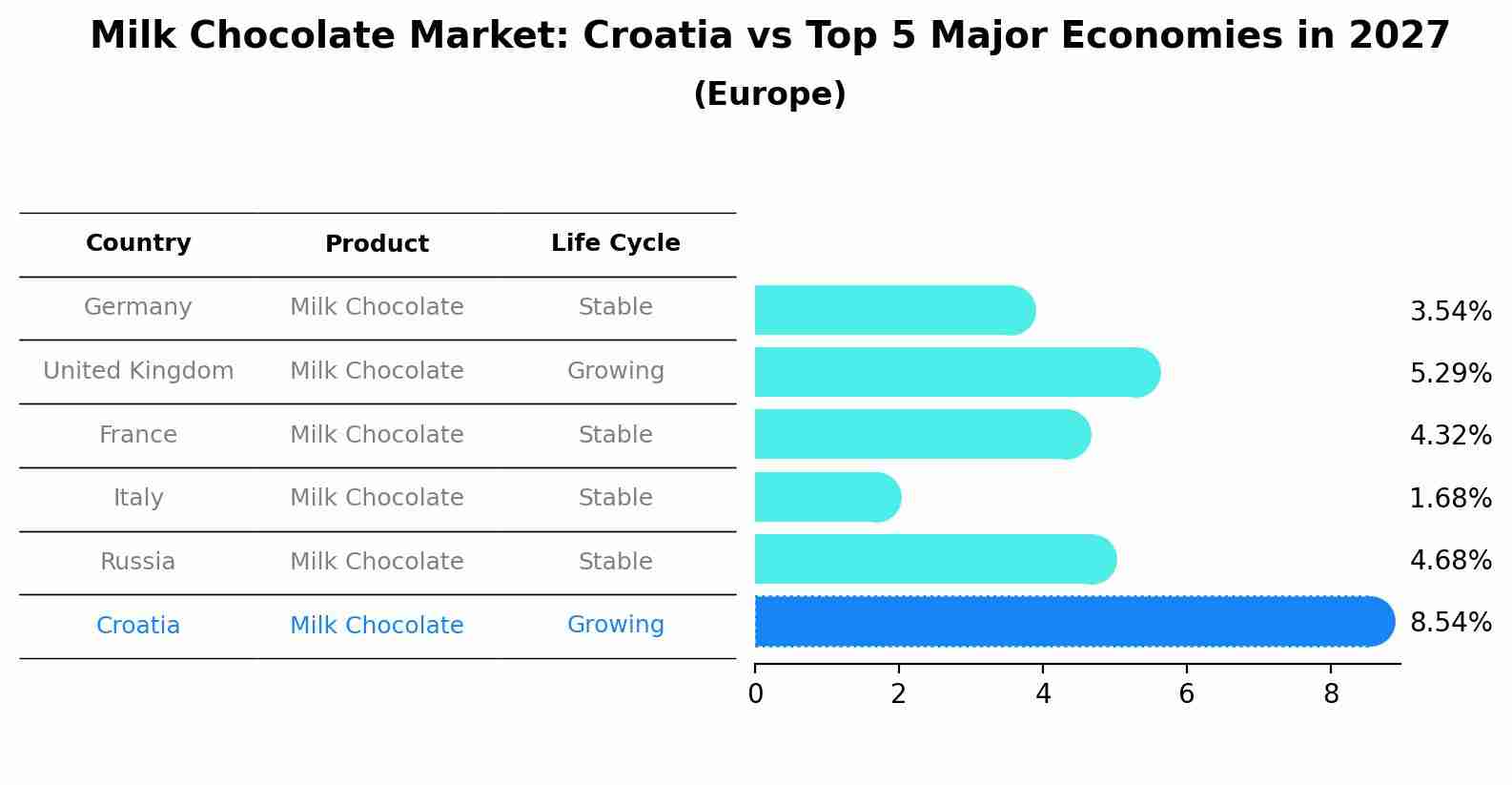
Milk Chocolate Market: Croatia vs Top 5 Major Economies in 2027 (Europe)
By 2027, Croatia's Milk Chocolate market is forecasted to achieve a growing growth rate of 8.54%, with Germany leading the Europe region, followed by United Kingdom, France, Italy and Russia.
Croatia Milk Chocolate Market Overview
In Croatia, the milk chocolate market is popular among consumers of all ages, driven by the demand for high-quality, indulgent confectionery products. The market includes a variety of milk chocolate offerings, ranging from traditional bars to innovative flavors and formats that cater to evolving consumer preferences.
Drivers of the market
The Croatian milk chocolate market is influenced by the growing consumer preference for sweet and indulgent treats. Milk chocolate is a popular confectionery product that appeals to a wide range of consumers. The increasing demand for high-quality and diverse chocolate products, coupled with innovations in chocolate formulations and packaging, drives market growth. Additionally, the rising trend of premium and artisanal chocolate offerings and the expansion of distribution channels contribute to market expansion.
Challenges of the market
In the Croatian milk chocolate market, challenges include managing production costs, ensuring consistent quality, and meeting consumer preferences for taste and texture. The market faces competition from both local and international brands and must navigate fluctuating prices of raw materials like cocoa and milk. Regulatory compliance with food safety standards and addressing environmental concerns related to packaging and production are also crucial factors. Additionally, innovation in flavors and product formulations plays a significant role in maintaining market competitiveness.
Government Policy of the market
In Croatia, the milk chocolate market is affected by policies related to food safety and consumer protection. Government regulations ensure that milk chocolate products meet safety and quality standards, including ingredient labeling and nutritional information. Policies promoting domestic production and trade in the food sector also influence the market.
Key Highlights of the Report:
- Croatia Milk Chocolate Market Outlook
- Market Size of Croatia Milk Chocolate Market, 2024
- Forecast of Croatia Milk Chocolate Market, 2031
- Historical Data and Forecast of Croatia Milk Chocolate Revenues & Volume for the Period 2021-2031
- Croatia Milk Chocolate Market Trend Evolution
- Croatia Milk Chocolate Market Drivers and Challenges
- Croatia Milk Chocolate Price Trends
- Croatia Milk Chocolate Porter`s Five Forces
- Croatia Milk Chocolate Industry Life Cycle
- Historical Data and Forecast of Croatia Milk Chocolate Market Revenues & Volume By Type for the Period 2021-2031
- Historical Data and Forecast of Croatia Milk Chocolate Market Revenues & Volume By Nuts Milk Chocolate for the Period 2021-2031
- Historical Data and Forecast of Croatia Milk Chocolate Market Revenues & Volume By Liqueur Milk Chocolate for the Period 2021-2031
- Historical Data and Forecast of Croatia Milk Chocolate Market Revenues & Volume By Other for the Period 2021-2031
- Historical Data and Forecast of Croatia Milk Chocolate Market Revenues & Volume By Distribution Channel for the Period 2021-2031
- Historical Data and Forecast of Croatia Milk Chocolate Market Revenues & Volume By Supermarkets/Hypermarkets for the Period 2021-2031
- Historical Data and Forecast of Croatia Milk Chocolate Market Revenues & Volume By Specialty Stores for the Period 2021-2031
- Historical Data and Forecast of Croatia Milk Chocolate Market Revenues & Volume By Convenience Stores for the Period 2021-2031
- Historical Data and Forecast of Croatia Milk Chocolate Market Revenues & Volume By Online Stores for the Period 2021-2031
- Historical Data and Forecast of Croatia Milk Chocolate Market Revenues & Volume By Others for the Period 2021-2031
- Historical Data and Forecast of Croatia Milk Chocolate Market Revenues & Volume By Application for the Period 2021-2031
- Historical Data and Forecast of Croatia Milk Chocolate Market Revenues & Volume By Residential for the Period 2021-2031
- Historical Data and Forecast of Croatia Milk Chocolate Market Revenues & Volume By Commercial for the Period 2021-2031
- Croatia Milk Chocolate Import Export Trade Statistics
- Market Opportunity Assessment By Type
- Market Opportunity Assessment By Distribution Channel
- Market Opportunity Assessment By Application
- Croatia Milk Chocolate Top Companies Market Share
- Croatia Milk Chocolate Competitive Benchmarking By Technical and Operational Parameters
- Croatia Milk Chocolate Company Profiles
- Croatia Milk Chocolate Key Strategic Recommendations






































