Ecuador Glyphosate Market Top 5 Importing Countries and Market Competition (HHI) Analysis
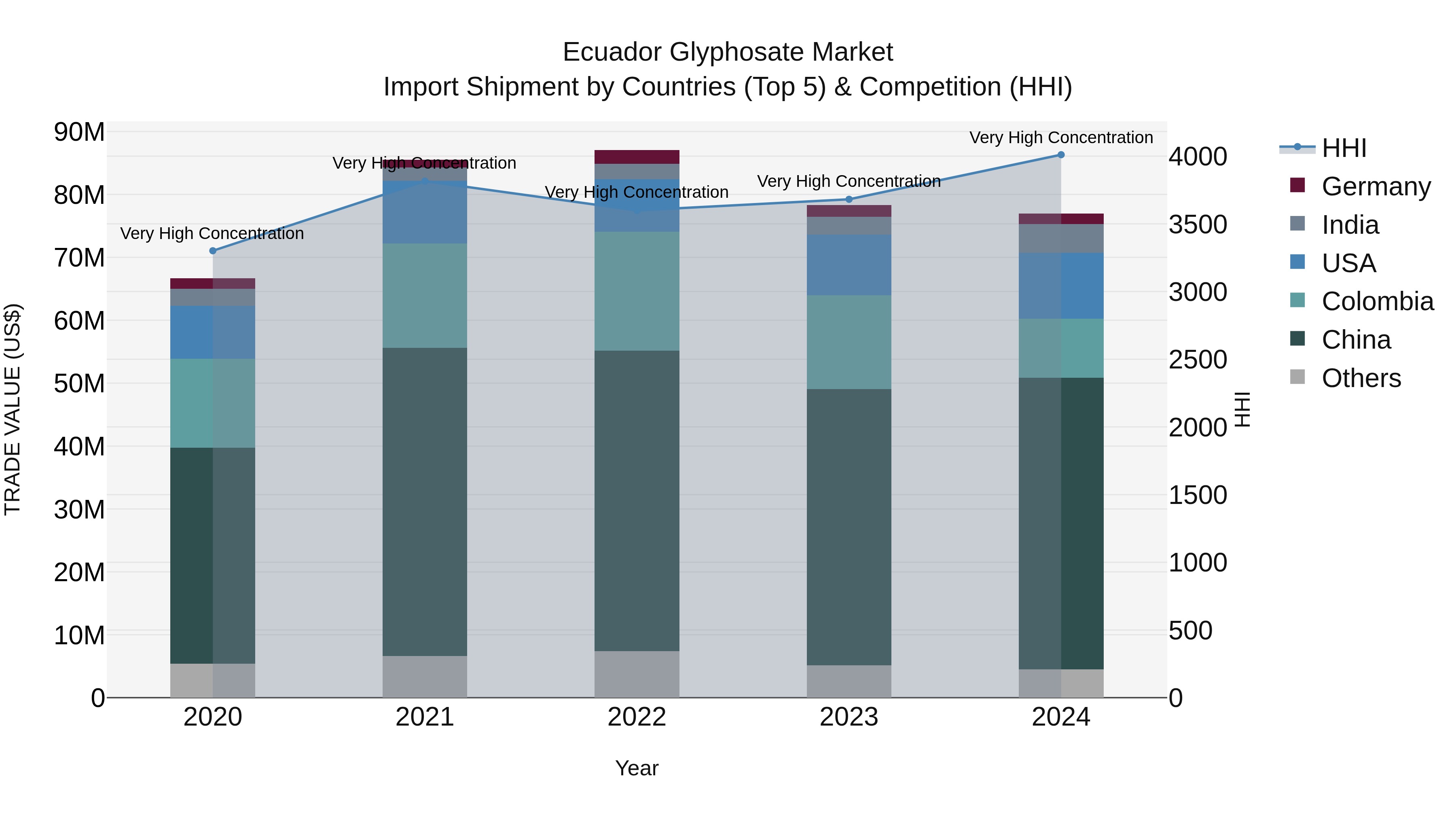
Despite a slight decline in growth rate in 2024, Ecuador`s glyphosate import Market Top 5 Importing Countries and Market Competition (HHI) Analysis continues to be dominated by a few key players. The high concentration of shipments from top exporters like China, USA, Colombia, India, and Germany indicates a stable Market Top 5 Importing Countries and Market Competition (HHI) Analysis structure. The compound annual growth rate (CAGR) over the past four years suggests steady expansion, albeit at a moderate pace. With the Market Top 5 Importing Countries and Market Competition (HHI) Analysis dynamics remaining consistent, it is essential for stakeholders to monitor any potential shifts in supply chains or regulatory environments that could impact future trends in glyphosate imports.
Glyphosate Market: Ecuador vs Top 5 Major Economies in 2027 (Latin America)
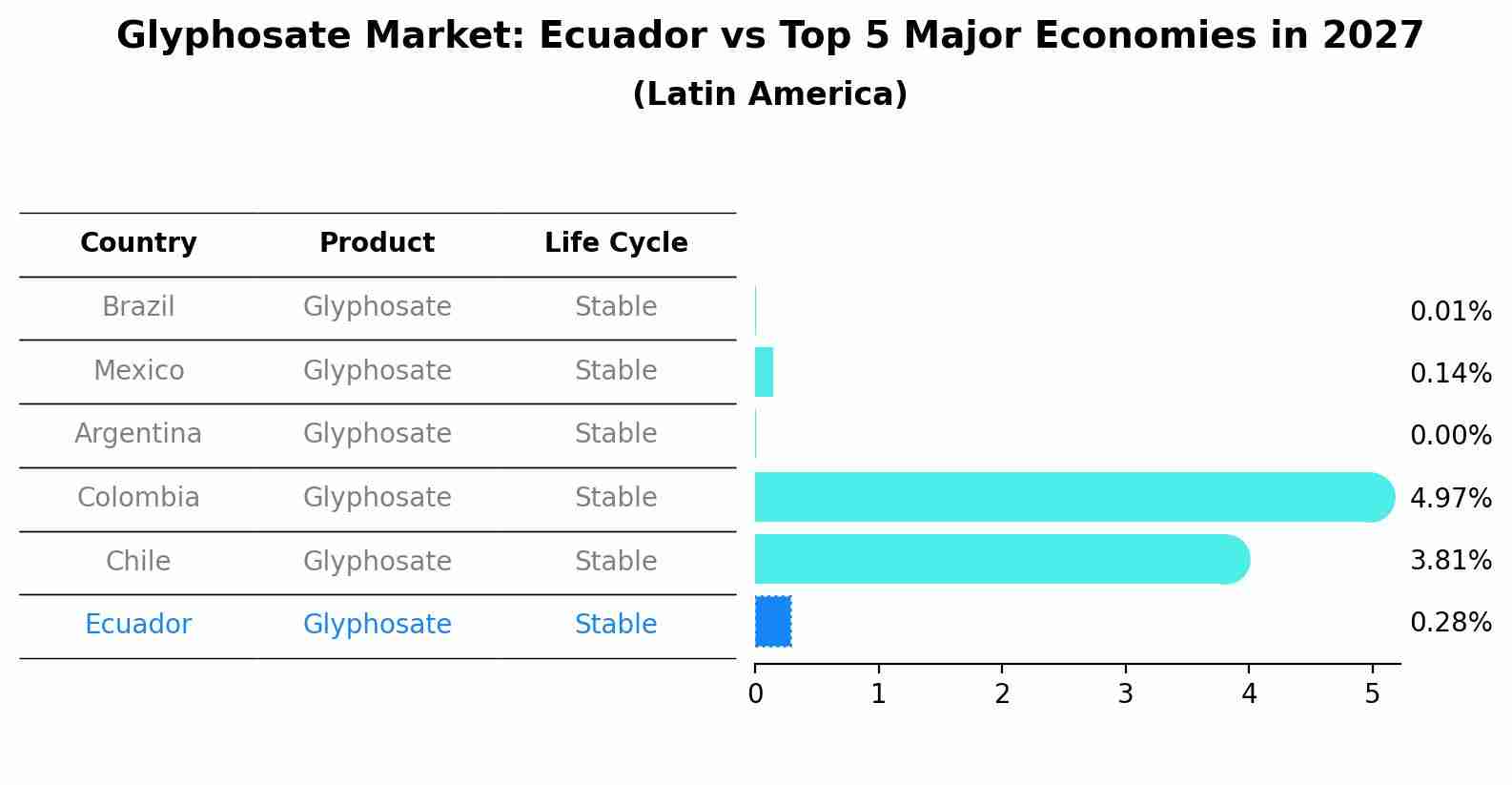
Ecuador's Glyphosate market is anticipated to experience a stable growth rate of 0.28% by 2027, reflecting trends observed in the largest economy Brazil, followed by Mexico, Argentina, Colombia and Chile.
Ecuador Glyphosate Market Overview
The glyphosate market in Ecuador is influenced by its applications in agriculture as a herbicide. Glyphosate is valued for its effectiveness in weed control, contributing to increased crop yields. The growing demand for food production and sustainable farming practices is driving market growth. However, the market faces challenges related to environmental concerns and regulatory scrutiny. Manufacturers are focusing on developing alternative solutions and addressing sustainability issues in glyphosate production.
Drivers of the market
The glyphosate market in Ecuador is influenced by the increasing demand for herbicides in agricultural practices. Glyphosate is widely used for weed control in various crops, contributing to improved yields and crop management. The rise of intensive farming and the growing focus on sustainable agricultural practices are propelling the demand for glyphosate. Furthermore, advancements in glyphosate formulations and application technologies are enhancing its effectiveness and safety, supporting market growth.
Challenges of the market
The glyphosate market encounters challenges related to environmental concerns and regulatory pressures. Increasing scrutiny regarding glyphosate`s safety and its impact on biodiversity has led to stricter regulations in many regions, including Ecuador. This can complicate the approval process for new products and limit market access. Additionally, competition from organic and sustainable farming practices may drive down demand for glyphosate as farmers seek alternatives.
Government Policy of the market
Ecuador`s government is recognizing the significance of the glyphosate market in agriculture. Policies are being developed to ensure that glyphosate usage complies with environmental and health regulations. The government encourages research initiatives aimed at exploring safer alternatives to glyphosate in pest management. Public awareness campaigns will educate farmers about responsible usage and best practices for glyphosate application.
Key Highlights of the Report:
- Ecuador Glyphosate Market Outlook
- Market Size of Ecuador Glyphosate Market, 2024
- Forecast of Ecuador Glyphosate Market, 2031
- Historical Data and Forecast of Ecuador Glyphosate Revenues & Volume for the Period 2021-2031
- Ecuador Glyphosate Market Trend Evolution
- Ecuador Glyphosate Market Drivers and Challenges
- Ecuador Glyphosate Price Trends
- Ecuador Glyphosate Porter`s Five Forces
- Ecuador Glyphosate Industry Life Cycle
- Historical Data and Forecast of Ecuador Glyphosate Market Revenues & Volume By Application for the Period 2021-2031
- Historical Data and Forecast of Ecuador Glyphosate Market Revenues & Volume By Genetically Modified (GM) Crops for the Period 2021-2031
- Historical Data and Forecast of Ecuador Glyphosate Market Revenues & Volume By Conventional Crops for the Period 2021-2031
- Ecuador Glyphosate Import Export Trade Statistics
- Market Opportunity Assessment By Application
- Ecuador Glyphosate Top Companies Market Share
- Ecuador Glyphosate Competitive Benchmarking By Technical and Operational Parameters
- Ecuador Glyphosate Company Profiles
- Ecuador Glyphosate Key Strategic Recommendations






































