Egypt Apiculture Market Size, Share & Growth Rate
The Egypt Apiculture Market was estimated at USD 376 Million in 2025 and is projected to reach USD 507 Million by 2032, growing at a CAGR of 4.4% from 2026 to 2032. This growth trajectory is primarily fueled by an increasing consumer shift towards natural and organic products, as well as rising domestic and international demand for honey and other bee-derived goods. Additionally, government initiatives aimed at enhancing sustainable beekeeping practices and improving infrastructure are expected to further bolster the industry.
Egypt Apiculture Market Year-wise Growth Rate and Key Drivers
This graph highlights how the Egypt Apiculture Market has steadily grown over the years, supported by major growth factors.
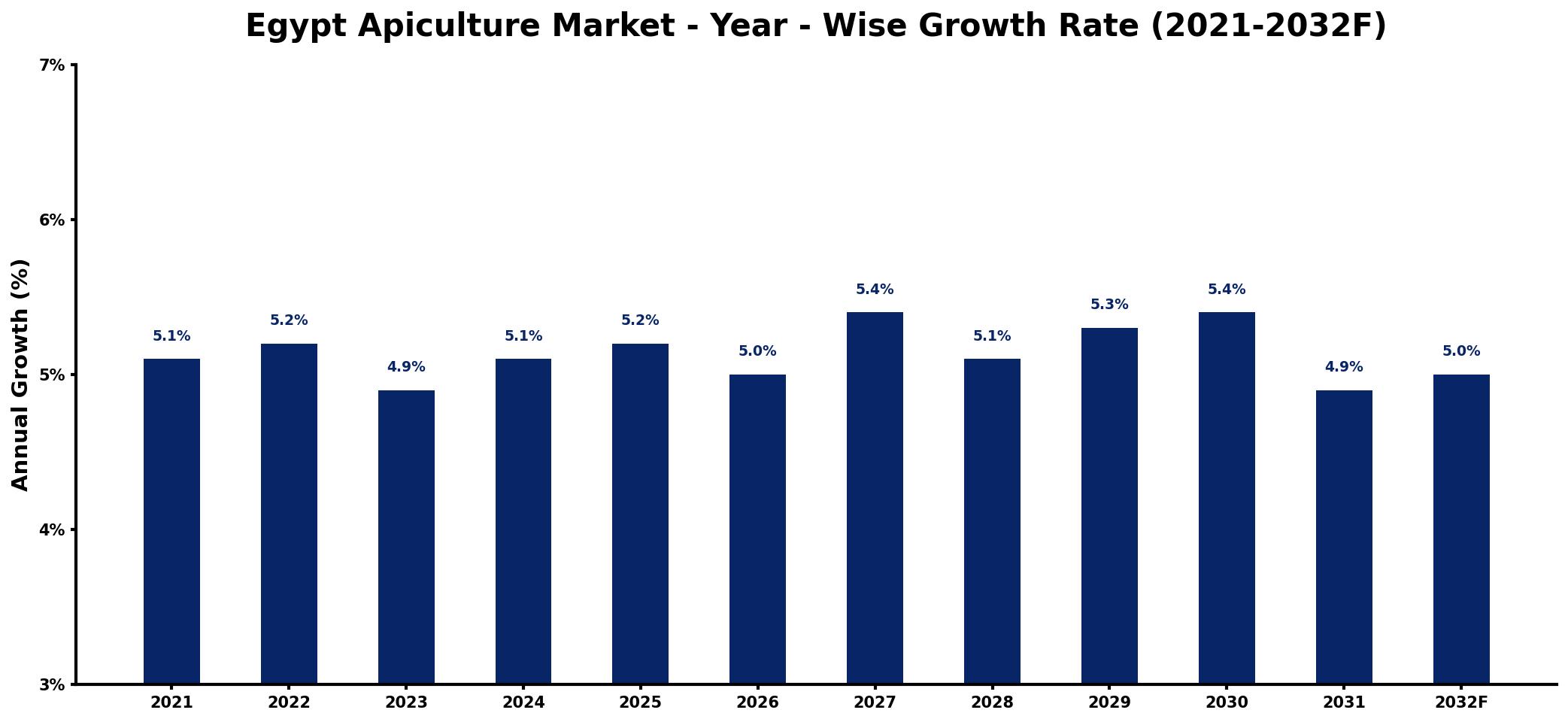
The table below presents the year‑wise growth rates along with the key drivers influencing the market
| Year | Growth Rate | Major Drivers |
| 2021 | 5.1% | Rising health consciousness among consumers |
| 2022 | 5.2% | Increased export opportunities for honey |
| 2023 | 4.9% | Growing popularity of natural sweeteners |
| 2024 | 5.1% | Expansion of organic farming practices |
| 2025 | 5.2% | Investment in local beekeeping initiatives |
| 2026 | 5.0% | Emergence of new distribution channels |
| 2027 | 5.4% | Strengthening demand for sustainable products |
| 2028 | 5.1% | Enhanced consumer education on benefits |
| 2029 | 5.3% | Growth of eco-friendly packaging solutions |
| 2030 | 5.4% | Surge in culinary tourism activities |
| 2031 | 4.9% | Increased interest in local sourcing |
| 2032 | 5.0% | Development of innovative product offerings |
Note: Market size estimations and growth projections presented in this report are based on 6Wresearch's proprietary forecasting methodology, utilizing the latest available industry data, government publications, and primary research inputs.
Egypt Apiculture Market Synopsis
In recent years, the Egypt Apiculture Market has witnessed a remarkable surge, primarily driven by a burgeoning interest in sustainable agriculture and the health benefits associated with honey and hive products. The country's diverse ecological systems and favorable climate conditions create an optimal environment for thriving apiaries, enabling both small-scale and larger commercial beekeeping operations to flourish.
With an increasing number of small-scale beekeepers entering the sector, the market is evolving toward a more sustainable and consumer-oriented approach. Government support in the form of training programs and financial assistance is fostering this development, further positioning Egypt as a competitive player in the global honey market.
Egypt Apiculture Market Key Takeaways
- The Egypt Apiculture Market is set for substantial growth due to rising global demand for organic honey.
- Small-scale beekeeping is a significant market component, reflecting a shift towards localized production.
- Government incentives are enhancing beekeeping infrastructure and practices across the nation.
- Emerging trends indicate increased consumer awareness about the health benefits of bee products.
- There are expanding opportunities for exporters targeting markets in Europe and the Middle East.
Evaluation of Restraints in Egypt Apiculture Market
Despite the promising outlook, several restraints hinder the Egypt Apiculture Market's growth. Climate change poses a significant threat, leading to unpredictable weather patterns that disrupt bee foraging and honey production. Furthermore, the widespread use of pesticides in agriculture adversely affects bee health, ultimately compromising the quality of honey. Additionally, many beekeepers lack access to modern equipment and training, which inhibits productivity and quality improvements. Addressing these challenges is critical to ensuring the long-term viability and competitiveness of Egypt's apiculture industry.
Egypt Apiculture Market Trends
The Egypt Apiculture Market is currently influenced by several notable trends. Consumers are increasingly leaning towards organic honey and bee products, driven by heightened awareness of health benefits associated with natural foods. Furthermore, modern beekeeping practices are gaining traction as beekeepers adopt new technologies to enhance honey quality and productivity. The growing popularity of beekeeping as a hobby is also evident, with more individuals recognizing it as a potential source of supplementary income. Additionally, sustainable practices aimed at protecting bee populations are becoming a focal point for many stakeholders.
Egypt Apiculture Market Opportunities
Investment opportunities within the Egypt Apiculture Market are particularly promising due to its favorable climate and growing consumer demand. Egypt's strategic geographical location allows for easy access to burgeoning markets in Europe and the Middle East, making honey exports a lucrative venture. Additionally, there is ample potential for developing value-added products like health supplements and cosmetic items derived from bee products. Fostering modern practices and providing support to local beekeepers can significantly enhance production capabilities, positioning Egypt as a competitive player in the global apiculture market.
Government Initiatives in the Egypt Apiculture Market
The Egyptian government has been proactive in supporting the apiculture market through various initiatives. The Ministry of Agriculture and Land Reclamation offers subsidies and financial assistance to beekeepers, which facilitates the purchase of beehives and necessary equipment. Furthermore, stringent regulations have been established to ensure honey quality and safety, which is critical for both domestic consumption and export. Research and development initiatives aimed at improving bee health and productivity are also gaining traction, reflecting the government's commitment to nurturing a sustainable apiculture sector.
Future Insights of the Egypt Apiculture Market
Looking ahead to 2026-2032, the Egypt Apiculture Market is poised for steady growth driven by rising consumer awareness of the health benefits associated with honey and other bee products. The market will likely see a continued emphasis on sustainable practices, with government support playing a pivotal role in fostering these initiatives. While challenges such as climate change and pest management persist, addressing these issues through innovation and collaboration will be vital for ensuring a thriving apiculture industry. The export potential of Egyptian honey remains a significant opportunity for market expansion.
Egypt Apiculture Market Latest Developments (2025 - 2026)
In the recent months leading up to mid-2026, the Egypt Apiculture Market has been witnessing a notable shift towards sustainable practices, with increased emphasis on organic production methods. Training programs for local beekeepers have been expanded, focusing on modern techniques and pest management strategies. Additionally, several partnerships between government entities and private stakeholders have been initiated to further research and development, ultimately enhancing product quality and market competitiveness.
Egypt Apiculture Market - Key Attractiveness of the Report
- 10 Years of Market Numbers
- Historical Data Starting from 2022 to 2025
- Base Year: 2025
- Forecast Data until 2032
- Key Performance Indicators Impacting the Market
- Major Upcoming Developments and Projects
Key Highlights of the Report:
- Egypt Apiculture Market Outlook
- Market Size of Egypt Apiculture Market, 2025
- Forecast of Egypt Apiculture Market, 2032
- Historical Data and Forecast of Egypt Apiculture Revenues & Volume for the Period 2022-2032F
- Egypt Apiculture Market Trend Evolution
- Egypt Apiculture Market Drivers and Challenges
- Egypt Apiculture Price Trends
- Egypt Apiculture Porter's Five Forces
- Egypt Apiculture Industry Life Cycle
- Historical Data and Forecast of Egypt Apiculture Market Revenues & Volume By Product Type for the Period 2022-2032F
- Historical Data and Forecast of Egypt Apiculture Market Revenues & Volume By Honey for the Period 2022-2032F
- Historical Data and Forecast of Egypt Apiculture Market Revenues & Volume By Beeswax for the Period 2022-2032F
- Historical Data and Forecast of Egypt Apiculture Market Revenues & Volume By Live-bees for the Period 2022-2032F
- Historical Data and Forecast of Egypt Apiculture Market Revenues & Volume By Others for the Period 2022-2032F
- Historical Data and Forecast of Egypt Apiculture Market Revenues & Volume By Application for the Period 2022-2032F
- Historical Data and Forecast of Egypt Apiculture Market Revenues & Volume By Medical for the Period 2022-2032F
- Historical Data and Forecast of Egypt Apiculture Market Revenues & Volume By Food Beverages for the Period 2022-2032F
- Historical Data and Forecast of Egypt Apiculture Market Revenues & Volume By Cosmetics for the Period 2022-2032F
- Historical Data and Forecast of Egypt Apiculture Market Revenues & Volume By Others for the Period 2022-2032F
- Egypt Apiculture Import Export Trade Statistics
- Market Opportunity Assessment By Product Type
- Market Opportunity Assessment By Application
- Egypt Apiculture Top Companies Market Share
- Egypt Apiculture Competitive Benchmarking By Technical and Operational Parameters
- Egypt Apiculture Company Profiles
- Egypt Apiculture Key Strategic Recommendations






































