Finland Conductive Yarn Market Size (2020-2030)
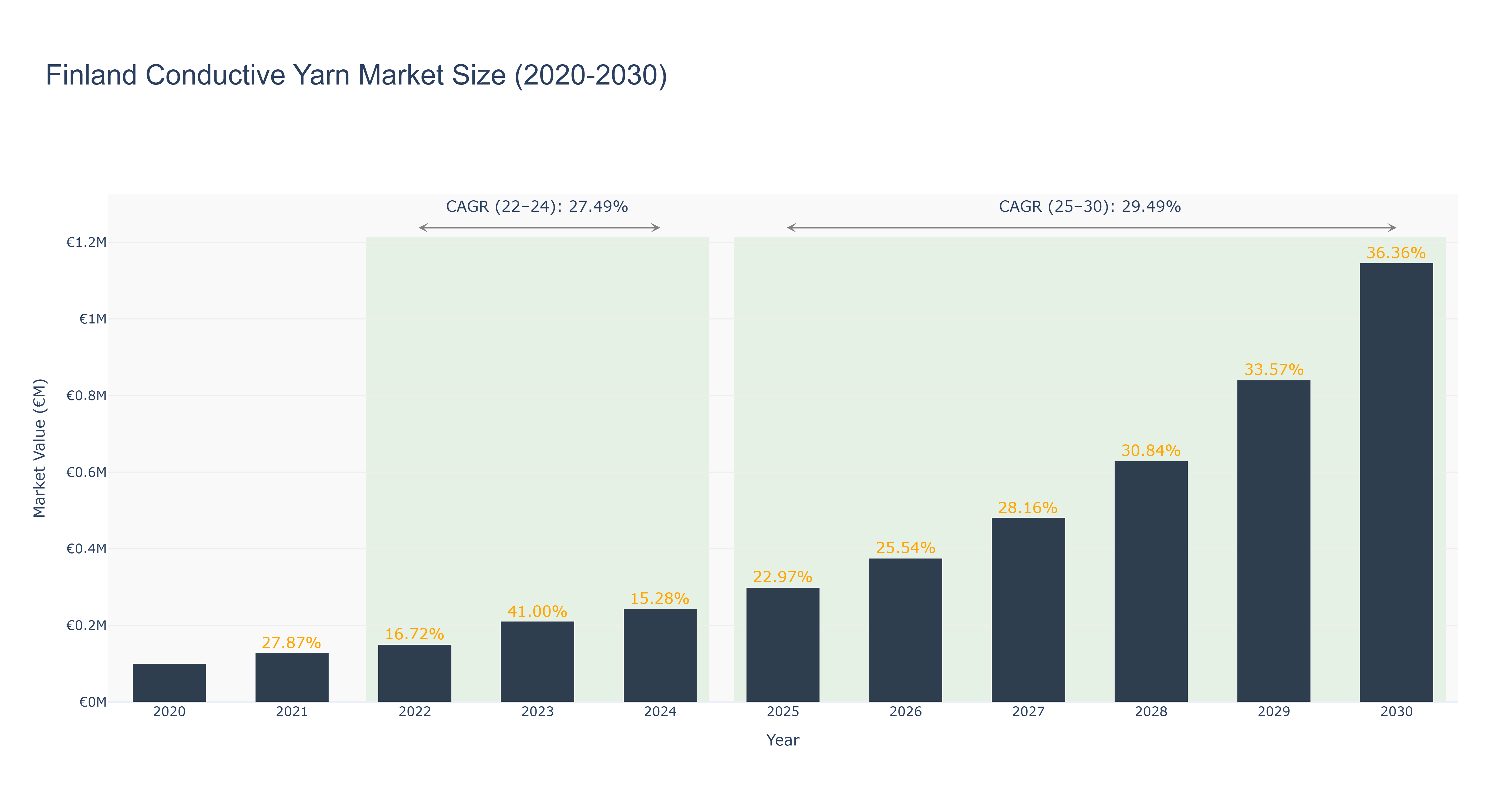
Finland Conductive Yarn Market has shown a remarkable growth trend over the years. The market peaked at €1.15 million in 2030, with a steady increase from €0.10 million in 2020. Notable growth phases include a substantial rise from €0.15 million in 2022 to €0.24 million in 2024, driven by a CAGR of 27.49% attributed to technological advancements. From 2025 to 2030, the market is forecasted to expand further, with a CAGR of 29.49%, reflecting the increasing demand for conductive yarn in various industries. The market's growth is primarily fueled by the rising adoption of smart textiles and wearable technology, driving innovation and product development. Looking ahead, Finland is set to witness new investments in research and development projects focusing on sustainable conductive yarn solutions, positioning the market for sustained growth and competitiveness in the global landscape.
Finland Conductive Yarn Market: Production & Trade Performance (2019-2025)
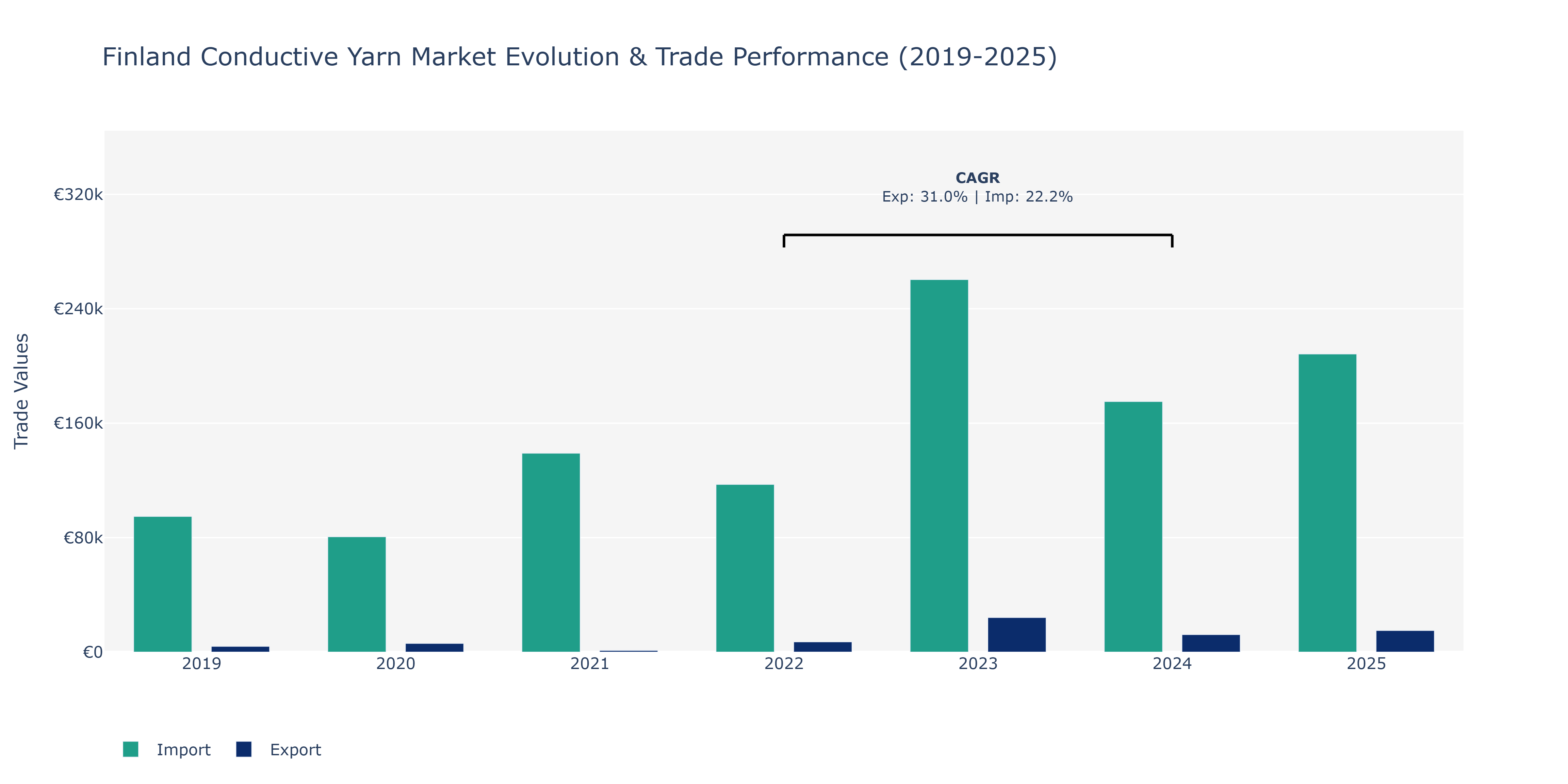
In the Finland Conductive Yarn Market, exports displayed noticeable fluctuations over the years. Starting at €3.94 thousand in 2019, there was a substantial increase to €7.09 thousand in 2022, followed by a significant drop to €24.07 thousand in 2023, and a partial recovery to €12.18 thousand in 2024. The peak export value was observed in 2022. On the other hand, imports consistently increased from €94.8 thousand in 2019 to €208.37 thousand in 2025. The import values peaked in 2025, showcasing a steady upward trend. The surge in exports in 2022 could be attributed to the growing demand for conductive yarns in electronic textiles and wearable technology. Conversely, the fluctuations in exports in 2023 and 2024 might be influenced by global market dynamics impacting the yarn industry. The continuous rise in imports reflects Finland's reliance on imported raw materials for its textile industry, indicating strong domestic manufacturing activities supported by external sourcing strategies.
Key Highlights of the Report:
- Finland Conductive Yarn Market Outlook
- Market Size of Finland Conductive Yarn Market, 2024
- Forecast of Finland Conductive Yarn Market, 2031
- Historical Data and Forecast of Finland Conductive Yarn Revenues & Volume for the Period 2021-2031
- Finland Conductive Yarn Market Trend Evolution
- Finland Conductive Yarn Market Drivers and Challenges
- Finland Conductive Yarn Price Trends
- Finland Conductive Yarn Porter`s Five Forces
- Finland Conductive Yarn Industry Life Cycle
- Historical Data and Forecast of Finland Conductive Yarn Market Revenues & Volume By ProductType for the Period 2021-2031
- Historical Data and Forecast of Finland Conductive Yarn Market Revenues & Volume By Metallic Type for the Period 2021-2031
- Historical Data and Forecast of Finland Conductive Yarn Market Revenues & Volume By Carbon-Based Type for the Period 2021-2031
- Historical Data and Forecast of Finland Conductive Yarn Market Revenues & Volume By Metal Compound Type for the Period 2021-2031
- Historical Data and Forecast of Finland Conductive Yarn Market Revenues & Volume By Application for the Period 2021-2031
- Historical Data and Forecast of Finland Conductive Yarn Market Revenues & Volume By Anti-Static Fabric for the Period 2021-2031
- Historical Data and Forecast of Finland Conductive Yarn Market Revenues & Volume By Signal Transmission for the Period 2021-2031
- Historical Data and Forecast of Finland Conductive Yarn Market Revenues & Volume By Cellphone Protective Cover for the Period 2021-2031
- Finland Conductive Yarn Import Export Trade Statistics
- Market Opportunity Assessment By ProductType
- Market Opportunity Assessment By Application
- Finland Conductive Yarn Top Companies Market Share
- Finland Conductive Yarn Competitive Benchmarking By Technical and Operational Parameters
- Finland Conductive Yarn Company Profiles
- Finland Conductive Yarn Key Strategic Recommendations






































