Finland Polyester Spun Yarn Market Size (2020-2030)
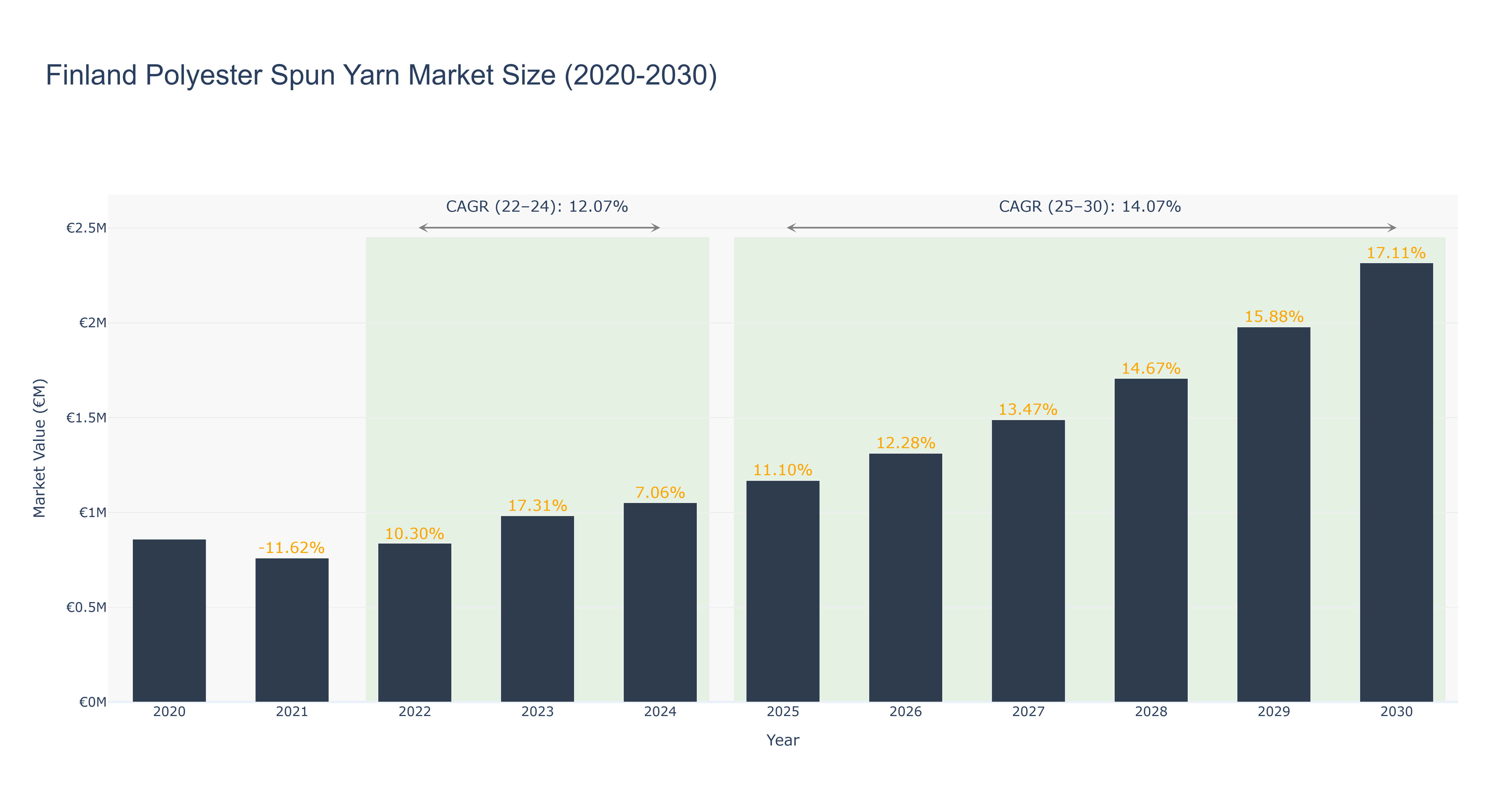
Finland Polyester Spun Yarn Market has shown a steady growth trend over the years. The peak market size of €2.32 million is forecasted for 2030, with a notable increase in market size from €0.86 million in 2020 to €1.05 million in 2024. The market is expected to continue its upward trajectory, reaching €2.32 million by 2030 with a CAGR of 14.07% from 2025 to 2030. The growth can be attributed to increasing demand for polyester spun yarn in various industries, such as textiles and automotive, driven by factors like durability and cost-effectiveness. Looking ahead, Finland is set to launch a sustainability initiative in the textile sector, promoting eco-friendly yarn production methods to align with global environmental standards. Industry drivers for the Finland Polyester Spun Yarn Market include the rising preference for synthetic fibers over natural fibers due to their versatility and performance characteristics, as well as the growing textile manufacturing sector in the region. The upcoming sustainability initiative in Finland's textile sector is expected to further boost the demand for polyester spun yarn, positioning the market for continued growth and innovation in the future.
Finland Polyester Spun Yarn Market: Production & Trade Performance (2019-2025)
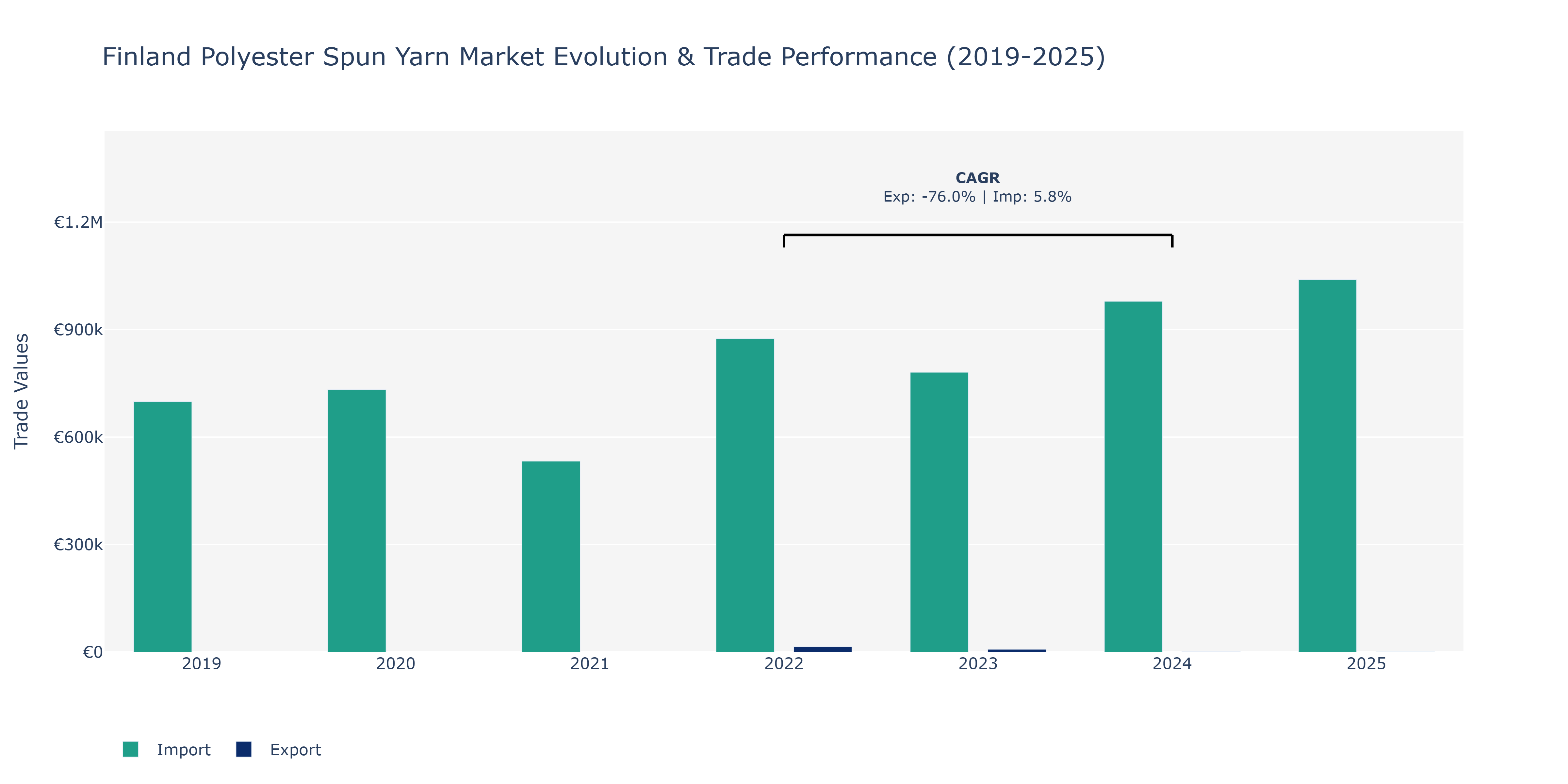
The Finland Polyester Spun Yarn Market saw notable fluctuations in both exports and imports from 2019 to 2025. In 2019, exports were valued at €20 million but experienced a sharp decline in 2020 to €17 million before rebounding significantly to €32 million in 2021. This surge continued in 2022, reaching €14.62 thousand, showcasing a substantial peak. However, the trend reversed in the following years, with exports plummeting to €7.7 thousand in 2023 and further dropping to €0.8 thousand in 2024, indicating a steep decline. Imports, on the other hand, demonstrated a more stable trajectory, increasing from €699.22 thousand in 2019 to €1.04 million in 2025. These fluctuations can be attributed to various factors such as changing global demand for polyester products, currency exchange rates affecting pricing competitiveness, and shifts in domestic production capacity. The rise in imports could be linked to growing demand for polyester spun yarn in Finland's textile industry, highlighting the market's reliance on international sourcing to meet local manufacturing needs.
Key Highlights of the Report:
- Finland Polyester Spun Yarn Market Outlook
- Market Size of Finland Polyester Spun Yarn Market, 2024
- Forecast of Finland Polyester Spun Yarn Market, 2031
- Historical Data and Forecast of Finland Polyester Spun Yarn Revenues & Volume for the Period 2021-2031
- Finland Polyester Spun Yarn Market Trend Evolution
- Finland Polyester Spun Yarn Market Drivers and Challenges
- Finland Polyester Spun Yarn Price Trends
- Finland Polyester Spun Yarn Porter`s Five Forces
- Finland Polyester Spun Yarn Industry Life Cycle
- Historical Data and Forecast of Finland Polyester Spun Yarn Market Revenues & Volume By Types for the Period 2021-2031
- Historical Data and Forecast of Finland Polyester Spun Yarn Market Revenues & Volume By Recycled Spun Yarn for the Period 2021-2031
- Historical Data and Forecast of Finland Polyester Spun Yarn Market Revenues & Volume By Non-recycled Spun Yarn for the Period 2021-2031
- Historical Data and Forecast of Finland Polyester Spun Yarn Market Revenues & Volume By Fields for the Period 2021-2031
- Historical Data and Forecast of Finland Polyester Spun Yarn Market Revenues & Volume By Apparel for the Period 2021-2031
- Historical Data and Forecast of Finland Polyester Spun Yarn Market Revenues & Volume By Household Textiles for the Period 2021-2031
- Historical Data and Forecast of Finland Polyester Spun Yarn Market Revenues & Volume By Others for the Period 2021-2031
- Finland Polyester Spun Yarn Import Export Trade Statistics
- Market Opportunity Assessment By Types
- Market Opportunity Assessment By Fields
- Finland Polyester Spun Yarn Top Companies Market Share
- Finland Polyester Spun Yarn Competitive Benchmarking By Technical and Operational Parameters
- Finland Polyester Spun Yarn Company Profiles
- Finland Polyester Spun Yarn Key Strategic Recommendations






































