France Metal Fabrication Market Top 5 Importing Countries and Market Competition (HHI) Analysis
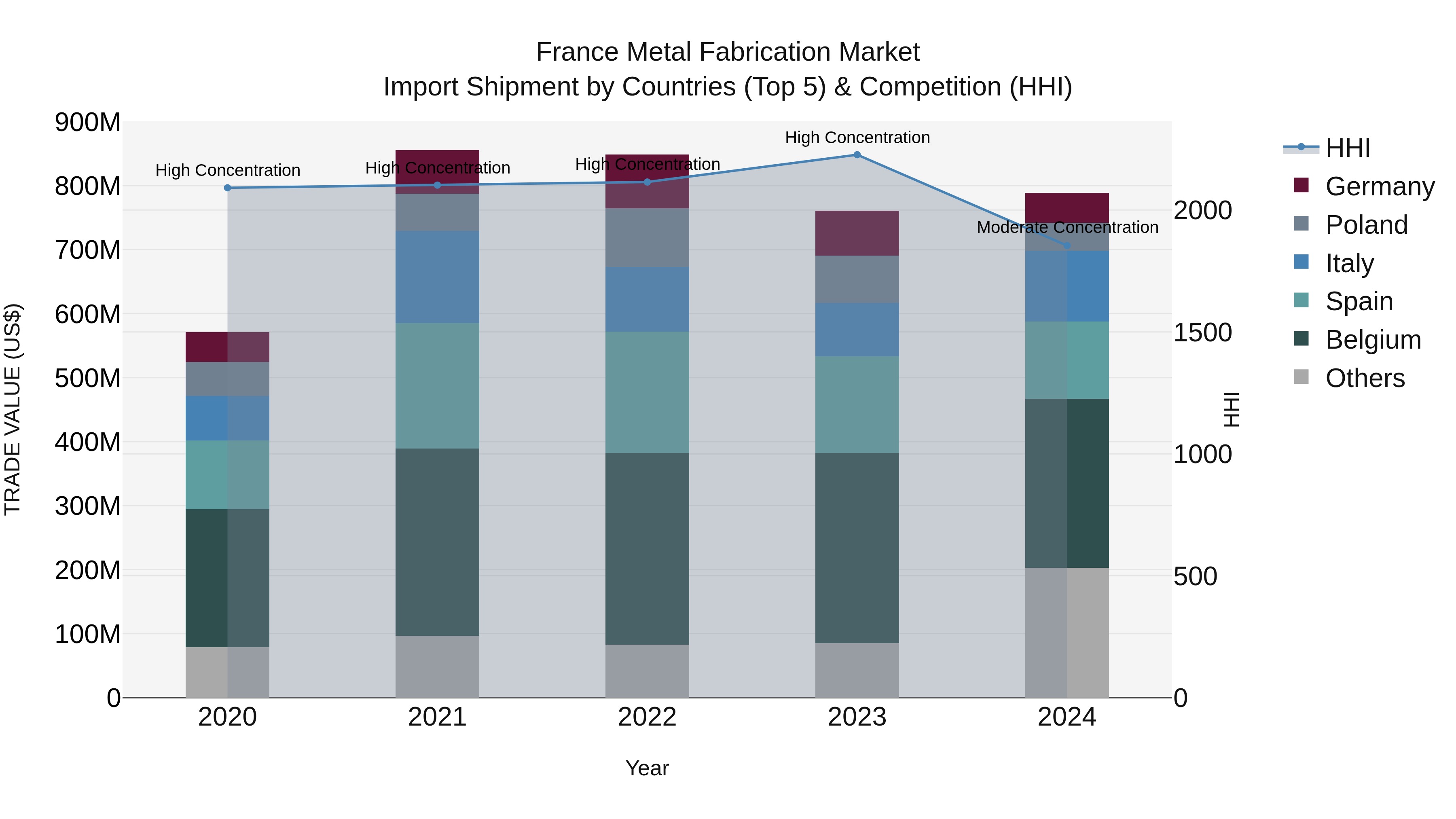
France`s metal fabrication import market experienced a notable shift in 2024, with top exporting countries including Belgium, Spain, China, Italy, and Germany. The market moved from high concentration in 2023 to a more moderate level in 2024, indicating increased diversification. With a solid compound annual growth rate of 8.39% from 2020 to 2024 and a growth rate of 3.59% in 2024, the sector shows resilience and potential for continued expansion. This data suggests a dynamic and evolving landscape for metal fabrication imports in France.
France Metal Fabrication Market Overview
France metal fabrication market offers a wide range of services for shaping, cutting, bending, and assembling metal components and structures for various industrial and construction projects. Metal fabrication processes include welding, machining, forming, and finishing to create custom-made products such as structural steel frames, sheet metal enclosures, and machine parts. With a focus on precision engineering and quality craftsmanship, France metal fabrication companies deliver tailored solutions to meet the specific needs and specifications of their customers.
Drivers of the market
The France Metal Fabrication Market is influenced by factors such as construction activity, infrastructure projects, and industrial manufacturing requirements. Metal fabrication services encompass processes such as cutting, bending, welding, and assembly to create custom metal components and structures for diverse applications in construction, transportation, machinery, and consumer goods. With industries seeking to optimize production processes, reduce lead times, and improve product quality, there`s a continuous demand for metal fabrication services in the French market.
Challenges of the market
The France metal fabrication market faces challenges related to technological advancements, skilled labor shortages, and market competition. Metal fabrication encompasses processes such as cutting, bending, welding, and machining to produce components and structures for industries such as construction, automotive, and machinery, but its market dynamics are influenced by factors such as material costs, labor productivity, and customer demands for quality and customization. Moreover, ensuring compliance with safety regulations, adopting digital technologies such as CAD/CAM software and automation, and addressing environmental sustainability concerns pose ongoing challenges for fabricators and manufacturers in this market.
Government Policy of the market
Government regulations in France govern metal fabrication activities, including standards for equipment safety, worker protection, and environmental compliance. Regulations address welding processes, material handling, and emissions control to minimize occupational hazards and environmental impacts. Additionally, industry certification programs and training initiatives ensure compliance with regulatory requirements and industry best practices.
Key Highlights of the Report:
- France Metal Fabrication Market Outlook
- Market Size of France Metal Fabrication Market, 2024
- Forecast of France Metal Fabrication Market, 2031
- Historical Data and Forecast of France Metal Fabrication Revenues & Volume for the Period 2021-2031
- France Metal Fabrication Market Trend Evolution
- France Metal Fabrication Market Drivers and Challenges
- France Metal Fabrication Price Trends
- France Metal Fabrication Porter's Five Forces
- France Metal Fabrication Industry Life Cycle
- Historical Data and Forecast of France Metal Fabrication Market Revenues & Volume By End-user Industry for the Period 2021-2031
- Historical Data and Forecast of France Metal Fabrication Market Revenues & Volume By Manufacturing for the Period 2021-2031
- Historical Data and Forecast of France Metal Fabrication Market Revenues & Volume By Power and Utilities for the Period 2021-2031
- Historical Data and Forecast of France Metal Fabrication Market Revenues & Volume By Construction for the Period 2021-2031
- Historical Data and Forecast of France Metal Fabrication Market Revenues & Volume By Oil and Gas for the Period 2021-2031
- Historical Data and Forecast of France Metal Fabrication Market Revenues & Volume By Other End-user Industries for the Period 2021-2031
- Historical Data and Forecast of France Metal Fabrication Market Revenues & Volume By Metal Folding for the Period 2021-2031
- Historical Data and Forecast of France Metal Fabrication Market Revenues & Volume By Product category for the Period 2021-2031
- Historical Data and Forecast of France Metal Fabrication Market Revenues & Volume By Structural steel fabrication for the Period 2021-2031
- Historical Data and Forecast of France Metal Fabrication Market Revenues & Volume By Process Equipment Fabrication for the Period 2021-2031
- France Metal Fabrication Import Export Trade Statistics
- Market Opportunity Assessment By End-user Industry
- Market Opportunity Assessment By Product category
- France Metal Fabrication Top Companies Market Share
- France Metal Fabrication Competitive Benchmarking By Technical and Operational Parameters
- France Metal Fabrication Company Profiles
- France Metal Fabrication Key Strategic Recommendations






































