France Milk Chocolate Market Size (2020-2030)
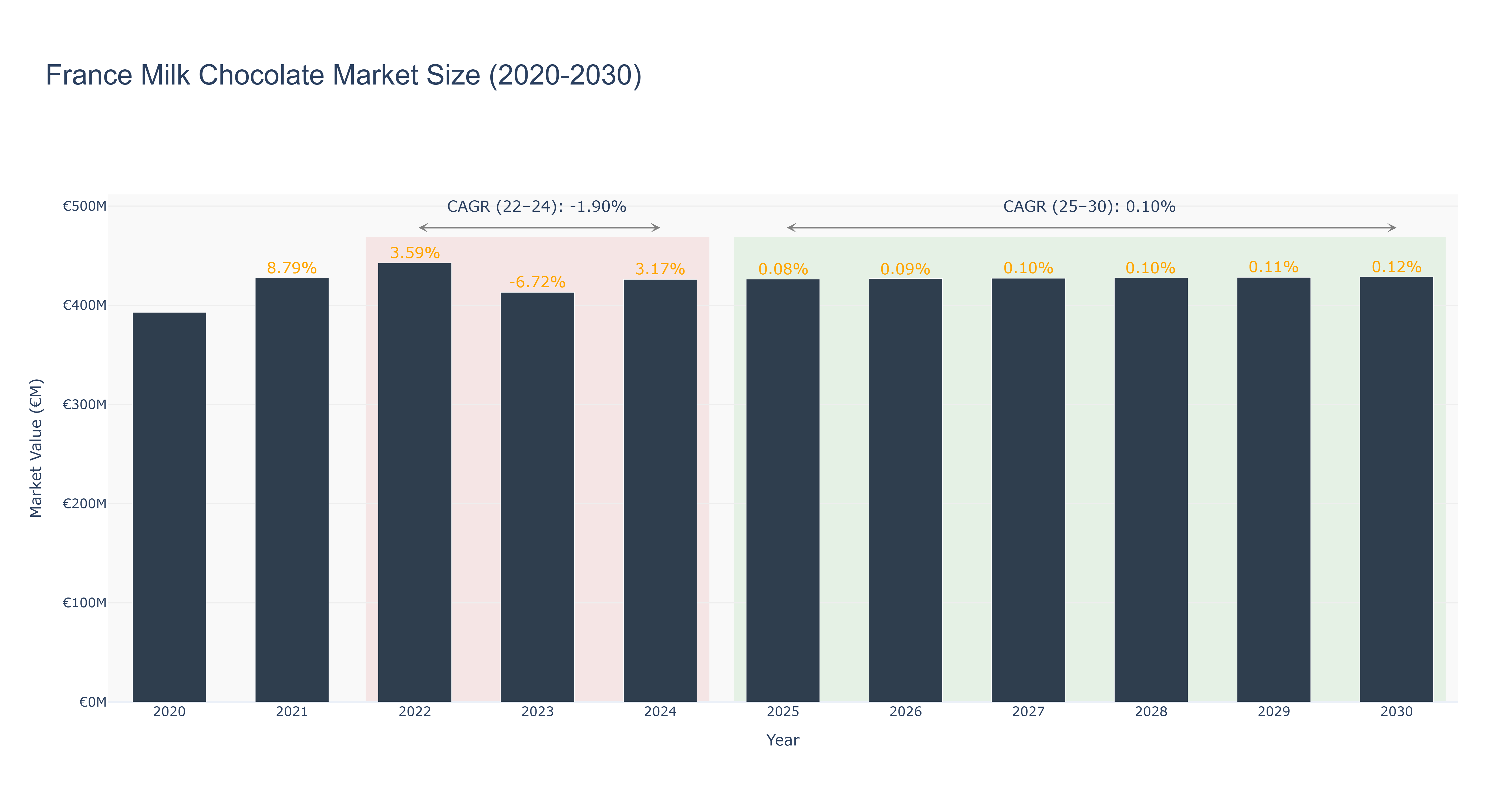
France Milk Chocolate Market has shown a fluctuating trend in recent years. The peak market size was €442.79 million in 2022, followed by a slight decline to €426.12 million in 2024. The forecasted market size is expected to grow steadily from €426.46 million in 2025 to €428.68 million in 2030, with a CAGR of -1.90% (2022-24) and 0.10% (2025-30). The market experienced a dip in 2023 due to economic uncertainties, but it has since stabilized and is projected to grow modestly in the coming years. Industry drivers such as increasing consumer demand for premium chocolates and innovative product offerings are expected to support this growth. Looking ahead, upcoming developments in sustainable sourcing practices and packaging initiatives are set to further enhance the market's competitiveness and sustainability.
France Milk Chocolate Market: Production & Trade Performance (2019-2025)
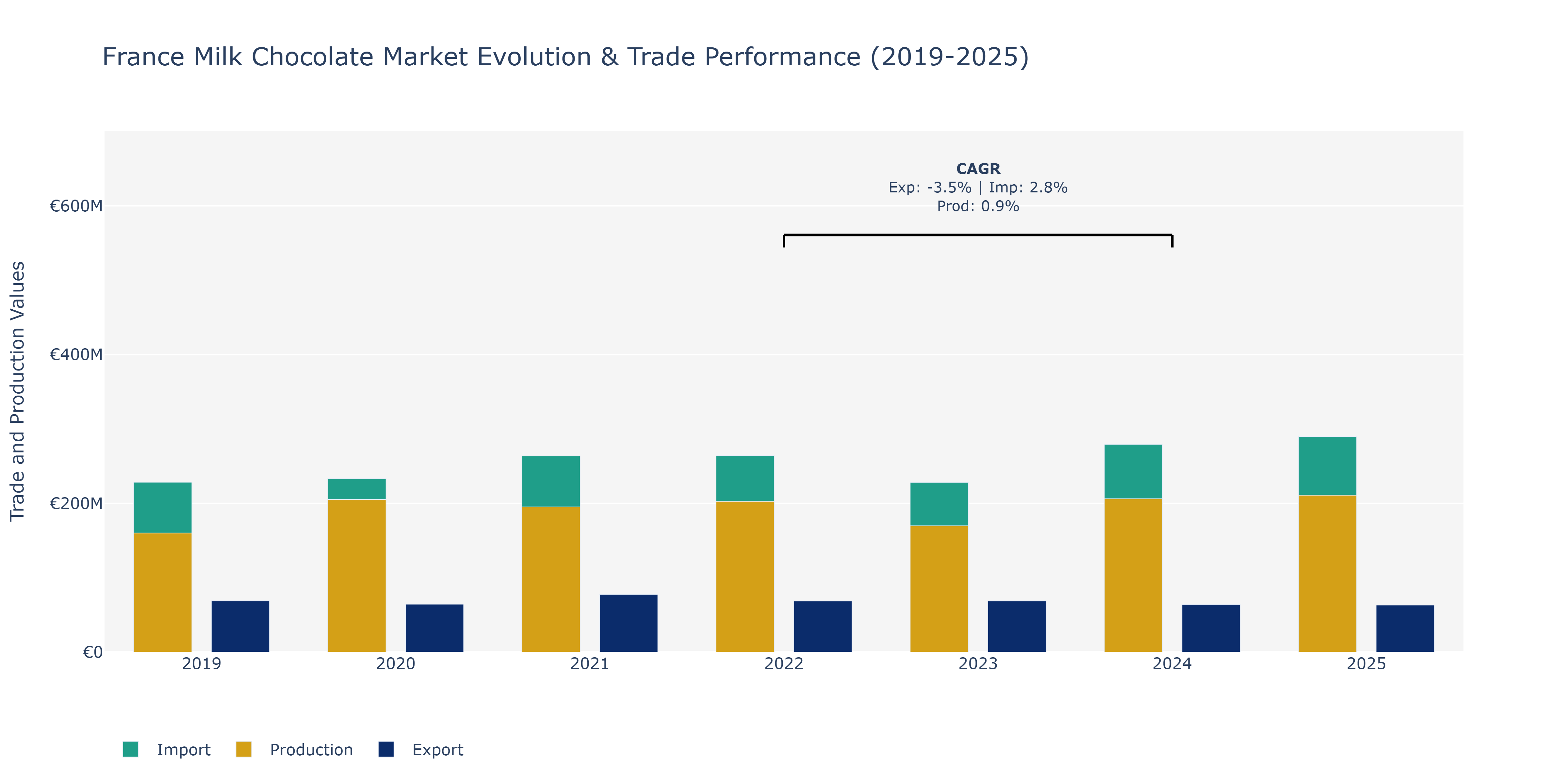
Between 2019 and 2025, the France Milk Chocolate Market saw fluctuations in exports, imports, and production. In 2021, exports peaked at €77.41 million before gradually declining in the following years, reaching €63.10 million in 2025. Imports, on the other hand, showed a steady increase from €228.28 million in 2019 to €289.95 million in 2025. Production levels peaked in 2025 at €210.87 million, showing an upward trend since 2019. The variations in exports can be attributed to changing consumer preferences, international trade agreements, and competitive pricing strategies. The consistent growth in imports may be due to increasing demand for premium chocolate products and the availability of a wide range of international brands in the market. The rise in production could be a result of technological advancements in manufacturing processes, leading to higher efficiency and output capacity in the industry. These trends reflect the dynamic nature of the market, necessitating strategic adaptations by key players to stay competitive in the evolving landscape.
France Milk Chocolate Market Overview
France milk chocolate market offers a wide range of chocolate products made with milk solids, cocoa solids, sugar, and flavorings, providing indulgent treats for consumers of all ages. Milk chocolate, known for its creamy texture and sweet flavor, is a popular confectionery choice for snacks, desserts, and gifts in France. With a focus on quality ingredients and artisanal craftsmanship, France chocolatiers and confectionery brands produce premium milk chocolate products with distinctive flavors, textures, and packaging to satisfy the discerning tastes of chocolate lovers nationwide.
Drivers of the market
The France Milk Chocolate Market is driven by factors such as consumer preferences for indulgent and premium chocolate products, the popularity of milk chocolate as a comfort food, and the demand for innovative flavor combinations and packaging designs. Milk chocolate, made from cocoa solids, milk solids, and sugar, offers a creamy and sweet taste profile that appeals to a wide range of consumers. With chocolatiers and confectionery companies focusing on product innovation, sustainability, and ethical sourcing practices, there`s a continuous demand for milk chocolate in the French market for everyday treats, gifts, and special occasions.
Challenges of the market
The France milk chocolate market faces challenges related to consumer preferences and health concerns regarding sugar and fat content, ensuring sustainable sourcing and ethical production practices for cocoa and dairy ingredients, and addressing market competition and price volatility. Milk chocolate is a popular confectionery product made from cocoa solids, milk solids, and sweeteners, but its market dynamics are influenced by factors such as flavor innovation, packaging design, and distribution channels. Moreover, ensuring product differentiation and brand loyalty, navigating regulatory requirements and labeling regulations, and adapting to changing consumer demographics and lifestyle trends pose ongoing challenges for chocolate manufacturers and retailers in this market.
Government Policy of the market
France government policies influence the milk chocolate market through regulations addressing food safety, labeling, and quality standards. Standards for chocolate composition, cocoa content, and labeling requirements ensure compliance with regulatory requirements and consumer expectations. Additionally, initiatives may promote sustainable cocoa sourcing, fair trade practices, and innovation in chocolate manufacturing to support the growth and competitiveness of the milk chocolate industry.
Key Attractiveness of the Report
- 10 Years of Market Numbers.
- Historical Data Starting from 2022 to 2025.
- Base Year: 2025
- Forecast Data until 2032.
- Key Performance Indicators Impacting the market.
- Major Upcoming Developments and Projects.
Key Highlights of the Report:
- France Milk Chocolate Market Outlook
- Market Size of France Milk Chocolate Market, 2025
- Forecast of France Milk Chocolate Market, 2032
- Historical Data and Forecast of France Milk Chocolate Revenues & Volume for the Period 2022-2032
- France Milk Chocolate Market Trend Evolution
- France Milk Chocolate Market Drivers and Challenges
- France Milk Chocolate Price Trends
- France Milk Chocolate Porter's Five Forces
- France Milk Chocolate Industry Life Cycle
- Historical Data and Forecast of France Milk Chocolate Market Revenues & Volume By Type for the Period 2022-2032
- Historical Data and Forecast of France Milk Chocolate Market Revenues & Volume By Nuts Milk Chocolate for the Period 2022-2032
- Historical Data and Forecast of France Milk Chocolate Market Revenues & Volume By Liqueur Milk Chocolate for the Period 2022-2032
- Historical Data and Forecast of France Milk Chocolate Market Revenues & Volume By Other for the Period 2022-2032
- Historical Data and Forecast of France Milk Chocolate Market Revenues & Volume By Distribution Channel for the Period 2022-2032
- Historical Data and Forecast of France Milk Chocolate Market Revenues & Volume By Supermarkets/Hypermarkets for the Period 2022-2032
- Historical Data and Forecast of France Milk Chocolate Market Revenues & Volume By Specialty Stores for the Period 2022-2032
- Historical Data and Forecast of France Milk Chocolate Market Revenues & Volume By Convenience Stores for the Period 2022-2032
- Historical Data and Forecast of France Milk Chocolate Market Revenues & Volume By Online Stores for the Period 2022-2032
- Historical Data and Forecast of France Milk Chocolate Market Revenues & Volume By Others for the Period 2022-2032
- Historical Data and Forecast of France Milk Chocolate Market Revenues & Volume By Application for the Period 2022-2032
- Historical Data and Forecast of France Milk Chocolate Market Revenues & Volume By Residential for the Period 2022-2032
- Historical Data and Forecast of France Milk Chocolate Market Revenues & Volume By Commercial for the Period 2022-2032
- France Milk Chocolate Import Export Trade Statistics
- Market Opportunity Assessment By Type
- Market Opportunity Assessment By Distribution Channel
- Market Opportunity Assessment By Application
- France Milk Chocolate Top Companies Market Share
- France Milk Chocolate Competitive Benchmarking By Technical and Operational Parameters
- France Milk Chocolate Company Profiles
- France Milk Chocolate Key Strategic Recommendations






































