Germany Oil and Gas Market: Import Trend Analysis
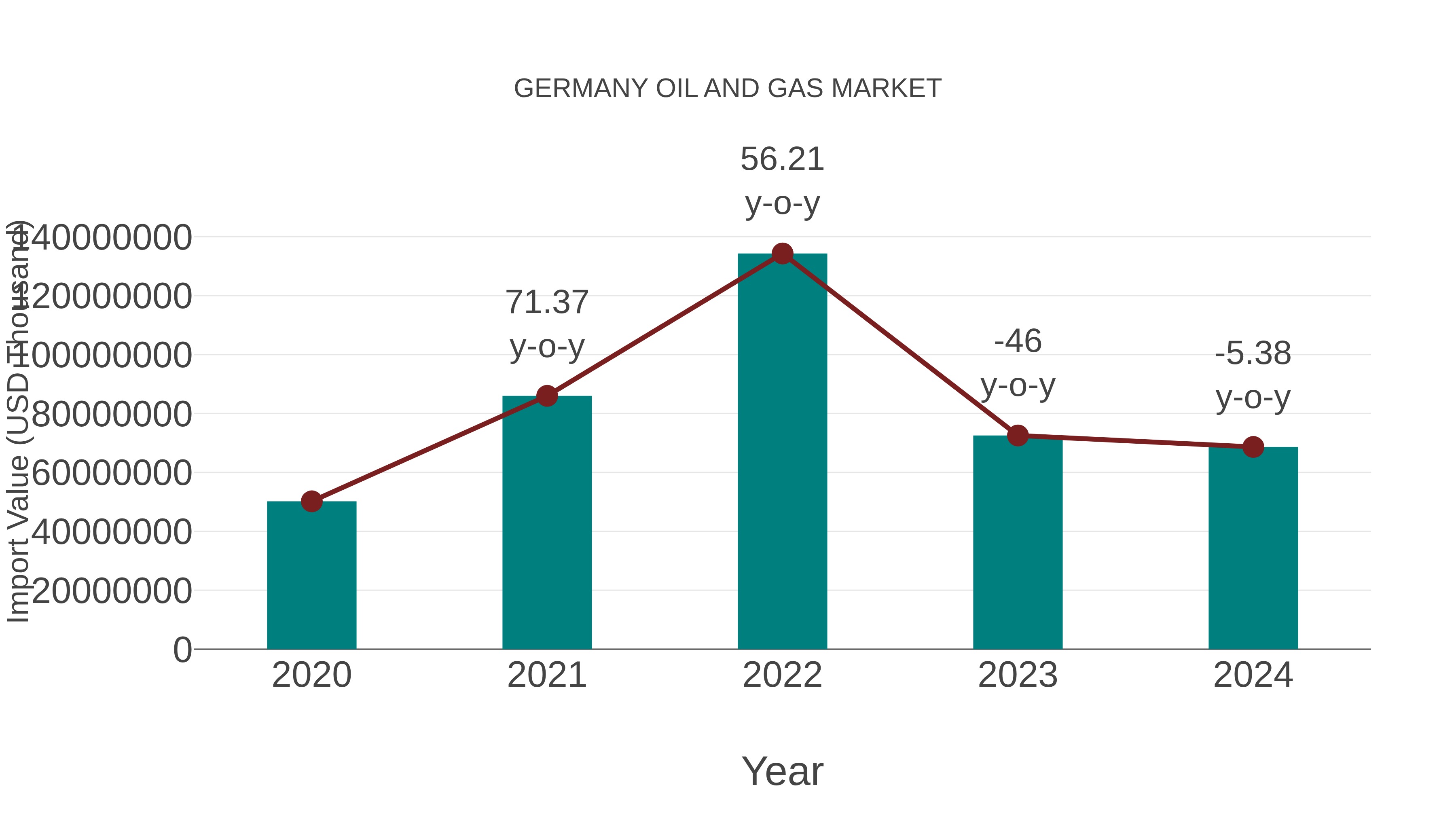
Germany`s oil and gas market experienced a -5.38% import trend from 2023 to 2024, with a Compound Annual Growth Rate (CAGR) of 8.15% from 2020 to 2024. This decline in import momentum could be attributed to shifts in global demand dynamics or changes in trade policies impacting market stability.
Germany Oil and Gas Market Synopsis
The Germany Oil and Gas Market is a significant player in the European energy sector, with a focus on reducing dependence on imported fossil fuels and transitioning towards renewable energy sources. The country has a well-established oil and gas infrastructure, with key players such as Wintershall Dea, RWE, and Uniper operating in the market. Germany`s energy policies, including the Energiewende initiative, aim to increase the share of renewable energy in the overall energy mix, which has led to a decline in domestic oil and gas production. However, the country remains a major importer of oil and gas, with a strong emphasis on energy security and sustainability. The market is also witnessing a shift towards cleaner energy solutions, such as natural gas and hydrogen, to reduce carbon emissions and meet environmental targets.
Germany Oil and Gas Market Trends
In the Germany Oil and Gas Market, the current trend is a shift towards renewable energy sources and sustainability practices. The country has set ambitious targets to reduce greenhouse gas emissions and increase the share of renewable energy in its energy mix. This has led to a growing focus on investments in wind, solar, and other clean energy technologies, with many oil and gas companies diversifying into renewable energy projects. Additionally, there is increasing emphasis on energy efficiency measures and digitalization in the industry to improve operational efficiency and reduce environmental impact. The market is also witnessing a gradual decline in conventional oil and gas production, prompting companies to explore new opportunities in the renewable energy sector to stay competitive and align with the country`s energy transition goals.
Germany Oil and Gas Market Challenges
In the Germany Oil and Gas Market, some of the key challenges faced include stringent environmental regulations, increasing competition from renewable energy sources, and a decreasing domestic production of oil and gas. The industry is under pressure to reduce carbon emissions and transition towards cleaner energy sources, which poses a challenge for traditional oil and gas companies operating in the market. Additionally, Germany`s commitment to phasing out nuclear power and reducing reliance on fossil fuels further complicates the landscape for oil and gas companies. As a result, companies in the Germany Oil and Gas Market are facing the challenge of adapting to a rapidly changing energy mix while maintaining profitability and sustainability in the long term.
Germany Oil and Gas Market Investment Opportunities
In the Germany Oil and Gas market, there are several investment opportunities to consider. One option is investing in renewable energy sources, such as offshore wind farms, as Germany continues to shift towards cleaner energy sources. Another opportunity lies in investing in technology and innovation within the oil and gas sector, particularly in the development of efficient extraction methods and environmental sustainability solutions. Additionally, investing in pipeline infrastructure and storage facilities can be lucrative due to Germany`s strategic location as a key energy hub in Europe. Overall, diversifying investments across different segments of the oil and gas market in Germany can help mitigate risks and capitalize on the evolving energy landscape in the region.
Germany Oil and Gas Market Future Outlook
The future outlook for the Germany Oil and Gas Market appears to be transitioning towards a more sustainable energy landscape, driven by increased focus on renewable sources and decarbonization efforts. The country`s commitment to phasing out coal and nuclear energy in favor of renewable alternatives is likely to impact the demand for traditional oil and gas products. However, Germany remains a significant consumer of natural gas and oil, indicating continued relevance for these resources in the short to medium term. The market is expected to witness growth in areas such as biofuels, hydrogen, and offshore wind energy, reflecting the broader global trend towards clean energy solutions. Companies operating in the oil and gas sector in Germany should consider diversifying their portfolios to align with the country`s evolving energy priorities.
Key Highlights of the Report:
- Germany Oil and Gas Market Outlook
- Market Size of Germany Oil and Gas Market, 2025
- Forecast of Germany Oil and Gas Market, 2032
- Historical Data and Forecast of Germany Oil and Gas Revenues & Volume for the Period 2022 - 2032F
- Germany Oil and Gas Market Trend Evolution
- Germany Oil and Gas Market Drivers and Challenges
- Germany Oil and Gas Price Trends
- Germany Oil and Gas Porter's Five Forces
- Germany Oil and Gas Industry Life Cycle
- Historical Data and Forecast of Germany Oil and Gas Market Revenues & Volume By Type for the Period 2022 - 2032F
- Historical Data and Forecast of Germany Oil and Gas Market Revenues & Volume By Upstream for the Period 2022 - 2032F
- Historical Data and Forecast of Germany Oil and Gas Market Revenues & Volume By Midstream for the Period 2022 - 2032F
- Historical Data and Forecast of Germany Oil and Gas Market Revenues & Volume By Downstream for the Period 2022 - 2032F
- Germany Oil and Gas Import Export Trade Statistics
- Market Opportunity Assessment By Type
- Germany Oil and Gas Top Companies Market Share
- Germany Oil and Gas Competitive Benchmarking By Technical and Operational Parameters
- Germany Oil and Gas Company Profiles
- Germany Oil and Gas Key Strategic Recommendations






































