Germany RegTech Market Size & Growth Rate (2026-2032)
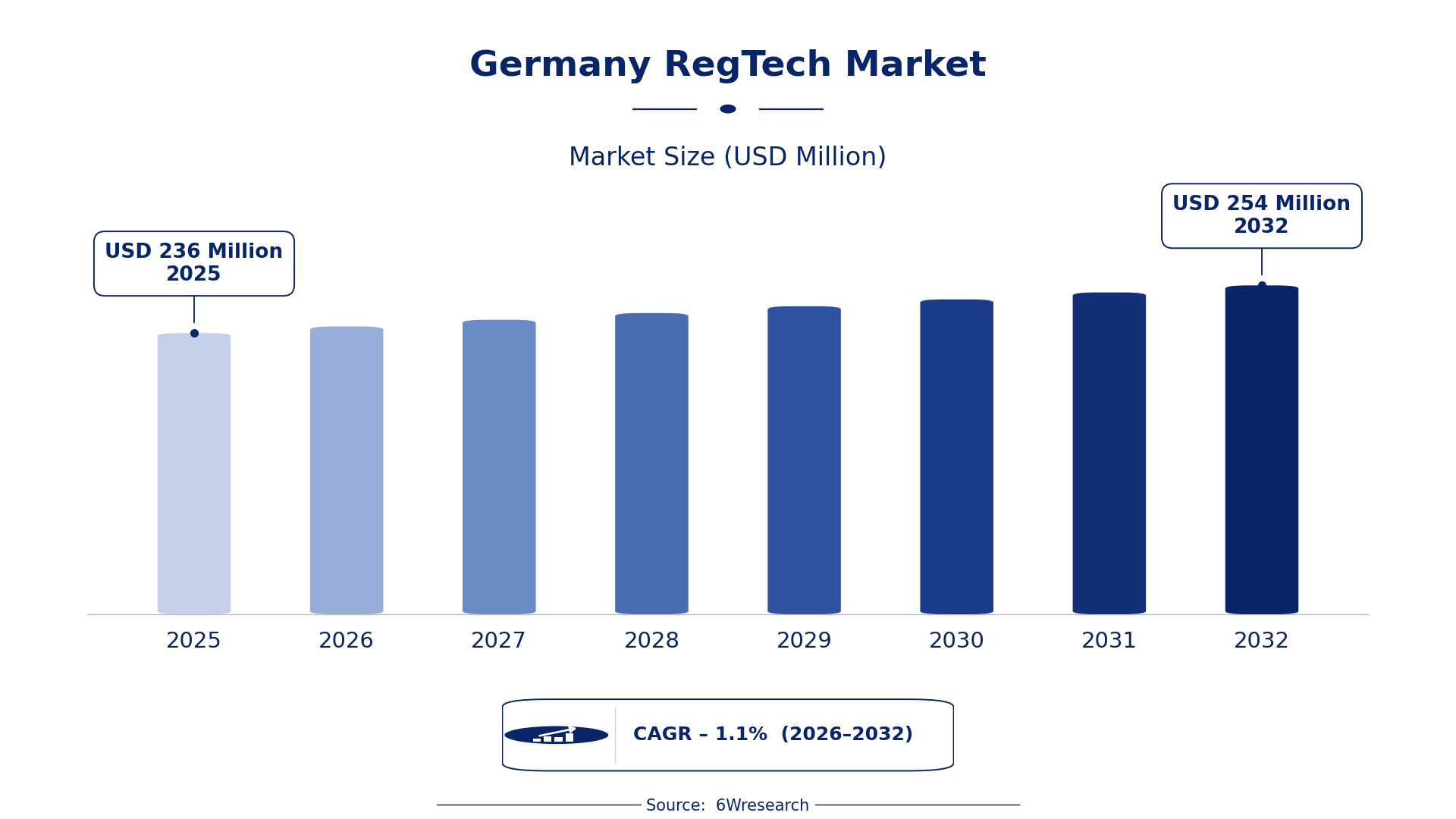
The Germany RegTech Market was estimated at USD 236 Million in 2025 and is projected to reach USD 254 Million by 2032, growing at a CAGR of 1.1% from 2026 to 2032.
Germany RegTech Market Synopsis
The primary force propelling the Germany RegTech market is the increasing complexity of regulatory requirements. Financial institutions are under pressure to not only comply with existing regulations but also adapt to emerging standards, particularly in data protection and anti-money laundering practices.
This scenario has led to a heightened demand for innovative RegTech solutions that can streamline compliance processes and mitigate operational risks. As banks, insurance firms, and other financial entities turn to technology, the market is witnessing a surge in the adoption of artificial intelligence and machine learning tools to enhance regulatory adherence.
Germany RegTech Market Year-wise Growth Rate and Key Drivers
This graph illustrates the annual growth rates of the Germany RegTech Market from 2021 to 2032, highlighting a steady upward trajectory and projected expansion over the forecast period.
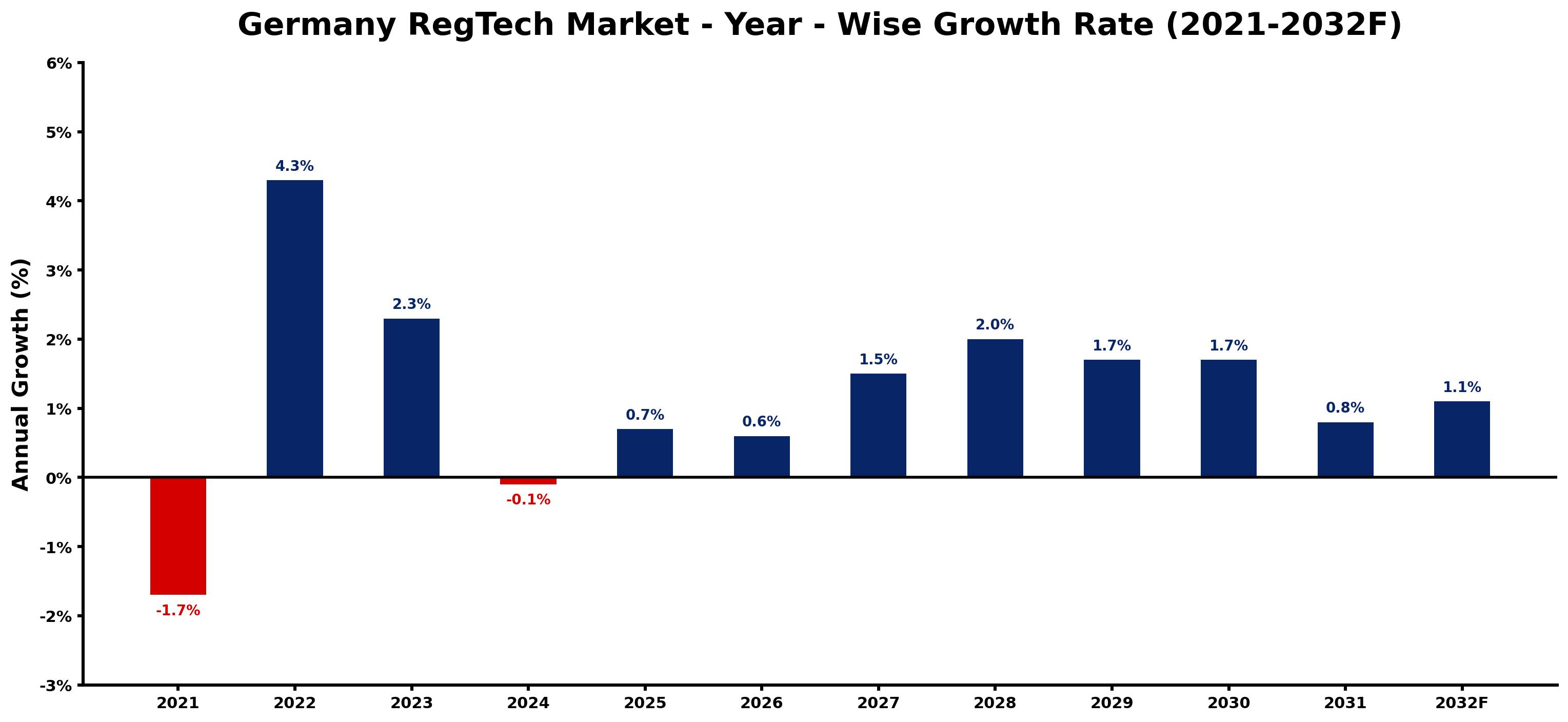
The table below presents the year‑wise growth rates along with the key drivers influencing the market
| Year | Growth Rate | Major Drivers |
| 2021 | -1.7% | Bafin's strict compliance requirements hindered innovation adoption. |
| 2022 | 4.3% | Implementation of EU's Digital Operational Resilience Act |
| 2023 | 2.3% | Rise in demand for KYC solutions post-financial scandals |
| 2024 | -0.1% | Declining investment in fintech due to rising interest rates. |
| 2025 | 0.7% | Growing focus on anti-money laundering regulations in Germany |
| 2026 | 0.6% | Increased cybersecurity mandates from BaFin for financial firms |
| 2027 | 1.5% | Emergence of AI-driven compliance tools gaining traction |
| 2028 | 2.0% | Support from German startups increasing financial technology innovation |
| 2029 | 1.7% | Regulatory changes facilitating easier fintech licensing processes |
| 2030 | 1.7% | Shift towards automated reporting solutions in financial services |
| 2031 | 0.8% | Increased investments in fraud detection technologies by banks |
| 2032 | 1.1% | Enhanced data privacy laws driving demand for compliance solutions |
Note: Market size estimations and growth projections presented in this report are based on 6Wresearch's proprietary forecasting methodology, utilizing the latest available industry data, government publications, and primary research inputs.
Germany RegTech Market Key Takeaways
Below are some of the specific key takeaways from the market, including:
- The market is primarily driven by the need for compliance with stringent regulatory frameworks.
- Investment in technology solutions is crucial for managing operational risks and ensuring compliance.
- Data privacy regulations such as GDPR are shaping the development of RegTech solutions.
- Collaboration between RegTech firms and financial institutions is on the rise to tackle compliance challenges.
- Emerging technologies are being integrated to improve regulatory reporting and risk monitoring.
Evaluation of Restraints in Germany RegTech Market
The Germany RegTech market faces a number of restraints that can hinder its growth trajectory. One of the most pressing issues is the intricate and often fragmented regulatory landscape, which complicates the compliance process for firms. Navigating varying regulations across industries demands substantial investment in adaptable technology solutions.
Additionally, building trust with clients regarding data security and privacy remains a significant concern. Financial institutions are cautious about implementing new technologies due to the sensitivity of regulatory data. These factors contribute to a cautious approach in adopting RegTech solutions, which can slow down market growth.
Germany RegTech Market Trends
A noticeable trend in the Germany RegTech market is the growing emphasis on advanced technologies, such as blockchain, artificial intelligence, and machine learning. These technologies are being increasingly adopted to enhance the efficiency of compliance processes.
on top of that, companies are focusing on integrating RegTech solutions with existing systems to improve overall compliance capabilities. The emphasis on data security and privacy continues to gain traction, with firms innovating to meet the evolving regulatory standards.
Germany RegTech Market Opportunities
Investment opportunities in the Germany RegTech market are abundant, particularly as regulatory demands become increasingly complex. Companies that can deliver scalable, customizable solutions for compliance monitoring and reporting stand to benefit significantly.
Additionally, there is a strong market potential for solutions that focus on anti-money laundering and cybersecurity, as these areas are increasingly prioritized by regulatory authorities. The convergence of technology and compliance presents a ripe avenue for innovative startups and established players alike.
Government Initiatives in the Germany RegTech Market
The German government is actively shaping the RegTech market through a variety of policies and initiatives aimed at enhancing regulatory compliance and fostering innovation. The regulatory environment emphasizes transparency and efficiency, which are crucial for the growth of RegTech solutions. With agencies like the Federal Financial Supervisory Authority (BaFin) overseeing compliance, companies are encouraged to adopt advanced technologies.
- A recently completed initiative was the introduction of a regulatory framework aimed at simplifying compliance processes for financial institutions, launched in early 2025.
- A current initiative focuses on promoting partnerships between RegTech providers and financial institutions to enhance compliance efficacy, which is underway and expected to yield results by mid-2026.
- A planned public-private partnership aims to create a national digital compliance infrastructure, scheduled to begin in late 2026.
- The implementation of stricter data privacy regulations, particularly in alignment with GDPR, continues to influence the development of RegTech solutions.
- Ongoing efforts to encourage innovation in the financial sector through the FinTech Action Plan are expected to bolster RegTech adoption.
Future Insights of the Germany RegTech Market
Looking ahead to 2026-2032, the Germany RegTech market is expected to thrive as regulatory environments become more stringent. The necessity for efficient compliance mechanisms will drive demand for innovative solutions, pushing firms to invest in advanced technologies.
As the landscape evolves, the intersection of technology and regulatory compliance will become increasingly crucial. Companies that can adapt quickly to changing regulations and provide comprehensive solutions will likely capture a significant share of the market.
Germany RegTech Market Latest Developments
In the past year, the Germany RegTech market has seen a flurry of activity as firms race to innovate amid tightening regulations. This heightened competition has spurred the launch of new technologies and partnerships that promise to improve compliance processes.
- A leading RegTech provider announced the rollout of an AI-driven compliance solution in Q1 2025, aimed at automating KYC verification processes.
- A major technology vendor is currently developing a blockchain-based platform for secure regulatory reporting, which is ongoing and expected to be completed by early 2026.
- A collaboration between several financial institutions and RegTech firms began in mid-2025 to create a shared compliance database, enhancing transparency and efficiency.
- An upcoming initiative focused on integrating data analytics into compliance tools is scheduled to launch in late 2026, aimed at improving risk monitoring capabilities.
- A service upgrade to existing anti-money laundering solutions is set to be implemented by the end of 2025, enhancing detection capabilities.
Germany RegTech Market - Key Attractiveness of the Report
- 10 Years of Market Numbers
- Historical Data Starting from 2022 to 2025
- Base Year: 2025
- Forecast Data until 2032
- Key Performance Indicators Impacting the Market
- Major Upcoming Developments and Projects
Key Highlights of the Report:
- Germany RegTech Market Outlook
- Market Size of Germany RegTech Market, 2025
- Forecast of Germany RegTech Market, 2032
- Historical Data and Forecast of Germany RegTech Revenues & Volume for the Period 2022-2032F
- Germany RegTech Market Trend Evolution
- Germany RegTech Market Drivers and Challenges
- Germany RegTech Price Trends
- Germany RegTech Porter's Five Forces
- Germany RegTech Industry Life Cycle
- Historical Data and Forecast of Germany RegTech Market Revenues & Volume By Component for the Period 2022-2032F
- Historical Data and Forecast of Germany RegTech Market Revenues & Volume By Solutions for the Period 2022-2032F
- Historical Data and Forecast of Germany RegTech Market Revenues & Volume By Services for the Period 2022-2032F
- Historical Data and Forecast of Germany RegTech Market Revenues & Volume By Application for the Period 2022-2032F
- Historical Data and Forecast of Germany RegTech Market Revenues & Volume By Risk & Compliance Management for the Period 2022-2032F
- Historical Data and Forecast of Germany RegTech Market Revenues & Volume By Identity Management for the Period 2022-2032F
- Historical Data and Forecast of Germany RegTech Market Revenues & Volume By Regulatory Reporting for the Period 2022-2032F
- Historical Data and Forecast of Germany RegTech Market Revenues & Volume By AML and Fraud Management for the Period 2022-2032F
- Historical Data and Forecast of Germany RegTech Market Revenues & Volume By Regulatory Intelligence for the Period 2022-2032F
- Historical Data and Forecast of Germany RegTech Market Revenues & Volume By Organization Size for the Period 2022-2032F
- Historical Data and Forecast of Germany RegTech Market Revenues & Volume By SMEs for the Period 2022-2032F
- Historical Data and Forecast of Germany RegTech Market Revenues & Volume By Large Enterprises for the Period 2022-2032F
- Historical Data and Forecast of Germany RegTech Market Revenues & Volume By Deployment Mode for the Period 2022-2032F
- Historical Data and Forecast of Germany RegTech Market Revenues & Volume By On-Premises for the Period 2022-2032F
- Historical Data and Forecast of Germany RegTech Market Revenues & Volume By Cloud for the Period 2022-2032F
- Historical Data and Forecast of Germany RegTech Market Revenues & Volume By Vertical for the Period 2022-2032F
- Historical Data and Forecast of Germany RegTech Market Revenues & Volume By Banking for the Period 2022-2032F
- Historical Data and Forecast of Germany RegTech Market Revenues & Volume By Insurance for the Period 2022-2032F
- Historical Data and Forecast of Germany RegTech Market Revenues & Volume By Non-Financial for the Period 2022-2032F
- Germany RegTech Import Export Trade Statistics
- Market Opportunity Assessment By Component
- Market Opportunity Assessment By Application
- Market Opportunity Assessment By Organization Size
- Market Opportunity Assessment By Deployment Mode
- Market Opportunity Assessment By Vertical
- Germany RegTech Top Companies Market Share
- Germany RegTech Competitive Benchmarking By Technical and Operational Parameters
- Germany RegTech Company Profiles
- Germany RegTech Key Strategic Recommendations






































