Ghana Concrete Chain Saw Market Size Growth Rate
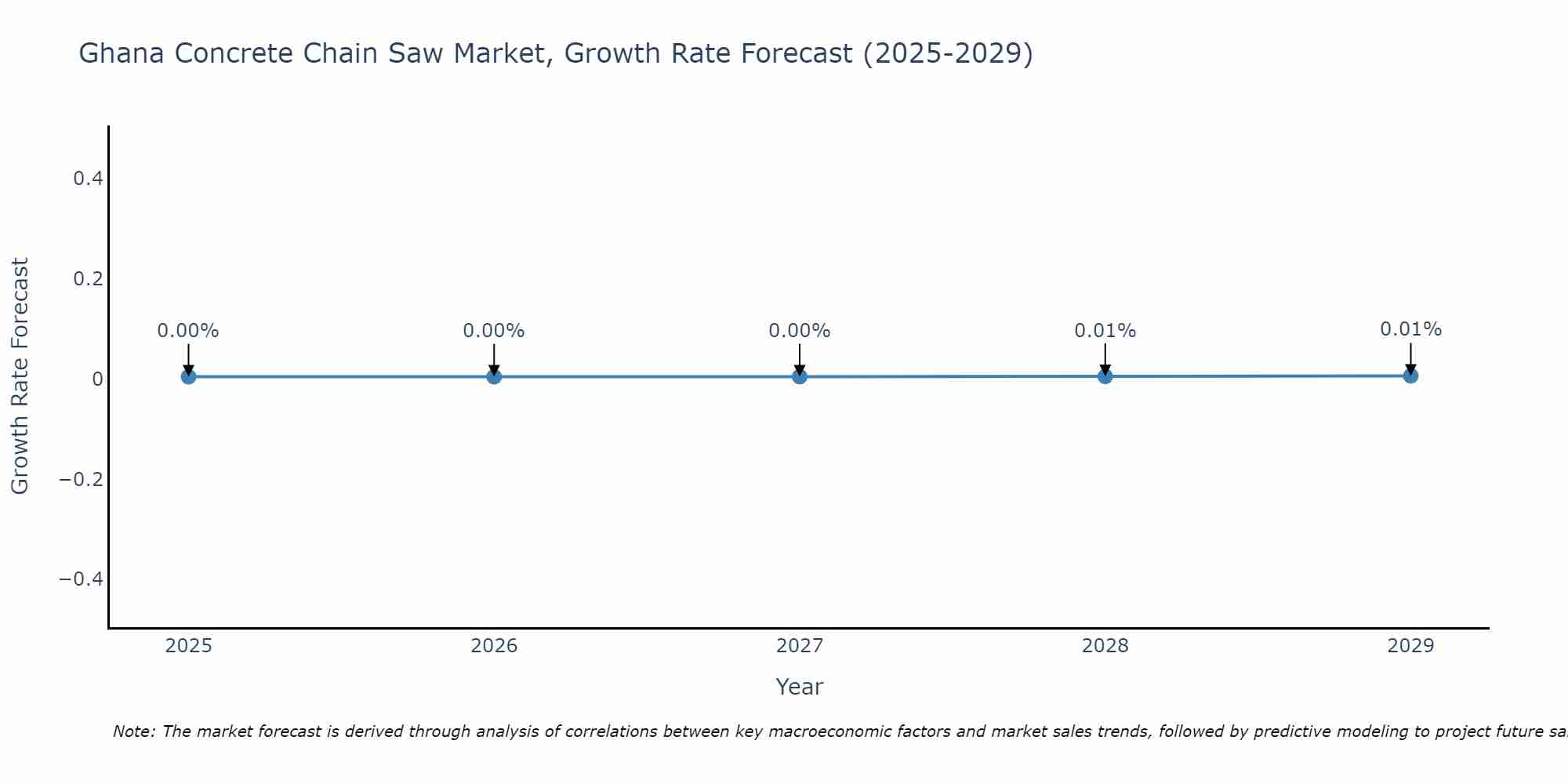
The Ghana Concrete Chain Saw Market is poised for steady growth rate improvements from 2025 to 2029. The growth rate starts at 0.00% in 2025 and reaches 0.01% by 2029.
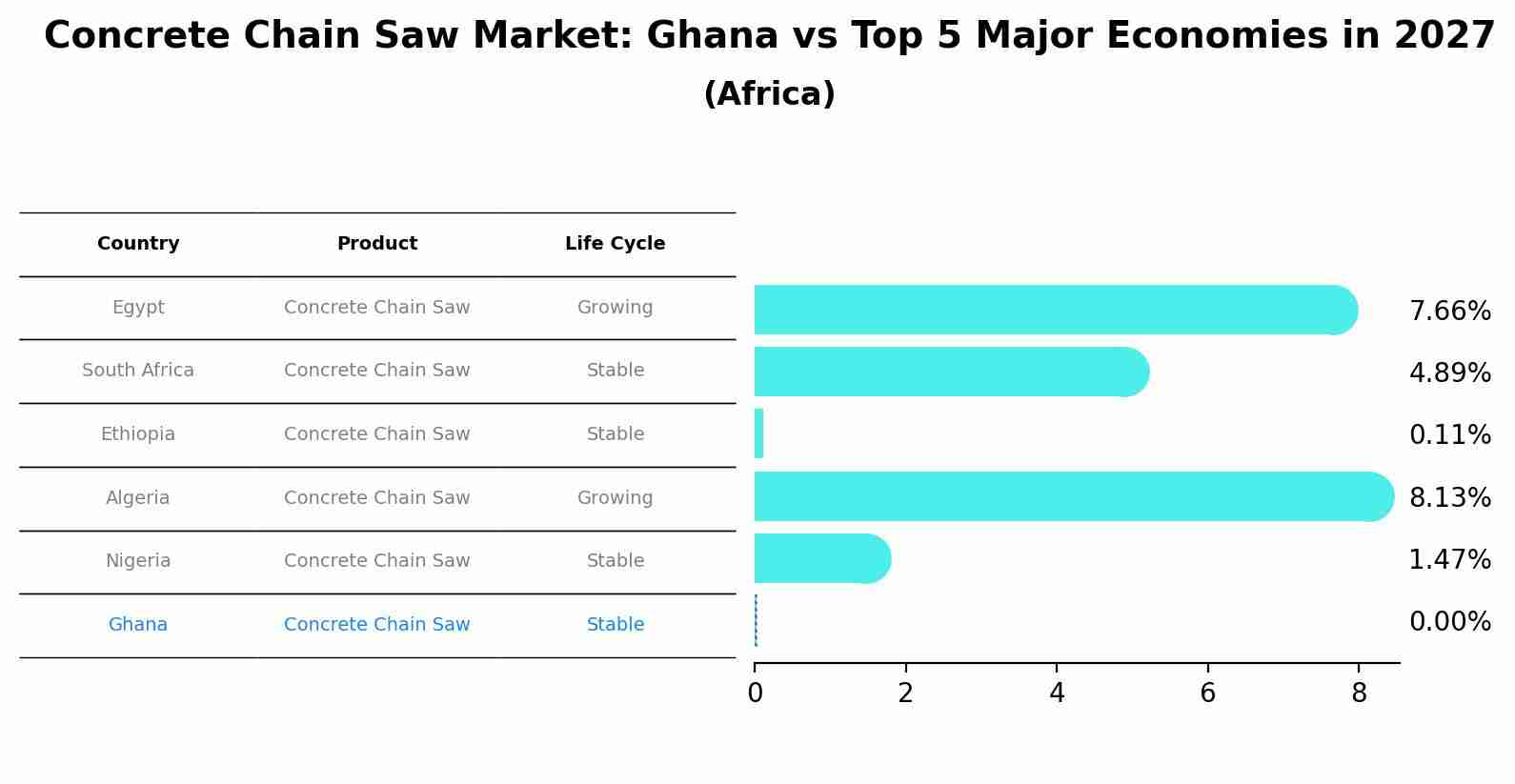
Concrete Chain Saw Market: Ghana vs Top 5 Major Economies in 2027 (Africa)
In the Africa region, the Concrete Chain Saw market in Ghana is projected to expand at a stable growth rate of 0.00% by 2027. The largest economy is Egypt, followed by South Africa, Ethiopia, Algeria and Nigeria.
Ghana Concrete Chain Saw Market Overview
The Ghana concrete chain saw market is experiencing moderate growth due to increasing construction activities in the country. The demand for concrete chain saws is primarily driven by the expanding infrastructure sector, including road construction, building projects, and urban development. The market is dominated by a few key players offering a range of products that cater to different customer needs. Factors such as technological advancements, product innovation, and the introduction of more efficient and durable concrete chain saws are shaping the market dynamics. Additionally, the rising emphasis on safety features and environmental sustainability in construction equipment is influencing consumer preferences. Overall, the Ghana concrete chain saw market is expected to continue its growth trajectory as the construction industry expands further.
Ghana Concrete Chain Saw Market Trends
The Ghana Concrete Chain Saw market is experiencing a growing demand for more powerful and efficient chainsaws that can handle heavy-duty concrete cutting tasks. Customers are increasingly looking for advanced features such as higher horsepower, improved cutting speed, and enhanced durability to increase productivity and reduce downtime. Additionally, the market is witnessing a shift towards electric and battery-powered chainsaws due to their eco-friendly nature and reduced operating costs compared to traditional gas-powered models. Key players in the market are focusing on innovation and product development to meet these evolving customer needs and gain a competitive edge. Overall, the trend in the Ghana Concrete Chain Saw market is towards higher performance, efficiency, and sustainability.
Ghana Concrete Chain Saw Market Challenges
In the Ghana Concrete Chain Saw Market, there are several challenges that industry players face. One of the primary challenges is the limited availability of skilled operators who are proficient in operating concrete chain saws effectively and safely. This scarcity of skilled labor not only hinders the adoption of these tools but also poses a safety risk on construction sites. Additionally, the high cost of concrete chain saws and related accessories can act as a barrier for small businesses or individual contractors looking to invest in this equipment. Furthermore, the lack of awareness and education about the benefits and proper usage of concrete chain saws among potential customers also presents a challenge in expanding market penetration in Ghana. Overall, addressing these challenges through targeted training programs, cost-effective solutions, and awareness campaigns could help unlock growth opportunities in the Ghana Concrete Chain Saw Market.
Ghana Concrete Chain Saw Market Investment Opportunities
The Ghana Concrete Chain Saw Market presents promising investment opportunities for both domestic and international investors. With the growing construction and infrastructure development projects in the country, there is an increasing demand for efficient and powerful concrete cutting tools like chain saws. Investing in this market can be lucrative as the construction industry continues to expand. Additionally, advancements in technology have led to the development of more innovative and user-friendly chain saws, providing a competitive edge for investors who can offer cutting-edge products. By understanding the market trends, building strong partnerships with local distributors and contractors, and providing reliable after-sales services, investors can capitalize on the opportunities present in the Ghana Concrete Chain Saw Market.
Ghana Concrete Chain Saw Market Government Policy
The Ghana government has implemented policies to regulate the Concrete Chain Saw Market, ensuring safety standards and environmental protection. These policies include requirements for manufacturers and distributors to adhere to quality control measures, provide training for operators, and use eco-friendly materials in production. Additionally, the government enforces strict licensing and certification processes to monitor the sale and use of concrete chain saws in the country. By implementing these regulations, the government aims to promote a competitive and sustainable market while safeguarding the well-being of workers and the environment in Ghana`s construction industry.
Ghana Concrete Chain Saw Market Future Outlook
The future outlook for the Ghana Concrete Chain Saw Market appears positive, with steady growth expected in the coming years. The increasing focus on infrastructure development and construction projects in the region is likely to drive the demand for concrete chain saws. Additionally, the growing trend towards urbanization and industrialization is expected to further boost the market as more buildings, roads, and other structures are constructed. Technological advancements in concrete cutting tools and equipment are also anticipated to enhance the efficiency and effectiveness of concrete chain saws, making them more attractive to businesses and contractors. Overall, the Ghana Concrete Chain Saw Market is poised for growth as the construction sector continues to expand and modernize.
Key Highlights of the Report:
- Ghana Concrete Chain Saw Market Outlook
- Market Size of Ghana Concrete Chain Saw Market, 2024
- Forecast of Ghana Concrete Chain Saw Market, 2031
- Historical Data and Forecast of Ghana Concrete Chain Saw Revenues & Volume for the Period 2021 - 2031
- Ghana Concrete Chain Saw Market Trend Evolution
- Ghana Concrete Chain Saw Market Drivers and Challenges
- Ghana Concrete Chain Saw Price Trends
- Ghana Concrete Chain Saw Porter's Five Forces
- Ghana Concrete Chain Saw Industry Life Cycle
- Historical Data and Forecast of Ghana Concrete Chain Saw Market Revenues & Volume By Type for the Period 2021 - 2031
- Historical Data and Forecast of Ghana Concrete Chain Saw Market Revenues & Volume By Gas Chain Saw for the Period 2021 - 2031
- Historical Data and Forecast of Ghana Concrete Chain Saw Market Revenues & Volume By Hydraulic Chain Saw for the Period 2021 - 2031
- Historical Data and Forecast of Ghana Concrete Chain Saw Market Revenues & Volume By Pneumatic Chain Saw for the Period 2021 - 2031
- Ghana Concrete Chain Saw Import Export Trade Statistics
- Market Opportunity Assessment By Type
- Ghana Concrete Chain Saw Top Companies Market Share
- Ghana Concrete Chain Saw Competitive Benchmarking By Technical and Operational Parameters
- Ghana Concrete Chain Saw Company Profiles
- Ghana Concrete Chain Saw Key Strategic Recommendations






































