India Immuno-Oncology Market Size & Growth Rate
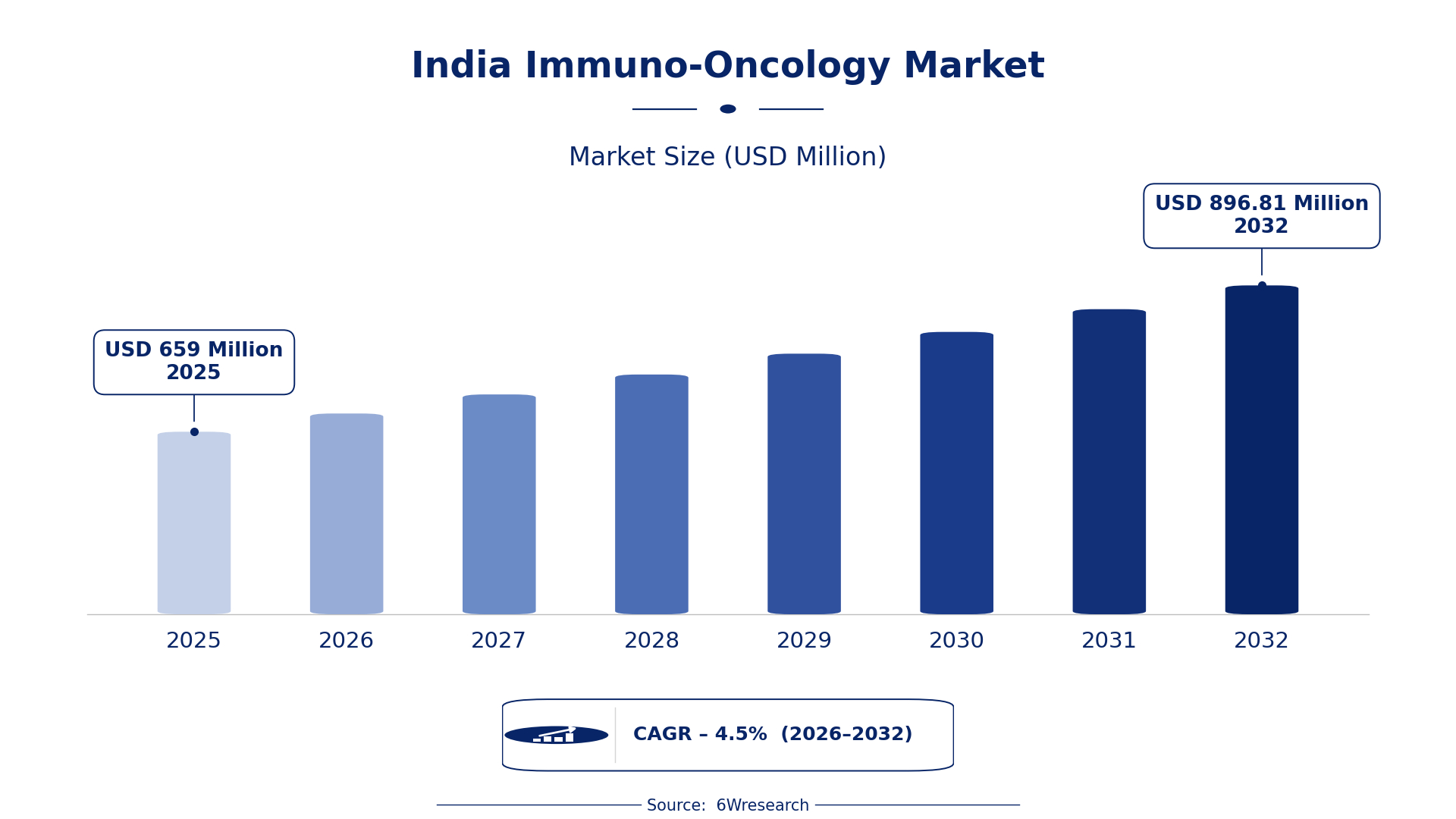
According to 6Wresearch internal database and industry insights, the India Immuno-Oncology Market was valued at USD 659.0 million in 2025 and is projected to reach USD 896.81 million by 2032, growing at a CAGR of approximately 4.5% during 2026–2032.
India Immuno-Oncology Market Highlights
| Report Metric | Details |
| Report Name | India Immuno-Oncology Market |
| Market Size 2025 | USD 659.0 million |
| Market Size 2032 | USD 896.81 million |
| Absolute Growth 2025–2032 | USD 237.81 million |
| CAGR 2026–2032 | 4.5% |
| Peak Annual Growth | 6.9% in 2029 |
| Forecast Period | 2026–2032 |
| Historical Data | 2022–2025 |
| Base Year | 2025 |
| Leading Therapy Type, 2025 | Checkpoint Inhibitors (38% share) |
| Leading Cancer Type, 2025 | Lung (35% share) |
| Leading Mode of Administration, 2025 | IV/Injectable (43% share) |
| Leading End User, 2025 | Oncology Hospitals (40% share) |
| Fastest-Growing Therapy Type | CAR-T Cell Therapy (6.3% CAGR) |
| Fastest-Growing Cancer Type | Leukemia (5.7% CAGR) |
| Fastest-Growing Mode of Administration | Personalized Infusion (5.7% CAGR) |
| Fastest-Growing End User | Cellular Therapy Units (6.5% CAGR) |
| Growing Sector | Oncology Hospitals |
| Key End Users | Oncology Hospitals, Cellular Therapy Units, Immunotherapy Clinics, Experimental Units |
India Immuno-Oncology Market Year-wise Growth Rate and Key Drivers (2022–2032)
This graph illustrates the annual growth rates of the market from 2022 to 2032, highlighting a steady upward trajectory and projected market expansion over the forecast period.
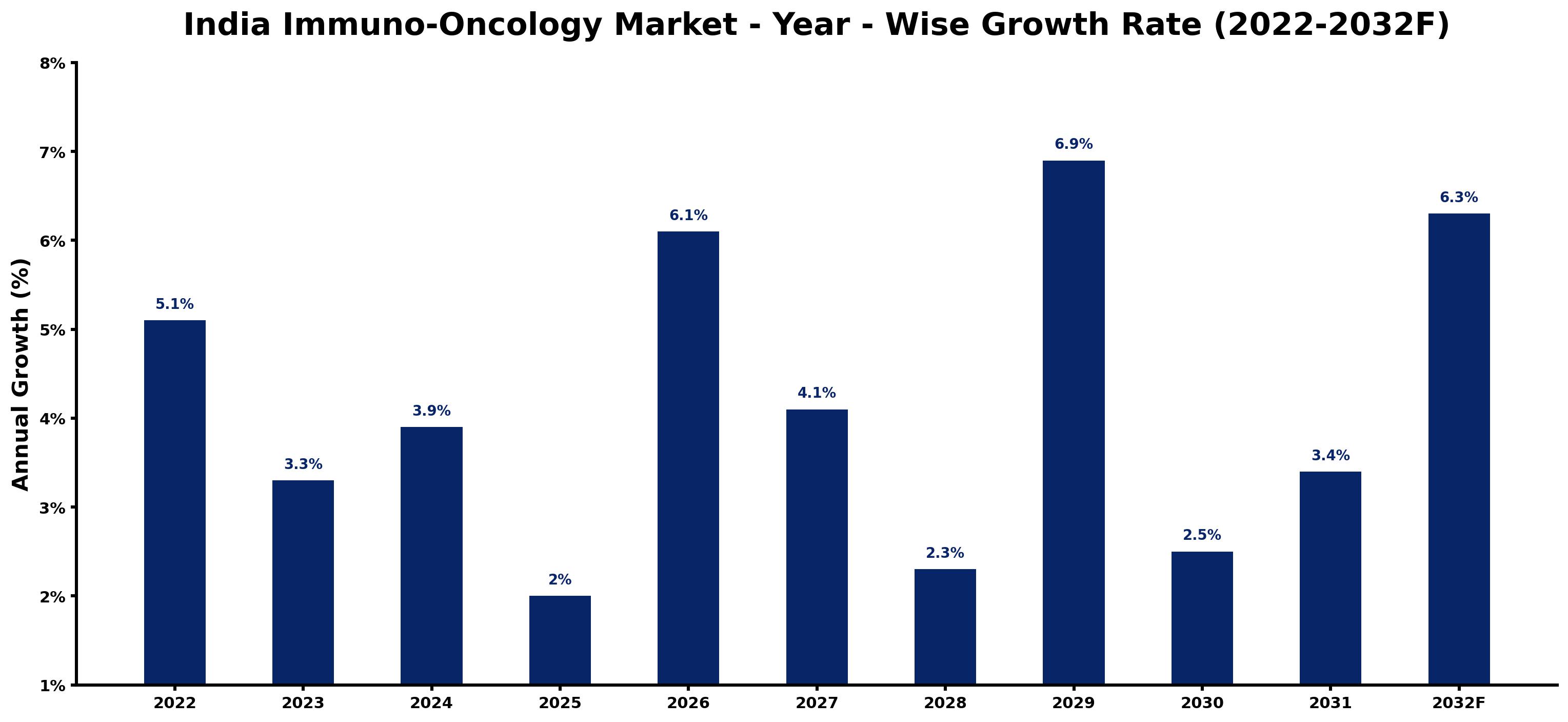
Annual growth estimates for each year appear below with the principal reason behind them, explaining the shifts that set the pace of the market.
| Year | Estimated Annual Growth (%) | Market Rationale |
| 2022 | 5.1 | The market showed strong activity with demand from urban healthcare settings. |
| 2023 | 3.3 | Growth slowed due to the impact of ongoing clinical trials and research phases. |
| 2024 | 3.9 | Increased approvals for therapies contributed to a faster growth rate this year. |
| 2025 | 2.0 | Growth slowed again as the market faced challenges in expanding rural healthcare access. |
| 2026 | 6.1 | The introduction of new CAR-T therapies is expected to spur faster growth in immuno-oncology treatments. |
| 2027 | 4.1 | A slight slowdown is projected as the Department of Biotechnology's initiatives are implemented. |
| 2028 | 2.3 | The market is expected to experience slower growth due to regulatory processes affecting approvals. |
| 2029 | 6.9 | A surge in demand for checkpoint inhibitors is projected to lead to the peak growth rate this year. |
| 2030 | 2.5 | Growth is expected to slow as the market adjusts to the influx of new treatment options. |
| 2031 | 3.4 | An increase in patient awareness and education is projected to lead to a faster growth rate this year. |
| 2032 | 6.3 | The market is expected to grow as more advanced therapies become available. |
Note: Market size estimations and growth projections presented in this report are based on 6Wresearch's proprietary forecasting methodology, utilizing the latest available industry data, government publications, and primary research inputs.
India Immuno-Oncology Market Synopsis
Immuno-Oncology in India covers cancer treatments that harness the immune system to combat malignancies. This approach primarily utilises monoclonal antibodies and engineered T cells, targeting cancers like melanoma and lung cancer. The India Immuno-Oncology Market is experiencing growth driven by over 1.3 million new cancer cases annually and increasing demand from oncology hospitals. The National Cancer Control Programme enhances treatment accessibility, while significant urban healthcare investments further stimulate market expansion. As of 2023, over 150 oncology hospitals are offering immuno-oncology treatments, improving patient access.
Market Dynamics Impact Analysis (2026–2032)
| Factor | Type | Impact | Primary Segment Affected |
| Increasing incidence of lung cancer drives demand for targeted therapies. | Driver | High | Lung |
| The rise of CAR-T Cell Therapy is creating new treatment options for leukemia patients. | Driver | High | CAR-T Cell Therapy |
| Growing urban healthcare facilities are expanding access to immuno-oncology treatments. | Opportunity | High | Oncology Hospitals |
| Emerging interest in personalized infusion therapies is creating new market avenues. | Opportunity | Medium | Personalized Infusion |
| Limited rural healthcare infrastructure restricts access to immuno-oncology treatments. | Restraint | High | Oncology Hospitals |
| Ongoing clinical trials for tumor vaccines slow down the market's expansion. | Restraint | Medium | Tumor Vaccines |
| Regulatory delays in therapy approvals hinder timely market growth. | Challenge | High | CAR-T Cell Therapy |
| High costs of advanced therapies limit patient access and treatment options. | Challenge | Medium | Checkpoint Inhibitors |
Evaluation of Drivers in India Immuno-Oncology Market (2026–2032)
The table below links each growth driver to the segment it affects and the evidence for it.
| Drivers | Primary Segment Affected | Why It Matters (Evidence) |
| Rising cancer cases necessitate effective treatments, leading to increased purchases of immuno-oncology therapies. | Lung | With over 1.3 million new cancer cases annually, oncology hospitals are expanding their treatment options. |
| The introduction of CAR-T therapies is improving treatment protocols for leukemia. | CAR-T Cell Therapy | Since 2021, several CAR-T therapies have received approval, boosting demand among healthcare providers. |
| Growing investments in urban healthcare facilities are expanding access to immuno-oncology. | Oncology Hospitals | As of 2023, over 150 oncology hospitals offer immuno-oncology treatments, increasing patient access. |
| The National Health Mission aims to improve cancer care facilities in rural areas by 2025. | Oncology Hospitals | This initiative is projected to increase treatment availability for patients in underserved regions. |
| ISO 9001 standards are being adopted by oncology hospitals to ensure quality management. | Oncology Hospitals | This trend is encouraging hospitals to invest in immuno-oncology capabilities. |
Growth in the Immuno-Oncology market in India comes from rising cancer incidences, increasing healthcare investments, and the introduction of new therapies. The approval of several CAR-T therapies since 2021 has improved treatment protocols for leukemia, driving demand further. The ongoing increase in urban healthcare investments is expanding access to immuno-oncology treatments, with over 150 oncology hospitals currently offering these therapies. Adoption of quality management standards is prompting hospitals to invest in immuno-oncology capabilities, enhancing overall treatment options for patients.
Evaluation of Restraints in India Immuno-Oncology Market
Below mentioned are some major restraints and their influence on market dynamics.
| Market Restraint | Primary Segment Affected | Why It Matters (Evidence) |
| Limited infrastructure in rural areas restricts access to immuno-oncology treatments. | Oncology Hospitals | This lack of facilities affects patient access, with only a small percentage receiving treatment. |
| Clinical trials for tumor vaccines are ongoing, delaying market expansion. | Tumor Vaccines | As of 2023, trials are being conducted in over 20 institutions, limiting immediate availability. |
| High costs associated with advanced therapies deter patient access. | Checkpoint Inhibitors | The average treatment cost can be prohibitive for many patients, affecting overall market growth. |
| Regulatory processes for new therapies can be lengthy and complex. | CAR-T Cell Therapy | Delays in approvals can slow the introduction of new treatment options to the market. |
| Limited awareness of immuno-oncology options among patients affects demand. | Oncology Hospitals | Many patients remain unaware of available immuno-oncology treatments, impacting their accessibility. |
India Immuno-Oncology Market Challenges
The India Immuno-Oncology market faces high treatment costs that can reach up to ₹1.5 million per patient annually, making it challenging for buyers in rural areas to obtain essential therapies. Limited access to advanced treatments exists, as only 150+ oncology hospitals currently offer immuno-oncology options, restricting choices for patients. Regulatory hurdles also create delays; the approval process for new therapies can exceed two years, complicating timely access for patients. Compliance with quality management standards incurs additional costs for hospitals, which may result in higher treatment prices for buyers seeking immuno-oncology care.
Trends in the India Immuno-Oncology Market
Below mentioned are some of the trends shaping the India Immuno-Oncology Market growth.
- Shift Towards Personalized Infusion Therapies: Since 2022, there has been a notable increase in the adoption of personalized infusion therapies in urban healthcare settings. This shift is evidenced by a projected CAGR of 5.7% for this segment, catering to the growing demand for tailored treatment approaches.
- Emergence of CAR-T Cell Therapy: As of 2023, CAR-T Cell Therapy is gaining traction in India, particularly for leukemia treatments. With a projected CAGR of 6.3%, this therapy is reshaping treatment protocols and attracting interest from oncology hospitals.
- Increased Focus on Quality Standards: Beginning in 2021, oncology hospitals have increasingly adopted ISO 9001 standards for quality management. This trend is important for ensuring treatment efficacy and patient safety, enhancing trust among patients and healthcare providers.
- Expansion of Oncology Hospitals: In 2023, over 150 oncology hospitals in India are offering immuno-oncology treatments. This expansion is vital for meeting the rising demand for cancer therapies, significantly improving patient access.
Investment Opportunities in the India Immuno-Oncology Market
Investors looking at the India Immuno-Oncology Market should consider the following areas.
- Rising Need for Advanced Therapies: With government funding for cancer research increasing by 30% since 2020, there is an opportunity to invest in advanced immuno-oncology therapies. Oncology hospitals are the primary buyers, and partnerships with local facilities can facilitate entry.
- Investment in Rural Healthcare Facilities: As the National Health Mission aims to improve cancer care in rural areas by 2025, there is a pressing need for investment in healthcare infrastructure. Collaborating with local health authorities can open new markets for immuno-oncology treatments.
- Research Grants for Immuno-Oncology: The Indian Council of Medical Research supports immuno-oncology research through various grants, providing an opportunity for investment in advanced therapies. Engaging with research institutions can lead to fruitful collaborations.
- Expansion of Clinical Trials: With ongoing clinical trials for tumor vaccines in over 20 institutions, there is an opportunity to supply advanced therapies. Partnering with research facilities can facilitate entry into this growing segment.
Government Initiatives in the India Immuno-Oncology Market
The National Cancer Control Programme, launched by the Ministry of Health and Family Welfare in 2020, aims to improve accessibility to cancer treatments, including immuno-oncology. This programme builds on previous initiatives by increasing funding and resources for cancer care facilities across India, particularly in underserved areas. The programme has allocated ₹500 crores to improve treatment capabilities and expand services.
The Biotechnology Industry Research Assistance Council (BIRAC) initiated the 'Innovative Biopharmaceuticals' program in 2021, allocating ₹500 crores to support immuno-oncology research. This funding enables researchers and institutions to develop advanced treatment options, promoting innovation in cancer therapies. Additionally, the Department of Health Research established the 'National Cancer Registry Programme' in 2021 to monitor cancer incidence and treatment outcomes, including immuno-oncology.
Future Insight of the India Immuno-Oncology Market
By 2032, buyers and suppliers in the India Immuno-Oncology market can expect improved access as the National Health Mission enhances cancer care facilities, particularly in rural areas. Increased government funding for cancer research, which has risen by 30% since 2020, will drive the development of new therapies and support ongoing clinical trials across more than 20 institutions. Research initiatives from the Department of Biotechnology are anticipated to lead to notable advancements in cancer immunotherapy. The expansion of oncology facilities will facilitate better patient outreach and treatment accessibility.
Market Segmentation Analysis
The report offers a comprehensive study of the following market segments and their leading categories in the market.
By Therapy Type – Checkpoint Inhibitors Dominated, CAR-T Cell Therapy Expected to Grow Fastest
According to Sachin Kumar Rai, Senior Research Analyst at 6Wresearch, the largest therapy type category in 2025 was Checkpoint Inhibitors, with a 38% share of total revenue. Checkpoint inhibitors dominate the India Immuno-Oncology Market due to their widespread application in treating common cancers such as lung cancer. Their established use in over 150 oncology hospitals highlights their critical role in cancer care across the country. The quickest growth will come from CAR-T Cell Therapy, forecast to expand at a CAGR of 6.3% between 2026 and 2032. The rapid growth of CAR-T Cell Therapy stems from its proven effectiveness in treating specific blood cancers, gaining recognition among healthcare providers. The approval of several CAR-T therapies since 2021 has significantly contributed to this segment's swift expansion. Suppliers should focus on advancing CAR-T Cell Therapy offerings to meet the escalating market demand.
By Cancer Type – Lung Dominated, Leukemia Expected to Grow Fastest
In 2025, Lung led the cancer type split with a 35% share. Lung cancer commands the largest market share as it has a notably high incidence rate in India, necessitating effective immuno-oncology treatments. The estimated 200,000 patients receiving treatment annually in urban centres highlights the urgent need for advanced therapies in this area. Leukemia is projected to grow fastest, at a CAGR of 5.7% during 2026–2032. Leukemia is experiencing the fastest growth due to a rising demand for targeted therapies designed for this specific cancer type. Ongoing clinical trials and research initiatives are expected to boost the uptake of immuno-oncology treatments for leukemia. Buyers should prioritise therapies that specifically target leukemia to meet the increasing demand in this segment.
By Mode of Administration – IV/Injectable Dominated, Personalized Infusion Expected to Grow Fastest
IV/Injectable held a 43% share of the India Immuno-Oncology Market by mode of administration in 2025. IV/Injectable administration holds the largest market share as it is the most common method for delivering immuno-oncology therapies. This mode is widely accepted in oncology hospitals, making it a preferred choice for both patients and healthcare providers. Over 2026–2032, Personalized Infusion is expected to post the fastest growth, at a CAGR of 5.7%. Personalized Infusion is rapidly gaining traction as a growing trend in tailored treatment approaches, allowing for more effective patient-specific therapies. The shift towards personalised medicine is likely to drive further growth in this segment. Suppliers must adapt to the increasing preference for personalized infusion methods to maintain competitive market share.
By End User – Oncology Hospitals Dominated, Cellular Therapy Units Expected to Grow Fastest
Oncology Hospitals accounted for a 40% market share by end user in 2025. Oncology hospitals hold the largest market share as they are the primary providers of immuno-oncology treatments, serving a substantial patient population. With over 150 oncology hospitals in India, they play a vital role in delivering comprehensive cancer care. Cellular Therapy Units are set to record the highest CAGR in this split, 6.5% over 2026–2032. Cellular Therapy Units are the fastest-growing segment, primarily due to their focus on advanced therapies like CAR-T that cater to specific patient needs. The growing emphasis on cellular therapies is likely to drive significant growth in this sector. Suppliers should direct their strategies towards cellular therapy units to capitalise on the rapid growth potential in this market.
Key Attractiveness of the Report
- 10 Years of Market Numbers
- Historical Data Starting from 2022 to 2025
- Base Year 2025
- Forecast Data until 2032
- Key Performance Indicators Impacting the Market
- Major Upcoming Developments and Projects
Key Highlights of the Report:
- India Immuno-Oncology Market Outlook
- Market Size of India Immuno-Oncology Market, 2025
- Forecast of India Immuno-Oncology Market, 2032
- Historical Data and Forecast of India Immuno-Oncology Revenues & Volume for the Period 2022 - 2032F
- India Immuno-Oncology Market Trend Evolution
- India Immuno-Oncology Market Drivers and Challenges
- India Immuno-Oncology Price Trends
- India Immuno-Oncology Porter's Five Forces
- India Immuno-Oncology Industry Life Cycle
- Historical Data and Forecast of India Immuno-Oncology Market Revenues & Volume By Therapy Type for the Period 2022 - 2032F
- Historical Data and Forecast of India Immuno-Oncology Market Revenues & Volume By Checkpoint Inhibitors for the Period 2022 - 2032F
- Historical Data and Forecast of India Immuno-Oncology Market Revenues & Volume By CAR-T Cell Therapy for the Period 2022 - 2032F
- Historical Data and Forecast of India Immuno-Oncology Market Revenues & Volume By Tumor Vaccines for the Period 2022 - 2032F
- Historical Data and Forecast of India Immuno-Oncology Market Revenues & Volume By Oncolytic Virus Therapy for the Period 2022 - 2032F
- Historical Data and Forecast of India Immuno-Oncology Market Revenues & Volume By Cancer Type for the Period 2022 - 2032F
- Historical Data and Forecast of India Immuno-Oncology Market Revenues & Volume By Lung, Melanoma for the Period 2022 - 2032F
- Historical Data and Forecast of India Immuno-Oncology Market Revenues & Volume By Leukemia, Lymphoma for the Period 2022 - 2032F
- Historical Data and Forecast of India Immuno-Oncology Market Revenues & Volume By Pancreatic, Cervical for the Period 2022 - 2032F
- Historical Data and Forecast of India Immuno-Oncology Market Revenues & Volume By Solid Tumors for the Period 2022 - 2032F
- Historical Data and Forecast of India Immuno-Oncology Market Revenues & Volume By Mode of Administration for the Period 2022 - 2032F
- Historical Data and Forecast of India Immuno-Oncology Market Revenues & Volume By IV/Injectable for the Period 2022 - 2032F
- Historical Data and Forecast of India Immuno-Oncology Market Revenues & Volume By Personalized Infusion for the Period 2022 - 2032F
- Historical Data and Forecast of India Immuno-Oncology Market Revenues & Volume By Intradermal for the Period 2022 - 2032F
- Historical Data and Forecast of India Immuno-Oncology Market Revenues & Volume By IV/Intratumoral for the Period 2022 - 2032F
- Historical Data and Forecast of India Immuno-Oncology Market Revenues & Volume By End User for the Period 2022 - 2032F
- Historical Data and Forecast of India Immuno-Oncology Market Revenues & Volume By Oncology Hospitals for the Period 2022 - 2032F
- Historical Data and Forecast of India Immuno-Oncology Market Revenues & Volume By Cellular Therapy Units for the Period 2022 - 2032F
- Historical Data and Forecast of India Immuno-Oncology Market Revenues & Volume By Immunotherapy Clinics for the Period 2022 - 2032F
- Historical Data and Forecast of India Immuno-Oncology Market Revenues & Volume By Experimental Units for the Period 2022 - 2032F
- India Immuno-Oncology Import Export Trade Statistics
- Market Opportunity Assessment By Therapy Type
- Market Opportunity Assessment By Cancer Type
- Market Opportunity Assessment By Mode of Administration
- Market Opportunity Assessment By End User
- India Immuno-Oncology Top Companies Market Share
- India Immuno-Oncology Competitive Benchmarking By Technical and Operational Parameters
- India Immuno-Oncology Company Profiles
- India Immuno-Oncology Key Strategic Recommendations
Market Covered
This report examines the market across the segments below.
By Therapy Type
- Checkpoint Inhibitors
- CAR-T Cell Therapy
- Tumor Vaccines
- Oncolytic Virus Therapy
By Cancer Type
- Lung
- Melanoma
- Leukemia
- Lymphoma
- Pancreatic
- Cervical
- Solid Tumors
By Mode of Administration
- IV/Injectable
- Personalized Infusion
- Intradermal
- IV/Intratumoral
By End User
- Oncology Hospitals
- Cellular Therapy Units
- Immunotherapy Clinics
- Experimental Units































