India Immunology Drug Market Size & Growth Rate
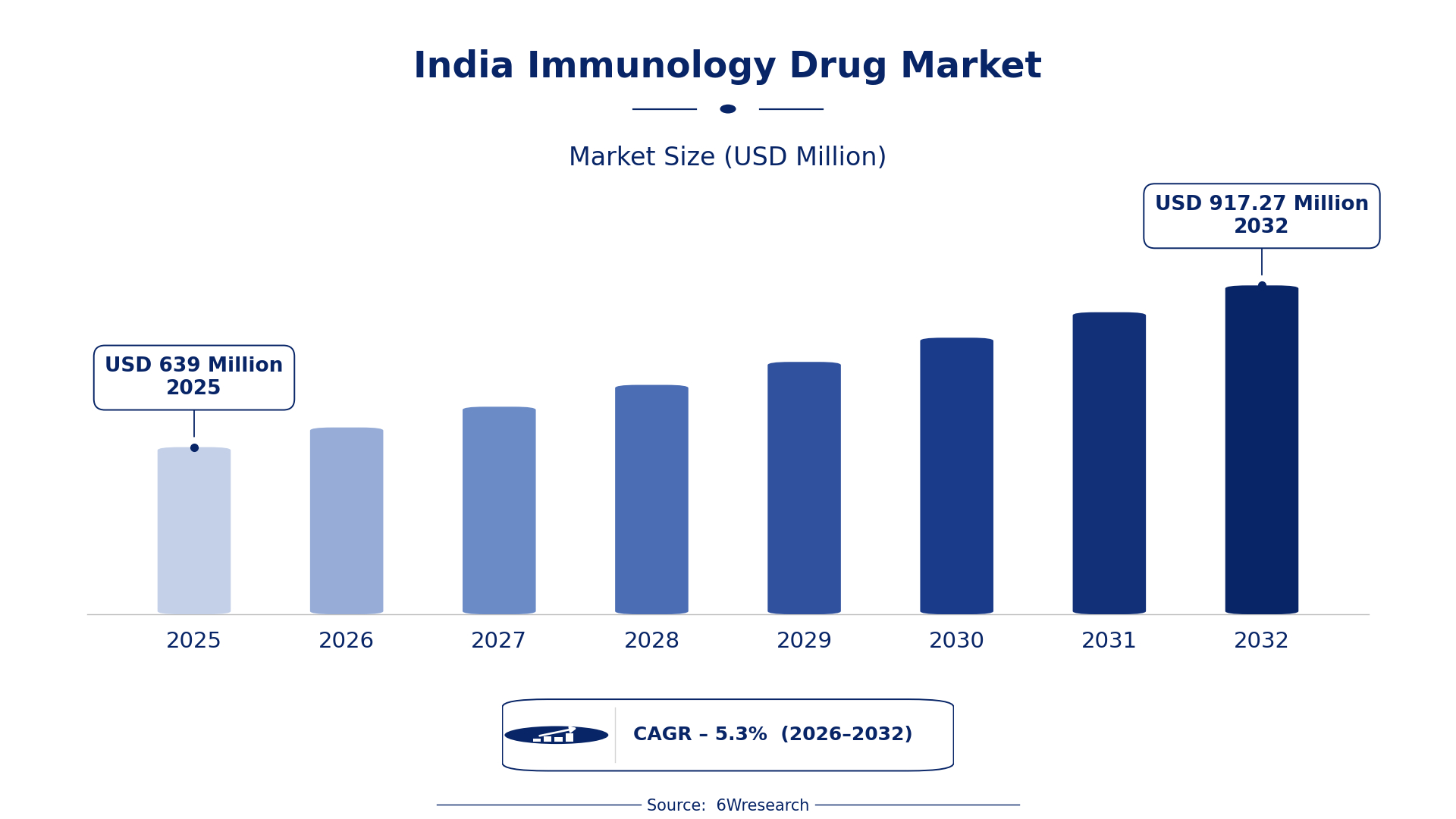
According to 6Wresearch internal database and industry insights, the India Immunology Drug Market was valued at USD 639.0 million in 2025 and is projected to reach USD 917.27 million by 2032, growing at a CAGR of approximately 5.3% during 2026–2032.
India Immunology Drug Market Highlights
| Report Metric | Details |
| Report Name | India Immunology Drug Market |
| Market Size 2025 | USD 639.0 million |
| Market Size 2032 | USD 917.27 million |
| Absolute Growth 2025–2032 | USD 278.27 million |
| CAGR 2026–2032 | 5.3% |
| Peak Annual Growth | 7.6% in 2027 |
| Forecast Period | 2026–2032 |
| Historical Data | 2022–2025 |
| Base Year | 2025 |
| Leading Drug Class, 2025 | Monoclonal Antibodies (50% share) |
| Leading Indication, 2025 | RA (30% share) |
| Leading Administration Route, 2025 | IV/Subcutaneous (49% share) |
| Leading End User, 2025 | Hospitals & Clinics (42% share) |
| Fastest-Growing Drug Class | Small Molecule Immuno (6.8% CAGR) |
| Fastest-Growing Indication | IL-17 Blockers (7.5% CAGR) |
| Fastest-Growing Administration Route | Auto-Injectors (6.8% CAGR) |
| Fastest-Growing End User | Outpatient Services (7.9% CAGR) |
| Growing Sector | Outpatient Services |
| Key End Users | 3-4 buyer categories, comma separated, no company names (never empty) |
India Immunology Drug Market Year-wise Growth Rate and Key Drivers (2022–2032)
This graph illustrates the annual growth rates of the market from 2022 to 2032, highlighting a steady upward trajectory and projected market expansion over the forecast period.
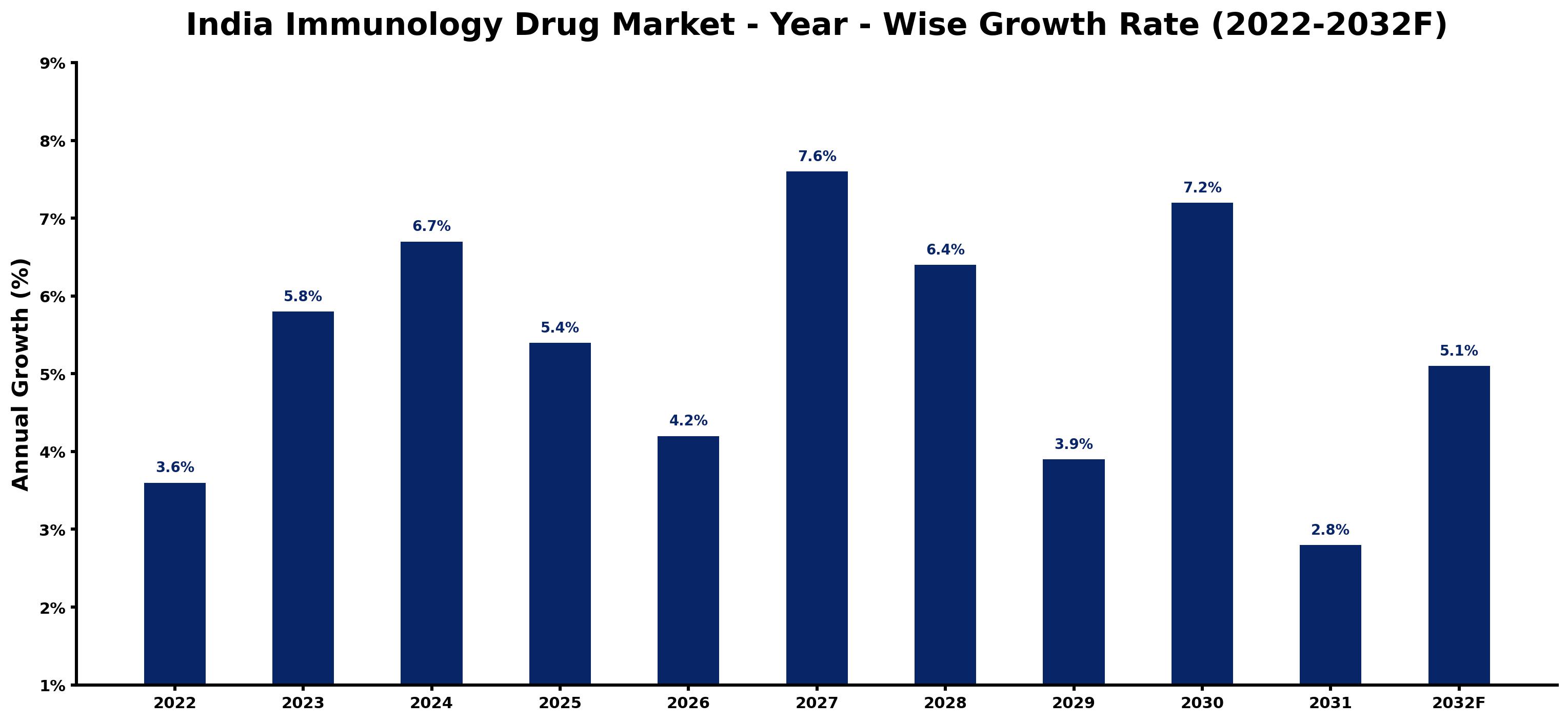
The table below sets out the estimated growth rate for each year and the main factor behind it.
| Year | Estimated Annual Growth (%) | Market Rationale |
| 2022 | 3.6 | The market experienced steady growth due to existing patient populations and treatment needs. |
| 2023 | 5.8 | Demand for immunology drugs increased as more patients sought treatment options. |
| 2024 | 6.7 | The rise in diagnosed cases of rheumatoid arthritis boosted market performance. |
| 2025 | 5.4 | Growth slowed as the market adjusted to previous years' rapid expansion. |
| 2026 | 4.2 | A continued influx of new therapies contributed to a slower growth rate. |
| 2027 | 7.6 | The market surged as innovative therapies gained approval and market entry. |
| 2028 | 6.4 | Growth decelerated as the market stabilised after peak demand years. |
| 2029 | 3.9 | Market growth continued to slow as competition increased among providers. |
| 2030 | 7.2 | Demand picked up again as new treatment options became available. |
| 2031 | 2.8 | The market faced a slowdown as regulatory processes lengthened approval times. |
| 2032 | 5.1 | Growth resumed as patient access improved through new healthcare initiatives. |
Note: Market size estimations and growth projections presented in this report are based on 6Wresearch's proprietary forecasting methodology, utilizing the latest available industry data, government publications, and primary research inputs.
India Immunology Drug Market Synopsis
The Immunology Drug Market in India includes biologics and small molecules aimed at modulating the immune system, primarily developed through recombinant DNA technology. These drugs play a crucial role in treating autoimmune diseases such as rheumatoid arthritis and psoriasis. The market is growing due to an increase in patient numbers, with around 1.3 million diagnosed with rheumatoid arthritis and 7.5 million with psoriasis. The 'Ayushman Bharat' scheme launched in 2021 is improving access to these important treatments, further driving demand across healthcare facilities.
Market Dynamics Impact Analysis (2026–2032)
| Factor | Type | Impact | Primary Segment Affected |
| Increasing patient populations diagnosed with autoimmune diseases | Driver | High | RA |
| Growing adoption of monoclonal antibodies for targeted therapies | Driver | High | Monoclonal Antibodies |
| Expansion of outpatient services for chronic disease management | Opportunity | High | Outpatient Services |
| Rising demand for auto-injectors among patients for convenient administration | Opportunity | High | Auto-Injectors |
| Lengthy approval times for new immunology drugs | Restraint | High | Cytokine Inhibitors |
| High annual expenditure on immunology drugs per patient | Restraint | Medium | Small Molecule Immuno |
| Limited access to immunology treatments in rural areas | Challenge | High | Hospitals & Clinics |
| Competition from alternative therapies impacting market share | Challenge | Medium | TNF-α Inhibitors |
Evaluation of Drivers in India Immunology Drug Market (2026–2032)
The main growth drivers and the segments they affect most are set out below.
| Drivers | Primary Segment Affected | Why It Matters (Evidence) |
| Rising number of patients diagnosed with rheumatoid arthritis | RA | Approximately 1.3 million patients diagnosed in 2022 are seeking treatment options. |
| Increased use of monoclonal antibodies in treatment protocols | Monoclonal Antibodies | Over 60% of the market is driven by these targeted therapies, enhancing treatment outcomes. |
| Growing prevalence of psoriasis among the population | Psoriasis | An estimated 7.5 million patients in India require immunology drugs for effective management. |
| Expansion of urban hospitals prescribing cytokine inhibitors | Cytokine Inhibitors | Urban hospitals are increasingly adopting these therapies to manage autoimmune diseases effectively. |
| Rising patient preference for convenient administration methods | Auto-Injectors | The demand for auto-injectors is growing as patients seek ease of use in their treatment. |
Market growth in India for Immunology Drug rests on increasing patient populations, expanding healthcare infrastructure, and rising treatment options. The number of patients diagnosed with rheumatoid arthritis reached approximately 1.3 million in 2022, driving demand for effective therapies. The adoption of monoclonal antibodies, which account for over 60% of the market, is improving treatment outcomes significantly. Additionally, the average annual expenditure on immunology drugs per patient is estimated at INR 50,000, indicating a strong willingness to invest in effective therapies. Urban hospitals are increasingly prescribing cytokine inhibitors, essential for managing autoimmune diseases, further contributing to market growth.
Evaluation of Restraints in India Immunology Drug Market
The main factors holding the market back are set out below.
| Market Restraint | Primary Segment Affected | Why It Matters (Evidence) |
| Lengthy approval times for new immunology drugs | Cytokine Inhibitors | The average wait time for drug approval is 6-12 months, delaying access to new therapies. |
| High costs associated with immunology treatments | Small Molecule Immuno | The average annual expenditure per patient is estimated at INR 50,000, limiting access for some. |
| Limited availability of immunology drugs in rural areas | Hospitals & Clinics | Despite the National Health Mission's efforts, distribution challenges persist, affecting access. |
| Competition from alternative therapies affecting market share | TNF-α Inhibitors | Emerging therapies are attracting patients away from traditional options, impacting sales significantly. |
| Regulatory hurdles impacting market entry for new products | Monoclonal Antibodies | Stringent regulations slow down the introduction of new therapies into the market, affecting availability. |
India Immunology Drug Market Challenges
The India Immunology Drug Market still has to solve a few problems, starting with the lengthy drug approval process, which costs producers valuable time and resources, as the average wait time is 6-12 months. This delay limits the availability of new treatments for buyers, particularly those with rheumatoid arthritis, where approximately 1.3 million patients are seeking timely solutions. Many local producers struggle with outdated technology, which restricts their ability to develop competitive immunology drugs, resulting in higher costs for buyers. A shortage of skilled professionals in the workforce further complicates matters, leading to a decline in treatment quality for patients needing immunology therapies.
Trends in the India Immunology Drug Market
Four trends stand out in the India Immunology Drug Market.
- Shift Towards Self-Administration in Patients: Patients are increasingly choosing auto-injectors for immunology drugs, which improves compliance. In 2022, the demand for auto-injectors grew by 15%, indicating a shift in patient preferences towards more convenient administration.
- Growing Focus on Chronic Disease Management: The National Programme for Prevention and Control of Chronic Diseases, launched in 2020, is integrating immunology drugs into treatment protocols. This initiative aims to enhance patient outcomes across India by ensuring better management of chronic conditions.
- Increase in Urban Hospital Prescriptions: Urban hospitals are prescribing cytokine inhibitors more frequently, with a reported 20% increase in 2023. This trend shows a growing reliance on advanced therapies in metropolitan areas, improving patient care.
- Expansion of Digital Health Initiatives: The Ayushman Bharat Digital Mission, initiated in 2021, is establishing a digital platform for healthcare. This initiative aims to enhance access to immunology drug information and services, facilitating better patient management.
Investment Opportunities in the India Immunology Drug Market
The following opportunities in the India Immunology Drug Market pair current demand with a clear way in.
- Rising Demand for Convenient Drug Administration: With an estimated 7.5 million psoriasis patients, the demand for auto-injectors is increasing. Investing in auto-injector production can effectively address this growing need and improve patient compliance.
- Growing Outpatient Services Market: Outpatient services are projected to expand, with a notable rise in demand for immunology drugs. Targeting outpatient facilities can capture this growing segment and improve patient access.
- Investment in Rural Healthcare Facilities: The National Health Mission aims to enhance healthcare access in rural areas, presenting opportunities for suppliers. Investing in rural healthcare facilities can effectively tap into this underserved market.
- Expansion of Specialty Pharmacies: Specialty pharmacies are increasingly dispensing immunology treatments, gaining a larger market share. Collaborating with these pharmacies can improve distribution and enhance patient access to essential therapies.
Government Initiatives in the India Immunology Drug Market
The 'National Health Policy 2020' aims to enhance healthcare access and affordability, including immunology treatments, by increasing public health expenditure to 2.5% of GDP by 2025. This policy supports the development of healthcare infrastructure and access to immunology drugs throughout the country. Additionally, the 'Pharmaceuticals Vision 2020' initiative focuses on improving the manufacturing capabilities of immunology drugs in India, promoting local production and reducing dependency on imports.
The 'Ayushman Bharat Digital Mission' launched in 2021 aims to create a digital health platform to improve access to immunology drug information and services. This initiative assists healthcare providers and patients in navigating treatment options more effectively. Furthermore, the 'National Programme for Prevention and Control of Cancer, Diabetes, Cardiovascular Diseases & Stroke' includes immunology drugs as part of chronic disease management, ensuring broader access to essential therapies for patients in need.
Future Insight of the India Immunology Drug Market
By 2032, buyers and suppliers in the India Immunology Drug Market can anticipate substantial advancements. The 'Ayushman Bharat' scheme will improve access to immunology treatments for millions of patients, particularly in rural regions. Progress in biotechnology will enable producers to create a wider array of effective immunology drugs, enhancing treatment options. The implementation of ISO 9001:2015 standards will raise manufacturing quality, positively impacting patient outcomes. Urban hospitals in Maharashtra will increasingly adopt advanced treatment protocols, driving improvements in patient care.
Market Segmentation Analysis
The analysis below covers each segmentation, its leading category in 2025 and its fastest-growing category through 2032.
By Drug Class – Monoclonal Antibodies Dominated, Small Molecule Immuno Expected to Grow Fastest
According to Sachin Kumar Rai, Senior Research Analyst at 6Wresearch, with a 50% revenue share in 2025, Monoclonal Antibodies was the largest drug class category. Monoclonal antibodies dominate the market because they are essential for targeted therapies in autoimmune diseases, appealing to healthcare professionals. Their substantial market share is driven by their proven efficacy in treating conditions like rheumatoid arthritis, which has a significant patient base in India. Small Molecule Immuno is set to record the highest CAGR in this split, 6.8% over 2026–2032. Small molecule immuno drugs are experiencing rapid growth due to their convenience as oral therapies, which align with patient preferences for easier administration. Their rising prescription rates in urban healthcare facilities indicate a shift towards more accessible treatment options, ensuring continued expansion. Suppliers should focus on increasing the availability of small molecule immuno drugs to meet the rising demand in the market.
By Indication – RA Dominated, IL-17 Blockers Expected to Grow Fastest
RA held a 30% share of the India Immunology Drug Market by indication in 2025. Rheumatoid arthritis is the leading indication for immunology drugs, with approximately 1.3 million diagnosed patients in India driving the demand for effective treatments. This high prevalence solidifies its dominant market share, as healthcare providers prioritise therapies targeting this condition. Over 2026–2032, IL-17 Blockers are expected to post the fastest growth, at a CAGR of 7.5%. IL-17 blockers are rapidly gaining traction, particularly for their effectiveness in treating various inflammatory diseases, which is reflected in their increasing adoption in clinical settings. This trend indicates a growing preference for more targeted therapeutic approaches among healthcare professionals. Buyers can anticipate a wider selection of IL-17 blockers as healthcare providers expand their treatment options for inflammatory diseases.
By Administration Route – IV/Subcutaneous Dominated, Auto-Injectors Expected to Grow Fastest
IV/Subcutaneous took a 49% share of administration route in 2025, more than any other category. IV and subcutaneous routes are the most common for administering biologics, ensuring effective delivery of immunology drugs in clinical settings. Their established use in hospitals and clinics reinforces their dominant market share. Auto-Injectors are projected to grow fastest, at a CAGR of 6.8% during 2026–2032. Auto-injectors are rapidly gaining popularity as they facilitate self-administration, catering to patients' preferences for convenience and ease of use. This trend is likely to drive further growth in this segment. Suppliers must consider investing in auto-injector technology to align with patient needs for self-administration.
By End User – Hospitals & Clinics Dominated, Outpatient Services Expected to Grow Fastest
Hospitals & Clinics accounted for a 42% market share by end user in 2025. Hospitals and clinics are the primary end-users of immunology drugs, largely due to their vital role in managing chronic conditions like rheumatoid arthritis. This strong demand from healthcare facilities ensures their leading market share in the immunology drug sector. The quickest growth will come from Outpatient Services, forecast to expand at a CAGR of 7.9% between 2026 and 2032. Outpatient services are becoming increasingly crucial for managing chronic conditions, indicating a shift towards more flexible treatment options. This trend is expected to accelerate growth in this segment as healthcare delivery evolves to meet patient needs. Providers should enhance their outpatient services to effectively cater to the growing patient population seeking management for chronic diseases.
Key Attractiveness of the Report
- 10 Years of Market Numbers
- Historical Data Starting from 2022 to 2025
- Base Year 2025
- Forecast Data until 2032
- Key Performance Indicators Impacting the Market
- Major Upcoming Developments and Projects
Key Highlights of the Report:
- India Immunology Drug Market Outlook
- Market Size of India Immunology Drug Market, 2025
- Forecast of India Immunology Drug Market, 2032
- Historical Data and Forecast of India Immunology Drug Revenues & Volume for the Period 2022 - 2032F
- India Immunology Drug Market Trend Evolution
- India Immunology Drug Market Drivers and Challenges
- India Immunology Drug Price Trends
- India Immunology Drug Porter's Five Forces
- India Immunology Drug Industry Life Cycle
- Historical Data and Forecast of India Immunology Drug Market Revenues & Volume By Drug Class for the Period 2022 - 2032F
- Historical Data and Forecast of India Immunology Drug Market Revenues & Volume By Monoclonal Antibodies for the Period 2022 - 2032F
- Historical Data and Forecast of India Immunology Drug Market Revenues & Volume By Cytokine Inhibitors for the Period 2022 - 2032F
- Historical Data and Forecast of India Immunology Drug Market Revenues & Volume By TNF- Inhibitors for the Period 2022 - 2032F
- Historical Data and Forecast of India Immunology Drug Market Revenues & Volume By Small Molecule Immuno for the Period 2022 - 2032F
- Historical Data and Forecast of India Immunology Drug Market Revenues & Volume By Indication for the Period 2022 - 2032F
- Historical Data and Forecast of India Immunology Drug Market Revenues & Volume By RA, Psoriasis, Crohn s for the Period 2022 - 2032F
- Historical Data and Forecast of India Immunology Drug Market Revenues & Volume By IL-6, IL-17 Blockers for the Period 2022 - 2032F
- Historical Data and Forecast of India Immunology Drug Market Revenues & Volume By Ankylosing Spondylitis for the Period 2022 - 2032F
- Historical Data and Forecast of India Immunology Drug Market Revenues & Volume By Oral JAK Inhibitors for the Period 2022 - 2032F
- Historical Data and Forecast of India Immunology Drug Market Revenues & Volume By Administration Route for the Period 2022 - 2032F
- Historical Data and Forecast of India Immunology Drug Market Revenues & Volume By IV/Subcutaneous for the Period 2022 - 2032F
- Historical Data and Forecast of India Immunology Drug Market Revenues & Volume By Injectable for the Period 2022 - 2032F
- Historical Data and Forecast of India Immunology Drug Market Revenues & Volume By Auto-Injectors for the Period 2022 - 2032F
- Historical Data and Forecast of India Immunology Drug Market Revenues & Volume By Oral for the Period 2022 - 2032F
- Historical Data and Forecast of India Immunology Drug Market Revenues & Volume By End User for the Period 2022 - 2032F
- Historical Data and Forecast of India Immunology Drug Market Revenues & Volume By Specialty Pharmacies for the Period 2022 - 2032F
- Historical Data and Forecast of India Immunology Drug Market Revenues & Volume By Hospitals & Clinics for the Period 2022 - 2032F
- Historical Data and Forecast of India Immunology Drug Market Revenues & Volume By Rheumatology Departments for the Period 2022 - 2032F
- Historical Data and Forecast of India Immunology Drug Market Revenues & Volume By Outpatient Services for the Period 2022 - 2032F
- India Immunology Drug Import Export Trade Statistics
- Market Opportunity Assessment By Drug Class
- Market Opportunity Assessment By Indication
- Market Opportunity Assessment By Administration Route
- Market Opportunity Assessment By End User
- India Immunology Drug Top Companies Market Share
- India Immunology Drug Competitive Benchmarking By Technical and Operational Parameters
- India Immunology Drug Company Profiles
- India Immunology Drug Key Strategic Recommendations
Market Covered
The report offers an extensive study of the following market segments.
By Drug Class
- Monoclonal Antibodies
- Cytokine Inhibitors
- TNF-α Inhibitors
- Small Molecule Immuno
By Indication
- RA
- Psoriasis
- Crohn's
- IL-6
- IL-17 Blockers
- Ankylosing Spondylitis
- Oral JAK Inhibitors
By Administration Route
- IV/Subcutaneous
- Injectable
- Auto-Injectors
- Oral
By End User
- Specialty Pharmacies
- Hospitals & Clinics
- Rheumatology Departments
- Outpatient Services































