India Infection Control Textiles Market Size & Growth Rate
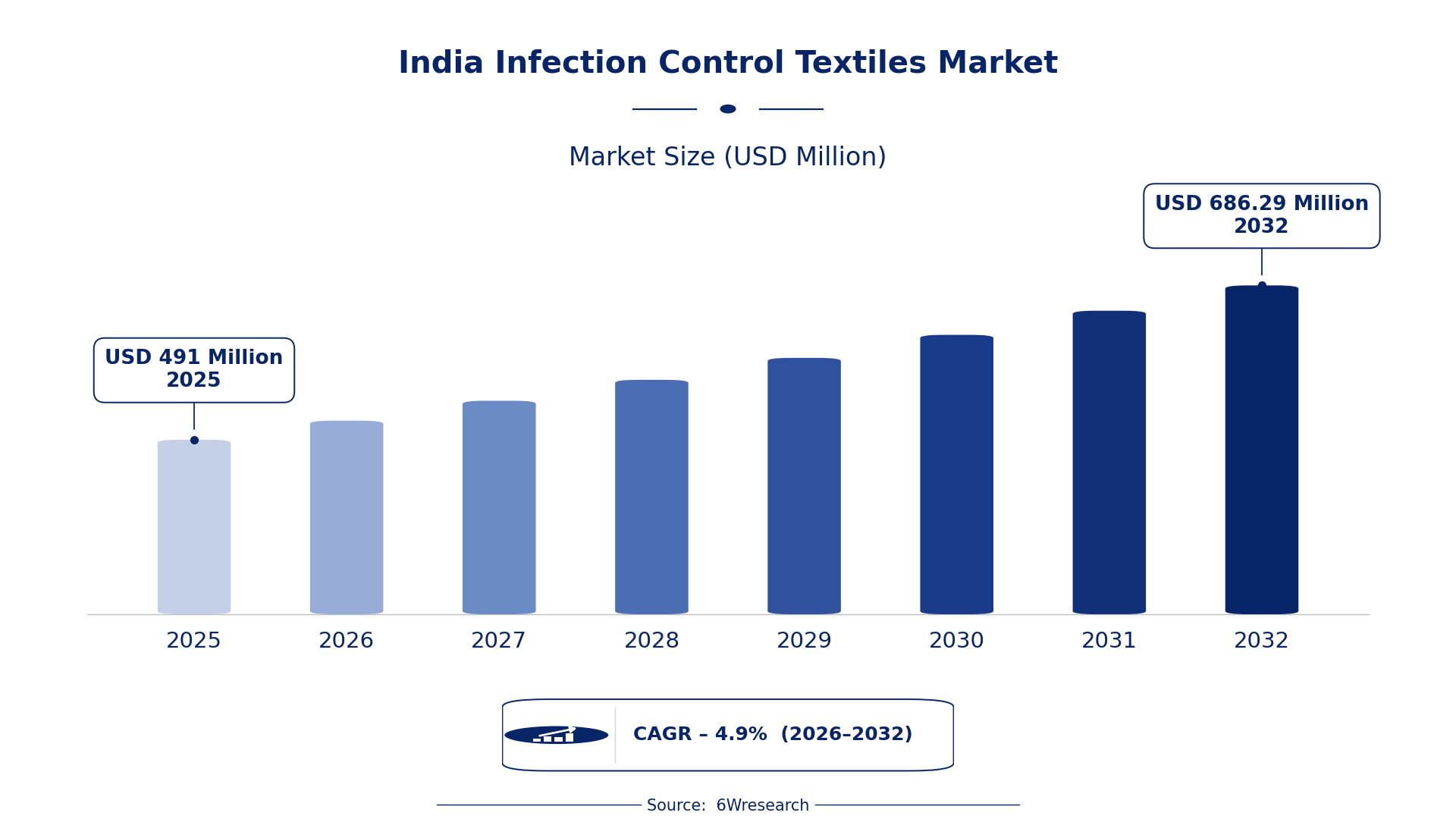
According to 6Wresearch internal database and industry insights, the India Infection Control Textiles Market was valued at USD 491.0 million in 2025 and is projected to reach USD 686.29 million by 2032, growing at a CAGR of approximately 4.9% during 2026–2032.
India Infection Control Textiles Market Highlights
| Report Metric | Details |
| Report Name | India Infection Control Textiles Market |
| Market Size 2025 | USD 491.0 million |
| Market Size 2032 | USD 686.29 million |
| Absolute Growth 2025–2032 | USD 195.29 million |
| CAGR 2026–2032 | 4.9% |
| Peak Annual Growth | 6.9% in 2029 |
| Forecast Period | 2026–2032 |
| Historical Data | 2022–2025 |
| Base Year | 2025 |
| Leading Textile Type, 2025 | Antimicrobial Curtains (49% share) |
| Leading Fiber Treatment, 2025 | Silver / Zinc Coatings (45% share) |
| Leading Usage Area, 2025 | Hospital Partitions (49% share) |
| Leading Distribution Channel, 2025 | Medical Textile Distributors (47% share) |
| Fastest-Growing Textile Type | Antibacterial Bedsheets (6.9% CAGR) |
| Fastest-Growing Usage Area | Medical Staff Apparel (7.2% CAGR) |
| Fastest-Growing Distribution Channel | Online Textile Suppliers (5.9% CAGR) |
| Growing Sector | Online Textile Suppliers |
| Key End Users | Medical Textile Distributors, Direct Sales, Online Textile Suppliers, Hospital Linen Providers |
India Infection Control Textiles Market Year-wise Growth Rate and Key Drivers (2022–2032)
This graph illustrates the annual growth rates of the market from 2022 to 2032, highlighting a steady upward trajectory and projected market expansion over the forecast period.
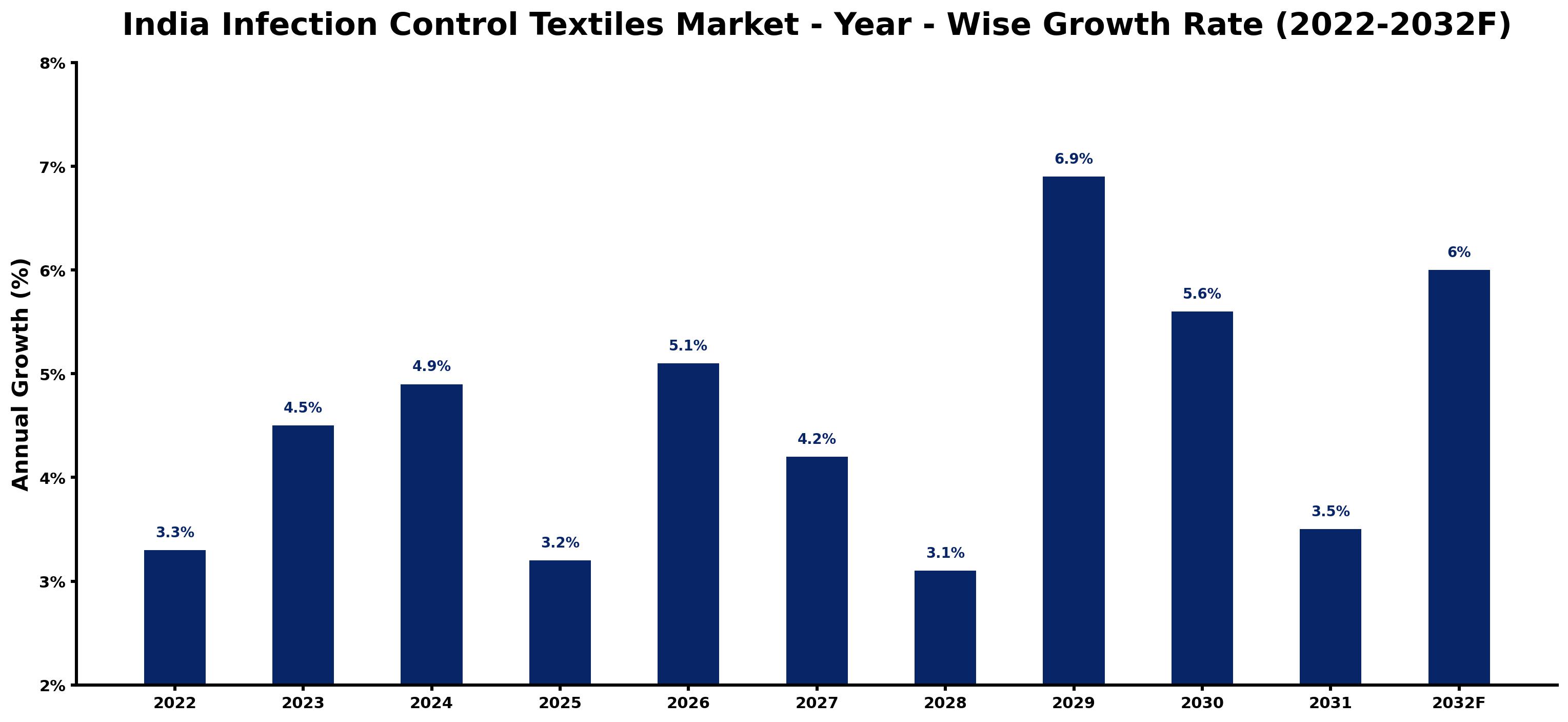
Below, each year's estimated growth is shown next to the factor that most influenced it.
| Year | Estimated Annual Growth (%) | Market Rationale |
| 2022 | 3.3 | Hospitals focused on enhancing infection control measures, driving demand for specialized textiles. |
| 2023 | 4.5 | The healthcare sector expanded, leading to increased adoption of infection control textiles in facilities. |
| 2024 | 4.9 | Antimicrobial textiles gained traction as hospitals aimed for higher patient safety standards. |
| 2025 | 3.2 | Growth slowed as hospitals faced challenges in upgrading to advanced infection control solutions. |
| 2026 | 5.1 | Investment in healthcare infrastructure rose, boosting the demand for infection control textiles. |
| 2027 | 4.2 | The need for improved hygiene standards constrained growth as hospitals adjusted to new regulations. |
| 2028 | 3.1 | Demand for infection control textiles slowed due to market saturation and procurement challenges. |
| 2029 | 6.9 | A surge in hospital numbers accelerated growth as facilities upgraded their infection control measures. |
| 2030 | 5.6 | Growth moderated as hospitals balanced budget constraints with the need for specialized textiles. |
| 2031 | 3.5 | Infection control standards continued to evolve, sustaining demand for advanced textile solutions. |
| 2032 | 6.0 | The healthcare sector's expansion is projected to drive significant demand for infection control textiles. |
Note: Market size estimations and growth projections presented in this report are based on 6Wresearch's proprietary forecasting methodology, utilizing the latest available industry data, government publications, and primary research inputs.
India Infection Control Textiles Market Synopsis
Infection Control Textiles in India are specialized fabrics designed to inhibit microbial growth and prevent infections in healthcare settings. These textiles are produced using advanced technology, incorporating antimicrobial agents during manufacturing. The India Infection Control Textiles Market is expanding as the healthcare sector grows, particularly in hospitals and clinics that are increasingly adopting advanced infection control measures. Over 70% of hospitals now implement these textiles, driven by the need for improved patient safety and hygiene. Additionally, the 'Make in India' initiative supports local manufacturing, further increasing demand for these products.
Market Dynamics Impact Analysis (2026–2032)
| Factor | Type | Impact | Primary Segment Affected |
| Growing adoption of antimicrobial textiles in hospitals enhances patient safety and hygiene standards. | Driver | High | Antimicrobial Curtains |
| Increasing demand for infection-resistant uniforms ensures medical staff safety and compliance with regulations. | Driver | High | Infection-Resistant Uniforms |
| Rising private hospital numbers create a larger market for infection control textiles. | Opportunity | High | Antibacterial Bedsheets |
| The need for disposable drapes in surgical centers opens up new supply avenues for manufacturers. | Opportunity | High | Disposable Drapes |
| Budget constraints in public hospitals may limit procurement of advanced textiles. | Restraint | Medium | Disposable Drapes |
| Quality compliance with standards like ISO 13485 can be challenging for manufacturers. | Restraint | Medium | Antimicrobial Curtains |
| Supply chain disruptions can delay the availability of specialized textiles for hospitals. | Challenge | High | Medical Staff Apparel |
| Competition from low-cost textile imports can pressure local manufacturers' pricing. | Challenge | Medium | Antibacterial Bedsheets |
Evaluation of Drivers in India Infection Control Textiles Market (2026–2032)
Below mentioned are some major drivers and their influence on market dynamics.
| Drivers | Primary Segment Affected | Why It Matters (Evidence) |
| Growing healthcare investments lead to increased demand for infection control textiles. | Antimicrobial Curtains | Over 70% of hospitals in India are adopting advanced infection control measures, driving purchases. |
| Rising patient safety standards necessitate the use of infection-resistant uniforms. | Infection-Resistant Uniforms | Infection-resistant uniforms are becoming mandatory in many hospitals to ensure staff safety. |
| The expansion of private hospitals boosts demand for antibacterial bedsheets. | Antibacterial Bedsheets | Private hospitals account for 40% of the healthcare market in India, increasing textile demand. |
| The need for sterile environments in surgical centers drives the use of disposable drapes. | Disposable Drapes | Disposable drapes are essential in over 1,000 surgical centers in India, ensuring sterile conditions. |
| Technological advancements in textile manufacturing improve product offerings. | Silver / Zinc Coatings | Innovations in antimicrobial coatings improve the effectiveness of infection control textiles. |
Market growth in India for Infection Control Textiles rests on rising healthcare investments, expanding private hospital numbers, and increasing patient safety standards. More than 70% of hospitals are adopting advanced infection control measures, leading to higher demand for specialized textiles. The private healthcare sector, which accounts for 40% of the market, is driving the need for antibacterial bedsheets and infection-resistant uniforms. Disposable drapes are essential in over 1,000 surgical centers to maintain sterile environments. Technological advancements in textile manufacturing, particularly in antimicrobial coatings, improve product offerings and drive further demand.
Evaluation of Restraints in India Infection Control Textiles Market
The table below lists the restraints and the evidence behind each.
| Market Restraint | Primary Segment Affected | Why It Matters (Evidence) |
| Budget constraints in public hospitals limit procurement of advanced textiles. | Disposable Drapes | Many public hospitals face financial limitations that restrict their ability to purchase new infection control textiles. |
| Quality compliance with standards like ISO 13485 can be challenging for manufacturers. | Antimicrobial Curtains | Manufacturers must invest in testing and certification processes to meet stringent quality standards. |
| Logistical issues can hinder timely delivery of essential infection control textiles to healthcare facilities. | Medical Staff Apparel | Supply chain disruptions can delay the availability of specialized textiles for hospitals. |
| Competition from low-cost textile imports can pressure local manufacturers' pricing. | Antibacterial Bedsheets | Imported textiles may offer cheaper alternatives, affecting local producers' market share. |
| Limited awareness among smaller healthcare facilities about infection control textiles. | Disposable Drapes | Smaller clinics may not prioritize investment in specialized textiles, impacting overall demand. |
India Infection Control Textiles Market Challenges
Over 70% of hospitals in India encounter difficulties in meeting strict infection control regulations, which necessitate advanced textiles to ensure patient safety. This regulatory pressure stems from an increased focus on hygiene, causing procurement delays for hospitals needing to upgrade their facilities. A shortage of skilled workers in textile manufacturing complicates production, resulting in cost increases of up to 20% for producers striving to maintain quality. Clinics, as buyers, face inflated operational budgets while searching for reliable suppliers, further straining their financial resources. Outdated technology in textile production restricts innovation, limiting the availability of effective infection control textiles in the market.
Trends in the India Infection Control Textiles Market
Several trends are reshaping the India Infection Control Textiles Market; the most important are set out below.
- Shift towards Advanced Antimicrobial Technologies: The healthcare sector is increasingly adopting advanced antimicrobial technologies in infection control textiles. The Bureau of Indian Standards updated the 'IS 16289:2015' standard in 2023, improving safety protocols for textiles.
- Growing Demand for Disposable Drapes: Surgical centres are increasingly relying on disposable drapes to ensure sterile environments. Over 1,000 surgical centres in India now utilise these essential products to maintain hygiene.
- Increased Focus on Staff Safety: Hospitals are prioritising the use of infection-resistant uniforms for medical staff. Many hospitals are making these uniforms mandatory to improve safety and hygiene standards.
- Rise of Online Textile Suppliers: Online textile suppliers are gaining traction in the distribution of infection control textiles. This shift is evident as the segment is expected to grow at 5.9% from 2026 to 2032.
Investment Opportunities in the India Infection Control Textiles Market
Below are the investment opportunities with the strongest case in the India Infection Control Textiles Market.
- Supply Antimicrobial Curtains: The rising need for antimicrobial curtains presents a key opportunity for manufacturers. With over 70% of hospitals adopting infection control measures, suppliers can target this expanding market.
- Invest in Medical Staff Apparel: The increasing focus on staff safety creates a need for infection-resistant uniforms. Hospitals are making these uniforms mandatory, providing a clear avenue for investment.
- Partner with Surgical Centers: Now is the ideal time to partner with surgical centres for the supply of disposable drapes. With over 1,000 centres requiring these products, establishing local partnerships can facilitate entry.
- Expand Online Distribution Channels: The rise of online textile suppliers offers a unique investment opportunity. This segment is expected to grow at 5.9%, allowing suppliers to reach a broader customer base.
Government Initiatives in the India Infection Control Textiles Market
In 2023, the Bureau of Indian Standards updated the 'IS 16289:2015' standard to include antimicrobial properties, improving safety protocols for infection control textiles. This measure builds on the 'National Infection Prevention and Control Guidelines' launched in 2021, which aimed to standardise practices across healthcare facilities. Together, these initiatives ensure that infection control textiles meet stringent quality requirements, benefiting both producers and buyers in the market.
Healthcare facilities utilise the 'Ayushman Bharat' scheme to improve service quality, indirectly boosting demand for infection control textiles. Under this initiative, hospitals receive funding to enhance infrastructure, which includes the procurement of specialised fabrics. The Ministry of Health and Family Welfare oversees this scheme, ensuring that healthcare providers can access necessary resources to maintain hygiene standards.
Future Insight of the India Infection Control Textiles Market
By 2032, buyers and suppliers in the India Infection Control Textiles Market can expect significant changes driven by new guidelines from the Bureau of Indian Standards. The National Health Mission's initiatives will enhance healthcare infrastructure, increasing demand for specialized textiles. Antimicrobial textiles will see wider adoption in over 500 hospitals, improving patient outcomes. The 'Make in India' initiative will encourage local manufacturers to invest in modern textile technologies, streamlining production and increasing the availability of infection control textiles.
Market Segmentation Analysis
Each segment group is reviewed below, with the leader by share and the fastest grower by CAGR.
By Textile Type – Antimicrobial Curtains Dominated, Antibacterial Bedsheets Expected to Grow Fastest
According to Shubham Deep, Research Manager at 6Wresearch, Antimicrobial Curtains accounted for a 49% market share by textile type in 2025. Antimicrobial curtains dominate the market share in India due to their critical role in infection prevention within hospital settings. With over 500 hospitals in major cities employing these textiles, their widespread adoption underscores their importance in maintaining hygiene. Antibacterial Bedsheets are projected to grow fastest, at a CAGR of 6.9% during 2026–2032. Antibacterial bedsheets are experiencing rapid growth as they become essential for patient care and hygiene in private hospitals, which represent 40% of the healthcare market in India. This increasing demand is driven by a heightened focus on patient safety and comfort. Suppliers should prioritise the production of antibacterial bedsheets to meet the growing demand in the healthcare sector.
By Fiber Treatment – Silver / Zinc Coatings Dominated and Is Expected to Record the Fastest Growth
With a 45% revenue share in 2025, Silver / Zinc Coatings was the largest fiber treatment category. Silver and zinc coatings are the preferred choice in infection control textiles due to their proven antimicrobial properties, essential for hospital environments. Their extensive use in various textile applications, particularly for surgical drapes, solidifies their dominant market position. Its lead should widen, with a projected CAGR of 6.8% during 2026–2032, the highest in this split. The rapid growth of silver and zinc coatings is fuelled by their increasing integration in advanced infection control textiles, as healthcare facilities seek enhanced safety measures. This ongoing trend will likely widen their market lead as demand for effective solutions continues to rise. Suppliers should prioritise the development of silver and zinc coatings to capitalise on their growing acceptance and maintain a competitive edge.
By Usage Area – Hospital Partitions Dominated, Medical Staff Apparel Expected to Grow Fastest
The largest usage area category in 2025 was Hospital Partitions, with a 49% share of total revenue. Hospital partitions command the largest market share as they play a vital role in ensuring patient privacy and infection control within healthcare facilities. Their critical function in creating safe and hygienic environments makes them indispensable in hospitals across India. The quickest growth will come from Medical Staff Apparel, forecast to expand at a CAGR of 7.2% between 2026 and 2032. Medical staff apparel is witnessing the fastest growth due to its essential role in safeguarding healthcare workers and preventing infections. With increasing regulations mandating such apparel in hospitals, this segment is poised for significant expansion. Suppliers must focus on the rising demand for medical staff apparel to remain competitive in the infection control textiles market.
By Distribution Channel – Medical Textile Distributors Dominated, Online Textile Suppliers Expected to Grow Fastest
In 2025, Medical Textile Distributors led the distribution channel split with a 47% share. Medical textile distributors maintain the largest market share by providing crucial supply chain support for infection control textiles. Their established networks are integral to distributing these essential products to healthcare facilities throughout India. Online Textile Suppliers are set to record the highest CAGR in this split, 5.9% over 2026–2032. Online textile suppliers are emerging as the fastest-growing distribution channel, reflecting a shift towards digital purchasing in the healthcare sector. The convenience and accessibility of online platforms are driving this trend, marking a key area for growth. Suppliers should enhance their online presence to effectively engage with the growing number of buyers who prefer digital purchasing options.
Key Attractiveness of the Report
- 10 Years of Market Numbers
- Historical Data Starting from 2022 to 2025
- Base Year 2025
- Forecast Data until 2032
- Key Performance Indicators Impacting the Market
- Major Upcoming Developments and Projects
Key Highlights of the Report:
- India Infection Control Textiles Market Outlook
- Market Size of India Infection Control Textiles Market, 2025
- Forecast of India Infection Control Textiles Market, 2032
- Historical Data and Forecast of India Infection Control Textiles Revenues & Volume for the Period 2022 - 2032F
- India Infection Control Textiles Market Trend Evolution
- India Infection Control Textiles Market Drivers and Challenges
- India Infection Control Textiles Price Trends
- India Infection Control Textiles Porter's Five Forces
- India Infection Control Textiles Industry Life Cycle
- Historical Data and Forecast of India Infection Control Textiles Market Revenues & Volume By Textile Type for the Period 2022 - 2032F
- Historical Data and Forecast of India Infection Control Textiles Market Revenues & Volume By Antimicrobial Curtains for the Period 2022 - 2032F
- Historical Data and Forecast of India Infection Control Textiles Market Revenues & Volume By Antibacterial Bedsheets for the Period 2022 - 2032F
- Historical Data and Forecast of India Infection Control Textiles Market Revenues & Volume By Infection-Resistant Uniforms for the Period 2022 - 2032F
- Historical Data and Forecast of India Infection Control Textiles Market Revenues & Volume By Disposable Drapes for the Period 2022 - 2032F
- Historical Data and Forecast of India Infection Control Textiles Market Revenues & Volume By Fiber Treatment for the Period 2022 - 2032F
- Historical Data and Forecast of India Infection Control Textiles Market Revenues & Volume By Silver / Zinc Coatings for the Period 2022 - 2032F
- Historical Data and Forecast of India Infection Control Textiles Market Revenues & Volume By Embedded Antiseptics for the Period 2022 - 2032F
- Historical Data and Forecast of India Infection Control Textiles Market Revenues & Volume By Coated Fabric for the Period 2022 - 2032F
- Historical Data and Forecast of India Infection Control Textiles Market Revenues & Volume By Nonwoven + Antiviral for the Period 2022 - 2032F
- Historical Data and Forecast of India Infection Control Textiles Market Revenues & Volume By Usage Area for the Period 2022 - 2032F
- Historical Data and Forecast of India Infection Control Textiles Market Revenues & Volume By Hospital Partitions for the Period 2022 - 2032F
- Historical Data and Forecast of India Infection Control Textiles Market Revenues & Volume By Patient Beds for the Period 2022 - 2032F
- Historical Data and Forecast of India Infection Control Textiles Market Revenues & Volume By Medical Staff Apparel for the Period 2022 - 2032F
- Historical Data and Forecast of India Infection Control Textiles Market Revenues & Volume By Surgical Use for the Period 2022 - 2032F
- Historical Data and Forecast of India Infection Control Textiles Market Revenues & Volume By Distribution Channel for the Period 2022 - 2032F
- Historical Data and Forecast of India Infection Control Textiles Market Revenues & Volume By Medical Textile Distributors for the Period 2022 - 2032F
- Historical Data and Forecast of India Infection Control Textiles Market Revenues & Volume By Direct Sales for the Period 2022 - 2032F
- Historical Data and Forecast of India Infection Control Textiles Market Revenues & Volume By Online Textile Suppliers for the Period 2022 - 2032F
- Historical Data and Forecast of India Infection Control Textiles Market Revenues & Volume By Hospital Linen Providers for the Period 2022 - 2032F
- India Infection Control Textiles Import Export Trade Statistics
- Market Opportunity Assessment By Textile Type
- Market Opportunity Assessment By Fiber Treatment
- Market Opportunity Assessment By Usage Area
- Market Opportunity Assessment By Distribution Channel
- India Infection Control Textiles Top Companies Market Share
- India Infection Control Textiles Competitive Benchmarking By Technical and Operational Parameters
- India Infection Control Textiles Company Profiles
- India Infection Control Textiles Key Strategic Recommendations
Market Covered
The report offers an extensive study of the following market segments.
By Textile Type
- Antimicrobial Curtains
- Antibacterial Bedsheets
- Infection-Resistant Uniforms
- Disposable Drapes
By Fiber Treatment
- Silver / Zinc Coatings
- Embedded Antiseptics
- Coated Fabric
- Nonwoven + Antiviral
By Usage Area
- Hospital Partitions
- Patient Beds
- Medical Staff Apparel
- Surgical Use
By Distribution Channel
- Medical Textile Distributors
- Direct Sales
- Online Textile Suppliers
- Hospital Linen Providers































